

The Science Behind Nitric Oxide
01
What is nitric oxide?
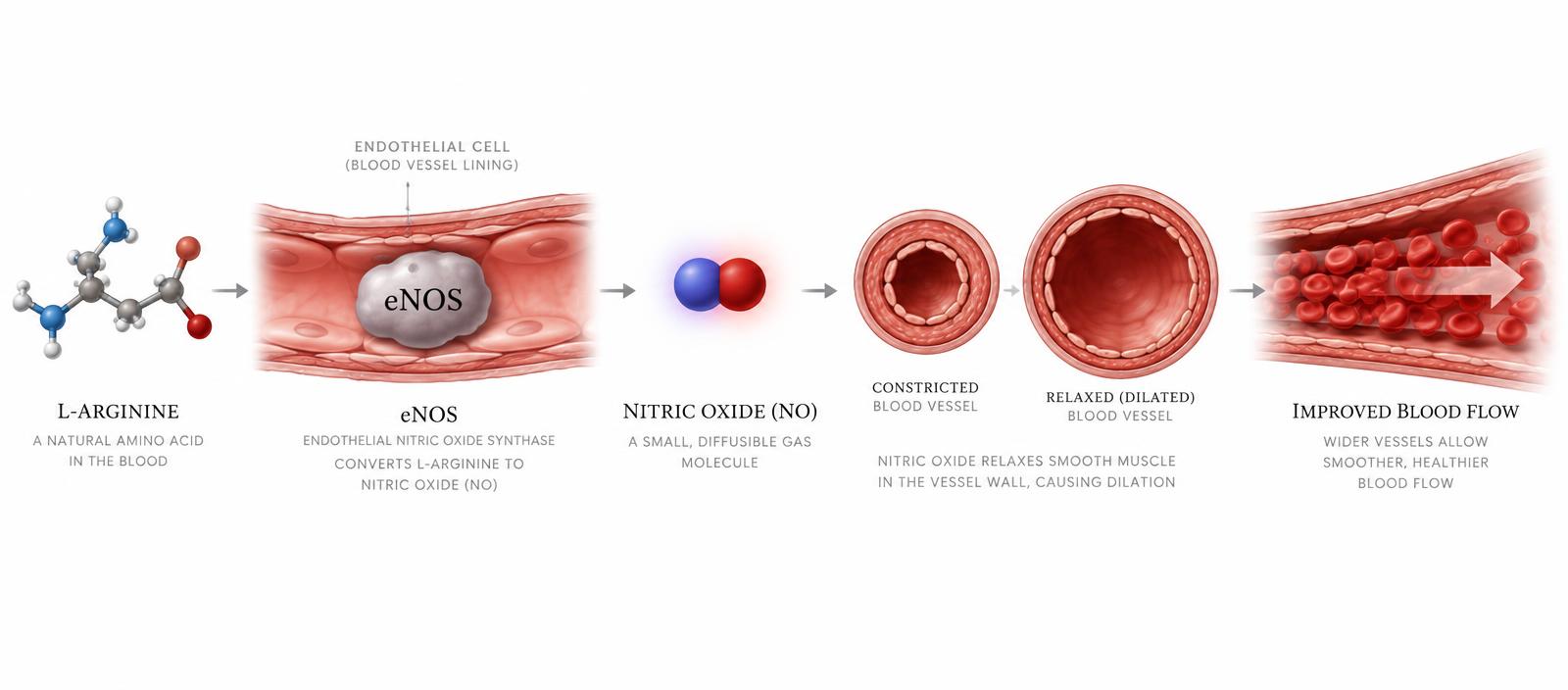
Nitric oxide (NO) is a tiny gas molecule your body makes for itself. It acts as a signal inside your blood vessels, telling them to relax and widen so blood, oxygen and nutrients can move freely.
Because almost every tissue depends on blood flow, this one small molecule touches circulation, cardiovascular wellness, energy, exercise recovery and how well you feel day to day.

02
It starts with your endothelium
The endothelium is a thin layer of cells lining the interior of blood vessels. It produces a molecule called Nitric Oxide (NO) through the enzyme endothelial nitric oxide synthase (eNOS). NO is a signaling gas involved in many normal physiological processes, including blood vessel relaxation and cellular communication.

03
Meet eNOS — the enzyme that makes NO
eNOS (endothelial nitric oxide synthase) is the enzyme inside your endothelial cells that converts the amino acid L-arginine into nitric oxide. The pathway is remarkably simple:
04
Why endothelial health matters
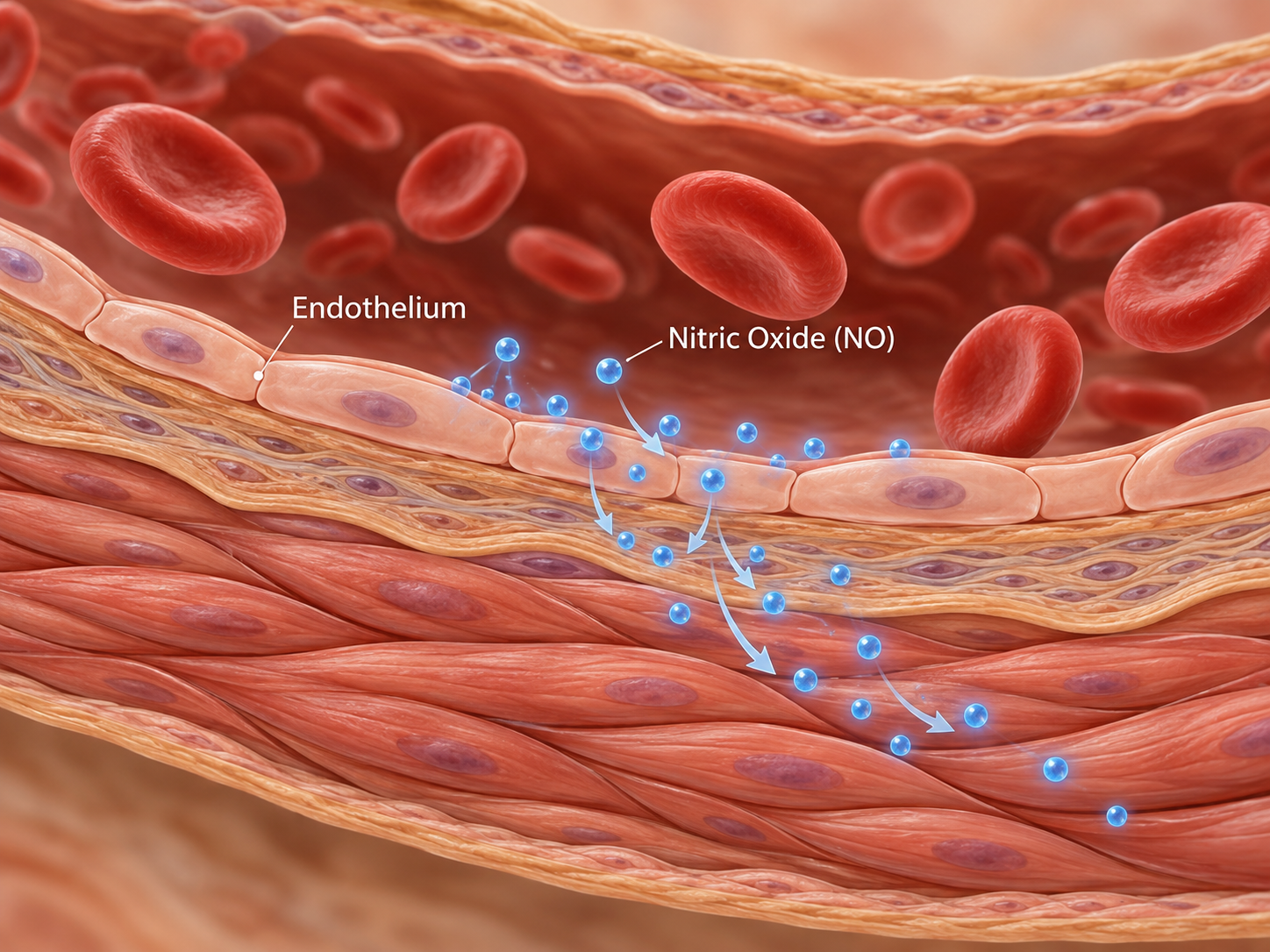
Over time, factors such as age, stress, and lifestyle can affect how well endothelial cells function. Endothelial cells produce Nitric Oxide (NO) via the enzyme eNOS, a molecule involved in normal vascular signaling and cellular communication. Production of Nitric Oxide may decline due to these, and other factors. Learning about endothelial function can help you understand the important role of Nitric Oxide in everyday physiology.
05
Why NO matters more as we age
Research suggests that the body's natural nitric oxide availability tends to decline with age. Endothelial cells become less efficient, and everyday factors — inactivity, diet, stress, oxidative stress — can add to that decline.
Lower nitric oxide availability can mean blood vessels are less able to relax and widen as readily as they once did, which is why circulation and cardiovascular wellness become a more deliberate focus after 50. Supporting the pathways your body already uses to make nitric oxide becomes part of everyday healthy living.
Nitric oxide is short-lived in the body — which is why consistent, daily support matters more than any single dose.
06
Proven science
1998 NOBEL PRIZE IN PHYSIOLOGY OR MEDICINE
Awarded for the discovery of nitric oxide as a signalling molecule in the cardiovascular system.
Robert F. Furchgott, Louis J. Ignarro and Ferid Murad shared the prize for revealing that the body produces nitric oxide to relax blood vessels — a finding that reshaped cardiovascular science and opened two decades of research into circulation, vascular health and healthy aging.
VIEW THE NOBEL PRIZE RECORD →In the years since, thousands of published studies have continued to explore nitric oxide's role in normal cardiovascular, immune and cellular function — the body of research that the ėNOS formula was designed around.
Dr. Jay Wilkins explains the eNOS function.
Dr Wilkins explains the medical science behind the eNOS function, and nitric oxide, and why it is so critical to good health.
Dr Jay Wilkins - Why ėNOS is so effective.
Learn why ėNOS is unique in the nitric oxide world, and why it is so powerful and works so well.
How ėNOS, the supplement, delivers the science
The power of nature and science
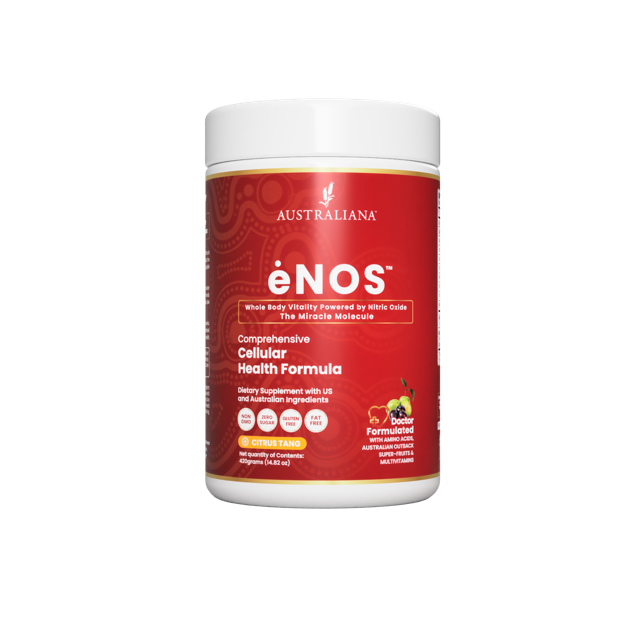
At Australiana, we blend nature and science to deliver a unique nutritional supplement. Our doctor designed formula is supported by knowledge gained through decades of scientific research and is designed to assist and support the body's natural Nitric Oxide (NO) production, helping maintain a healthy cardiovascular system and feelings of well-being. Every ingredient is carefully selected to work in synergy—so you may get resulting benefits.
Statements made on this website or on product packaging have not been evaluated by the FDA. ėNOS is a dietary supplement and not intended to prevent, treat, diagnose or cure any medical condition. No medical claims are made. If you have any medical or dietary condition you are advised to seek professional medical attention.