
Healthy Circulation & Nitric Oxide
How Your Body Regulates Blood Flow From Head to Toe
Circulation is easy to take for granted.
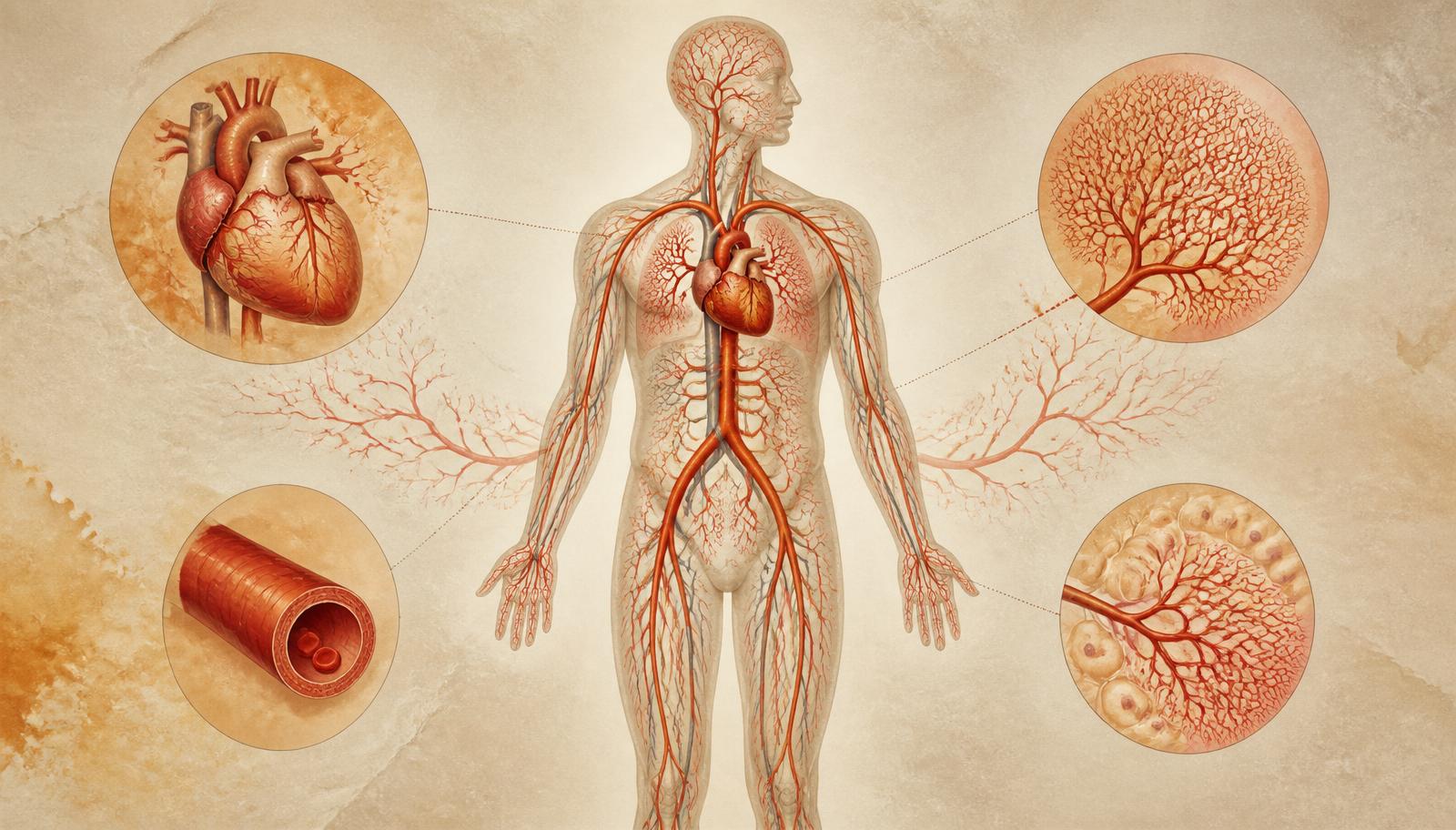
Every second of every day, blood is moving through an extraordinary network of vessels — delivering oxygen and nutrients to tissues and carrying metabolic products away.
Your brain needs it. Your muscles need it. Your skin needs it. Your digestive system needs it. Every organ depends upon it.
But healthy circulation isn't simply about blood moving.
The body must continually decide where blood is needed, how much is needed and when flow needs to change. One of the signaling molecules involved in this remarkable system is nitric oxide — NO.
Circulation Is a Dynamic Distribution System
Imagine the vascular system as an enormous transportation network.
- The heart provides the pumping force.
- Large arteries carry blood away from the heart.
- Smaller arteries and arterioles help distribute it.
- Capillaries allow exchange with tissues.
- Veins return blood toward the heart.
But unlike a fixed network of pipes, blood vessels continually adjust.
During exercise, blood flow to active muscles increases. After eating, digestive circulation changes. In hot conditions, blood flow to the skin can increase as part of temperature regulation.
The body is continually redistributing blood according to demand. This ability to regulate vascular tone and vessel diameter is fundamental to healthy circulation.
Nitric Oxide Helps Blood Vessels Relax
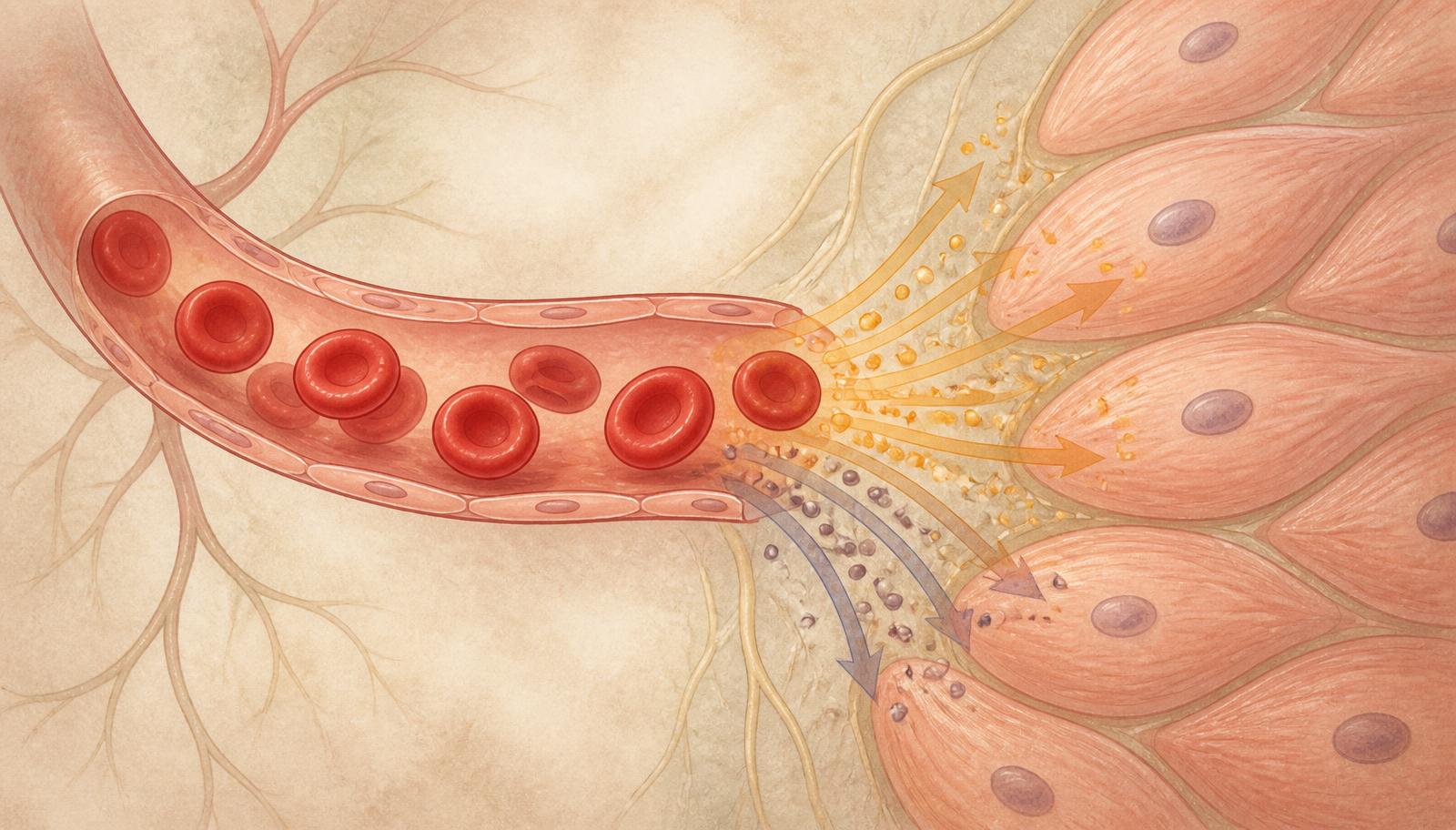
The inner surface of blood vessels is lined by the endothelium.
Endothelial cells produce nitric oxide through an enzyme known as endothelial nitric oxide synthase, or eNOS. eNOS uses L-arginine as a substrate in NO production.
Once produced, nitric oxide moves into surrounding vascular smooth muscle and activates signaling that promotes relaxation. The vessel can widen. This is called vasodilation.
Vasodilation helps the vascular system adjust blood flow to changing physiological demands — which is what makes NO so relevant to the science of circulation.
Circulation Is About Delivery
Why does blood flow matter so much? Because blood is the body's delivery system.
- Red blood cells carry oxygen from the lungs.
- The bloodstream transports glucose, amino acids, fatty acids, vitamins, minerals and hormones.
- It also transports carbon dioxide and other metabolic products away from tissues.
The objective isn't simply to have blood circulating. It is to deliver what tissues need when they need it.
From Large Arteries to Tiny Vessels
When people hear "circulation," they often picture the large arteries. But much of the actual delivery of oxygen and nutrients occurs much farther downstream.
It is at the capillary level that much of the exchange between blood and tissues takes place. This is called microcirculation.
The vascular system therefore must coordinate flow across vessels ranging from major arteries to microscopic channels barely wide enough for blood cells to pass through. Nitric-oxide signaling participates in the broader regulation of this vascular network.
Circulation Changes When You Exercise
Physical activity provides an excellent demonstration of dynamic circulation.
At rest, skeletal muscles require a certain amount of oxygen and nutrients. Start exercising and demand rises dramatically. The cardiovascular system responds.
- Heart rate increases.
- Cardiac output rises.
- Blood flow is redistributed.
- Vessels supplying active muscles adjust.
- Local metabolic signals accumulate.
Nitric oxide participates in the mechanisms helping regulate this increased flow. This helps explain why NO is extensively studied in exercise physiology as well as cardiovascular science.
The Shear-Stress Effect
Exercise also creates an interesting feedback mechanism. As blood moves more rapidly through arteries, it produces greater shear stress along the endothelial surface.
Endothelial cells can sense this mechanical force. Increased shear stress influences signaling pathways associated with endothelial nitric-oxide production.

Healthy Circulation and Everyday Vitality
Circulation affects virtually everything we do because every active tissue requires energy and oxygen.
- Walking.
- Climbing stairs.
- Gardening.
- Cycling.
- Working around the house.
- Playing with grandchildren.
- Exercising.
The body's ability to increase blood flow appropriately helps tissues respond to changing activity.
This doesn't mean nitric oxide is a magic energy molecule. It isn't. Rather, NO participates in the vascular system responsible for delivering the oxygen and nutrients that active tissues require.
The Role of Arginine and Citrulline
Nutrition can influence the substrates involved in natural nitric-oxide production.
L-arginine is directly used by nitric oxide synthase. L-citrulline takes a complementary route: after absorption, citrulline can be converted into arginine — importantly through renal metabolism — increasing circulating arginine availability.
Human pharmacokinetic research has demonstrated that oral citrulline can increase plasma arginine and NO-dependent signaling. [1]
ARGININE
More directly available substrate for the NO pathway.
CITRULLINE
A metabolic route that can replenish and extend arginine availability.
This supports a strategy of more immediate plus more sustained nutritional support for the body's natural NO-production pathway.
Vegetables Provide Another NO Route
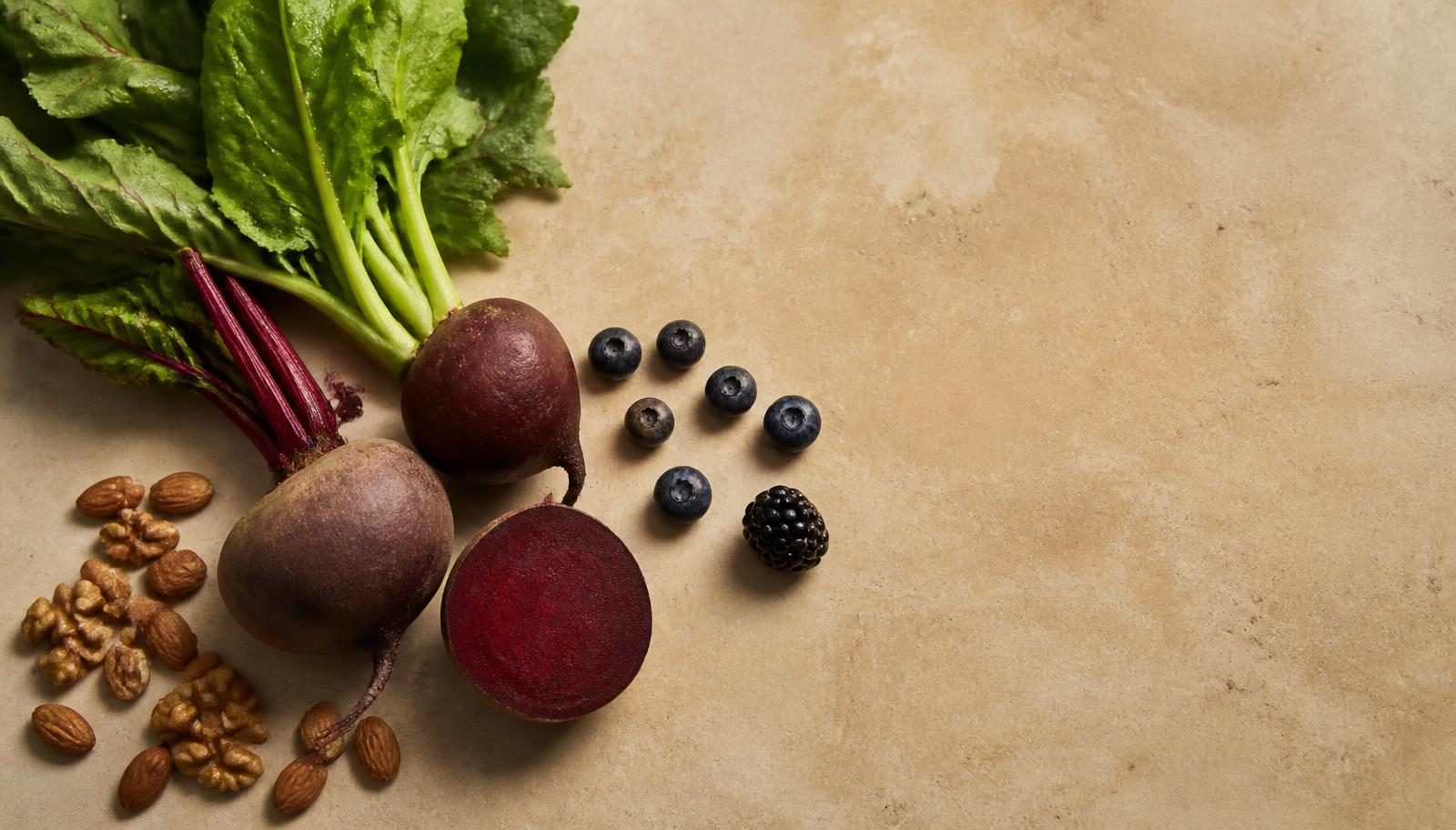
There is another fascinating connection between nutrition and circulation. Certain vegetables contain natural nitrate — leafy greens and beetroot are particularly well-known examples.
Research into this pathway has examined vascular physiology, exercise performance and other cardiovascular measures. [2][3]
This gives us an important nutritional lesson. Supporting healthy circulation isn't simply about avoiding certain foods. What we actively include in our diet matters too.
Circulation Changes With Age
Vascular physiology changes as we grow older. Research has documented age-associated changes in endothelial function and NO bioavailability. [4]
This helps make regular movement increasingly important. Long periods of inactivity mean the vascular system receives less of the increased-flow stimulus produced by physical activity.
Walking is one of the simplest ways to change that. You don't have to be an athlete to challenge your circulation. Regular movement matters.
Supporting Healthy Circulation
A circulation-supportive lifestyle doesn't require exotic interventions. The fundamentals are remarkably familiar:
- Move regularly.
- Exercise appropriately.
- Eat vegetables and plant-rich foods.
- Maintain adequate hydration.
- Avoid smoking.
- Maintain healthy cardiovascular risk factors.
- Get appropriate sleep.
Healthy circulation is the result of an entire biological system working together.
Where ėNOS Fits
The formulation philosophy behind ėNOS by Australiana Life begins with supporting the body's natural nitric-oxide system. A central component is the complementary relationship between L-arginine and L-citrulline.
Arginine provides substrate more directly to the eNOS pathway. Citrulline follows another route and can subsequently replenish circulating arginine. The formulation combines these with additional selected nutrients and Australian plant ingredients intended to complement the broader nutritional environment associated with cardiovascular wellness.
ėNOS does not replace exercise or a healthy diet. It is designed to complement the lifestyle foundations that support healthy circulation.
Scientific References
[1] Pharmacokinetic and pharmacodynamic properties of oral L-citrulline and L-arginine: impact on nitric oxide metabolism
Schwedhelm E, Maas R, Freese R, et al. British Journal of Clinical Pharmacology. 2008;65(1):51–59. PMID: 17662090.
PubMed / National Library of Medicine →[2] Dietary nitrite and nitrate: a review of potential mechanisms of cardiovascular benefits
Machha A, Schechter AN. European Journal of Nutrition. 2011;50(5):293–303. PMID: 21626413.
PubMed / National Library of Medicine →[3] Vascular effects of dietary nitrate via the nitrate-nitrite-nitric oxide pathway
Lidder S, Webb AJ. British Journal of Clinical Pharmacology. 2013;75(3):677–696. PMID: 22882425.
PubMed / National Library of Medicine →[4] Aging and vascular endothelial function in humans
Seals DR, Jablonski KL, Donato AJ. Clinical Science. 2011;120(9):357–375.
PubMed / National Library of Medicine →
Continue Exploring
- Nitric Oxide and Heart Health →
Why nitric oxide sits at the centre of cardiovascular physiology, from the endothelium outward.
- Nitric Oxide and Arterial Health →
What keeps arteries flexible and responsive, and the role nitric oxide plays in arterial tone.
- Circulation After 50 →
Why nitric-oxide production declines with age and what that means for blood flow.
- Discover the Science Behind ėNOS →
How Australiana Life applied nitric-oxide research to the ėNOS formulation philosophy.
DISCOVER THE SCIENCE BEHIND ĖNOS
See how Australiana Life applied nitric-oxide and circulation research to the formulation philosophy behind ėNOS.
EXPLORE ĖNOS →More in Circulation & Blood Flow
About Our Health & Science Content
Australiana Life Health & Science articles are based on published scientific research and written to make complex health and nitric oxide science easier to understand. Our educational content undergoes scientific review for accuracy and appropriate interpretation of the evidence and is updated as relevant scientific understanding evolves.