
Healthy Arteries & Nitric Oxide
What happens inside your arteries may be just as important as what flows through them
We often picture arteries as tubes carrying blood away from the heart. But arteries are not passive plumbing.
They are living, responsive structures whose walls continually react to pressure, blood flow, hormones, metabolic signals and the changing needs of the body.
At the center of this activity is an extraordinarily thin layer of cells lining the inside of every artery: the endothelium. And one of the endothelium's most important signaling molecules is nitric oxide — NO.
To understand arterial health, it helps to understand this relationship.
An Artery Is a Living Structure
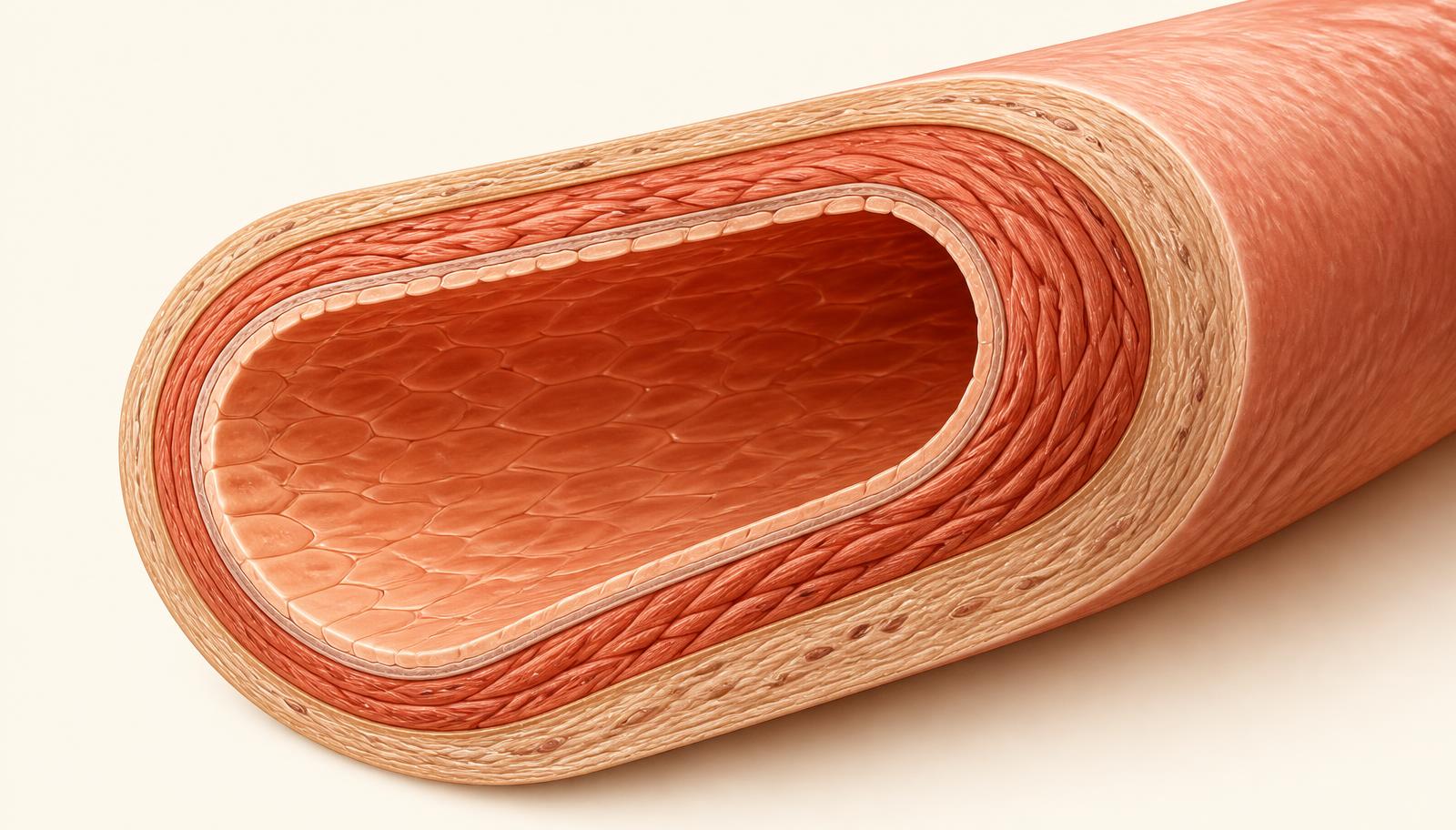
An arterial wall contains several layers. The innermost surface includes the endothelium. Behind it are layers containing smooth muscle and structural tissue that give the artery strength and the ability to change its diameter.
The endothelium interacts directly with circulating blood.
- It senses changes in flow.
- It responds to chemical signals.
- It communicates with the surrounding arterial wall.
- And it produces biological signals of its own.
One of the most important is nitric oxide.
The Endothelium Changed Cardiovascular Science
The endothelium was once considered little more than an inert lining. Research transformed that view.
Scientists discovered that blood vessels themselves release substances capable of controlling vascular behavior. This research eventually helped identify nitric oxide as a crucial endothelial signaling molecule.
The discovery was considered so important that the 1998 Nobel Prize in Physiology or Medicine was awarded to Robert F. Furchgott, Louis J. Ignarro and Ferid Murad for discoveries concerning nitric oxide as a signaling molecule in the cardiovascular system. [1]
Modern vascular science now recognizes the endothelium as an active regulator of arterial function.
How an Artery Relaxes
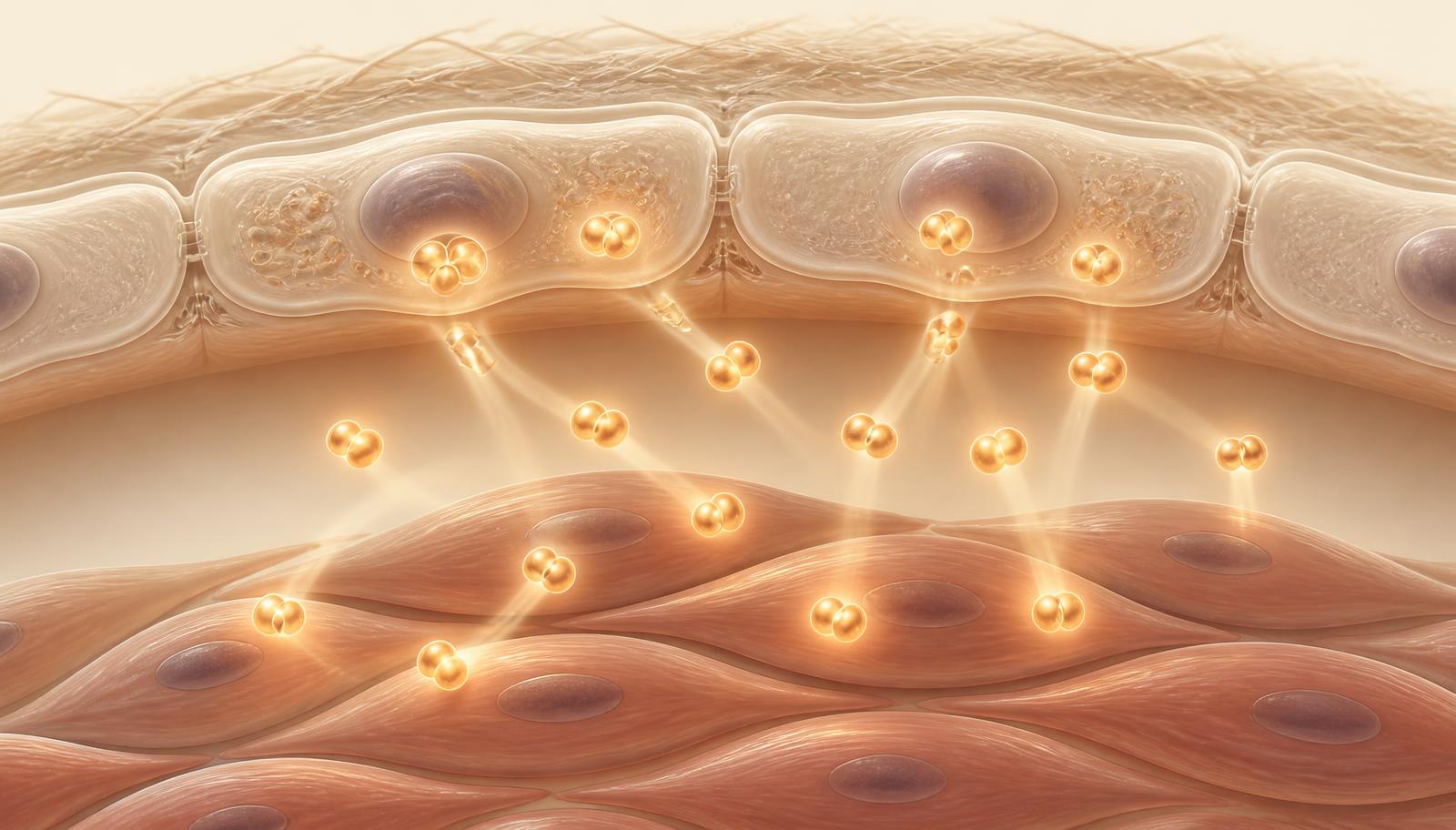
Endothelial cells contain endothelial nitric oxide synthase — eNOS. This enzyme uses L-arginine as a substrate to produce nitric oxide.
NO then diffuses into the smooth muscle layer of the artery. There it activates signaling that promotes relaxation. As the smooth muscle relaxes, the vessel can widen.
This process is called vasodilation. It is one of the mechanisms allowing arteries to adjust blood flow and vascular tone.
Arterial Health Is About Function, Not Just Structure
People often think about arterial health only in structural terms. Are the arteries open? Is plaque present? Those are obviously important medical considerations.
But vascular researchers also study function.
- How well does an artery respond when increased blood flow is required?
- How effectively does the endothelium signal the vessel to relax?
- How does the artery respond to physiological stress?
These questions relate to endothelial function. One research technique used to study this is flow-mediated dilation, commonly abbreviated FMD. It measures how an artery responds to an increase in blood flow and is widely used in vascular research as an indicator of endothelial function.
Healthy arteries aren't simply open arteries. They are responsive arteries.
The Balance Between Relaxation and Constriction
Arterial tone is controlled by multiple interacting biological signals. Some encourage vessels to constrict. Others encourage relaxation. Nitric oxide is an important contributor to the relaxation side of this balance.
Healthy vascular function therefore depends upon regulation rather than simply maximizing dilation. The objective is not to have arteries permanently "wide open." The objective is for blood vessels to respond appropriately to the body's changing needs.
What Is Endothelial Dysfunction?
When normal endothelial signaling becomes impaired, researchers refer to the condition as endothelial dysfunction. Reduced NO bioavailability is one characteristic frequently associated with impaired endothelial function.
Many factors can influence endothelial health, including aging and established cardiovascular risk factors. Endothelial dysfunction is therefore an important area of cardiovascular research because it provides information about the functional health of the vascular system — not merely its anatomy.
Oxidative Stress and Nitric Oxide
Producing nitric oxide is only part of the story. NO must remain biologically available long enough to perform its signaling role.
Reactive oxygen species can interact with nitric oxide and reduce its availability. Oxidative stress can also interfere with mechanisms associated with endothelial NO production.
Researchers therefore increasingly think about vascular nitric-oxide biology in terms of a balance:

What Happens to Arteries as We Age?
Arteries change over time. With aging, large arteries tend to become less compliant and endothelial function can decline. Research has associated advancing age with reduced NO bioavailability and changes in endothelial physiology. [2]
This does not mean arterial decline is simply something to accept. Lifestyle remains highly relevant. Physical activity, nutrition, smoking avoidance and management of cardiovascular risk factors all influence vascular health.
But the biology helps explain why arterial wellness deserves increasing attention after midlife.
Arterial Flexibility and Arterial Stiffness
Healthy arteries must withstand pressure generated by every heartbeat while remaining capable of responding to changing blood-flow demands. With age and other vascular stresses, arteries can become progressively stiffer.
Arterial stiffness is a distinct area of cardiovascular research and is not identical to endothelial dysfunction, although different aspects of vascular health can interact.
The important consumer-level point is straightforward: arteries are designed to be dynamic structures, and their ability to respond and adapt is an important component of vascular function.
Exercise Talks Directly to the Artery Wall
One of the most fascinating aspects of arterial biology is that the artery can actually sense blood flowing across its surface.
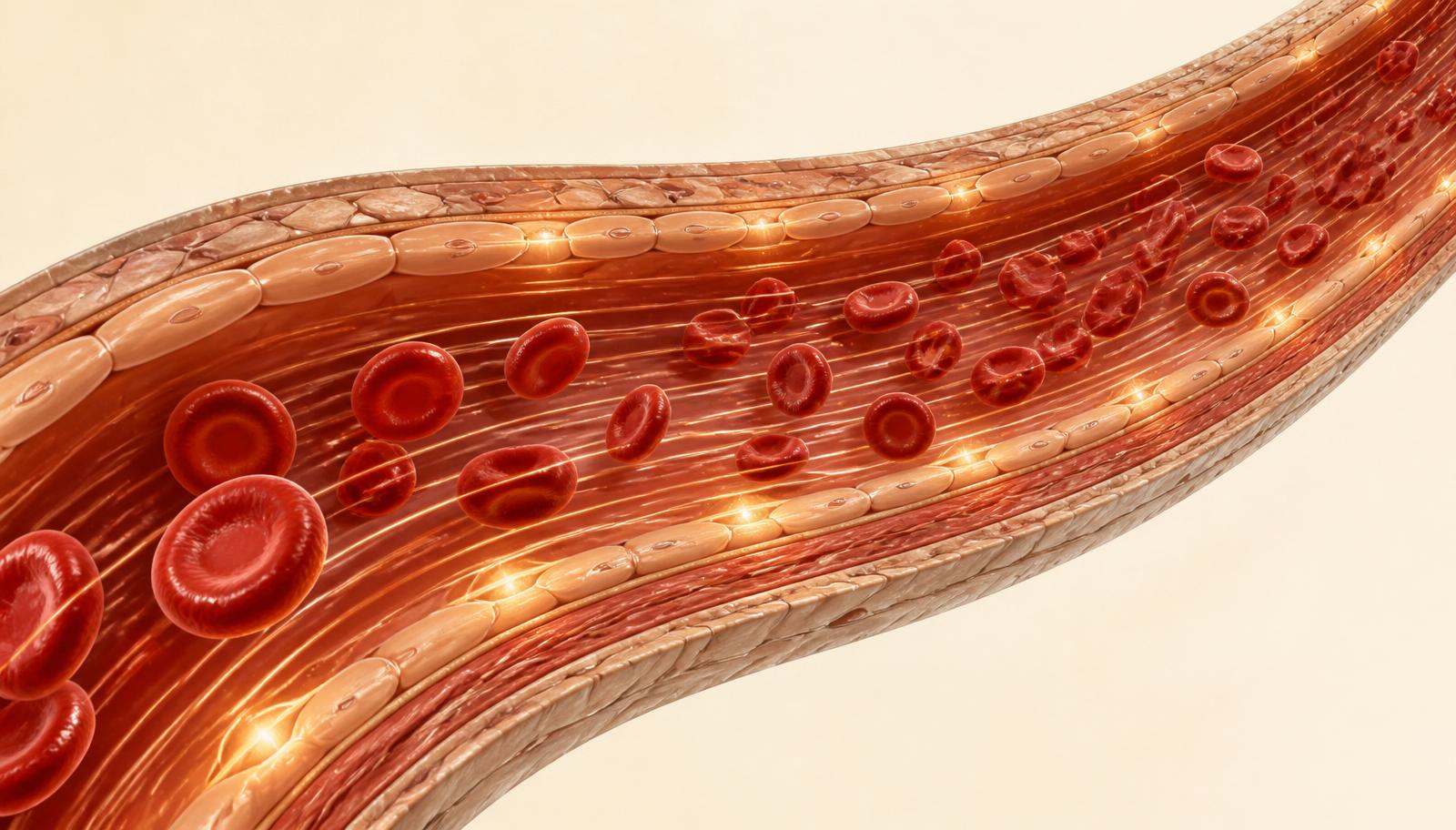
When exercise increases blood flow, the resulting shear stress acts on endothelial cells. Those cells respond biologically. Shear stress influences pathways associated with endothelial nitric-oxide production and vascular adaptation.
Exercise therefore provides more than a workout for your muscles. It creates a direct mechanical stimulus at the arterial wall.
Nutrition and Arterial NO Production
The body requires appropriate biological substrates to produce nitric oxide. One is L-arginine, which can be used directly by eNOS. Another is L-citrulline, which is efficiently absorbed and can subsequently be converted into arginine, importantly through renal metabolism.
Research demonstrates that oral citrulline can increase circulating arginine and NO-dependent signaling. [3]
ARGININE
Directly available substrate for eNOS
CITRULLINE
Conversion to arginine → replenished substrate availability
The different metabolic pathways provide the rationale for combining arginine and citrulline when the objective is both more immediate and more sustained support of the body's natural NO-production system.
Vegetables and the Alternative NO Pathway
The body has another mechanism for producing nitric oxide. Dietary nitrate found naturally in foods such as leafy green vegetables and beetroot can enter a separate pathway:
This pathway operates differently from the eNOS pathway and has become an important area of vascular research. [4] It also demonstrates an important principle: the body has more than one mechanism for supporting nitric-oxide availability.
Supporting the Arterial Environment
No single nutrient determines arterial health. A broader strategy includes:
- regular physical activity
- plant-rich nutrition
- avoiding smoking
- maintaining healthy blood pressure
- maintaining healthy blood glucose
- maintaining appropriate blood lipids
- healthy body composition
- adequate sleep
- appropriate stress management
These factors interact with the vascular environment in different ways. Nitric oxide provides one biological lens through which we can understand why many of these familiar recommendations matter.
Where ėNOS Fits
This broader understanding of arterial and endothelial biology influenced the formulation philosophy behind ėNOS by Australiana Life. Rather than approaching nitric oxide through a single ingredient, ėNOS uses selected ingredients intended to complement different aspects of the nutritional system.
Central to this is L-arginine together with L-citrulline. Arginine provides direct substrate availability to the eNOS pathway. Citrulline provides a complementary metabolic route that can replenish circulating arginine. Additional selected nutrients and Australian plant ingredients complement the broader formulation.
The objective is to support the body's natural nitric-oxide biology as part of a healthy cardiovascular lifestyle.
Scientific References
[1] Nobel Prize in Physiology or Medicine 1998
Robert F. Furchgott, Louis J. Ignarro and Ferid Murad. Awarded for discoveries concerning nitric oxide as a signaling molecule in the cardiovascular system. Nobel Assembly at Karolinska Institutet.
NobelPrize.org →[2] Aging and vascular endothelial function in humans
Seals DR, Jablonski KL, Donato AJ. Clinical Science. 2011;120(9):357–375.
PubMed / National Library of Medicine →[3] Pharmacokinetic and pharmacodynamic properties of oral L-citrulline and L-arginine: impact on nitric oxide metabolism
Schwedhelm E, Maas R, Freese R, et al. British Journal of Clinical Pharmacology. 2008;65(1):51–59. PMID: 17662090.
PubMed / National Library of Medicine →[4] Vascular effects of dietary nitrate via the nitrate-nitrite-nitric oxide pathway
Lidder S, Webb AJ. British Journal of Clinical Pharmacology. 2013;75(3):677–696. PMID: 22882425.
PubMed / National Library of Medicine →
Continue Exploring
- Nitric Oxide and Heart Health →
Why nitric oxide sits at the centre of cardiovascular physiology, from the endothelium outward.
- Nitric Oxide and Healthy Circulation →
Signs of healthy circulation and simple ways to support blood flow throughout the body.
- Nitric Oxide & Aging After 50 →
Why nitric-oxide biology becomes increasingly relevant as we grow older.
- Discover the Science Behind ėNOS →
How Australiana Life applied nitric-oxide research to the ėNOS formulation philosophy.
DISCOVER THE SCIENCE BEHIND ĖNOS
See how Australiana Life applied nitric-oxide and vascular research to the formulation philosophy behind ėNOS.
EXPLORE ĖNOS →More in Heart & Arteries
About Our Health & Science Content
Australiana Life Health & Science articles are based on published scientific research and written to make complex health and nitric oxide science easier to understand. Our educational content undergoes scientific review for accuracy and appropriate interpretation of the evidence and is updated as relevant scientific understanding evolves.