
Nitric Oxide and Blood Flow: How Are They Connected?
How Your Blood Vessels Use Nitric Oxide to Adjust Blood Flow Throughout the Day
Blood is always moving. But it doesn't always move at the same rate — or to the same places.
- Walk up a flight of stairs and your leg muscles suddenly need more oxygen.
- Eat a meal and blood-flow requirements change in the digestive system.
- Step outside on a hot day and circulation near the skin adjusts to help regulate body temperature.
- Begin exercising and blood flow to working muscles can increase dramatically.
Your body is continually adjusting how much blood reaches different tissues according to their needs. One of the signaling molecules involved in making those adjustments possible is nitric oxide — NO.
Understanding the relationship between nitric oxide and blood flow helps explain why this tiny molecule has become such an important part of modern cardiovascular physiology.
Blood Flow Isn't Fixed
It is easy to imagine the cardiovascular system as a plumbing system. The heart is the pump. The arteries are the pipes. Blood flows through them.
But that comparison misses something important. Your blood vessels are alive.
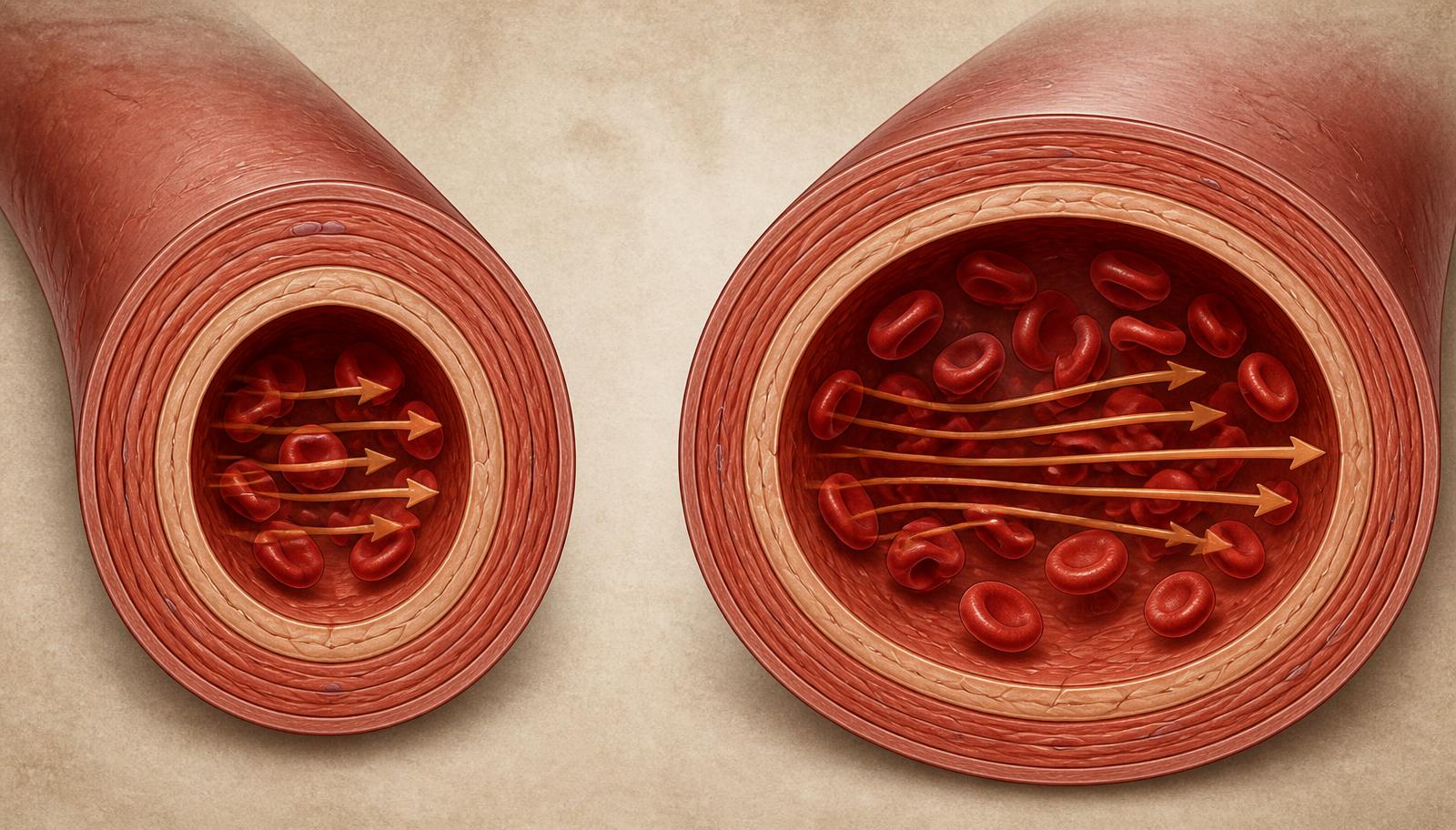
The walls of arteries and smaller vessels contain smooth muscle that can contract or relax. When vascular smooth muscle contracts, the vessel becomes narrower. When it relaxes, the vessel can become wider.
This continual adjustment of vessel diameter helps regulate vascular resistance and blood flow. Nitric oxide participates directly in this process.
Where Nitric Oxide Enters the Picture
The inside of a blood vessel is covered by a remarkably thin layer of cells called the endothelium. These endothelial cells aren't simply a lining. They actively sense and respond to what is happening inside the vessel.
One of the important substances they produce is nitric oxide. An enzyme called endothelial nitric oxide synthase — eNOS — uses the amino acid L-arginine as a substrate in the production of NO.
Once produced in endothelial cells, NO diffuses into the smooth muscle surrounding the vessel. There it activates a signaling pathway involving an enzyme called soluble guanylate cyclase and the signaling molecule cyclic GMP (cGMP).
The end result is relaxation of vascular smooth muscle. The vessel can widen. This process is called vasodilation. [1][2]
And when vessel diameter changes, blood flow can change too.
Why Vessel Diameter Matters So Much
Here is one of the most interesting aspects of blood-flow physiology: relatively small changes in the internal radius of a blood vessel can have a large effect on resistance to flow.
Fluid-flow principles demonstrate that resistance within a vessel is strongly influenced by its radius. The human circulatory system is obviously much more complicated than a rigid laboratory tube — blood is biologically complex and blood vessels are elastic, branching and actively regulated.
Changes in vessel diameter can substantially influence resistance and blood flow. That is why the ability of vascular smooth muscle to relax and contract is so important — and nitric oxide provides one of the body's natural mechanisms for influencing that process.
Your Body Doesn't Simply Want "More Blood Flow"
The objective of healthy vascular function is not maximum blood flow everywhere, all the time. That would make little physiological sense. Different tissues need different amounts of blood at different times.
What the body needs is appropriate blood flow.
- Sometimes vessels need to relax.
- Sometimes they need to constrict.
- Sometimes blood needs to be redistributed from one area to another.
Healthy circulation therefore depends on regulation. Nitric oxide is one of several important signaling systems involved in that regulation.
So when people talk about "increasing blood flow," a more scientifically accurate objective is supporting the body's ability to regulate healthy blood flow according to demand.
What Happens When You Start Exercising?
Imagine you are sitting quietly. Your leg muscles have relatively modest metabolic requirements. Now stand up and begin walking briskly uphill. Within moments, those muscles require more oxygen and nutrients.
- Heart rate increases.
- Cardiac output increases.
- Local metabolic conditions change.
- Blood vessels supplying active muscle adjust.
- Blood flow increases to meet demand.
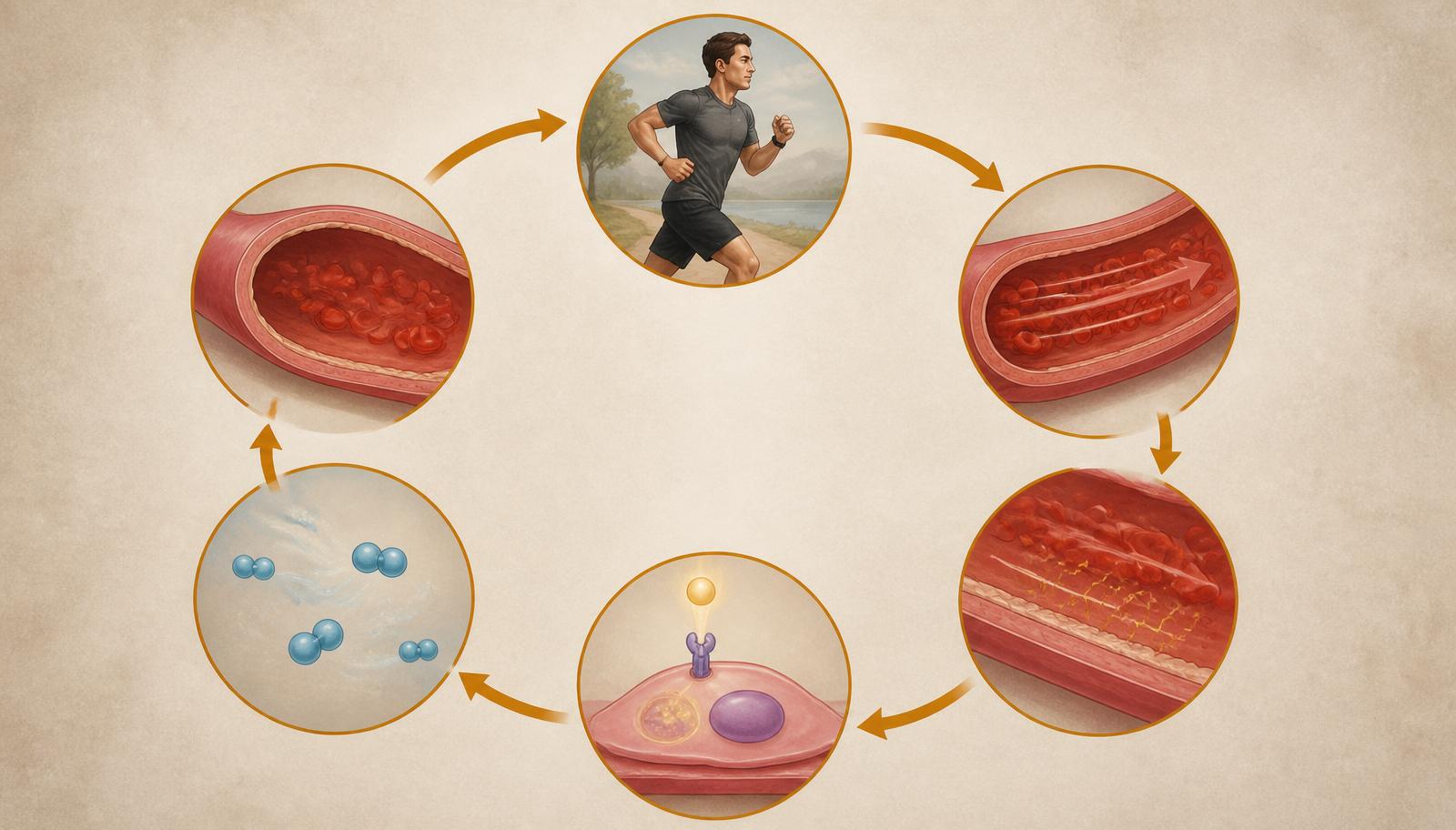
Nitric oxide contributes to the complex group of mechanisms involved in regulating vascular tone and exercise blood flow. [3] This is blood-flow regulation happening in real time.
Blood Flow Can Stimulate More Nitric Oxide
The relationship between NO and blood flow becomes even more interesting because it works in both directions. Nitric oxide helps regulate vascular relaxation and blood flow — but increased blood flow can also stimulate endothelial NO signaling.
As blood moves across the endothelial lining of an artery, it creates frictional force along the vessel wall. This is called shear stress. When blood flow increases — during exercise, for example — shear stress increases.
Endothelial cells sense that mechanical stimulus and respond through biological signaling pathways that include activation of eNOS and increased NO production. [3][4]
Blood Flow Is Really About Delivery
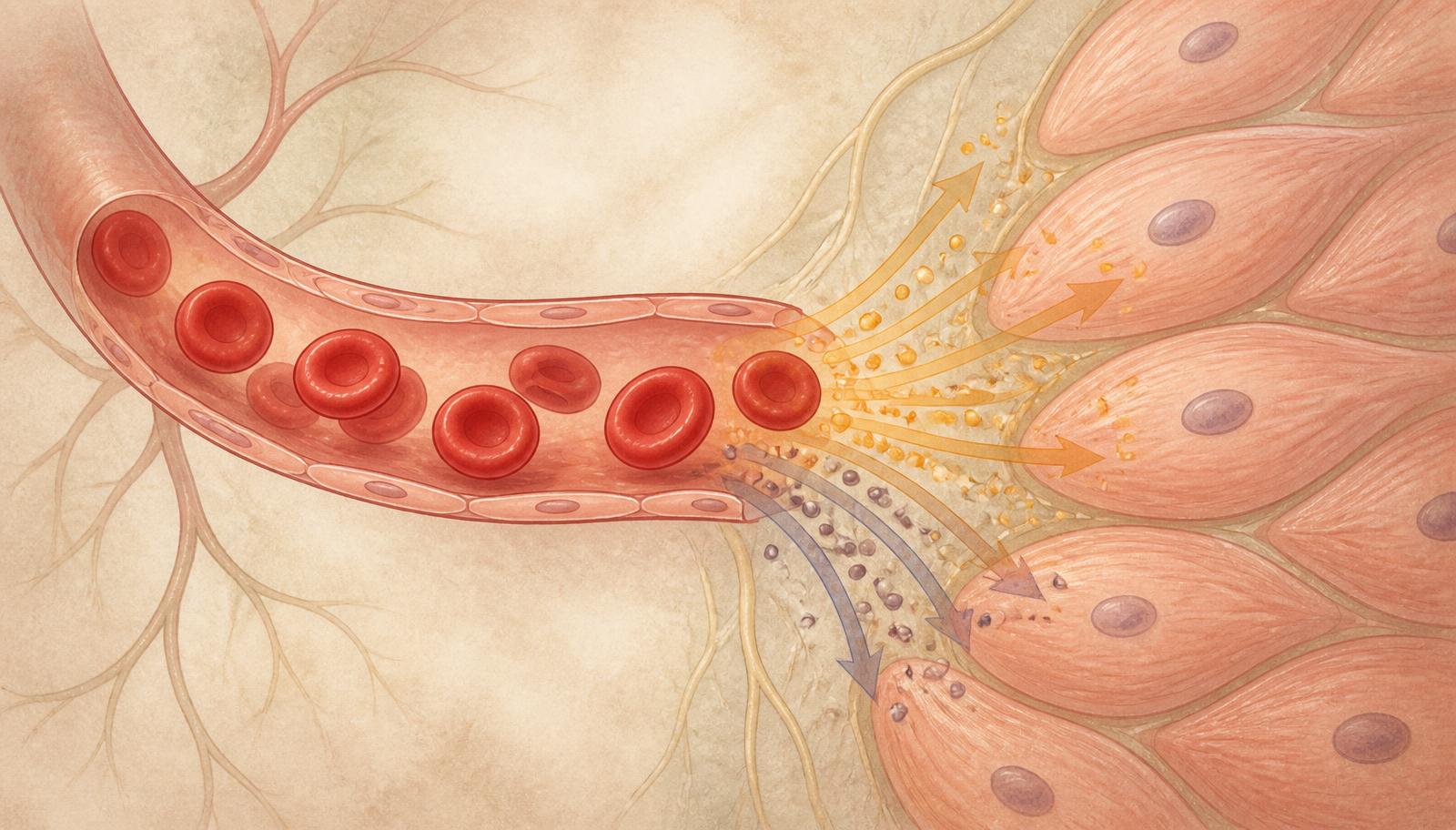
Blood flow has a purpose. Blood delivers essential materials to tissues.
Oxygen
Red blood cells transport oxygen from the lungs to tissues throughout the body.
Nutrients
The bloodstream transports glucose, amino acids, fatty acids, vitamins and minerals.
Hormones
Chemical messengers travel through the bloodstream to communicate with tissues and organs.
Blood flow also helps transport carbon dioxide, metabolic byproducts, heat and numerous other substances. So when we talk about healthy blood flow, we are really talking about the body's ability to deliver resources and transport materials where they are needed.
From the Heart to the Smallest Blood Vessels
Blood begins its journey through large arteries. Those arteries branch. And branch again. Eventually they become much smaller vessels called arterioles, which feed enormous networks of microscopic capillaries.
Capillaries are where much of the exchange between circulating blood and tissues occurs. Oxygen leaves the blood. Nutrients reach tissues. Carbon dioxide and metabolic products enter the circulation. This microscopic level of circulation is known as microcirculation.
Blood-flow regulation therefore involves far more than the large arteries we can easily imagine. It extends throughout an extraordinary branching vascular network.
Why Healthy Blood Flow Matters During Everyday Activity
You don't need to be running a marathon to experience changing blood-flow demands. Think about ordinary life.
- Walking the dog.
- Climbing stairs.
- Carrying groceries.
- Working in the garden.
- Playing golf.
- Taking a bike ride.
- Swimming.
- Playing with grandchildren.
Even standing after sitting for an extended period requires cardiovascular adjustments. Your body's ability to adapt blood flow helps support all of these activities.
This is one reason vascular function becomes increasingly relevant as we think about maintaining an active lifestyle through middle age and beyond.
How Can You Support Healthy Blood Flow Naturally?
There isn't one magic food or exercise that controls blood flow. But several lifestyle strategies support the vascular systems responsible for regulating it.
Exercise Regularly
Exercise increases blood flow and creates shear stress along the endothelial surface. Regular physical activity is therefore one of the most direct natural ways to challenge and support vascular function.
Walking is valuable. Cycling is valuable. Swimming is valuable. Resistance exercise is valuable. The important principle is regular movement.
Eat Nitrate-Rich Vegetables
Leafy green vegetables and beetroot naturally contain dietary nitrate. The body can convert this nitrate through a separate pathway:
Research has extensively examined dietary nitrate in relation to vascular function, blood pressure and exercise physiology. [5][6]
The oral microbiome plays an important role in the first stages of this pathway, because nitrate-reducing bacteria in the mouth help convert nitrate into nitrite. So foods such as:
- arugula / rocket
- spinach
- leafy lettuce
- beetroot
- celery
can contribute naturally occurring nitrate to the diet.

Arginine and Citrulline Support Another NO Pathway
The body also produces nitric oxide through the eNOS pathway, which requires L-arginine. Arginine is used directly as substrate by nitric oxide synthase. But oral arginine undergoes substantial metabolism before all of it reaches systemic circulation.
L-citrulline provides a complementary route. Citrulline is efficiently absorbed and can subsequently be converted into arginine, importantly through kidney metabolism. Human pharmacokinetic research has shown that oral citrulline can increase circulating arginine and markers of NO-dependent signaling. [7]
ARGININE
More directly available → eNOS → NO
CITRULLINE
Absorption → conversion to arginine → eNOS → NO
This provides a biological rationale for combining them when the objective is more immediate plus more sustained support of arginine availability for the body's natural NO-production pathway.
Blood Flow and Aging
Blood vessels change as we grow older. Research has documented age-associated reductions in endothelial function and NO bioavailability. [8] Large arteries also tend to become less compliant with age.
That doesn't mean declining vascular function is simply inevitable or that lifestyle doesn't matter. Quite the opposite.
- Regular physical activity repeatedly exposes the vascular system to increased flow and shear stress.
- Plant-rich nutrition provides nitrate, antioxidants and numerous phytochemicals.
- Avoiding smoking protects the vascular environment.
- Maintaining healthy blood pressure, blood glucose, blood lipids and body composition remains important.
Aging makes supporting the system increasingly relevant.
What About Cold Hands and Feet?
People often associate cold hands or feet with "poor circulation." Sometimes temperature is simply the explanation — blood vessels near the skin naturally constrict when the body is trying to conserve heat.
There are also many other potential reasons someone may experience persistently cold hands or feet. For that reason, it is not appropriate to assume that every sensation of cold extremities means someone needs to "increase nitric oxide."
Persistent or unexplained circulation-related symptoms should be discussed with an appropriate healthcare professional. Nitric-oxide science should help us understand physiology — not encourage self-diagnosis.
"Improve Blood Flow Naturally" — What Does That Really Mean?
The phrase is searched frequently because the benefit is easy to understand. But scientifically, improving blood flow naturally should not mean attempting to force every blood vessel to dilate.
A better objective is supporting healthy vascular responsiveness. That means supporting:
- endothelial function
- natural nitric-oxide production
- regular physical activity
- healthy nutrition
- appropriate vascular tone
- cardiovascular risk-factor management
- and the body's ability to respond normally when tissue demand changes
That is a much more useful definition of healthy blood flow.
Where ėNOS Fits
The relationship among nitric oxide, vascular tone and blood flow is one of the scientific principles behind the formulation philosophy of ėNOS by Australiana Life. Central to that approach is the complementary relationship between L-arginine and L-citrulline.
Arginine provides substrate more directly available to the eNOS pathway. Citrulline follows another metabolic route and can subsequently be converted into arginine, helping replenish and extend arginine availability. Additional selected nutrients and Australian plant ingredients complement the broader nutritional environment associated with cardiovascular wellness.
The objective is not to artificially control blood flow. It is to nutritionally support the body's natural nitric-oxide system as part of a healthy cardiovascular lifestyle. ėNOS is intended to complement — not replace — regular exercise, good nutrition and appropriate medical care.
The Takeaway: Nitric Oxide and Blood Flow
So how are nitric oxide and blood flow connected? The answer begins inside your blood vessels.
- The endothelium produces nitric oxide.
- NO signals vascular smooth muscle to relax.
- Relaxation can increase vessel diameter.
- Changes in vessel diameter influence vascular resistance and blood flow.
- And when blood flow itself increases, the resulting shear stress can stimulate endothelial NO signaling.
The goal isn't simply "more blood flow." Healthy vascular function is about having the right blood flow, in the right place, at the right time.
Scientific References
[1] Nitric oxide synthases: regulation and function
Förstermann U, Sessa WC. European Heart Journal. 2012;33(7):829–837. A major scientific review of nitric-oxide synthase biology, including endothelial NO production and vascular function.
PubMed / National Library of Medicine →[2] Nobel Prize in Physiology or Medicine 1998
Robert F. Furchgott, Louis J. Ignarro and Ferid Murad. Awarded for discoveries concerning nitric oxide as a signaling molecule in the cardiovascular system. Nobel Assembly at Karolinska Institutet.
NobelPrize.org →[3] Regulation of increased blood flow (hyperemia) to muscles during exercise: a hierarchy of competing physiological needs
Joyner MJ, Casey DP. Physiological Reviews. 2015;95(2):549–601. Review of mechanisms regulating skeletal-muscle blood flow during exercise.
PubMed / National Library of Medicine →[4] Cardiovascular effects of exercise: role of endothelial shear stress
Niebauer J, Cooke JP. Journal of the American College of Cardiology. 1996;28(7):1652–1660. PMID: 8962548.
PubMed / National Library of Medicine →[5] Vascular effects of dietary nitrate (as found in green leafy vegetables and beetroot) via the nitrate-nitrite-nitric oxide pathway
Lidder S, Webb AJ. British Journal of Clinical Pharmacology. 2013;75(3):677–696. PMID: 22882425.
PubMed / National Library of Medicine →[6] Dietary Nitrate, Nitric Oxide, and Cardiovascular Health
Bondonno CP, Croft KD, Hodgson JM. Critical Reviews in Food Science and Nutrition. 2016;56(12):2036–2052. PMID: 25976309.
PubMed / National Library of Medicine →[7] Pharmacokinetic and pharmacodynamic properties of oral L-citrulline and L-arginine: impact on nitric oxide metabolism
Schwedhelm E, Maas R, Freese R, et al. British Journal of Clinical Pharmacology. 2008;65(1):51–59. PMID: 17662090.
PubMed / National Library of Medicine →[8] Aging and vascular endothelial function in humans
Seals DR, Jablonski KL, Donato AJ. Clinical Science. 2011;120(9):357–375.
PubMed / National Library of Medicine →
Continue Exploring
- Nitric Oxide and Healthy Circulation →
See how the vascular system distributes blood, oxygen and nutrients throughout the body.
- Nitric Oxide and Arterial Health →
Take a closer look at the endothelium, arterial responsiveness and vascular function.
- How to Increase Nitric Oxide Naturally →
Explore food, exercise and lifestyle strategies that support natural NO production.
- Nitric Oxide and Heart Health →
Learn why healthy vascular function and healthy heart function are so closely connected.
- Nitric Oxide & Aging After 50 →
Explore how NO biology and endothelial function change with age.
- Discover the Science Behind ėNOS →
See how Australiana Life applied nitric-oxide and nutritional science to the formulation philosophy behind ėNOS.
DISCOVER THE SCIENCE BEHIND ĖNOS
See how Australiana Life applied nitric-oxide and nutritional science to the formulation philosophy behind ėNOS.
EXPLORE ĖNOS →More in Circulation & Blood Flow
About Our Health & Science Content
Australiana Life Health & Science articles are based on published scientific research and written to make complex health and nitric oxide science easier to understand. Our educational content undergoes scientific review for accuracy and appropriate interpretation of the evidence and is updated as relevant scientific understanding evolves.