
Healthy Circulation After 50: Why Blood Flow Matters
What Changes in the Vascular System With Age — and What Helps
After 50, conversations about health tend to become increasingly focused on numbers.
Blood pressure. Cholesterol. Blood sugar. Weight. Heart rate.
All are important. But there is another aspect of cardiovascular health that is easy to overlook: how effectively can your cardiovascular system deliver blood where it is needed, when it is needed?
That is circulation.
Every minute of every day, blood is transporting oxygen and nutrients throughout the body while carrying metabolic byproducts away from tissues. When you stand up, circulation adapts. When you walk faster, it adapts. When your muscles work, blood flow to those muscles increases. When you eat, digest, exercise or move between warm and cold environments, blood vessels continually adjust.
Healthy circulation isn't simply about having blood moving through open vessels. It depends upon a cardiovascular system capable of responding to changing demands. And after 50, preserving that responsiveness becomes increasingly worth thinking about.
Circulation Is a Delivery Network
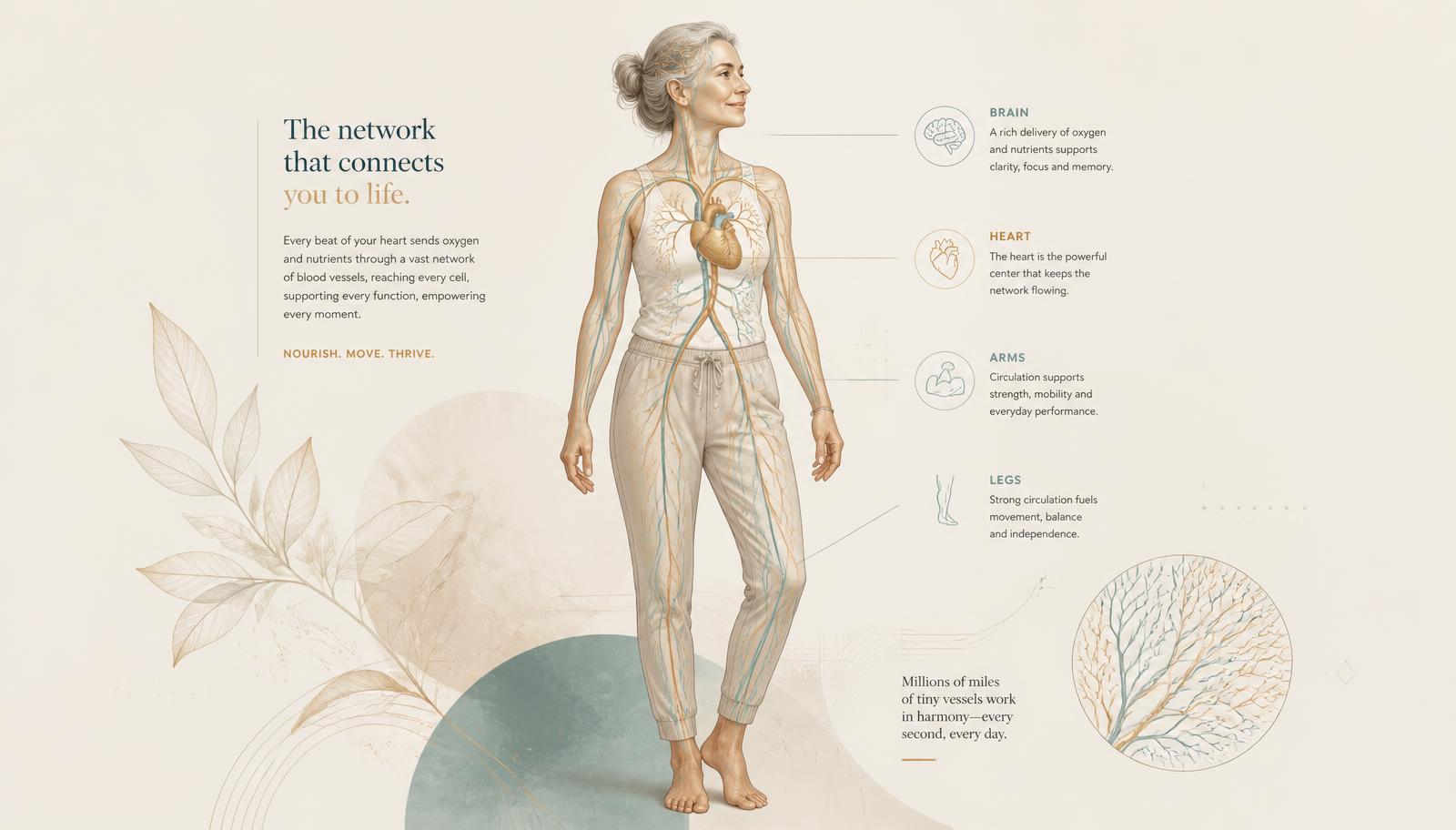
Imagine the cardiovascular system as an enormous transportation network.
- The heart supplies the pumping force.
- Large arteries provide major routes.
- Smaller arteries and arterioles distribute blood regionally.
- Capillaries bring the circulation into intimate contact with tissues.
- Veins complete the return journey.
But unlike a system of rigid plumbing, blood vessels can change their diameter. They respond to signals from nerves, hormones, local tissues and the cells lining the blood vessels themselves. That ability to continually adjust blood distribution is what makes human circulation so remarkable.
What Changes After 50?
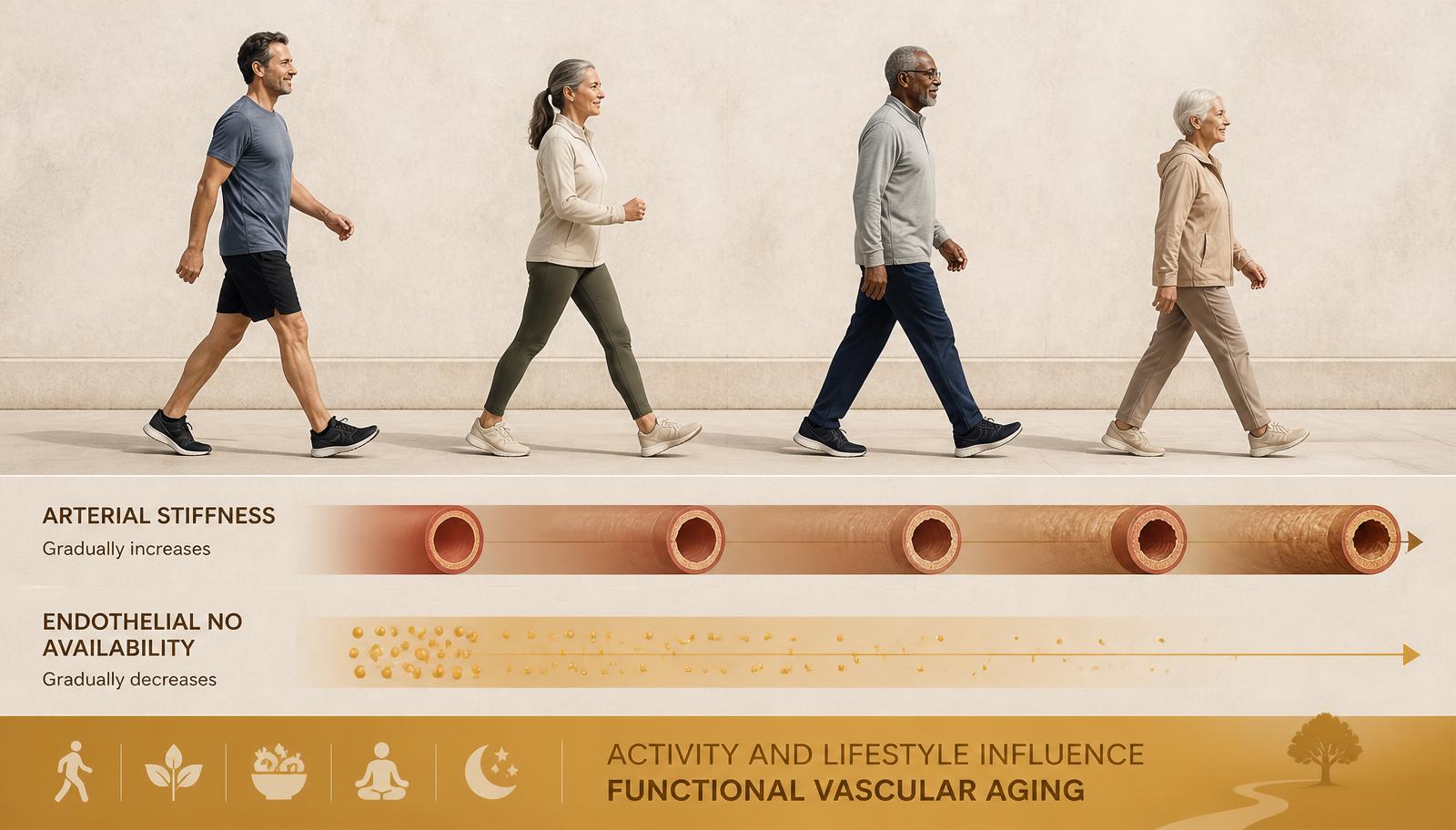
There is nothing magical about your 50th birthday. Circulation doesn't suddenly become poor when the calendar changes. But several biological changes become increasingly relevant through midlife and later adulthood.
- Large arteries tend to become stiffer.
- Endothelial function can decline.
- Nitric-oxide bioavailability tends to decrease.
- Physical activity may decline.
- Muscle mass can decrease.
- Blood pressure, glucose regulation and other cardiovascular risk factors can become more common.
Together, these changes can affect the environment in which the circulatory system operates. [1][2]
Importantly, they do not happen equally to everyone. Chronological age and vascular function are related — but they are not the same thing. How active you remain and how effectively cardiovascular risk factors are managed can make a meaningful difference.
Blood Flow Is Not Constant — And Shouldn't Be
One misconception about "good circulation" is that more blood flow must always be better. That isn't how the body works. The objective is not maximum blood flow everywhere, all the time. The objective is appropriate blood flow.
Imagine sitting quietly. Your leg muscles don't need the same blood supply they require when climbing a hill. Start walking briskly and metabolic demand increases. Blood vessels supplying working muscle adjust. Blood flow rises. Finish exercising and requirements change again.
A healthy vascular system continually matches circulation to demand. That ability to adjust is one reason vascular responsiveness matters so much.
What Does Blood Actually Deliver?
Blood's job goes well beyond oxygen. Circulation transports:
- oxygen from the lungs to tissues
- glucose and other nutrients to cells
- hormones between organs
- immune cells throughout the body
- heat for temperature regulation
- and numerous other molecules required for normal physiology
Blood also carries carbon dioxide and metabolic products away from tissues. So circulation isn't merely about keeping blood moving. It is about maintaining the body's enormous internal transport and exchange system.
Your Muscles Make the Importance of Blood Flow Easy to Understand
Take a brisk walk. Your leg muscles immediately begin requiring more energy. Their oxygen demand rises. Metabolic activity increases. The cardiovascular system responds by increasing cardiac output and redistributing blood flow toward the active tissue.
Local signals within working muscle contribute to vasodilation, while endothelial and neural mechanisms participate in regulating vascular tone. This is circulation doing exactly what it was designed to do: matching delivery to demand.
As we get older, maintaining the ability to walk, climb stairs, cycle, swim, garden and remain physically independent depends partly on preserving both muscular capacity and cardiovascular capacity. The two systems work together.

The Endothelium: Where Blood Flow Meets the Blood Vessel
Blood flowing through an artery is not simply moving through an inert tube. It is passing over a living cellular surface called the endothelium. This single-cell layer lines the interior of blood vessels — and it can actually sense the mechanical force created by flowing blood. That force is known as shear stress.
When blood flow changes, endothelial cells respond to changes in shear stress through complex cellular signaling. One of the important pathways involves an enzyme called eNOS — endothelial nitric oxide synthase. eNOS helps endothelial cells produce nitric oxide (NO) from L-arginine. Nitric oxide then participates in signaling that helps surrounding vascular smooth muscle relax.
Nitric Oxide: Small Molecule, Important Signal
Nitric oxide is unusual. It is a gas. It is short-lived. And yet it became one of the most important signaling molecules discovered in cardiovascular physiology.
Its role in vascular relaxation was so significant that the 1998 Nobel Prize in Physiology or Medicine was awarded to Robert F. Furchgott, Louis J. Ignarro and Ferid Murad for discoveries concerning nitric oxide as a signaling molecule in the cardiovascular system. [4]
For circulation, its relevance is straightforward: NO helps blood vessels respond. That doesn't mean nitric oxide is the only regulator of blood flow. Far from it. Circulation is controlled by multiple interacting neural, hormonal, metabolic and mechanical systems. But endothelial NO signaling is an important part of the story.
Why NO Becomes More Interesting With Age
Research in humans has shown that endothelial function and nitric-oxide bioavailability tend to decline with advancing age. [1] Several processes contribute.
- Oxidative stress can reduce NO availability.
- eNOS regulation can change.
- The endothelial environment changes.
- Arteries become less compliant.
- Cardiovascular risk factors can accumulate.
This does not mean older adults stop producing nitric oxide. It means the system may become less efficient than it was earlier in life. That makes supporting vascular function through appropriate lifestyle choices increasingly relevant after 50.
One of the Best Things You Can Do for Circulation Is Almost Embarrassingly Simple
Walk. Walking activates leg muscles. Heart rate rises according to intensity. Blood flow increases. The vascular system responds. And unlike many complicated health interventions, walking is available to a large proportion of adults.
Research examining exercise in middle-aged and older adults consistently supports physical activity as a strategy for improving cardiovascular fitness and measures of vascular function. [5][6]
Walking also has another circulatory benefit that is easy to overlook. Your calf muscles contract repeatedly as you move. Those contractions help compress veins and assist the return of blood toward the heart — sometimes referred to as the skeletal-muscle pump.
Your legs are not simply passive recipients of circulation. Your muscles help participate in it.
Sitting Still Is Different From Getting Older
People often attribute changes in physical capacity entirely to age. But aging and inactivity frequently occur together.
- Retirement may reduce everyday movement.
- Driving may replace walking.
- Workouts become less frequent.
- More time is spent sitting.
- Muscle mass can gradually decline.
- Physical conditioning decreases.
Some of what feels like "getting older" can therefore reflect deconditioning layered on top of biological aging. That is encouraging, because inactivity is modifiable. You cannot change your birth date. You can change how much you move today.
Strength Training Belongs in the Circulation Conversation
Aerobic exercise usually receives most of the attention when blood flow is discussed. But muscle matters too. Resistance training helps preserve strength and lean tissue as we age. Skeletal muscle is metabolically active tissue, an important site of glucose disposal, and intimately connected with blood-flow regulation during activity.
Research has also examined resistance and combined exercise programs in relation to endothelial function and arterial health in older adults. [6]
A well-rounded program after 50 therefore doesn't need to choose between walking and weights, or cardio and strength. Both can serve important purposes.
Food Can Support More Than One NO Pathway
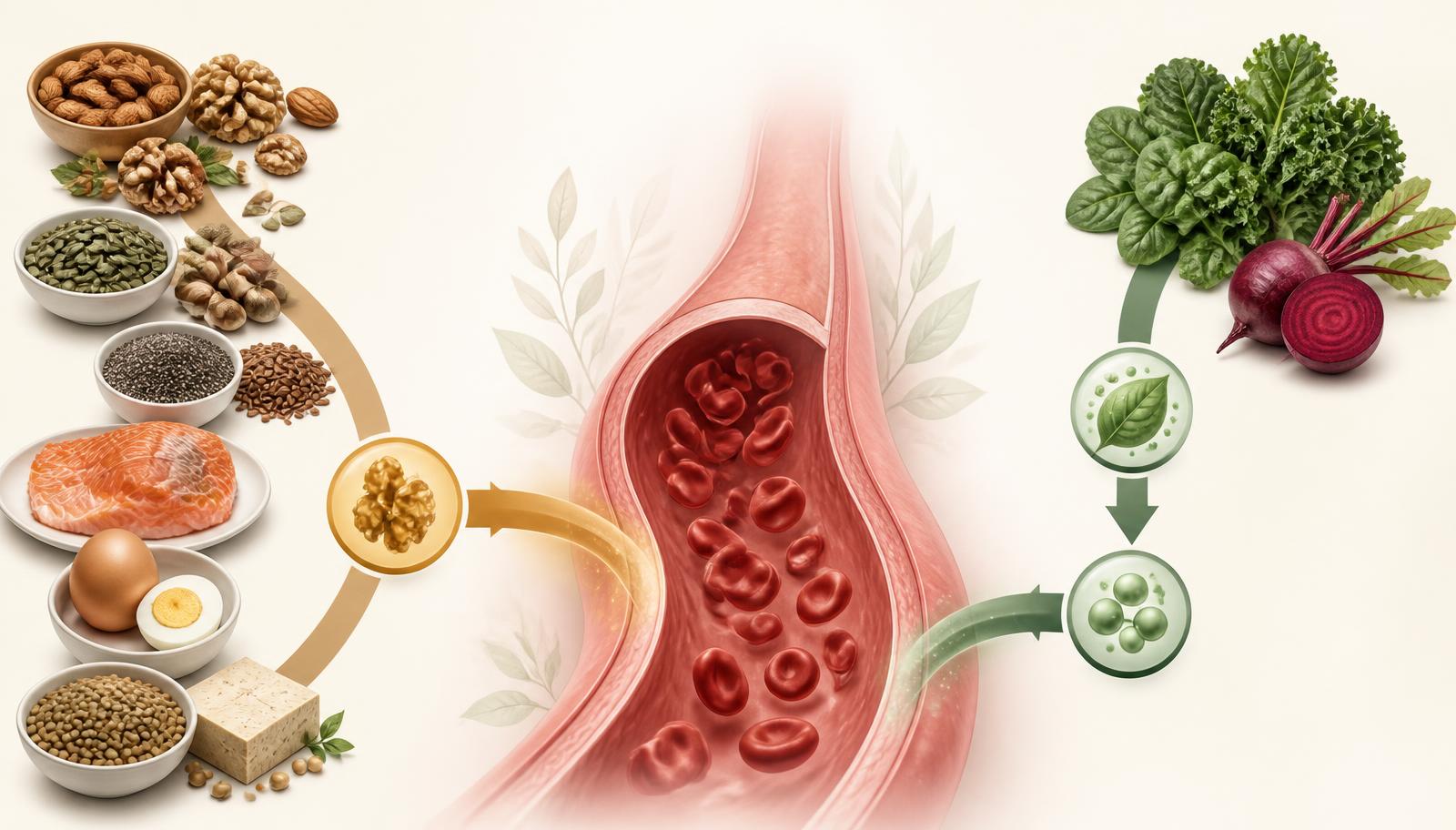
Exercise is one route into the circulation story. Nutrition provides another. The body has more than one pathway capable of generating nitric oxide.
Pathway One: The Endothelial Route
Pathway Two: The Dietary Nitrate Route
Leafy greens and beetroot are among the best-known dietary nitrate sources. [7] These pathways are different — and that is useful. It means NO biology isn't dependent upon one food or one nutrient.
Citrulline Adds Another Route to Arginine
There is also an interesting relationship between two amino acids: L-arginine and L-citrulline. Arginine is directly used by nitric oxide synthase. Citrulline is different. After absorption, citrulline can be converted into arginine, importantly through metabolism involving the kidneys.
Human research demonstrates that oral citrulline can increase circulating arginine availability. [8]
What Should You Eat for Healthy Circulation?
There is no single "circulation food." A better approach is a cardiovascular eating pattern. Build meals around plenty of:
- vegetables — especially leafy greens and colorful varieties
- fruit — including berries and other deeply colored fruits
- nuts and seeds, which provide arginine and other nutrients
- legumes, for fiber, minerals and plant protein
- fish and other appropriate protein sources
- whole grains where suitable
- healthy unsaturated fats
Mediterranean-style dietary patterns have been extensively studied for cardiovascular health and have also been associated with improvements in measures of endothelial function. [9]
The objective isn't to eat one heroic beet every morning. It's to create a nutritional environment your cardiovascular system experiences consistently.
Seven Everyday Ways to Support Healthy Circulation After 50
1. Walk Every Day You Can
Even when you exercise formally, keep everyday movement in your life.
2. Challenge Your Cardiovascular System Appropriately
Brisk walking, cycling, swimming and similar aerobic activities ask the circulation to adapt.
3. Maintain Muscle
Include appropriate resistance exercise and adequate nutrition.
4. Eat Vegetables Generously
Leafy greens offer the added interest of dietary nitrate.
5. Know Your Numbers
Blood pressure, blood glucose and blood lipids matter increasingly with age.
6. Don't Smoke
Smoking works strongly against endothelial and cardiovascular health.
7. Break Up Long Periods of Sitting
Movement doesn't need to occur only during workouts.
These aren't glamorous strategies. Their strength comes from repetition.
A Word About "Poor Circulation"
People use the phrase poor circulation very loosely. Cold hands. Cold feet. Tingling. Leg discomfort. Swelling. Fatigue. All sometimes get attributed to circulation.
But these symptoms can have many different causes, including neurological, vascular, metabolic, medication-related and other medical conditions. They should not automatically be interpreted as evidence that someone simply needs to "increase nitric oxide."
New, persistent or concerning symptoms deserve appropriate medical evaluation. Sudden symptoms — particularly severe pain, weakness, shortness of breath, chest discomfort or major changes in a limb — can require urgent medical attention. Supporting healthy circulation is different from self-diagnosing circulatory disease.
Can You Actually "Improve Circulation Naturally"?
If by "improve circulation" we mean supporting normal cardiovascular and vascular function, several lifestyle measures have substantial evidence behind them.
- Regular physical activity
- Appropriate cardiovascular exercise
- Maintaining muscle
- A high-quality dietary pattern
- Not smoking
- Managing blood pressure
- Managing blood glucose and lipids
- Maintaining an appropriate body composition
- Getting adequate sleep
These actions influence multiple biological systems simultaneously. That is far more meaningful than searching for a product that promises to "increase circulation" overnight.
Where ėNOS Fits After 50
The biology of nitric oxide becomes increasingly interesting as endothelial function and NO availability change with age. That thinking is central to the formulation philosophy behind ėNOS by Australiana Life.
ėNOS is designed to nutritionally support the body's natural nitric-oxide system. Central to that approach are L-arginine and L-citrulline. Arginine provides the substrate directly used by eNOS. Citrulline provides a complementary metabolic route that can help replenish circulating arginine availability. Additional selected nutrients and Australian plant ingredients complement the broader nutritional strategy.
But ėNOS should be understood in the right context. It does not replace walking. It does not replace exercise. It does not replace vegetables. It does not replace management of blood pressure, cholesterol, glucose or cardiovascular disease. It is designed to complement a lifestyle that supports vascular health.
Your Circulation Likes to Be Used
There is a simple idea underneath all this science. The human cardiovascular system is dynamic. It was designed to respond.
- When muscles work, blood-flow requirements change.
- When you walk faster, circulation adjusts.
- When blood flows more rapidly, endothelial cells sense it.
- When the body needs to redistribute blood, vessels respond.
And many of the systems that make those adjustments possible remain trainable well beyond age 50.
Perhaps the most useful question is not "How do I make more blood flow?" but "How do I keep my cardiovascular system capable of responding to what my body asks it to do?"
Keep moving. Maintain your muscles. Feed yourself well. Manage cardiovascular risk factors. And give your vascular system reasons to keep adapting. Healthy circulation isn't something you simply have. It is something your body continually does.
Scientific References
[1] Aging and vascular endothelial function in humans
Seals DR, Jablonski KL, Donato AJ. Clinical Science. 2011;120(9):357–375. Review of endothelial dysfunction, reduced NO bioavailability and vascular aging in humans.
PubMed / National Library of Medicine →[2] Arterial and cardiac aging: major shareholders in cardiovascular disease enterprises
Lakatta EG, Levy D. Circulation. 2003;107:139–146. Foundational review of structural and functional cardiovascular changes associated with aging.
PubMed / National Library of Medicine →[3] eNOS activation by physical forces: from short-term regulation of contraction to chronic remodeling of cardiovascular tissues
Balligand JL, Feron O, Dessy C. Physiological Reviews. 2009;89(2):481–534. Review of shear stress, eNOS activation and vascular adaptation.
PubMed / National Library of Medicine →[4] The Nobel Prize in Physiology or Medicine 1998
Robert F. Furchgott, Louis J. Ignarro and Ferid Murad. Awarded for discoveries concerning nitric oxide as a signaling molecule in the cardiovascular system.
NobelPrize.org →[5] Influence of different exercise types on vascular endothelial function in middle-aged and older adults — a systematic review and network meta-analysis
Chen Q, Gao X, Wang C, Zhang P. Archives of Gerontology and Geriatrics. 2025;128:105624. PMID: 39288582.
PubMed / National Library of Medicine →[6] Effects of aerobic, resistance and combined training on endothelial function and arterial stiffness in older adults
da Silva RSN, da Silva DS, de Oliveira PC, et al. PLoS ONE. 2024. PMID: 39621701.
PubMed / National Library of Medicine →[7] Vascular effects of dietary nitrate (as found in green leafy vegetables and beetroot) via the nitrate-nitrite-nitric oxide pathway
Lidder S, Webb AJ. British Journal of Clinical Pharmacology. 2013;75(3):677–696. PMID: 22882425.
PubMed / National Library of Medicine →[8] Pharmacokinetic and pharmacodynamic properties of oral L-citrulline and L-arginine: impact on nitric oxide metabolism
Schwedhelm E, Maas R, Freese R, et al. British Journal of Clinical Pharmacology. 2008;65(1):51–59. PMID: 17662090.
PubMed / National Library of Medicine →[9] Mediterranean Diet Increases Endothelial Function in Adults: A Systematic Review and Meta-Analysis of Randomized Controlled Trials
Shannon OM, Mendes I, Köchl C, et al. Journal of Nutrition. 2020. PMID: 32027740.
PubMed / National Library of Medicine →
Keep Exploring
- Nitric Oxide and Aging: What Changes After 40, 50 and Beyond? →
Take a deeper look at why NO biology changes through midlife and later adulthood.
- What Supports Healthy Arteries as We Age? →
Explore the lifestyle factors associated with healthier vascular aging.
- The Endothelium: The Hidden Key to Healthy Blood Vessels →
Discover the remarkable cellular lining that helps blood vessels sense and respond to blood flow.
- Foods That Support Natural Nitric Oxide Production →
See how leafy greens, beetroot, arginine-containing foods and watermelon connect with NO biology.
- L-Arginine + L-Citrulline: Two Pathways Supporting Nitric Oxide →
Understand the complementary amino-acid pathways behind natural NO support.
- Supporting Your Natural NO System After 50 →
Learn how the science of L-arginine, L-citrulline and nitric-oxide biology influenced the formulation philosophy behind ėNOS.
EXPLORE THE SCIENCE OF ĖNOS
Learn how the science of L-arginine, L-citrulline and nitric-oxide biology influenced the formulation philosophy behind ėNOS.
EXPLORE ĖNOS →This article is provided for educational purposes only and is not intended as medical advice or to diagnose, treat, cure or prevent disease. Symptoms sometimes attributed to "poor circulation" can have many causes and should be appropriately evaluated. ėNOS is a dietary supplement and should complement rather than replace appropriate nutrition, physical activity, cardiovascular risk management or medical care.
More in Circulation & Blood Flow
About Our Health & Science Content
Australiana Life Health & Science articles are based on published scientific research and written to make complex health and nitric oxide science easier to understand. Our educational content undergoes scientific review for accuracy and appropriate interpretation of the evidence and is updated as relevant scientific understanding evolves.