
Nitric Oxide and Aging: What Changes After 40, 50 and Beyond?
Why Nitric-Oxide Biology Deserves More Attention as We Get Older
Most of us notice aging from the outside first.
Recovery takes a little longer. Stairs may feel different than they did twenty years ago. Muscle mass becomes harder to maintain. Energy, endurance and physical resilience can gradually change.
But some of the most important changes associated with aging are happening where we cannot see them — inside our blood vessels. One of those changes involves nitric oxide — NO.
Nitric oxide is an important signaling molecule produced naturally by the body. Within the cardiovascular system, it helps blood vessels relax, supports normal vascular responsiveness and participates in the regulation of blood flow.
Research on vascular aging has consistently identified a reduction in nitric-oxide bioavailability as one of the important changes associated with advancing age. [1][2][3]
That doesn't mean your body suddenly stops making NO when you turn 40, 50 or 60. Aging doesn't work like that. The more accurate story is one of gradual biological change — influenced not only by the calendar, but also by exercise, diet, body composition, smoking, metabolic health and other factors.
There Is No "Nitric Oxide Cliff" at 40
You may see claims online suggesting that nitric-oxide production falls by a particular percentage at age 40, 50 or 60. Human biology is not that precise. There is no universally accepted age at which nitric-oxide production suddenly drops.
Instead, research shows that endothelial function tends to deteriorate progressively with advancing age, with reduced NO availability playing an important role. [1][2]
Two people of the same chronological age can therefore have very different vascular function. One may have exercised regularly for decades. The other may have been sedentary. One may have healthy metabolic markers. Another may have accumulated multiple cardiovascular risk factors.
Age matters — but how we age matters too.
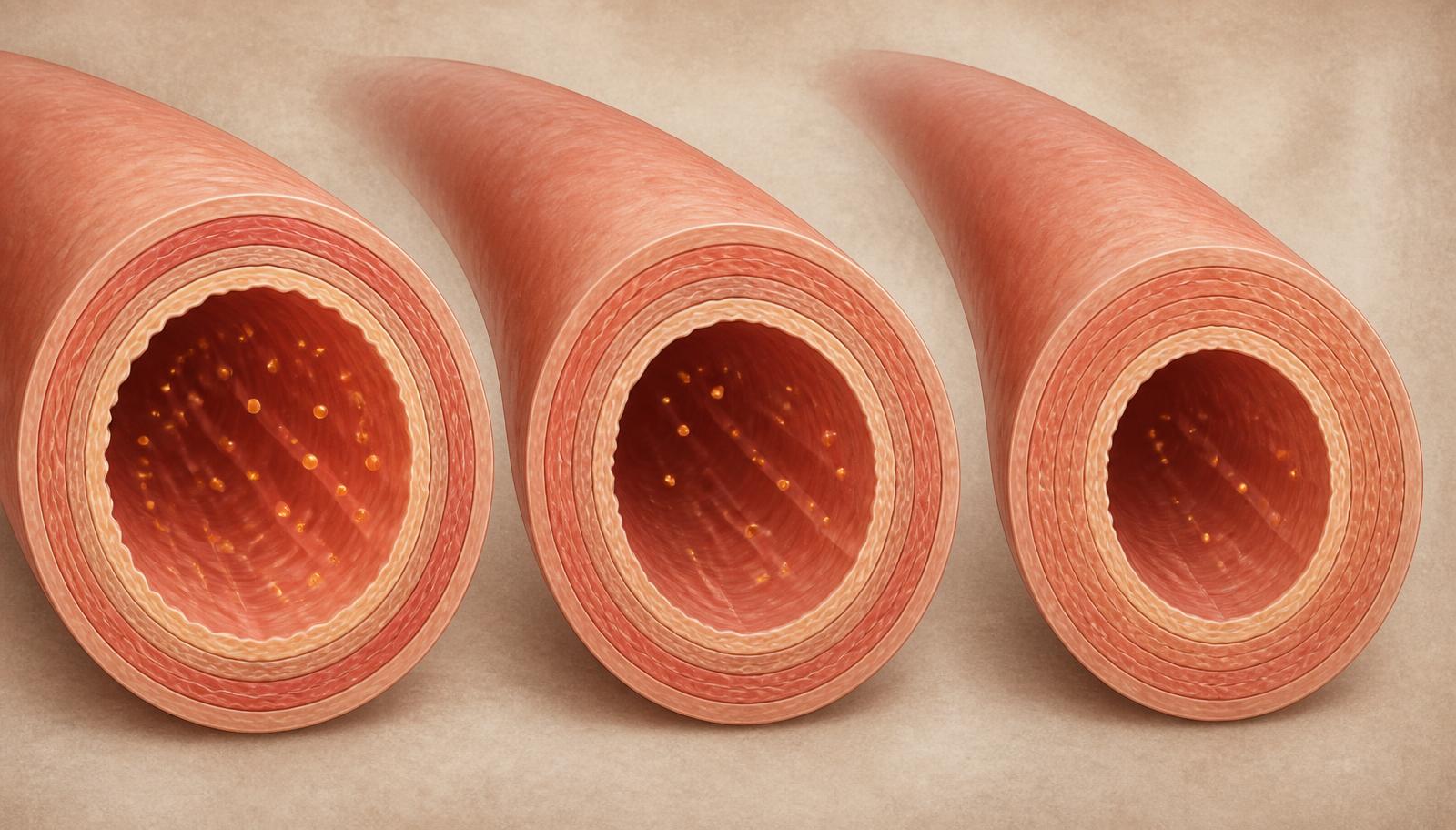
What Actually Changes With Age?
Several interconnected processes help explain why nitric-oxide biology may become less efficient over time.
1. The Endothelium Becomes Less Responsive
The endothelium is the thin cellular lining inside blood vessels. These cells help regulate vascular function and produce nitric oxide through an enzyme called endothelial nitric oxide synthase — eNOS.
With advancing age, this system can become less efficient. Research describes age-related changes in eNOS regulation, endothelial signaling and other processes that contribute to lower NO bioavailability. [1][2]
The issue isn't simply "making less NO." It is a broader change in how effectively the vascular system produces and uses it.
2. Oxidative Stress Can Consume Nitric Oxide
Reactive oxygen species are normal byproducts of metabolism, and the body has sophisticated systems for controlling them. With age, however, the balance can shift.
Research has shown that vascular oxidative stress tends to increase with aging. Reactive oxygen species — particularly superoxide — can interact with nitric oxide, reducing the amount available for normal vascular signaling. [2]
A person may produce NO, but less of it remains biologically available. NO production and NO availability are not necessarily the same thing.
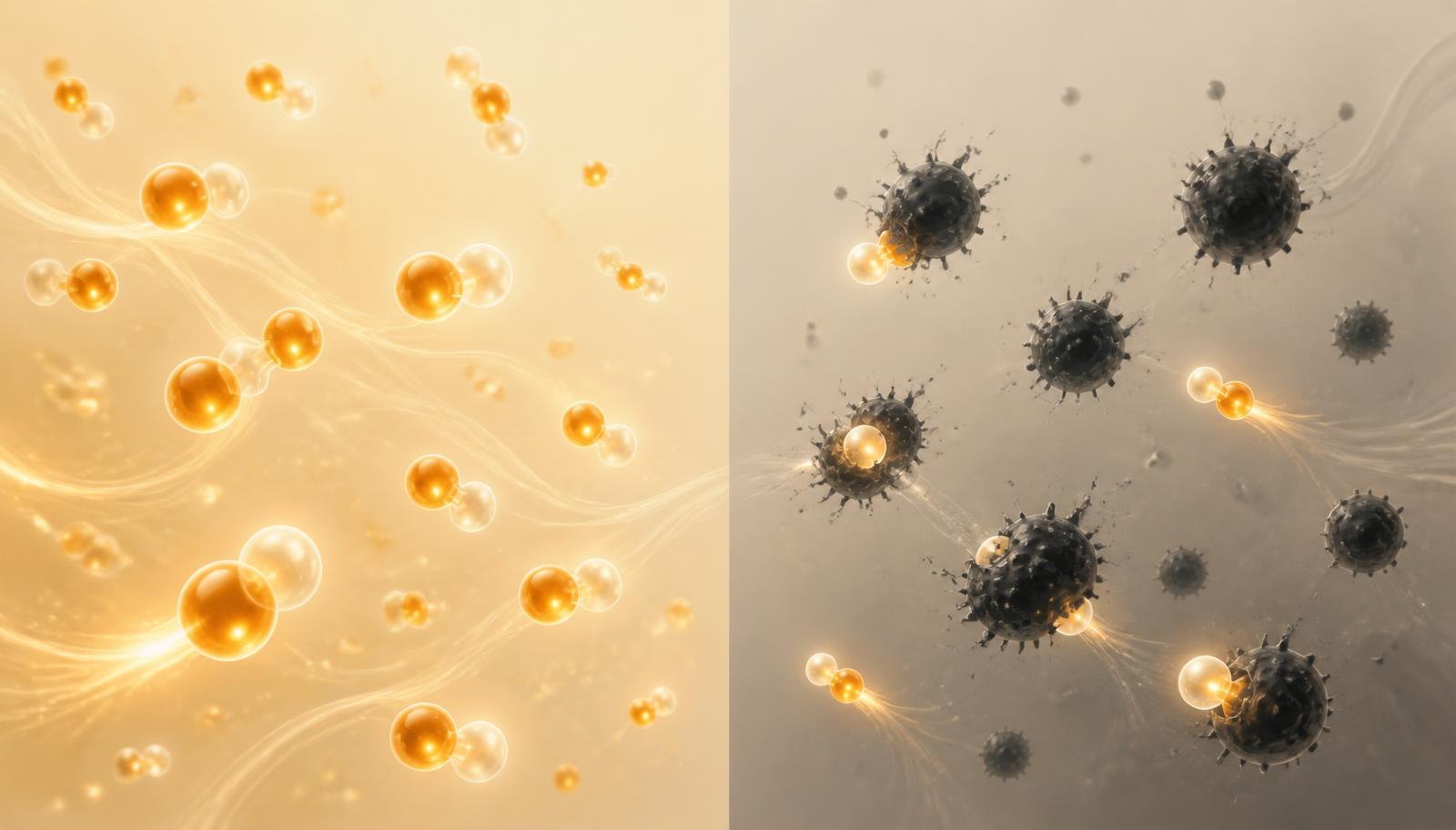
3. eNOS Can Become Less Efficient
Under normal circumstances, eNOS produces nitric oxide. But eNOS requires several biological cofactors to function properly. One of them is tetrahydrobiopterin — BH4.
With aging and oxidative stress, BH4 availability can become impaired. When that happens, eNOS may become partially "uncoupled." Instead of efficiently producing NO, the enzyme can begin generating more superoxide.
[2][4] This is an excellent example of why nitric-oxide health involves more than simply supplying one precursor ingredient. The entire biological environment matters.
What May Be Happening in Your 40s?
For many people, the 40s are not an age of obvious cardiovascular limitation. And that is exactly the point. Many vascular changes occur gradually long before they become noticeable.
Lifestyle factors can begin to accumulate:
- less daily physical activity
- gradual weight gain
- changes in sleep
- greater metabolic stress
- more sitting
- higher blood pressure
- changes in blood glucose or lipids
- chronic stress
These factors can interact with the aging process and influence endothelial function. The 40s can therefore be thought of as an important maintenance decade — a useful time to protect the vascular function you already have rather than waiting until later to think about it.

What Changes Become More Relevant After 50?
By the 50s, age-related vascular biology often becomes increasingly relevant. This does not mean everyone over 50 has poor endothelial function. Far from it. But age itself is now interacting with decades of lifestyle exposure.
Research in humans has consistently shown that advancing age is associated with impaired endothelium-dependent dilation and reduced NO bioavailability. [1][3]
For women, menopause also introduces additional vascular changes. Estrogen interacts with endothelial biology, and the menopausal transition is associated with changes in vascular function. The relationship is complex, and NO is only one part of it, but this is one reason cardiovascular health deserves increasing attention in women after midlife. [3]
For men and women alike, this is also the age when familiar cardiovascular risk factors often become more common. That makes vascular maintenance increasingly important.
Beyond 60: Function Matters More Than the Number
Once people reach their 60s and beyond, chronological age becomes an increasingly poor description of functional age. A sedentary 62-year-old and a physically active 72-year-old may have very different vascular profiles.
Studies comparing older active adults with sedentary counterparts have found more favorable endothelial function among people who maintain long-term aerobic activity. [5]
More recent randomized-trial evidence also supports exercise as a way to improve measures of endothelial function in middle-aged and older adults. A 2025 network meta-analysis involving 20 randomized trials found improvements in flow-mediated dilation across several exercise approaches, with aerobic exercise ranking particularly well. [6] And a 2024 meta-analysis of randomized trials in older adults found improvements in flow-mediated dilation with aerobic and combined exercise programs. [7]
Aging influences vascular function, but physical inactivity is not the same thing as aging.

Why Arteries Tend to Become Stiffer
Large arteries contain elastic fibers that allow them to expand with each heartbeat and recoil afterward. Over decades, changes occur in:
- elastin
- collagen
- vascular smooth muscle
- endothelial signaling
- inflammatory processes
- oxidative balance
As a result, large arteries tend to become progressively less compliant. This is known as arterial stiffening. Reduced NO bioavailability and impaired endothelial signaling are part of this broader process of vascular aging. [2]
Arterial stiffness and endothelial dysfunction are not identical conditions, but they can interact. This is why healthy aging isn't simply about maintaining a strong heart. It also involves maintaining a vascular system capable of responding appropriately.
Does Reduced Nitric Oxide Explain Feeling Older?
Not by itself. Nitric oxide is involved in many physiological processes, but it would be misleading to attribute ordinary age-related fatigue, reduced endurance or other symptoms entirely to NO.
Aging involves:
- muscle changes
- mitochondrial changes
- hormonal changes
- sleep changes
- nervous-system changes
- metabolic changes
- cardiovascular changes
- and many other biological processes
Nitric oxide belongs within that larger picture. Its relevance comes from the central role it plays in vascular signaling — particularly endothelial function and blood-flow regulation. It is one important part of healthy aging, not an explanation for everything that changes with age.
One Advantage We Retain: The Body Still Responds
Perhaps the most encouraging aspect of vascular-aging research is that older blood vessels remain biologically responsive. They are not simply "worn out."
- Exercise still creates shear stress.
- The endothelium still responds to physiological signals.
- Nitrate-rich foods can still participate in the nitrate–nitrite–NO pathway.
- Citrulline can still be converted into arginine.
- Lifestyle still matters.
Recent scientific reviews continue to identify exercise and nutritional approaches among the strategies being studied for preserving or improving NO signaling during cardiovascular aging. [2]
That changes the conversation from "How much NO have I lost?" to "What can I do to support the system I still have?"
Exercise May Become More Important, Not Less
Younger people often exercise for appearance or performance. After midlife, exercise increasingly becomes a strategy for preserving function.
When physical activity increases blood flow, the resulting shear stress along the endothelial surface stimulates vascular signaling associated with eNOS and nitric oxide. This means exercise is effectively communicating with the blood-vessel wall.
Recent meta-analyses support the ability of exercise training to improve vascular measures including flow-mediated dilation in middle-aged and older adults. [6][7]
You don't necessarily need extreme exercise. Walking matters. Cycling matters. Swimming matters. Resistance exercise matters. Combined programs can matter. Consistency becomes increasingly valuable.
Food Offers Another Pathway That Becomes Interesting With Age
The body has more than one route for producing NO. The eNOS pathway is one. But there is also:
Dietary nitrate comes naturally from vegetables such as:
- arugula / rocket
- spinach
- leafy greens
- lettuce
- beetroot
- celery
This pathway does not depend on eNOS in exactly the same manner as the classical arginine pathway. For that reason, researchers have become increasingly interested in dietary nitrate as a complementary way of supporting NO availability when endothelial NO signaling becomes less efficient with age. [2]
This doesn't turn beetroot into an anti-aging cure. It simply illustrates that the body has multiple routes for maintaining nitric-oxide biology.

Arginine and Citrulline After Midlife
The arginine/eNOS pathway also remains nutritionally relevant. L-arginine serves directly as substrate for eNOS. L-citrulline follows a complementary metabolic route: after absorption, citrulline can be converted into arginine — with the kidneys playing an important role in that conversion.
Controlled human research has demonstrated that citrulline can raise circulating arginine and support markers of NO-dependent signaling. [8]
ARGININE
More directly available → eNOS → NO
CITRULLINE
Absorption → conversion to arginine → eNOS → NO
Because the metabolic routes and timing differ, the combination provides a logical strategy for more immediate and more sustained nutritional support of arginine availability. This becomes particularly interesting when viewed in the context of aging, because maintaining the raw materials for NO production is one piece of supporting the broader vascular system.
What About Antioxidants?
Because oxidative stress contributes to reduced NO bioavailability with age, it is tempting to assume that simply taking large doses of antioxidants will fix the problem. The evidence is not that simple.
Oxidative signaling is biologically complex, and isolated antioxidant supplementation has not consistently produced the cardiovascular outcomes people might expect. A stronger strategy is to support the vascular environment broadly through:
- plant-rich nutrition
- regular exercise
- healthy body composition
- smoking avoidance
- adequate sleep
- management of blood pressure
- management of blood glucose
- management of blood lipids
Foods rich in vitamin C, polyphenols, flavonoids and other phytochemicals can contribute to that overall dietary pattern. But healthy aging is not likely to come from one antioxidant pill.
Your 50s and 60s Are Not Too Late
There is an understandable tendency to think: "I should have started twenty years ago." Perhaps.
But the physiology doesn't support giving up.
- Vascular tissue remains adaptive.
- Physical activity remains useful.
- Diet remains relevant.
- Cardiovascular risk factors remain modifiable.
Human exercise studies show measurable vascular adaptations in middle-aged and older adults. [6][7] The better question isn't whether you started perfectly. It is: what are you doing now?
Building a Nitric-Oxide-Supportive Lifestyle After 40
The most effective long-term strategy is not one dramatic intervention. It is an accumulation of habits.
Move Often
Avoid turning exercise into something that happens only once or twice per week while the rest of the week is sedentary. Walk. Use your muscles. Create blood flow.
Exercise With Purpose
Include aerobic activity and appropriate resistance work. Both physical capacity and vascular health matter as you age.
Eat Plants Every Day
Especially include leafy greens and other vegetables that naturally contribute nitrate and phytochemicals.
Eat Adequate Protein
Protein-containing foods provide amino acids, including arginine.
Protect Metabolic Health
Blood pressure, glucose, lipids and body composition become increasingly relevant to vascular aging.
Don't Smoke
Smoking adversely affects endothelial and cardiovascular health.
Sleep
Healthy aging depends on recovery as well as activity.
Think Long Term
You are not trying to temporarily "boost NO." You are trying to maintain a biological system for decades.
Where ėNOS Fits Into the Healthy-Aging Conversation
The biology of vascular aging influenced the thinking behind ėNOS by Australiana Life. ėNOS was developed around the idea that nitric-oxide support should address more than one aspect of the pathway.
Central to the formulation is the complementary relationship between L-arginine and L-citrulline. Arginine supplies substrate more directly to the eNOS pathway. Citrulline follows a different metabolic route and can subsequently replenish circulating arginine availability. Additional selected nutrients and Australian plant ingredients complement the broader nutritional environment associated with cardiovascular wellness.
The purpose is not to make the body younger. Nor is it to replace exercise, healthy food or appropriate medical care. The objective is more practical: to nutritionally support the body's natural nitric-oxide system at a stage of life when maintaining healthy vascular function becomes increasingly relevant.
What Matters Most as the Years Add Up
There is no birthday on which nitric oxide suddenly disappears. There is no single percentage decline that applies to everyone. And there is no supplement, vegetable or exercise that stops vascular aging altogether.
What science does tell us is more useful:
- Nitric-oxide bioavailability tends to decline with age.
- Endothelial function changes with age.
- Oxidative stress contributes to that process.
- Arteries tend to become less compliant over time.
But also:
- Exercise still works.
- The endothelium remains responsive.
- Nutrition still matters.
- The body has multiple pathways for producing NO.
- And lifestyle can influence how vascular aging unfolds.
The goal after 40, 50 and beyond should not be to pretend aging isn't happening. It should be to support the systems that help us age well. Nitric oxide is one of those systems.
Scientific References
[1] Endothelial dysfunction and aging: an update
Rodríguez-Mañas L, El-Assar M, Vallejo S, et al. Ageing Research Reviews. 2009. Review describing progressive reductions in NO bioavailability and changes in endothelial regulation with aging.
PubMed / National Library of Medicine →[2] Declining nitric oxide bioavailability in cardiovascular aging: mechanistic insights and emerging interventions
Journal of Cardiovascular Aging. 2025. Contemporary review of reduced NO bioavailability, oxidative stress, eNOS dysfunction, vascular stiffening and potential lifestyle and nutritional interventions in cardiovascular aging.
PubMed / National Library of Medicine →[3] Aging and vascular endothelial function in humans
Seals DR, Jablonski KL, Donato AJ. Clinical Science. 2011;120(9):357–375. PMID: 21244363.
PubMed / National Library of Medicine →[4] Cellular and molecular biology of aging endothelial cells
Donato AJ, Morgan RG, Walker AE, Lesniewski LA. Journal of Molecular and Cellular Cardiology. 2015. PMID: 25655936.
PubMed / National Library of Medicine →[5] Long-Term Aerobic Exercise Improves Vascular Function Into Old Age: A Systematic Review, Meta-Analysis and Meta Regression
Research comparing vascular endothelial function in older active and sedentary adults. PMID: 30863313.
PubMed / National Library of Medicine →[6] Influence of different exercise types on vascular endothelial function in middle-aged and older adults — systematic review and network meta-analysis
Chen Q, Gao X, Wang C, Zhang P. Archives of Gerontology and Geriatrics. 2025;128:105624. PMID: 39288582.
PubMed / National Library of Medicine →[7] Effects of aerobic, resistance and combined training on endothelial function and arterial stiffness in older adults
da Silva RSN, da Silva DS, de Oliveira PC, et al. PLoS ONE. 2024. PMID: 39621701.
PubMed / National Library of Medicine →[8] Pharmacokinetic and pharmacodynamic properties of oral L-citrulline and L-arginine: impact on nitric oxide metabolism
Schwedhelm E, Maas R, Freese R, et al. British Journal of Clinical Pharmacology. 2008;65(1):51–59. PMID: 17662090.
PubMed / National Library of Medicine →
Continue Your Exploration
- How to Increase Nitric Oxide Naturally →
Practical ways to support the body's natural NO pathways through food, activity and nutrition.
- Nitric Oxide and Arterial Health →
Explore what happens inside the artery wall and why endothelial responsiveness matters.
- Nitric Oxide and Blood Flow →
Understand the connection between NO, vascular relaxation and changing blood-flow demands.
- Nitric Oxide and Heart Health →
Explore how vascular function contributes to the broader cardiovascular system.
- Circulation After 50 →
See how NO, circulation and everyday activity intersect after midlife.
- Learn More About ėNOS →
Explore how Australiana Life applied nitric-oxide and nutritional research to the formulation philosophy behind ėNOS.
EXPLORE THE ĖNOS SCIENCE
See how Australiana Life applied nitric-oxide and nutritional research to the formulation philosophy behind ėNOS.
EXPLORE ĖNOS →More in Lifestyle & Healthy Aging
- Nitric Oxide & Exercise Performance
- Nitric Oxide & Exercise Recovery
- Lifestyle Habits That Support Healthy Nitric Oxide Production
- Exercise & Nitric Oxide: Why Movement Matters
- Can a Sedentary Lifestyle Affect Nitric Oxide & Circulation?
- Diet & Nitric Oxide: How Everyday Food Choices Matter
- Sleep, Cardiovascular Health & Nitric Oxide: What Do We Know?
- Smoking, Vascular Health & Nitric Oxide
- Nitric Oxide, Energy & Staying Active as We Age
- Nitric Oxide & Men's Sexual Health: The Blood-Flow Connection
- Nitric Oxide & Oral Health: The Surprising Connection
- Why Does Nitric Oxide Production Change With Age?
- Healthy Aging: Supporting Circulation, Blood Flow & Nitric Oxide After 50
- Nitric Oxide and Brain Health/Cognition
About Our Health & Science Content
Australiana Life Health & Science articles are based on published scientific research and written to make complex health and nitric oxide science easier to understand. Our educational content undergoes scientific review for accuracy and appropriate interpretation of the evidence and is updated as relevant scientific understanding evolves.