
What Supports Healthy Arteries as We Age?
The Everyday Habits That Help Preserve Vascular Function Through Midlife and Beyond
Aging changes our arteries. That is normal biology.
Over time, the large arteries that carry blood away from the heart tend to become less elastic. The endothelial cells lining them can become less responsive. Nitric-oxide availability may decline. Blood pressure and metabolic factors can become more important.
But there is another side to the story. Arterial aging is not determined by birthdays alone.
Physical activity, food choices, smoking, blood pressure, blood glucose, body composition and other lifestyle factors can influence the vascular environment over decades. Two people can therefore reach the same age with very different levels of cardiovascular fitness and vascular function.
That gives us a useful question to ask: what can we do to support healthy arteries as we get older? The answer is not one food, one supplement or one biological pathway. It is a collection of habits that help preserve the structure, responsiveness and biological environment of the blood vessels we depend upon every day.
First, What Does a “Healthy Artery” Actually Mean?
Most people picture an artery as a pipe. If it isn't blocked, it must be healthy.
But arterial health is more complicated than that. A healthy artery needs several qualities.
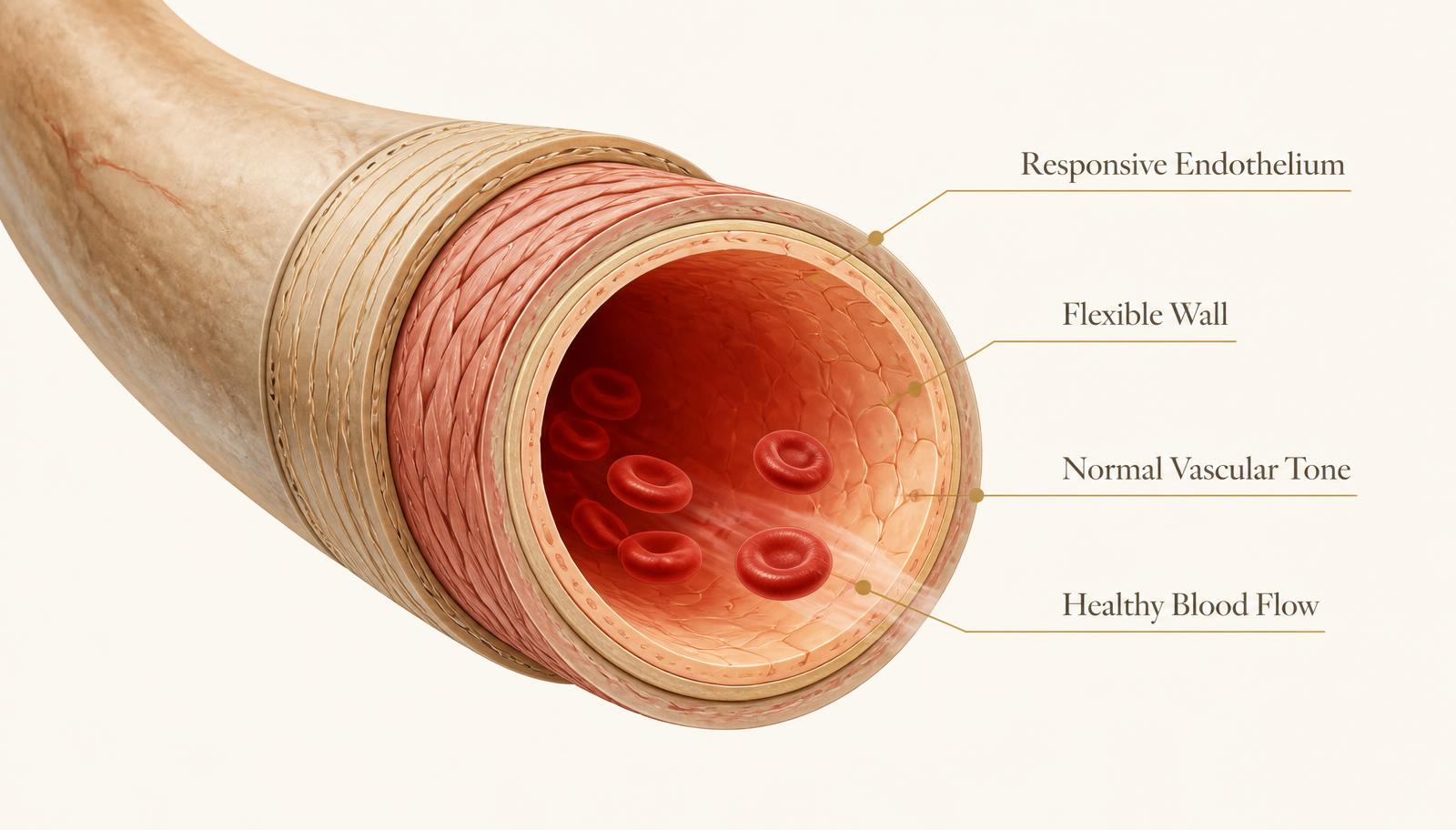
- Sufficient structural integrity to withstand the pressure created by each heartbeat.
- Some degree of elasticity so it can expand and recoil.
- A muscular wall able to adjust vascular tone.
- An inner endothelial lining that senses and responds to changes in blood flow.
- A healthy metabolic and inflammatory environment to function within.
So there are at least two sides to artery health:
Structure
What is the physical condition of the arterial wall?
Function
How effectively can the artery respond to changing physiological demands?
Both become increasingly important as we age.
What Aging Does to the Arterial Wall
Arteries are remarkable structures. With every heartbeat, the large arteries receive a wave of blood under pressure. In younger arteries, elastic components in the arterial wall allow the vessel to expand and recoil.
Over decades, structural changes gradually occur.
- Elastin fibers can fragment.
- Collagen can become relatively more prominent and cross-linked.
- The arterial wall can become thicker.
- The endothelium can become less responsive.
- Oxidative stress may increase.
The result is a tendency toward greater arterial stiffness with advancing age.
Arterial stiffness is not identical to clogged arteries. It describes a change in the mechanical properties of the vessel wall. A stiffer artery does not expand and recoil in quite the same way as a more compliant one. That is one reason vascular aging is about more than cholesterol alone.
The Inner Surface Matters Too
Inside every artery is an extremely thin cellular lining called the endothelium. It is only one cell thick, but it plays an important role in vascular regulation.
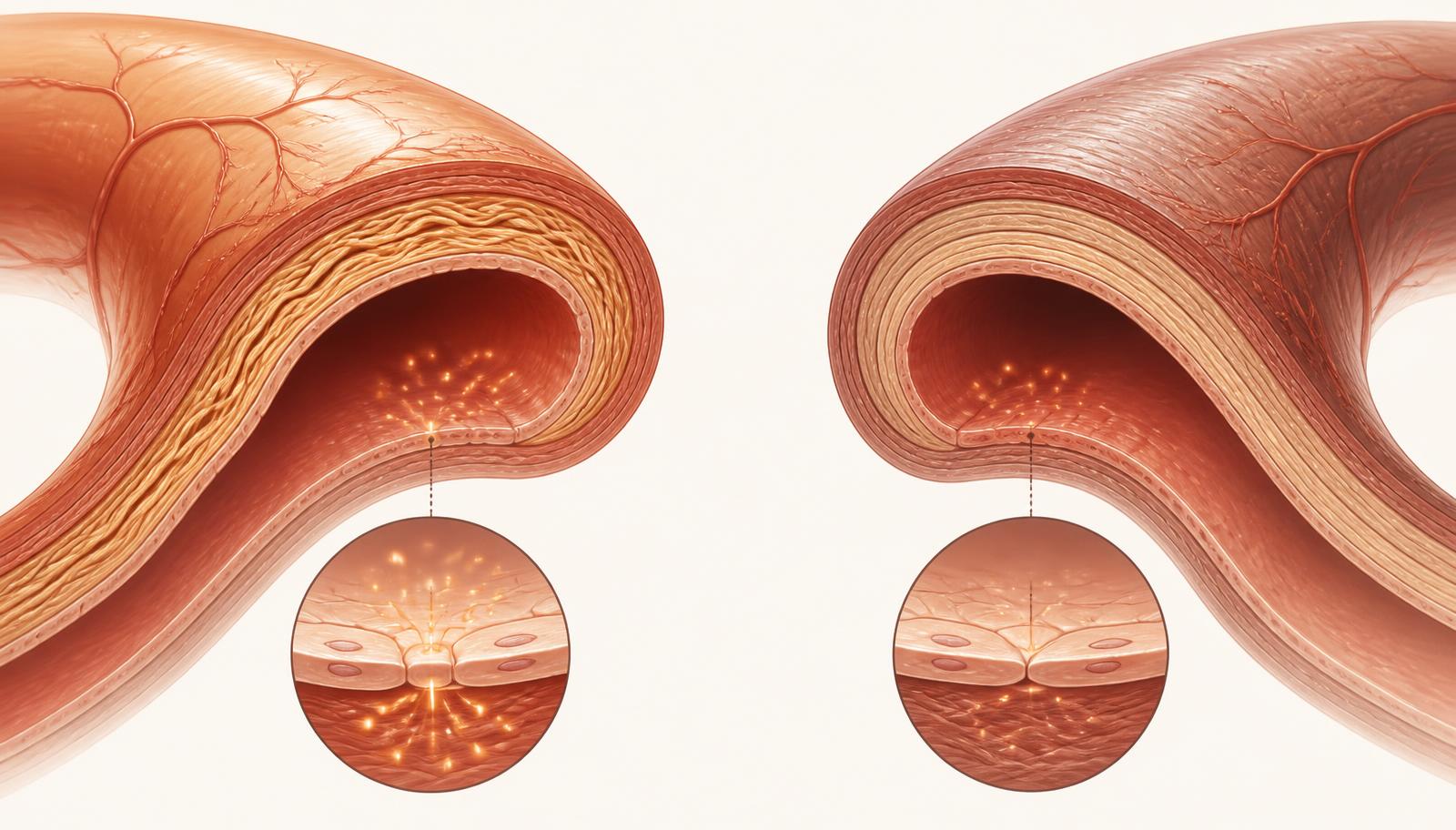
Endothelial cells sense blood flowing across their surface and produce chemical signals that communicate with the rest of the arterial wall. One of the most important of those signals is nitric oxide — NO.
An endothelial enzyme called eNOS — endothelial nitric oxide synthase — helps produce NO from the amino acid L-arginine. Nitric oxide then helps signal the surrounding vascular smooth muscle to relax. This contributes to the artery's ability to adjust its diameter when blood-flow requirements change.
With advancing age, endothelial function and NO bioavailability tend to decline. [1] This is one reason maintaining the health of the inside surface of the artery becomes increasingly relevant after midlife.
The Good News: Arteries Remain Adaptable
Aging blood vessels are not simply passive structures deteriorating on a fixed schedule. They remain biologically responsive.
- Exercise
- Changes in blood flow
- Diet
- Blood pressure
- Metabolic health
- Smoking exposure
- And numerous other environmental influences
This is important because it changes the goal. We cannot make our arteries 25 years old again. But we can help create conditions that support healthier vascular aging.
Recent randomized-trial reviews continue to show that exercise can improve measures of endothelial function and arterial stiffness in middle-aged and older adults. [2] [3] [4]
So the habits that follow are not merely generic “healthy lifestyle advice.” They interact with the physiology of the arteries themselves.
1. Keep Blood Moving
If there is one habit arteries appear designed to respond to, it is movement.
When you exercise, the heart pumps more blood. Blood flow through arteries increases. That increased flow creates a mechanical force along the endothelial surface called shear stress.
Endothelial cells can detect shear stress. That mechanical signal activates cellular pathways associated with vascular adaptation and nitric-oxide signaling. In other words: exercise communicates directly with the artery wall.
Walking Counts
You do not need to become an endurance athlete. Walking itself has been studied as a vascular intervention.
A 2026 network meta-analysis of randomized trials in adults aged 60 and older found that several exercise modalities were associated with improvements in vascular measures, with aerobic exercise and walking showing potential advantages for arterial stiffness and resistance-type exercise showing benefits for endothelial function. The authors cautioned that the differences between exercise types were not definitive. [2]
That is useful practical news. You have options.
- Walking
- Cycling
- Swimming
- Resistance exercise
- Combined exercise programs
The best long-term program is likely to be one you can actually continue.

2. Don't Forget Strength
Healthy aging is not only about aerobic fitness. Maintaining muscle strength becomes increasingly important with age, and resistance exercise also influences cardiovascular and vascular physiology.
A 2024 systematic review and meta-analysis examining aerobic, resistance and combined training in older adults found evidence that exercise programs can improve measures of endothelial function, although effects on different arterial outcomes vary according to exercise type and study design. [3]
More recent evidence has continued to examine resistance and isometric exercise as possible tools for supporting arterial and endothelial function in middle-aged and older adults. [4]
Keep moving — and keep your muscles working too.
3. Eat in a Way Your Arteries Recognize
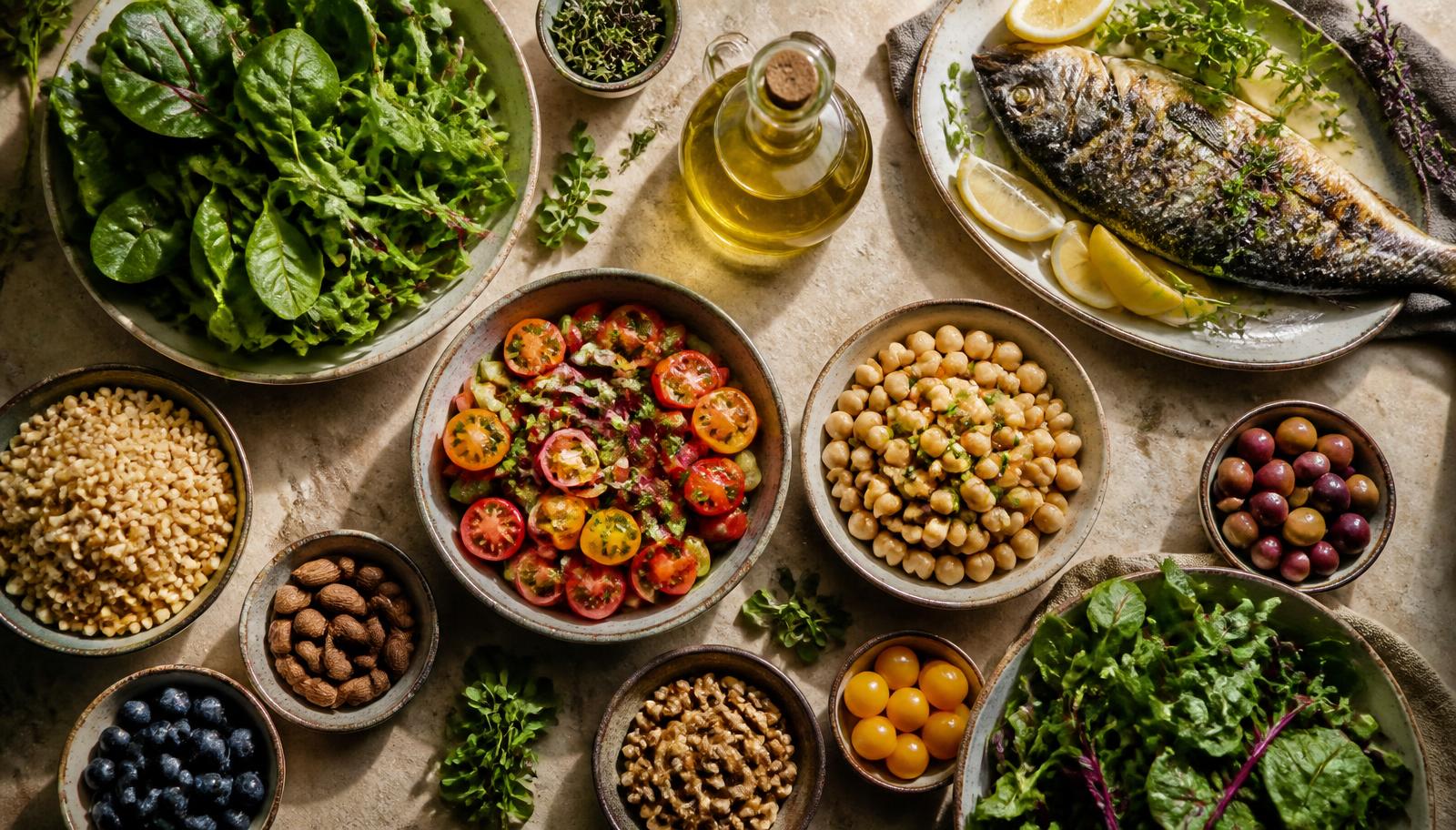
The best diet for arterial health probably does not come from a single “superfood.” Instead, research increasingly supports dietary patterns. One of the most extensively studied is the Mediterranean-style diet, which emphasizes vegetables, fruit, legumes, nuts, whole grains, olive oil, fish and other minimally processed foods.
A meta-analysis of randomized clinical trials found that Mediterranean-diet interventions improved measures of endothelial function in adults. [5]
A 2025 systematic review examining arterial stiffness likewise found that greater adherence to Mediterranean-style eating patterns was generally associated with lower arterial stiffness, although much of the literature was observational and the number of randomized trials was smaller. [6]
That distinction is important. The evidence does not mean one particular cuisine magically prevents vascular aging. It suggests that a consistent food pattern rich in plants and minimally processed foods can create a more favorable cardiovascular environment.
Think Pattern, Not Ingredient
Instead of asking “What is the best artery food?”, consider asking “What does my plate look like most days?” A useful pattern might emphasize:
- Vegetables — especially leafy greens and colorful varieties
- Fruit — including berries and other deeply colored fruits
- Nuts and seeds — for unsaturated fats, minerals and plant compounds
- Legumes — for fiber and plant protein
- Whole grains, where appropriate
- Fish, as part of a balanced dietary pattern
- Unsaturated fats such as olive oil
The objective is not dietary perfection. It is repetition. Arteries experience what you do year after year, not what you eat at one perfect lunch.
4. Give Vegetables an Additional Job: Supporting Nitric Oxide
Vegetables contribute vitamins, minerals, fiber and phytochemicals. Some also provide another interesting compound: dietary nitrate.
Leafy green vegetables and beetroot can supply natural nitrate, which the body can process through a pathway:
This route complements the endothelial eNOS pathway. Nitric oxide contributes to normal vascular relaxation and endothelial signaling, making nitrate-rich foods particularly interesting in vascular nutrition. [7]
- Arugula / rocket
- Spinach
- Lettuce
- Beetroot
- Celery
- Other leafy vegetables
This does not mean nitrate-rich vegetables “clean arteries.” They do not. Their relevance is physiological: they can contribute substrate to one of the body's natural NO-producing pathways.
5. Keep Blood Pressure in the Conversation
Blood pressure and arterial health have a close relationship. The arteries experience the pressure generated by every heartbeat, and persistent high blood pressure can place additional mechanical stress on the arterial system. At the same time, increased arterial stiffness can influence the way pressure waves travel through the vascular system. The relationship can therefore become bidirectional.
This is why maintaining blood pressure within an appropriate range is one of the most important components of cardiovascular aging. For someone with elevated blood pressure, this is not an area to manage through supplements alone. Appropriate medical assessment and treatment can be extremely important.
Healthy artery support should complement medical risk-factor management, not compete with it.
6. Blood Sugar Matters to Blood Vessels
Blood glucose may seem like a completely different subject. It isn't. Metabolic health and vascular health are closely connected.
Chronically abnormal glucose regulation can affect endothelial biology, oxidative stress and other aspects of vascular function. That is one reason maintaining healthy blood glucose becomes increasingly important as we get older.
Movement helps. Body composition matters. Food choices matter. And people with diabetes or prediabetes should work with appropriate healthcare professionals to manage these conditions. The vascular system sees the metabolic environment every day.
7. So Do Blood Lipids
Cholesterol is not the entire arterial-health story. But that does not mean it is unimportant.
LDL-containing particles and other lipid-related factors are central to the biology of atherosclerosis. For people with elevated cardiovascular risk, managing lipids can therefore be one of the most consequential steps in protecting long-term arterial health.
Lifestyle matters. But medical treatment can also be appropriate and important. An authority article on healthy arteries should not create the impression that nitric oxide, vegetables or supplements replace established cardiovascular risk management. They don't.
8. Smoking Is Especially Hard on the Vascular System
Smoking exposes blood vessels to a complex mixture of chemicals and oxidants. The vascular effects include impaired endothelial function and greater oxidative stress, among many other cardiovascular consequences.
From the perspective of artery health, avoiding tobacco is therefore one of the clearest modifiable choices available. You can eat an excellent diet. You can exercise. You can consume nitrate-rich vegetables. But smoking can work strongly against the vascular environment you are trying to support.
9. Sleep Is Part of Cardiovascular Maintenance
Sleep is often discussed as though it belongs only to brain health or energy. But the cardiovascular system does not stop mattering at night. Sleep interacts with:
- Blood pressure regulation
- Autonomic nervous-system activity
- Metabolic function
- Stress hormones
- And other systems relevant to cardiovascular health
Chronic inadequate sleep is therefore not simply about feeling tired. Healthy aging requires enough recovery for the systems being challenged during the day. This is another example of why artery health is a whole-person issue, not a one-nutrient issue.
10. Avoid Long Periods of Inactivity
Exercise sessions are important. So is everything that happens between them.
A person can exercise for 30 minutes in the morning and still spend most of the remaining day sitting. Breaking up prolonged sedentary time with regular movement is a simple strategy:
- Stand up
- Walk
- Use stairs
- Work in the garden
- Take the dog out
- Move around the house
- Do something physical
The vascular system evolved in a body designed to move. Regular movement throughout the day keeps asking the cardiovascular system to adapt.
11. Maintain Muscle as You Age
Muscle and cardiovascular health are more connected than they first appear. Skeletal muscle is a major site of glucose disposal. It influences metabolic health. It requires blood flow. And maintaining muscle helps preserve physical independence, which in turn makes continued activity easier.
So maintaining muscle through appropriate protein intake and resistance exercise indirectly supports many of the conditions associated with healthier vascular aging.
Healthy arteries help us stay active — and staying active helps support healthy arteries.
What About Supplements for Artery Health?
This is where perspective matters. There is no dietary supplement that makes all the other factors unnecessary. Healthy arteries depend upon movement, blood pressure, lipids, blood glucose, diet, smoking status, body composition, sleep, age, genetics and numerous other factors.
But targeted nutrition can complement that foundation. In the context of nitric-oxide biology, nutritional research has examined compounds including L-arginine, L-citrulline and dietary nitrate.
Their relevance comes from their relationship to the body's natural NO pathways — not from an ability to “clean,” “unclog” or repair arteries. That is an important distinction.
The Arginine–Citrulline Connection
Inside the endothelium, eNOS uses L-arginine as substrate in the production of nitric oxide. L-citrulline takes a complementary route: after absorption, it can be converted into arginine, importantly through renal metabolism.
The two therefore provide different routes for supporting arginine availability. That can be relevant nutritionally as part of a broader strategy for supporting natural NO production. But amino acids remain only one piece of arterial wellness.
A Better Way to Think About “Anti-Aging” for Your Arteries
We often hear the phrase anti-aging. Arteries don't need an anti-aging fantasy. They need good conditions in which to age.
That distinction matters. You cannot remove decades from your vascular system. But you can ask whether your daily choices are helping create an environment associated with:
- Better endothelial function
- Appropriate vascular responsiveness
- Healthy blood pressure
- Healthy metabolism
- Greater physical fitness
- Preservation of functional capacity
That is a far more realistic goal. And scientifically, it is much more defensible.

Where Nitric Oxide Fits — Without Making It the Whole Story
Nitric oxide is particularly relevant because it helps connect several of these behaviors.
- Exercise increases blood flow and endothelial shear stress, which can stimulate eNOS signaling.
- Nitrate-rich vegetables provide another nutritional route toward NO.
- Arginine serves as substrate for endothelial nitric oxide synthesis.
- Citrulline can help replenish arginine availability.
- Oxidative stress influences NO bioavailability.
So nitric oxide provides a useful biological thread running through several aspects of vascular health. But healthy arteries are bigger than nitric oxide alone. That distinction is important for understanding the philosophy behind vascular wellness.
How ėNOS Fits Into the Picture
The same broad perspective influenced the development of ėNOS by Australiana Life. ėNOS was not designed to replace exercise, vegetables, healthy blood pressure or appropriate medical care. It was designed as nutritional support for one part of the larger cardiovascular picture: the body's natural nitric-oxide system.
Central to the formulation are L-arginine and L-citrulline. Arginine provides substrate more directly to the eNOS pathway. Citrulline provides a complementary metabolic route that can help replenish circulating arginine availability. Additional selected nutrients and Australian plant ingredients complement the broader nutritional strategy.
The philosophy is therefore not “take a supplement and your arteries are healthy.” It is: support NO nutrition within a lifestyle that supports the entire vascular system.
The Habits Your Arteries Live With
Perhaps the most useful way to think about arterial health is not in terms of occasional interventions. Think in terms of exposure.
Your arteries experience your blood pressure every day. They experience your blood glucose. Your blood lipids. Your smoking exposure — or lack of it. Your meals. Your periods of activity. Your periods of inactivity. Your sleep. Your metabolic environment. And the effects accumulate over years.
That is why the most powerful healthy-aging strategies often look surprisingly ordinary:
- Walk.
- Exercise.
- Use your muscles.
- Eat plants.
- Don't smoke.
- Know your blood pressure.
- Manage blood sugar and lipids appropriately.
- Sleep.
- Stay engaged in your health as you grow older.
No single one is a fountain of youth. Together, they create a much better environment in which your arteries can age.
Scientific References
[1] Aging and vascular endothelial function in humans
Seals DR, Jablonski KL, Donato AJ. Clinical Science. 2011;120(9):357–375. Review of age-related endothelial dysfunction, nitric-oxide bioavailability and vascular aging.
PubMed / National Library of Medicine →[2] Comparative effectiveness of various exercise modalities on arterial stiffness and endothelial function in older adults
Wen H, Liu Y, Huang W, Ma Z, Zhao H. Systematic review and network meta-analysis of randomised controlled trials. Frontiers in Cardiovascular Medicine. 2026. PMID: 42516957. Examines aerobic exercise, walking, resistance training and other exercise modes in adults aged 60 and older.
PubMed / National Library of Medicine →[3] Effects of aerobic, resistance and combined training on endothelial function and arterial stiffness in older adults
da Silva RSN, da Silva DS, de Oliveira PC, et al. A systematic review and meta-analysis. PLoS ONE. 2024. PMID: 39621701.
PubMed / National Library of Medicine →[4] Can isometric exercise training improve arterial stiffness and endothelial function in middle-aged and older adults?
Li Z, Tan S, Luo P. A systematic review and meta-analysis of randomized controlled trials. Maturitas. 2026;210:108973. PMID: 42114354.
PubMed / National Library of Medicine →[5] Mediterranean Diet Increases Endothelial Function in Adults
Shannon OM, Mendes I, Köchl C, et al. A systematic review and meta-analysis of randomized controlled trials. Journal of Nutrition. 2020. PMID: 32027740. Meta-analysis of 14 reports involving 1,930 participants found improved endothelial function with Mediterranean-diet interventions.
PubMed / National Library of Medicine →[6] The Effect of a Mediterranean Diet on Arterial Stiffness: A Systematic Review
Zupo R, et al. Nutrients. 2025. PMID: 40218950. Systematic review examining Mediterranean-diet adherence and measures of arterial stiffness.
PubMed / National Library of Medicine →[7] Vascular effects of dietary nitrate (as found in green leafy vegetables and beetroot) via the nitrate-nitrite-nitric oxide pathway
Lidder S, Webb AJ. British Journal of Clinical Pharmacology. 2013;75(3):677–696. PMID: 22882425.
PubMed / National Library of Medicine →
Follow the Vascular Health Story
- The Endothelium: The Hidden Key to Healthy Blood Vessels →
Meet the living cellular layer responsible for much of the artery's ability to sense and respond.
- Healthy Arteries & Nitric Oxide →
Explore NO signaling, vascular tone and arterial responsiveness in more depth.
- Nitric Oxide and Aging: What Changes After 40, 50 and Beyond? →
See how endothelial function and NO availability can change over time.
- Foods That Support Natural Nitric Oxide Production →
Leafy greens, beetroot, arginine-containing foods, watermelon and other nutrition relevant to NO biology.
- How to Increase Nitric Oxide Naturally →
Bring together food, exercise and the body's complementary NO pathways.
- Discover the Science Behind ėNOS →
How the formulation philosophy focuses on nutritionally supporting the body's natural nitric-oxide system.
EXPLORE THE SCIENCE BEHIND ĖNOS
Learn how the formulation philosophy behind ėNOS focuses on nutritionally supporting the body's natural nitric-oxide system within a broader heart-healthy lifestyle.
EXPLORE ĖNOS →This article is provided for educational purposes only and is not intended as medical advice or to diagnose, treat, cure or prevent disease. Cardiovascular risk varies among individuals. ėNOS is a dietary supplement and should complement rather than replace appropriate nutrition, physical activity, risk-factor management or medical care. Anyone with cardiovascular disease, high blood pressure, diabetes or other health concerns should discuss appropriate lifestyle and supplement choices with a qualified healthcare professional.
More in Heart & Arteries
About Our Health & Science Content
Australiana Life Health & Science articles are based on published scientific research and written to make complex health and nitric oxide science easier to understand. Our educational content undergoes scientific review for accuracy and appropriate interpretation of the evidence and is updated as relevant scientific understanding evolves.