
What Is Cardiovascular Health? Heart, Arteries & Circulation Explained
Understanding the System That Delivers Oxygen and Nutrients to Every Part of Your Body
When people hear the words cardiovascular health, they usually think of one organ: the heart.
That makes sense. The heart is the pump that keeps blood moving.
But cardiovascular health is much bigger than the heart.
A healthy cardiovascular system depends on the coordinated function of the heart, arteries, smaller blood vessels, capillaries, veins, blood and the cellular lining of the vascular system itself.
Think of it as one enormous delivery-and-return network.
- The heart creates the driving force
- Arteries distribute blood
- Smaller vessels decide where it goes
- Capillaries bring blood close enough to tissues for exchange
- Veins return blood to the heart
And throughout the vascular system, chemical signals help blood vessels continually adjust to changing demands. One of the most important of those signals is nitric oxide — NO.
Cardiovascular health is not simply about whether the heart beats normally. It is about whether the entire system can pump, transport, regulate, deliver and adapt.
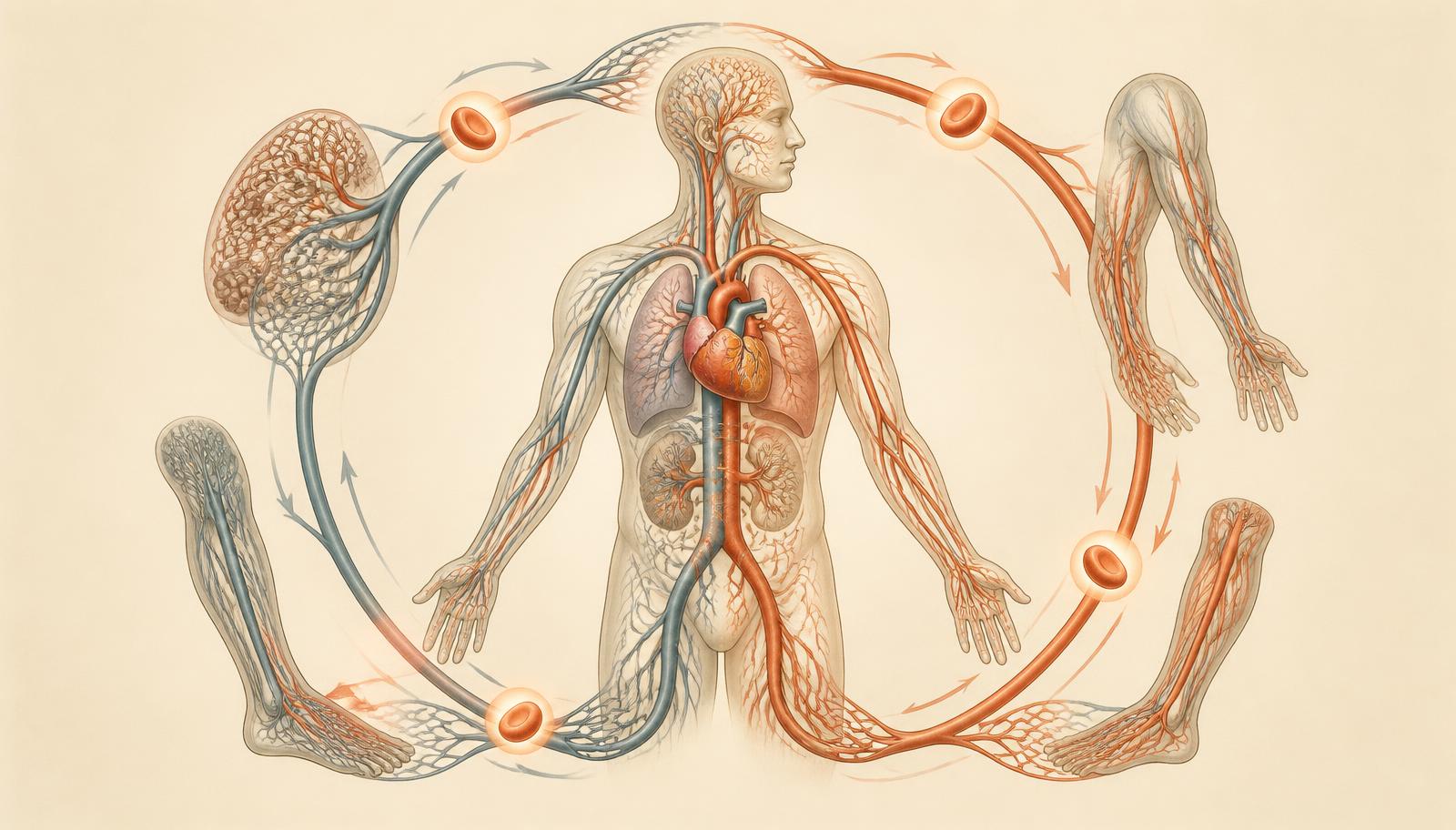
One Heartbeat Starts a Journey
Imagine following one red blood cell.
It returns from the body to the right side of the heart carrying relatively little oxygen. The heart sends it to the lungs. There it releases carbon dioxide and picks up oxygen. It returns to the left side of the heart.
The powerful left ventricle then pushes it through the aortic valve into the aorta. From there, it travels through progressively smaller arteries until it eventually reaches tiny capillaries close to body tissues.
Oxygen can then move toward cells. Nutrients can be delivered. Carbon dioxide and other metabolic products can enter the bloodstream for transport elsewhere.
Eventually, that red blood cell enters the venous circulation and begins the return trip to the heart. Then the cycle starts again. A healthy heart maintains this continuous body → heart → lungs → heart → body circulation. [1]
The Heart: The Pump
The adult heart contains four chambers. The two upper chambers — the atria — receive blood. The two lower chambers — the ventricles — pump it onward.
The right side of the heart sends blood toward the lungs. The left side sends oxygenated blood into the systemic circulation. Four heart valves help maintain one-way blood flow.
Every heartbeat therefore creates pressure and forward movement. But the heart cannot control the cardiovascular system by itself. A pump is only as useful as the network into which it pumps.
Arteries: Much More Than Tubes
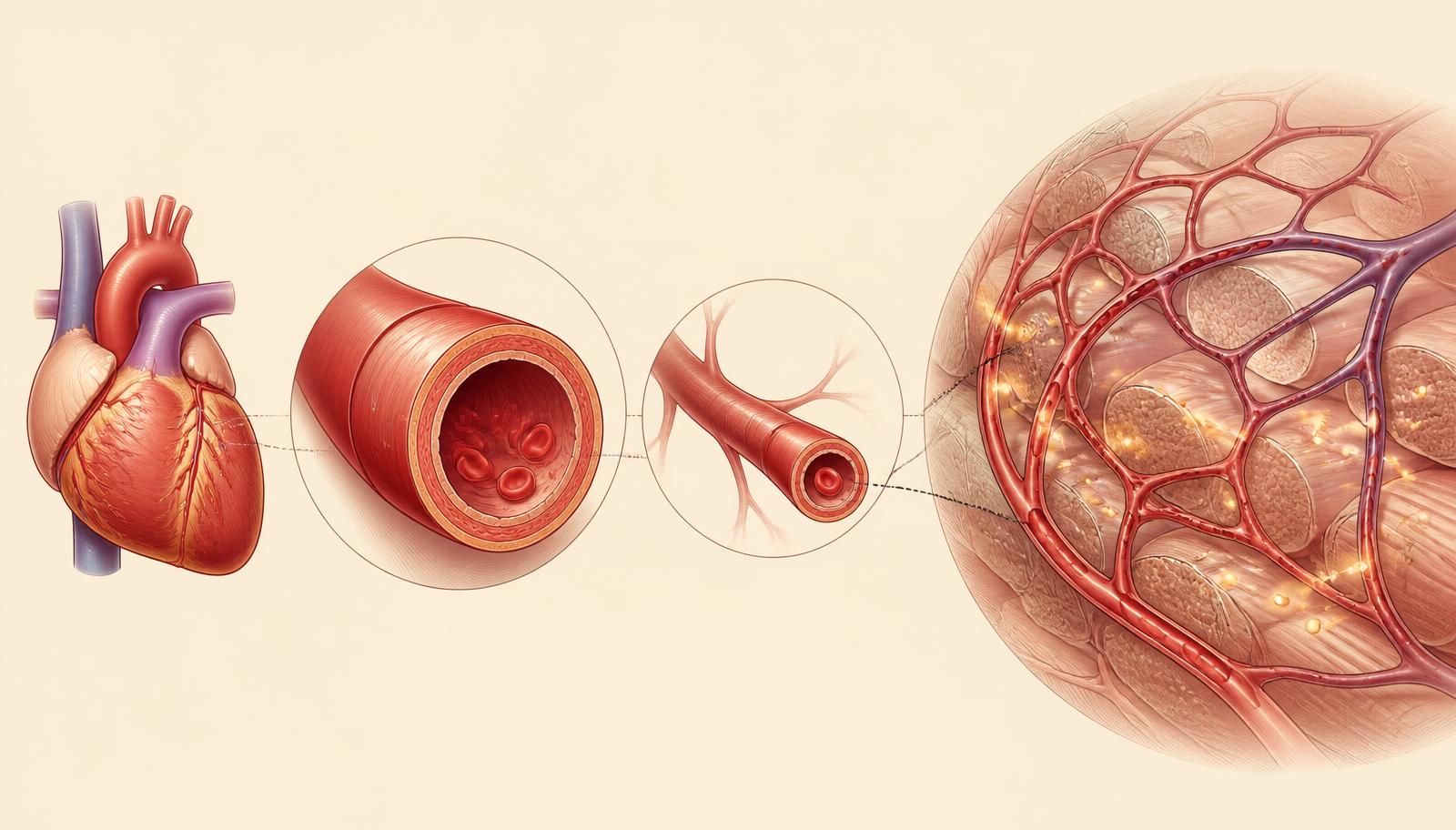
Arteries carry blood away from the heart, and the largest arteries need to withstand the pressure generated when the heart contracts. But arteries are not rigid plumbing. Their walls contain:
- An inner endothelial lining
- Vascular smooth muscle
- Elastic tissue
- Connective tissue
- Multiple signaling systems
This means an artery can alter its behavior. It can become somewhat narrower. It can become wider. It can respond to changes in pressure, react to nervous-system signals and respond to the needs of the tissue it supplies.
That responsiveness is one of the most important characteristics of a healthy cardiovascular system.
Then the Arteries Get Smaller
Large arteries branch into smaller arteries. Those branch into arterioles. Arterioles are particularly important because they help regulate how much blood enters different tissues.
Imagine exercising. Your leg muscles suddenly need much more oxygen and fuel. At the same time, the body does not need to increase blood flow equally to every organ. The cardiovascular system redistributes its output: vessels supplying active tissue can adjust their diameter while other parts of the system maintain appropriate vascular tone.
This is cardiovascular regulation in real time.
Capillaries: Where Delivery Actually Happens
Eventually, blood reaches vessels so small that red blood cells may pass through almost one at a time. These are capillaries, and their walls are extremely thin — thin enough to allow exchange between blood and surrounding tissue.
This is where the cardiovascular system fulfills much of its ultimate purpose.
- Oxygen reaches cells
- Glucose and other nutrients are delivered
- Hormonal signals arrive
- Carbon dioxide is collected
- Metabolic products are transported away
So the cardiovascular system is not simply a blood-moving system. It is a delivery, exchange and communication system.
Veins Complete the Circuit
Once blood has moved through the tissues, it needs to return. Veins carry blood back toward the heart. In the legs, valves within veins help limit backward flow, and muscle contraction assists venous return.
Every time you walk, calf-muscle contractions help compress veins and move blood upward. That means movement supports circulation in more than one way: your heart pumps, your arteries regulate, and your muscles help return blood. The system works together.
Cardiovascular Health in One Sentence
A healthy cardiovascular system needs to do five things well.
One of the most interesting parts of cardiovascular science concerns the mechanisms regulating the middle step: how blood vessels decide when to relax, constrict and change blood flow. That brings us to the endothelium.
The Endothelium: The Control Surface Inside Your Blood Vessels
The inside of your blood vessels is covered by an extraordinarily thin cellular layer called the endothelium. It is only one cell thick. Yet researchers now recognize endothelial function as fundamental to cardiovascular health: the endothelium sits between circulating blood and vascular smooth muscle and responds to mechanical forces and cardiovascular risk factors. [2]
Endothelial cells can:
- Sense blood flowing across them
- Produce chemical signals
- Communicate with smooth muscle
- Influence vascular tone
- Participate in broader vascular homeostasis
One of their most important signaling molecules is nitric oxide.
Nitric Oxide: One of the Cardiovascular System's Key Messages
Inside endothelial cells is an enzyme called eNOS — endothelial nitric oxide synthase. eNOS uses the amino acid L-arginine as substrate in the production of nitric oxide.
Once produced, NO can diffuse into nearby vascular smooth muscle. There it activates signaling involving soluble guanylate cyclase and cGMP, and that signaling contributes to smooth-muscle relaxation. The blood vessel can then adjust its diameter. Modern reviews continue to identify eNOS-derived NO as an important contributor to vascular homeostasis and normal cardiovascular function. [3][4]
Why Blood-Vessel Relaxation Matters
Suppose a muscle becomes active. Its need for oxygen increases and blood flow must rise. One way this happens is through local vasodilation — relaxation of the smooth muscle surrounding blood vessels. Nitric oxide participates in that regulation.
This does not mean cardiovascular health is about keeping arteries permanently dilated. The body needs both vasodilation and vasoconstriction. The important ability is responsiveness: a healthy cardiovascular system continually makes small adjustments according to demand.
Your Blood Vessels Can Feel Blood Flow
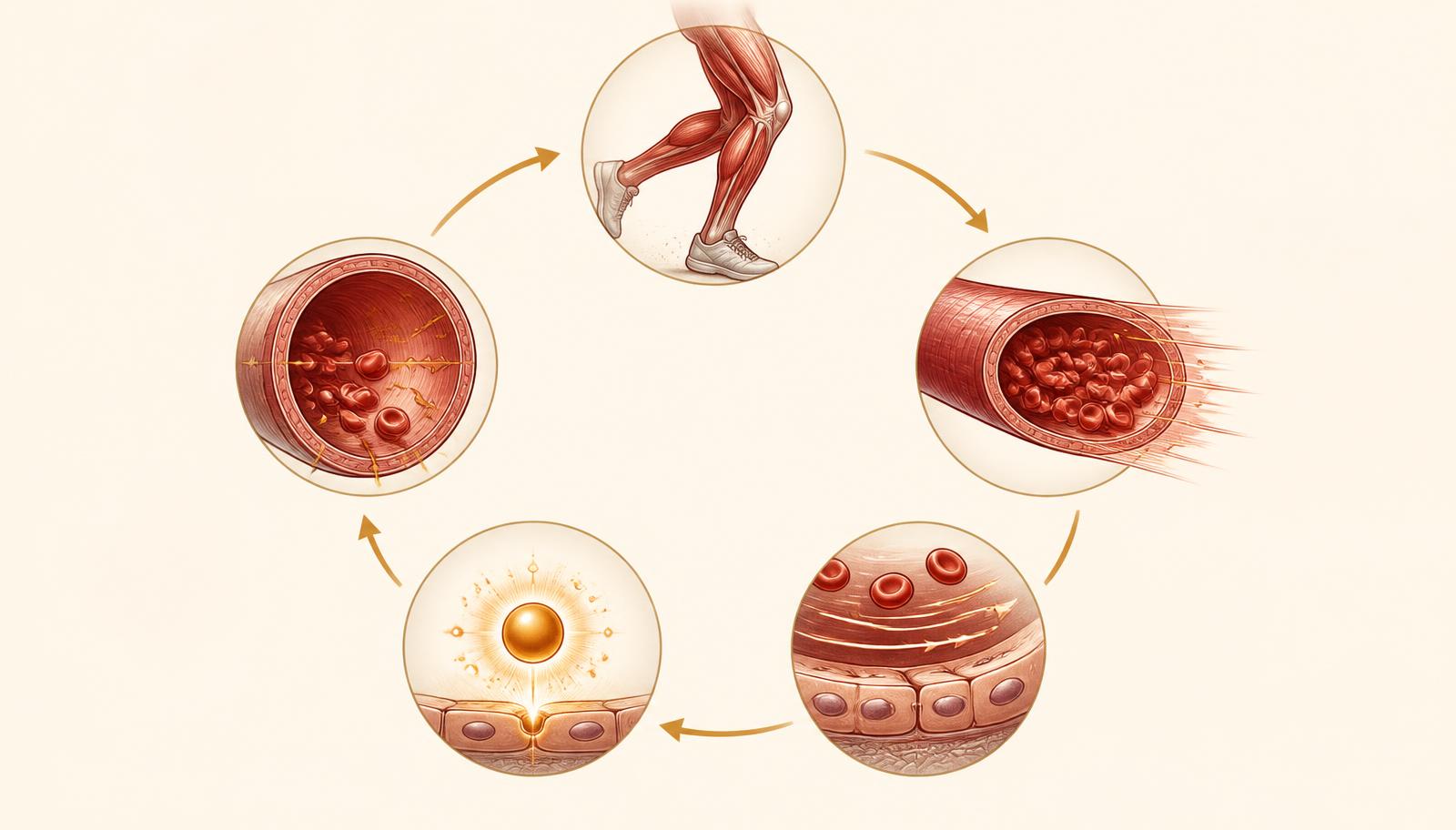
One of the most extraordinary features of the endothelium is its ability to detect a mechanical signal. As blood moves across endothelial cells, it creates force called shear stress. Increase blood flow — during exercise, for example — and the endothelial cells sense the change, which can stimulate signaling involving eNOS and NO.
Recent vascular research continues to identify exercise as an important way to preserve endothelial function. [3]
Heart Health and Artery Health Cannot Really Be Separated
We often talk about "heart health" and "artery health" as though they are independent subjects. Physiologically, they are closely connected.
- The heart pumps into the vascular system
- The resistance presented by the vascular system influences how hard the heart must work
- The elasticity of large arteries affects pressure waves created by each heartbeat
- The coronary arteries provide blood to the heart muscle itself
The heart and vascular system are in continuous conversation. That is why cardiovascular health is the more complete concept. It includes the heart — but it does not stop there.
Healthy Circulation Is Not Simply "More Blood Flow"
The goal is not to maximize blood flow throughout the body. Your kidneys don't need the same blood flow while exercising that your working quadriceps do. Your skin needs different circulation when you are hot than when you are cold. Your digestive system changes its demands after a meal. The brain carefully regulates its own blood supply.
Healthy circulation means appropriate blood flow, delivered to the right tissue, at the right time, according to physiological need. That requires both a functioning heart and responsive blood vessels.
What Does "Cardiovascular Wellness" Actually Include?
Rather than reducing cardiovascular health to one laboratory number, it is useful to think of several interacting layers.
Heart
Generates the force needed to circulate blood.
Large arteries
Carry blood and buffer the pressure created by each heartbeat.
Small arteries / arterioles
Regulate regional blood-flow distribution.
Capillaries
Allow oxygen, nutrient and metabolic exchange with tissue.
Veins
Return blood toward the heart.
Endothelium
Senses the bloodstream and coordinates vascular signaling.
Nitric oxide system
Contributes to vascular relaxation and endothelial signaling.
Blood
Carries oxygen, nutrients, hormones and metabolic products.
That is why interventions aimed at cardiovascular wellness generally work best when they support the system, rather than focusing on one isolated structure.
What Changes With Age?
Cardiovascular aging is not one process.
- The heart changes
- Large arteries tend to become stiffer
- Endothelial function can decline
- Oxidative stress may increase
- NO bioavailability tends to decrease
- Blood-pressure regulation can change
- Metabolic factors may become more important
A recent review of cardiovascular aging specifically identifies declining NO bioavailability as one mechanism associated with endothelial dysfunction, vascular stiffening and other age-related cardiovascular changes. [5][6]
This is why maintaining cardiovascular health becomes increasingly important after 50 — not because the system suddenly fails, but because preserving its functional reserve and responsiveness becomes more valuable.
The Heart May Still Pump — but the Delivery System Matters
A common mistake in healthy aging is to ask only: "Is my heart healthy?" A more complete question is: "How well is my cardiovascular system functioning?"
- Can blood vessels respond appropriately?
- Are you physically active enough to challenge the system?
- Are blood pressure and metabolic factors being managed?
- Is the endothelium functioning well?
- Does the body have adequate nutritional substrate for normal NO production?
- Are you maintaining muscle?
- Are you supporting healthy circulation from more than one direction?
Nutrition Enters the Cardiovascular System in Several Ways
Food contributes to cardiovascular health through many pathways. Protein provides amino acids. Vegetables provide nitrate, minerals and plant compounds. Fruits provide vitamins and phytonutrients. Healthy dietary patterns contribute fiber and support metabolic health. Minerals participate in muscle, nerve and vascular physiology.
There is no single "cardiovascular nutrient." But some nutrients have particularly direct relationships with NO biology.
L-Arginine: Raw Material for Endothelial NO
L-arginine is an amino acid found naturally in protein-containing foods. Its importance to nitric-oxide biology is very specific: eNOS uses L-arginine as substrate. That means adequate arginine availability is part of the natural endothelial NO-production system.
But oral arginine is also subject to significant first-pass metabolism, so nutritional support of arginine availability can be approached in another way. [8]
L-Citrulline: A Complementary Route to Arginine
L-citrulline is metabolized differently. After absorption, citrulline can be converted into L-arginine, importantly through metabolism involving the kidneys.
L-ARGININE
Provides the substrate for eNOS more directly.
L-CITRULLINE
Provides a complementary route for replenishing circulating arginine.
Human research has found that combining the two can raise plasma arginine more effectively than the same total quantity of either alone under studied conditions. [7]
The value is not simply having two amino acids. It is using two metabolically different routes toward the same important substrate.
Dietary Nitrate Provides Another Path
Leafy greens and beetroot can provide dietary nitrate, which creates another route toward NO.
So cardiovascular nutrition can support NO biology from more than one direction. That is especially interesting as we age, because declining endothelial NO bioavailability can make complementary pathways increasingly relevant. [2]
Magnesium Belongs in the Broader Cardiovascular Picture
Magnesium is not a direct NO precursor. Its value is broader: magnesium is involved in hundreds of enzymatic processes and contributes to normal muscle function, nerve function, electrolyte balance, energy metabolism and cardiovascular physiology.
The heart is muscle. The vascular system contains smooth muscle. Cardiovascular health therefore depends upon more than NO alone — a useful example of the difference between an ingredient that participates directly in the NO pathway and one that contributes to the broader physiological environment in which that pathway operates.
Plant Nutrients Have Another Supporting Role
Kakadu Plum and Davidson's Plum, for example, are not direct nitric-oxide precursors and should not be presented as though they manufacture NO. Kakadu Plum is particularly notable for vitamin C, while Australian fruits can also provide naturally occurring polyphenolic and phytonutrient compounds.
That fits into cardiovascular nutrition by supporting the wider nutritional environment — not by duplicating the job of arginine or citrulline. Different ingredients can support different parts of the physiology.
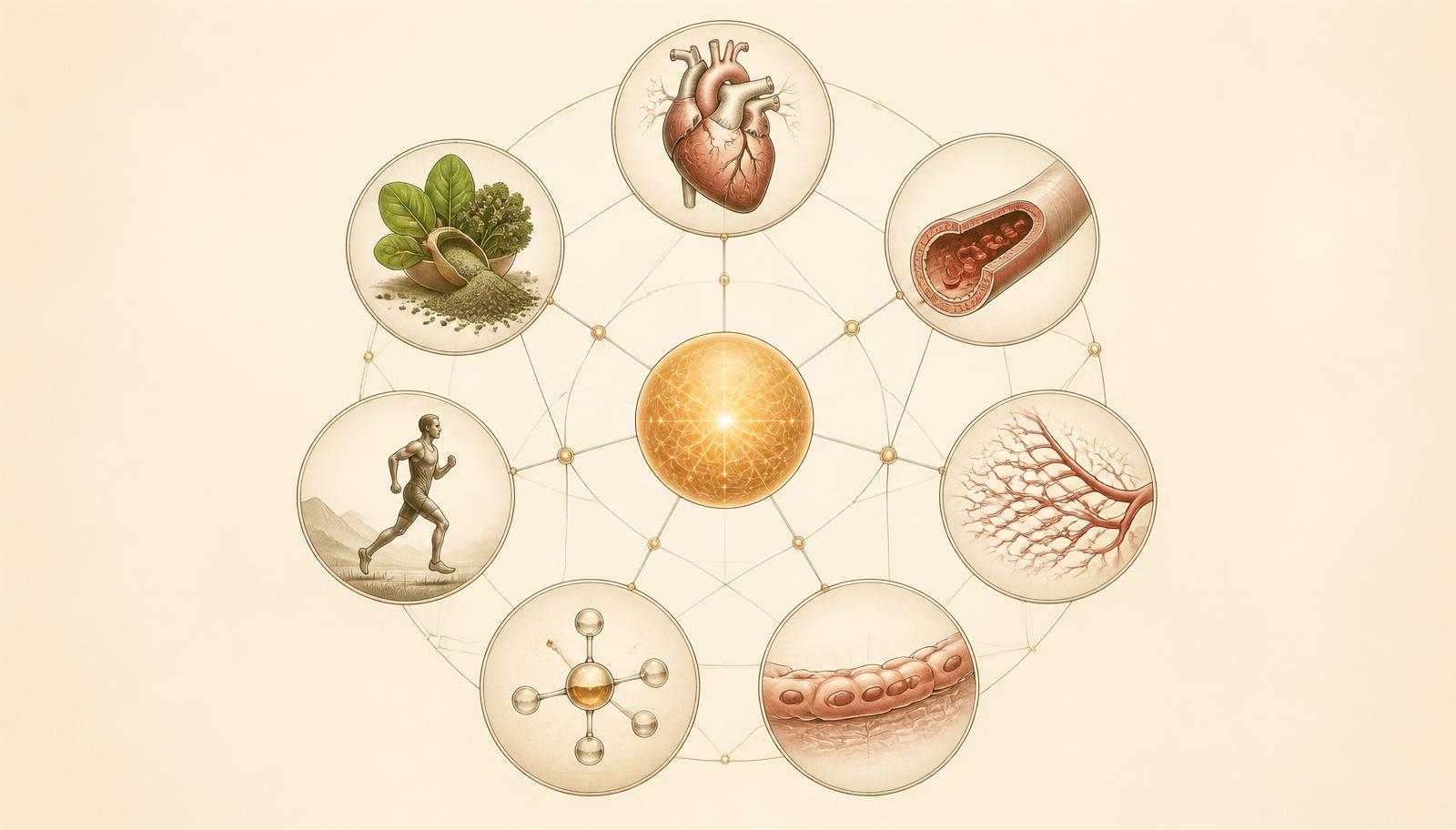
A Useful Way to Look at the Whole System
Think of cardiovascular health as a working organization.
- The heart supplies the power
- The arteries distribute the flow
- The microcirculation completes the delivery
- The veins return the blood
- The endothelium monitors and coordinates
- Nitric oxide carries one of the regulatory messages
- Arginine and citrulline contribute raw material to that signaling system
- Dietary nitrate provides another NO route
- Minerals and plant nutrients contribute to the broader biological environment
- Exercise keeps challenging the entire organization to remain responsive
No one piece is the whole system. But every piece has a job.
Where ėNOS Fits Into Human Physiology
This systems perspective helps explain the formulation philosophy behind ėNOS by Australiana Life. First, an important distinction: eNOS is endothelial nitric oxide synthase — the enzyme naturally present in the body. ėNOS is Australiana Life's nutritional supplement, and the name reflects the biological pathway the formulation is designed to support.
Rather than attempting to replace normal cardiovascular physiology, ėNOS is designed to work with it nutritionally. At the center are L-arginine and L-citrulline. Arginine provides substrate directly relevant to the natural endothelial eNOS pathway. Citrulline approaches arginine availability differently and can be converted into arginine, providing complementary substrate support.
Supply the raw material through more than one metabolic route, then allow the body's regulated eNOS system to determine NO production according to physiological need. That is fundamentally different from claiming a supplement simply "forces arteries open." It doesn't — nor should it. Healthy cardiovascular physiology depends on regulation.
Why the Supporting Ingredients Matter
ėNOS also reflects a broader principle: cardiovascular wellness is bigger than one biochemical pathway. Magnesium contributes to normal muscle, nerve and metabolic physiology. Kakadu Plum and Davidson's Plum contribute plant-derived nutrients and phytonutrients to the overall formula.
Together with the core arginine/citrulline strategy, these ingredients create a formulation designed around different aspects of the cardiovascular nutritional environment rather than simply maximizing the number of ingredients on the label — targeted NO-pathway support inside a broader wellness formulation.
Why This Becomes Especially Relevant After 50
Younger adults often possess substantial cardiovascular reserve. With age, several systems become less forgiving: NO bioavailability can decline, arterial stiffness tends to increase, recovery from inactivity becomes more difficult, metabolic risk factors may accumulate, maintaining muscle and aerobic capacity requires more deliberate effort, and diet is not always perfect.
This creates a strong rationale for combining good food, regular movement, cardiovascular risk management and consistent targeted nutritional support. ėNOS can be particularly useful in that context because it provides repeatable daily nutritional support for the arginine/eNOS side of NO physiology, rather than depending on dietary intake being ideal every day.
The objective isn't to replace normal physiology. It is to give normal physiology better nutritional support.
ėNOS Is Best Understood as a Partner to Cardiovascular Wellness
The strongest way to position a cardiovascular supplement is not "take this instead of doing everything else." It is "use this intelligently alongside everything else."
- Exercise still stimulates endothelial shear stress
- Vegetables still provide nitrate and phytonutrients
- Healthy protein foods still provide amino acids
- Maintaining an appropriate body composition still matters
- Blood pressure, glucose and lipids still matter
- Not smoking still matters enormously
- Sleep and recovery still matter
ėNOS adds something specific to that foundation: a deliberately formulated daily nutritional strategy centered on supporting the body's natural nitric-oxide system and healthy circulation.
Cardiovascular Health Is a Capability
Perhaps the best way to think about cardiovascular health is not as the absence of one particular disease. Think of it as capability.
- Can your heart increase its output when needed?
- Can your blood vessels respond?
- Can your circulation redirect blood toward working tissues?
- Can oxygen reach those tissues?
- Can blood return efficiently?
- Can the endothelium sense and signal?
- Can the cardiovascular system adapt as demands change?
That is what a healthy cardiovascular system does. It is dynamic. Responsive. Integrated. And astonishingly active every second of your life.
The Heart Is the Beginning — Not the Whole Story
Your heart deserves its reputation. Without it, circulation stops. But the cardiovascular system is much more than its pump. It is the heart plus the arteries, the veins, the capillaries, the endothelium, the blood, the muscles, the regulatory signals, and the nutritional and metabolic environment in which all of them operate.
Nitric oxide is one of those important signals. L-arginine is one of its important raw materials. L-citrulline provides another route toward that raw material. Dietary nitrate provides another route toward NO. And formulations such as ėNOS can add targeted support to the natural system — especially when used as part of an active, cardiovascular-conscious lifestyle.
That is cardiovascular health in its fullest sense: not one organ working alone, but an entire network working together.
Scientific References
[1] How the Healthy Heart Works
American Heart Association. Overview of normal heart chambers, valves and circulation through the heart, lungs and systemic vascular system. The AHA describes healthy circulation as a continuous body → heart → lungs → heart → body cycle.
American Heart Association →[2] Nitric Oxide Signaling and Regulation in the Cardiovascular System: Recent Advances
Carlström M, et al. Pharmacological Reviews. 2024;76(6):1038–1062. Comprehensive review identifying eNOS-derived NO as an important contributor to vascular homeostasis and describing both NOS-dependent and nitrate–nitrite NO pathways.
PubMed / National Library of Medicine →[3] Promotion of nitric oxide production: mechanisms, strategies, and possibilities
Gonzalez D, Clayton ZE, Wauson EM, Christian M, Tran QK. Frontiers in Physiology. 2025. PMID: 39917079. Contemporary review of endogenous NO production, endothelial eNOS signaling and strategies aimed at supporting endogenous NO.
PubMed / National Library of Medicine →[4] Nitric oxide synthases: regulation and function
Förstermann U, Sessa WC. European Heart Journal. 2012;33(7):829–837. Foundational review of nitric-oxide synthase biology.
PubMed / National Library of Medicine →[5] Aging and vascular endothelial function in humans
Seals DR, Jablonski KL, Donato AJ. Clinical Science. 2011;120:357–375. Review of endothelial dysfunction, reduced NO bioavailability and vascular aging.
PubMed / National Library of Medicine →[6] Declining nitric oxide bioavailability in cardiovascular aging: mechanistic insights and emerging interventions
Patel P, et al. Journal of Cardiovascular Aging. 2025. PMID: 41953454. Recent review connecting declining NO bioavailability with endothelial dysfunction and vascular aging.
PubMed / National Library of Medicine →[7] The effects on plasma L-arginine levels of combined oral L-citrulline and L-arginine supplementation in healthy males
Suzuki T, Morita M, Hayashi T, Kamimura A. Bioscience, Biotechnology, and Biochemistry. 2017;81(2):372–375. PMID: 27667025. Human study demonstrating the complementary effect of combined L-arginine and L-citrulline on circulating arginine.
PubMed / National Library of Medicine →[8] Pharmacokinetic and pharmacodynamic properties of oral L-citrulline and L-arginine: impact on nitric oxide metabolism
Schwedhelm E, Maas R, Freese R, et al. British Journal of Clinical Pharmacology. 2008;65(1):51–59. PMID: 17662090. Human research demonstrating different pharmacokinetic characteristics of arginine and citrulline.
PubMed / National Library of Medicine →
Explore the Cardiovascular System Further
- What Is Nitric Oxide and Why Does It Matter? →
Meet one of the signaling molecules that helps blood vessels respond.
- Healthy Arteries & Nitric Oxide →
Explore the structure and function of the vessels carrying blood away from the heart.
- Healthy Circulation After 50: Why Blood Flow Matters →
See what happens to blood-flow regulation through midlife and beyond.
- The Endothelium: The Hidden Key to Healthy Blood Vessels →
Discover the cellular surface coordinating much of vascular signaling.
- Why Combine L-Arginine and L-Citrulline? →
Understand the complementary nutritional strategy at the center of ėNOS.
SUPPORT THE SYSTEM — NOT JUST ONE PART OF IT
Cardiovascular health depends on an integrated network of heart, arteries, circulation, endothelial signaling and nutrition. ėNOS combines L-arginine + L-citrulline with deliberately selected supporting nutrients, including magnesium and Australian plant ingredients, to provide consistent nutritional support for the body's natural nitric-oxide system, healthy circulation and cardiovascular wellness.
EXPLORE ĖNOS →This article is provided for informational purposes only and is not intended as medical advice or to diagnose, treat, cure or prevent disease. Cardiovascular health is influenced by many factors, including blood pressure, blood lipids, glucose regulation, smoking, physical activity, diet, age, genetics and medical conditions. ėNOS is a dietary supplement formulated to support the body's natural nitric-oxide system, healthy circulation and cardiovascular wellness. It should complement, rather than replace, appropriate nutrition, physical activity, cardiovascular risk management or medical care.
More in Heart & Arteries
About Our Health & Science Content
Australiana Life Health & Science articles are based on published scientific research and written to make complex health and nitric oxide science easier to understand. Our educational content undergoes scientific review for accuracy and appropriate interpretation of the evidence and is updated as relevant scientific understanding evolves.