
How to Increase Nitric Oxide Naturally
Food, Exercise and Everyday Ways to Support Your Body's Natural NO Production
Your body already knows how to make nitric oxide. The question is: how can you help it do that effectively?
Nitric oxide — usually abbreviated NO — is a signaling molecule produced naturally throughout the body. Within the cardiovascular system, it plays an important role in helping blood vessels relax and respond to changing demands.
Unlike a vitamin, nitric oxide is not something the body simply stores in large quantities and uses later. It is produced as needed through several biological pathways. That means supporting healthy nitric-oxide levels is less about finding one magical "NO food" or ingredient and more about supporting the systems your body uses to make it.
Fortunately, several everyday habits can do exactly that. They include:
- eating nitrate-rich vegetables
- supplying the amino acids used in the NO pathway
- exercising regularly
- supporting a healthy oral microbiome
- eating a plant-rich diet
- protecting endothelial health
- maintaining healthy lifestyle habits as you age
Let's look at how each one works.
First: Understand How the Body Makes Nitric Oxide
There are two especially important pathways worth understanding.
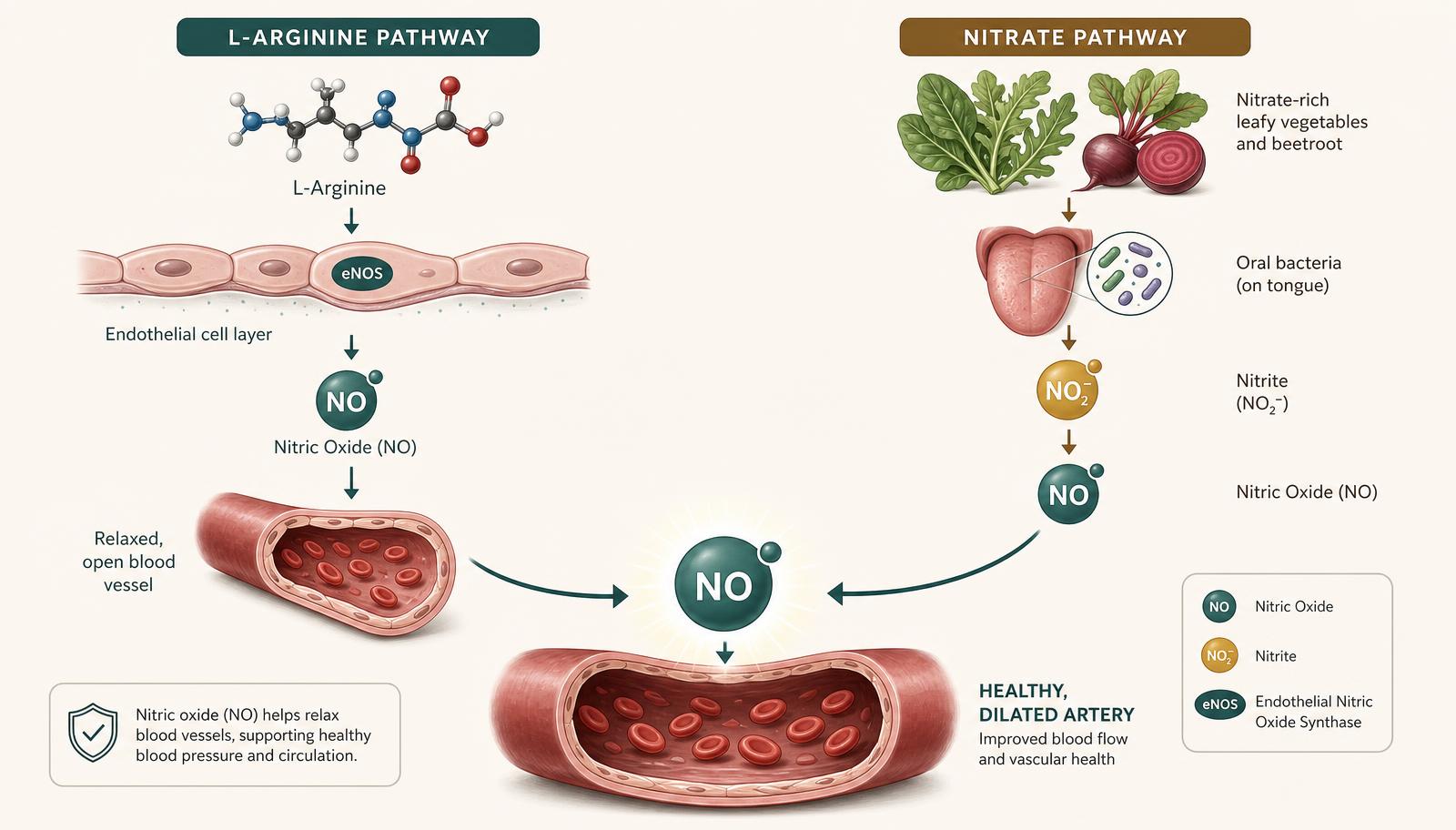
Pathway 1: The L-Arginine / eNOS Pathway
The cells lining your blood vessels — known collectively as the endothelium — contain an enzyme called endothelial nitric oxide synthase, or eNOS. eNOS uses the amino acid L-arginine as a substrate in the production of nitric oxide. In simplified form:
This is one of the body's principal pathways for producing vascular NO. But there is another.
Pathway 2: The Nitrate–Nitrite–NO Pathway
Certain foods, particularly vegetables, naturally contain nitrate. The body can process this nitrate through a completely different route:
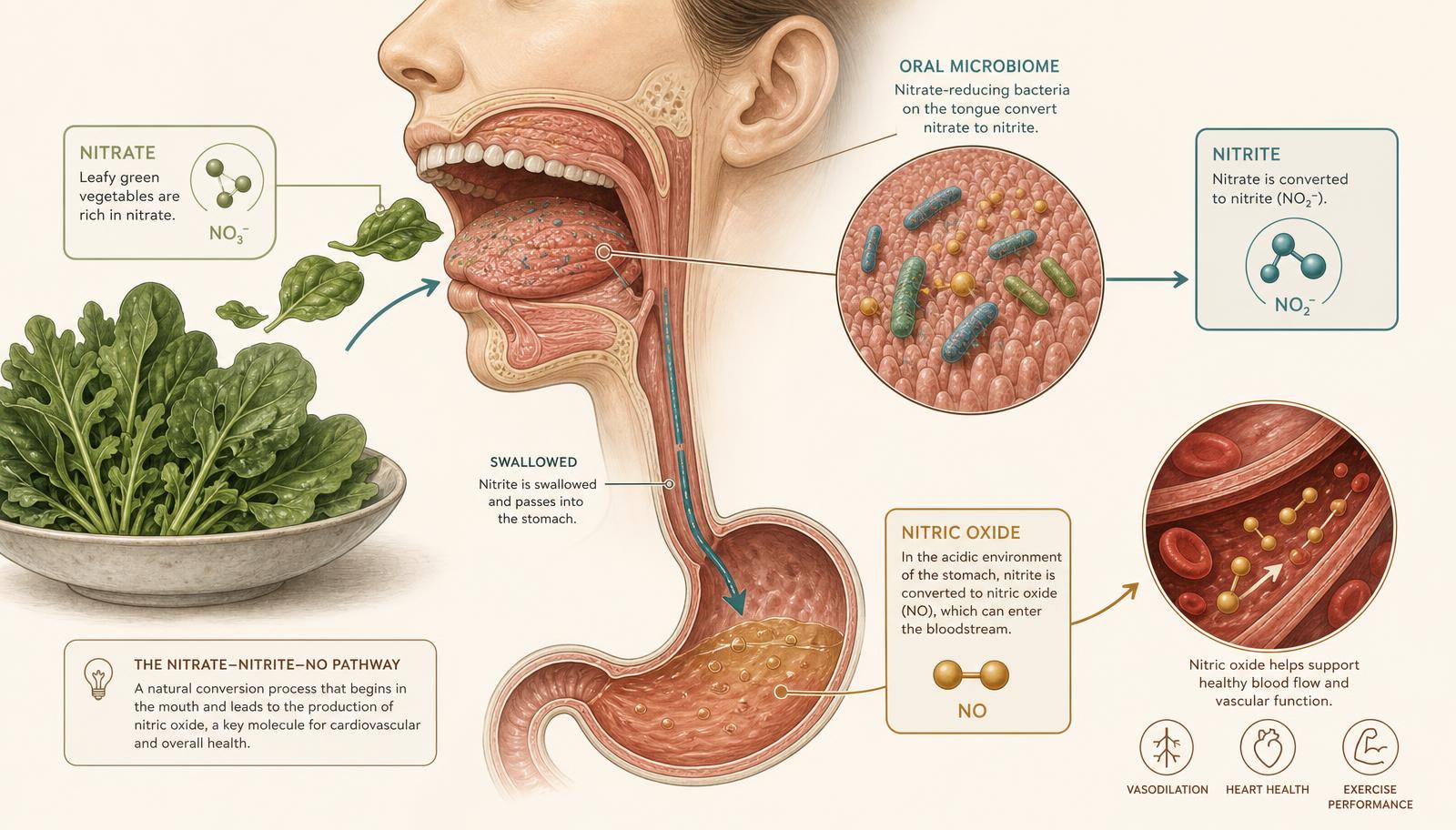
An especially fascinating part of this pathway happens in your mouth. Bacteria living on the tongue help convert nitrate into nitrite. Nitrite is swallowed and can subsequently participate in reactions that produce nitric oxide elsewhere in the body. [1][2]
So nature has provided more than one route for producing NO. That gives us several ways to support the process naturally.
1. Eat More Nitrate-Rich Vegetables
One of the simplest natural strategies for supporting nitric-oxide production is something nutrition experts have recommended for decades: eat your vegetables. But the reason is more interesting than many people realize.
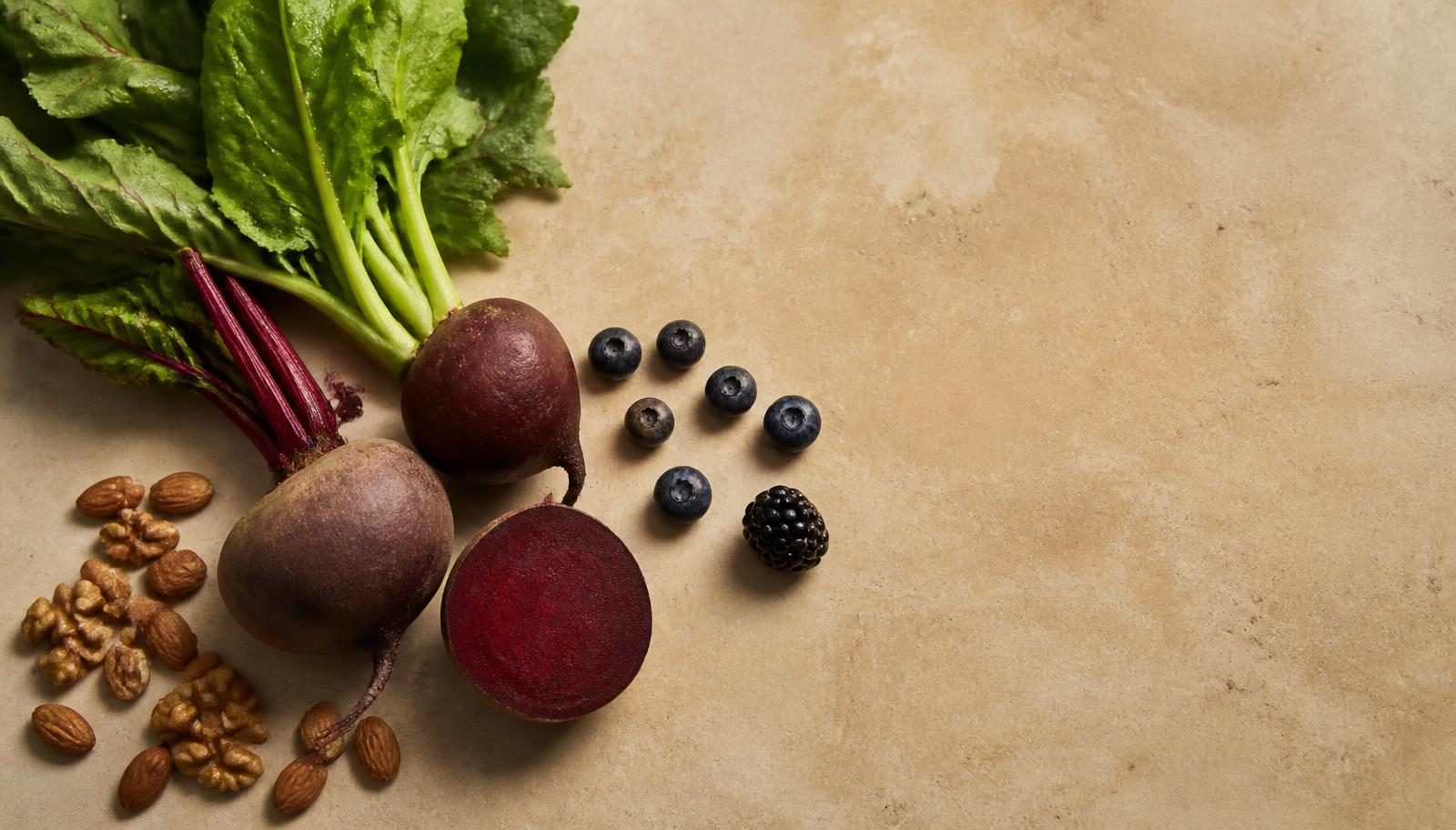
Green leafy vegetables and certain root vegetables can contain meaningful amounts of naturally occurring nitrate. Research has identified foods such as:
- spinach
- arugula / rocket
- lettuce
- beetroot
- celery
- other leafy green vegetables
as useful dietary nitrate sources. The amount varies considerably according to the vegetable, growing conditions, soil, season and preparation.
Once consumed, dietary nitrate can become part of the nitrate–nitrite–NO pathway. Reviews of the scientific literature describe vegetable nitrate as an important nutritional contributor to nitric-oxide availability. [2][3]
A recent systematic review examining habitual vegetable-nitrate intake also found associations between greater intake and favorable cardiovascular outcomes, although the authors emphasized that additional randomized clinical research is still needed. [4]
A vegetable-rich diet doesn't just provide vitamins, minerals and fiber. It can also provide raw material for one of the body's natural nitric-oxide pathways.
Beetroot: Why It Gets So Much Attention
Beetroot has become particularly well known in nitric-oxide research. The reason isn't that beetroot itself contains nitric oxide. It doesn't. Rather, beetroot can contain substantial amounts of inorganic nitrate, which the body can use through the nitrate–nitrite–NO pathway.
Numerous human studies have examined beetroot or beetroot juice in relation to vascular function, blood pressure and exercise physiology. A systematic review and meta-analysis of randomized clinical trials reported that beetroot-derived nitrate was associated with improvements in some measures of endothelial function and arterial stiffness, although not every cardiovascular measure changed significantly. [5]
This is exactly why we prefer the language "supports nitric-oxide production" rather than claiming that a food simply "boosts NO." The biology is more sophisticated than that.
2. Don't Forget the Bacteria in Your Mouth
This may be the most surprising part of the nitric-oxide story: your mouth is involved in producing NO from dietary nitrate.
After nitrate is absorbed, some of it is actively concentrated by the salivary glands and returned to the mouth in saliva. Certain bacteria living on the tongue convert nitrate into nitrite. That nitrite is then swallowed and can contribute to further nitric-oxide formation. [1][6]
This process is known as enterosalivary circulation. In other words:
Your oral microbiome is therefore not simply a collection of unwanted germs. Some oral bacteria participate in normal human physiology.
What About Antibacterial Mouthwash?
If nitrate-reducing bacteria in the mouth are important to this pathway, what happens when they are heavily suppressed? In a small randomized crossover study involving people receiving treatment for hypertension, three days of antibacterial mouthwash reduced oral nitrate-to-nitrite conversion and was accompanied by a small rise in systolic blood pressure compared with the control condition. [7]
That does not mean people should stop using medically or dentally recommended antimicrobial mouthwash. There are legitimate reasons dentists and physicians may recommend these products. It does mean that routinely eliminating large portions of the oral microbiome may have biological effects beyond fresh breath. The relationship among oral health, oral bacteria and nitric-oxide metabolism is now an active field of research.
3. Exercise — Because Blood Flow Stimulates Your Arteries
One of the most effective natural ways of supporting healthy vascular function doesn't come from food at all. It comes from movement.
When you exercise, working muscles need more oxygen and nutrients. The heart pumps more blood. Blood flow increases through the arteries. As that blood moves along the inner surface of blood vessels, it creates a mechanical force known as shear stress.
Endothelial cells can sense this increased flow. That stimulus influences pathways associated with endothelial nitric-oxide production. Research has long identified exercise-induced shear stress as an important mechanism through which physical activity affects vascular function. [8]
This means exercise doesn't merely strengthen muscles and condition the heart. It stimulates the blood vessels themselves.
You Don't Have to Be an Athlete
The important word is regular. Activities that increase blood flow can include:
- brisk walking
- cycling
- swimming
- jogging
- resistance training
- hiking
- active recreational exercise
The objective is not to chase a momentary nitric-oxide "spike." It is to build a lifestyle in which your cardiovascular system is regularly asked to work, respond and adapt.

4. Supply the Building Blocks: Arginine and Citrulline
The eNOS pathway requires L-arginine. Arginine is an amino acid found naturally in the body and in protein-containing foods. Dietary sources can include:
- meat
- poultry
- fish
- dairy foods
- nuts
- seeds
- legumes
But another amino acid is especially interesting in nitric-oxide metabolism: L-citrulline.
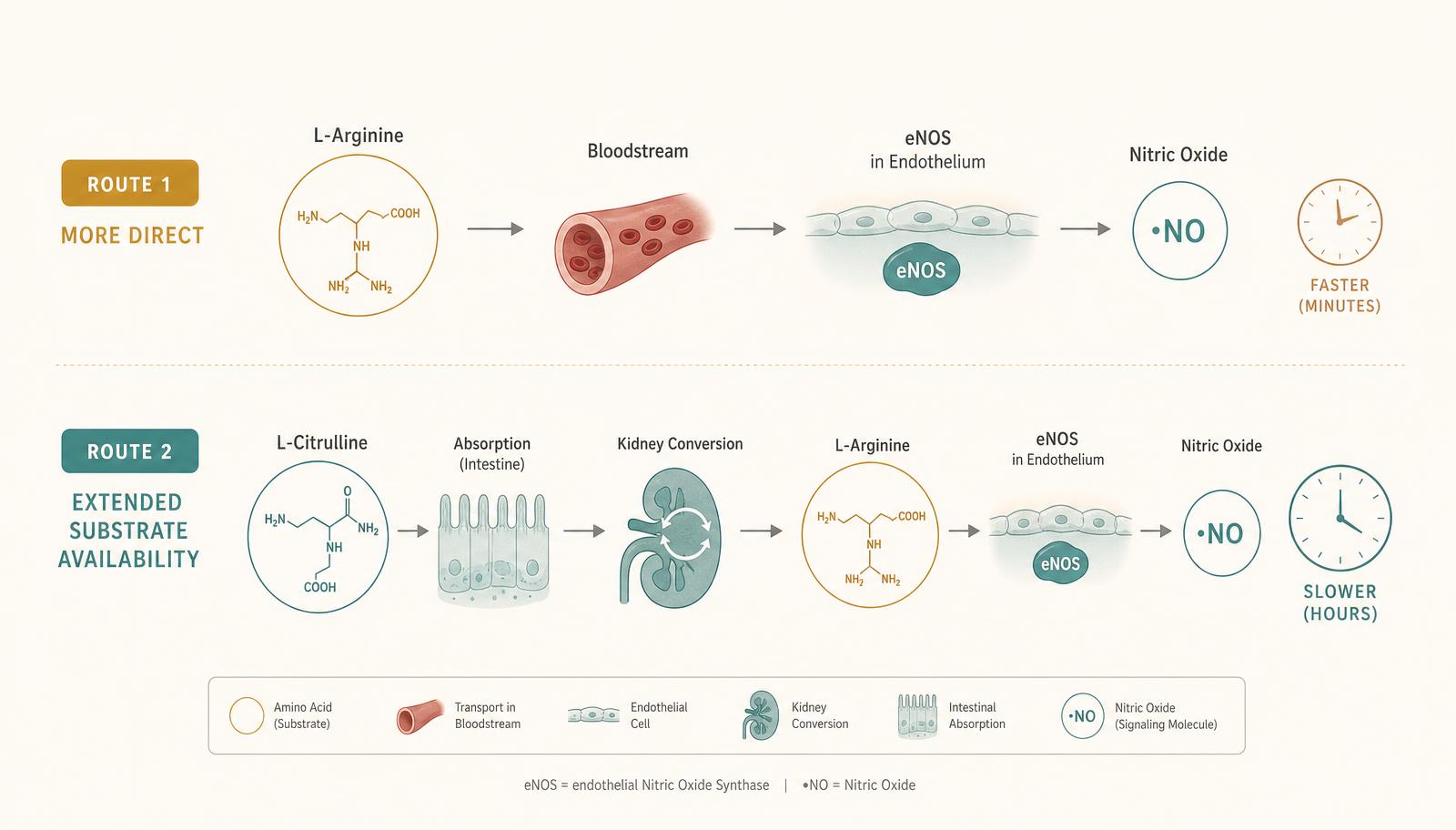
Arginine: The Direct Route
Arginine serves directly as substrate for nitric oxide synthase. In simplified form:
After oral consumption, however, a portion of arginine is metabolized in the gastrointestinal tract and liver before reaching systemic circulation. This is where citrulline becomes especially valuable from a metabolic perspective.
Citrulline: The Complementary Route
Citrulline follows a different pathway. It is efficiently absorbed and avoids much of the first-pass metabolism experienced by orally consumed arginine. The body can then convert citrulline into arginine, with the kidneys playing an important role in that conversion.
Controlled human research has demonstrated that oral citrulline can raise circulating arginine concentrations and increase markers of NO-dependent signaling. [9]
This creates two complementary routes:
The timing is different. That is why combining the two can provide a scientifically logical strategy for more immediate and more sustained support of arginine availability for natural NO production.
Citrulline itself should not be described as "slow-release nitric oxide." Rather, its different metabolism can help replenish the arginine pool from which the body subsequently produces NO.
5. Eat for the Endothelium, Not Just for Nitric Oxide
It can be tempting to reduce NO nutrition to nitrate, arginine and citrulline. But the body doesn't work as a collection of isolated pathways. Nitric oxide is produced within a biological environment. The health of the endothelium matters. Oxidative balance matters. Overall nutritional status matters.
That is why a plant-rich cardiovascular eating pattern remains important even beyond nitrate-rich vegetables. Fruits and vegetables provide compounds such as:
- vitamin C
- polyphenols
- flavonoids
- anthocyanins
- carotenoids
- minerals
- numerous other phytochemicals
These compounds participate in multiple aspects of normal cellular physiology. The goal shouldn't be "which one food makes the most nitric oxide?" A better question is: "what kind of diet supports the biological system that produces and uses nitric oxide?" That leads to a broader and more sustainable nutritional strategy.
6. Consider the Role of Oxidative Stress
Producing NO is only half of the equation. The NO produced also needs to remain biologically available long enough to do its job. Reactive oxygen species can interact with nitric oxide and reduce NO bioavailability. This is one reason vascular scientists distinguish between NO production and NO availability.
A healthy lifestyle therefore supports more than simply production. It helps support the environment in which normal NO signaling occurs. That reinforces familiar recommendations:
- Eat a plant-rich diet.
- Exercise regularly.
- Don't smoke.
- Maintain healthy metabolic and cardiovascular risk factors.
- Get appropriate sleep.
Think of the entire system.
7. Nitric Oxide Becomes More Relevant as We Age
One reason interest in nitric-oxide support increases after midlife is that NO biology changes with age. Research has associated aging with impaired endothelial function and reduced NO bioavailability. The body's nitric-oxide synthase pathway may become less effective, while oxidative stress can increase.
Interestingly, the nitrate–nitrite–NO pathway may provide a complementary mechanism that does not rely on exactly the same enzymatic process as endothelial eNOS. Recent scientific reviews continue to examine nitrate-rich vegetables as a nutritional strategy of particular interest in aging populations. [10]
This makes the basics increasingly important with age:
- Move.
- Eat vegetables.
- Support vascular nutrition.
- Maintain metabolic health.
- Provide the body with appropriate nutritional building blocks.
The objective isn't to reverse time. It is to support the physiology you want to maintain as you get older.
8. What About "Nitric Oxide Boosting" Supplements?
The phrase "nitric oxide supplement" can be misleading. Most supplements do not actually contain meaningful amounts of nitric oxide gas. Instead, they generally supply nutrients intended to help the body produce NO. These might include:
- L-arginine
- L-citrulline
- nitrate-containing plant ingredients
- vitamins or minerals
- plant compounds associated with cardiovascular nutrition
The important questions therefore are not "how many ingredients are on the label?" or "does the product say NO booster?" Better questions include:
- Which nitric-oxide pathways are being supported?
- Are the ingredients present in meaningful amounts?
- Are their forms and combinations based on biological rationale?
- Does the formulation support only NO production, or the broader nutritional environment as well?
That is a much more useful way to evaluate nitric-oxide nutrition.
9. A Practical Natural NO Routine
Supporting nitric oxide naturally does not need to become complicated. A sensible everyday pattern might look something like this:
Every Day
- Include vegetables, especially leafy greens.
- Include a variety of colorful fruits and vegetables.
- Eat appropriate protein sources that provide amino acids.
- Stay physically active.
- Avoid smoking.
- Support good oral health without assuming that every oral bacterium needs to be eliminated.
- Maintain appropriate hydration.
Several Times Each Week
- Perform aerobic activity that noticeably increases blood flow.
- Include appropriate strength or resistance exercise.
- Rotate nitrate-rich vegetables such as leafy greens and beetroot into meals.
Over the Long Term
- Maintain healthy blood pressure, blood glucose, blood lipids and body composition.
- Prioritize sleep.
- Remain physically active as you age.
- Think about vascular health as a lifelong practice rather than a short-term intervention.
There Is No Single "Nitric Oxide Hack"
Internet searches often produce shortcuts. Eat this. Take that. Drink this juice. Do this breathing trick. The scientific reality is more interesting. Nitric oxide is part of an integrated biological system involving:
- the endothelium
- eNOS
- arginine
- citrulline
- dietary nitrate
- oral bacteria
- blood flow
- exercise
- oxidative balance
- nutrition
- aging
No single strategy controls all of them. That is why the best natural approach is also the most logical: support the whole system.
Where ėNOS Fits
The same systems approach influenced the development of ėNOS by Australiana Life. Rather than approaching nitric oxide as though one ingredient alone controls NO production, ėNOS combines selected nutrients intended to complement different aspects of the body's natural nitric-oxide and cardiovascular pathways.
Central to that strategy is the relationship between L-arginine and L-citrulline. Arginine provides more directly available substrate for eNOS. Citrulline follows a complementary metabolic route and can be converted into arginine, helping replenish and extend circulating arginine availability. The formulation also includes selected nutrients and Australian plant ingredients intended to complement the broader nutritional environment associated with cardiovascular wellness.
Don't try to replace the body's natural nitric-oxide system. Support the system the body already has. ėNOS is intended to complement the fundamentals discussed throughout this article — nutritious food, regular movement and a healthy lifestyle.
The Takeaway: How to Increase Nitric Oxide Naturally
If you want to support your body's natural nitric-oxide production, start with the fundamentals.
- Eat nitrate-rich vegetables. Leafy greens and beetroot provide nutritional nitrate for the nitrate–nitrite–NO pathway.
- Exercise regularly. Increased blood flow creates shear stress that stimulates the vascular endothelium.
- Provide appropriate amino acids. Arginine is used directly by eNOS, while citrulline provides a complementary route for replenishing arginine.
- Respect the oral microbiome. Bacteria in the mouth participate in converting dietary nitrate to nitrite.
- Eat for vascular health. Plant compounds, nutrients and overall dietary quality contribute to the biological environment surrounding NO.
- Protect the system as you age. Regular activity and sound nutrition become increasingly important as endothelial function and NO availability change with age.
Most importantly: think beyond the idea of "boosting" one molecule. Healthy nitric-oxide biology is the result of multiple systems working together.
Scientific References
[1] The nitrate–nitrite–nitric oxide pathway in physiology and therapeutics
Lundberg JO, Weitzberg E, Gladwin MT. Research describing the complementary nitrate–nitrite–NO pathway and its physiological importance.
PubMed / National Library of Medicine →[2] Dietary Nitrate, Nitric Oxide, and Cardiovascular Health
Bondonno CP, Croft KD, Hodgson JM. Critical Reviews in Food Science and Nutrition. 2016;56(12):2036–2052. PMID: 25976309.
PubMed / National Library of Medicine →[3] Vascular effects of dietary nitrate (as found in green leafy vegetables and beetroot) via the nitrate-nitrite-nitric oxide pathway
Lidder S, Webb AJ. British Journal of Clinical Pharmacology. 2013;75(3):677–696. PMID: 22882425.
PubMed / National Library of Medicine →[4] Associations between Vegetable Nitrate Intake and Cardiovascular Disease Risk and Mortality: A Systematic Review
Blekkenhorst LC, et al. Nutrients. 2024;16(10):1511. PMID: 38794749.
PubMed / National Library of Medicine →[5] The effect of beetroot inorganic nitrate supplementation on cardiovascular risk factors: a systematic review and meta-regression of randomized controlled trials
Bahrami LS, Arabi SM, Feizy Z, Rezvani R. Nitric Oxide. 2021;115:8–22. PMID: 34119659.
PubMed / National Library of Medicine →[6] The oral microbiome and nitric oxide homeostasis
Hezel MP, Weitzberg E. Oral Diseases. PMID: 23837897.
PubMed / National Library of Medicine →[7] Antibacterial mouthwash blunts oral nitrate reduction and increases blood pressure in treated hypertensive men and women
Bondonno CP, Liu AH, Croft KD, et al. American Journal of Hypertension. PMID: 25359409.
PubMed / National Library of Medicine →[8] Cardiovascular effects of exercise: role of endothelial shear stress
Niebauer J, Cooke JP. Journal of the American College of Cardiology. PMID: 8962548.
PubMed / National Library of Medicine →[9] Pharmacokinetic and pharmacodynamic properties of oral L-citrulline and L-arginine: impact on nitric oxide metabolism
Schwedhelm E, Maas R, Freese R, et al. British Journal of Clinical Pharmacology. 2008;65(1):51–59. PMID: 17662090.
PubMed / National Library of Medicine →[10] Nitrate-rich vegetables, aging and nitric-oxide biology
Recent review literature describing the enterosalivary nitrate pathway and its potential relevance where age-related endothelial NO production is reduced.
PubMed / National Library of Medicine →
Continue Exploring the Heart Health & Science Library
- What Is Nitric Oxide? →
Start with the fundamentals — how the body makes NO and why this signaling molecule matters.
- Nitric Oxide and Heart Health →
Explore the relationship between nitric oxide, vascular function and the heart.
- Nitric Oxide and Healthy Circulation →
Learn how NO participates in the regulation of blood flow and delivery of oxygen and nutrients.
- Nitric Oxide and Arterial Health →
Take a deeper look at the endothelium, vascular responsiveness and arterial function.
- Nitric Oxide & Aging After 50 →
Explore why nitric-oxide biology becomes increasingly relevant as we grow older.
- Discover the Science Behind ėNOS →
See how Australiana Life applied nitric-oxide and nutritional science to the formulation philosophy behind ėNOS.
DISCOVER THE SCIENCE BEHIND ĖNOS
See how Australiana Life applied nitric-oxide and nutritional science to the formulation philosophy behind ėNOS.
EXPLORE ĖNOS →More in Nutrition & NO Support
- Foods That Support Natural Nitric Oxide Production
- L-Arginine + L-Citrulline: Two Pathways Supporting Nitric Oxide
- Arginine vs. Citrulline: What's the Difference?
- L-Citrulline Explained: From Citrulline to Arginine to Nitric Oxide
- L-Arginine & Nitric Oxide Explained
- Why Combine L-Arginine & L-Citrulline?
- Dietary Nitrates & the Nitrate–Nitrite–Nitric Oxide Pathway
- Nitric Oxide Supplements: What Should You Look For?
About Our Health & Science Content
Australiana Life Health & Science articles are based on published scientific research and written to make complex health and nitric oxide science easier to understand. Our educational content undergoes scientific review for accuracy and appropriate interpretation of the evidence and is updated as relevant scientific understanding evolves.