
Foods That Support Natural Nitric Oxide Production
What to Put on Your Plate to Support the Body's Own NO Pathways
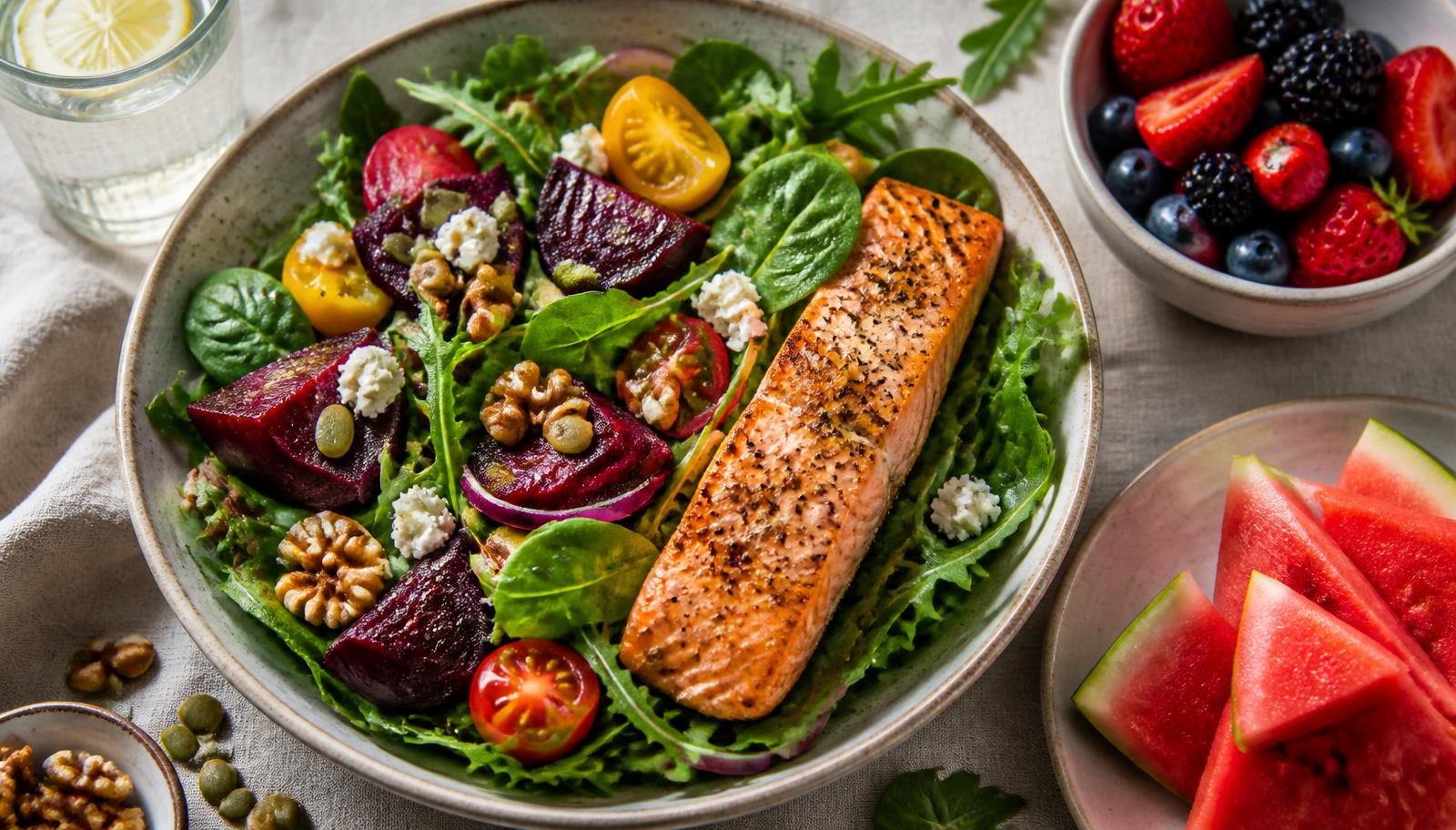
If you wanted to support your body's natural production of nitric oxide, where would you start? You might be surprised to discover that one answer is sitting in the produce aisle.
Arugula. Spinach. Lettuce. Beetroot. Celery.
These everyday foods can provide nitrate — a naturally occurring compound the body can convert through a series of steps into nitric oxide.
But nitrate-rich vegetables are only one part of the nutritional story. Protein foods provide L-arginine, an amino acid used directly in one of the body's principal NO-producing pathways. Watermelon provides L-citrulline, which the body can convert into arginine. Colorful fruits and vegetables provide vitamin C, polyphenols, flavonoids and other compounds that contribute to the broader nutritional environment in which healthy vascular function occurs.
Rather than searching for one magical "nitric oxide food," it makes more sense to build a plate that supports the system from several directions. And fortunately, that can be both simple and delicious.
The Nitric Oxide Grocery List
If you want the quick version before we explore the science, start here.
Leafy Greens
- Arugula / rocket
- Spinach
- Lettuce
- Swiss chard and other leafy greens
Root and Stalk Vegetables
- Beetroot
- Celery
Arginine-Containing Foods
- Nuts
- Seeds
- Legumes
- Fish
- Poultry
- Meat
- Dairy foods
A Notable Citrulline Source
- Watermelon
Colorful Plant Foods
- Berries
- Citrus fruit
- Grapes
- Plums
- Pomegranate
- Herbs and vegetables of many colors
The foods in these groups don't all support NO biology in the same way. That's what makes the nutrition story interesting.
Start With Green: Leafy Vegetables and Dietary Nitrate
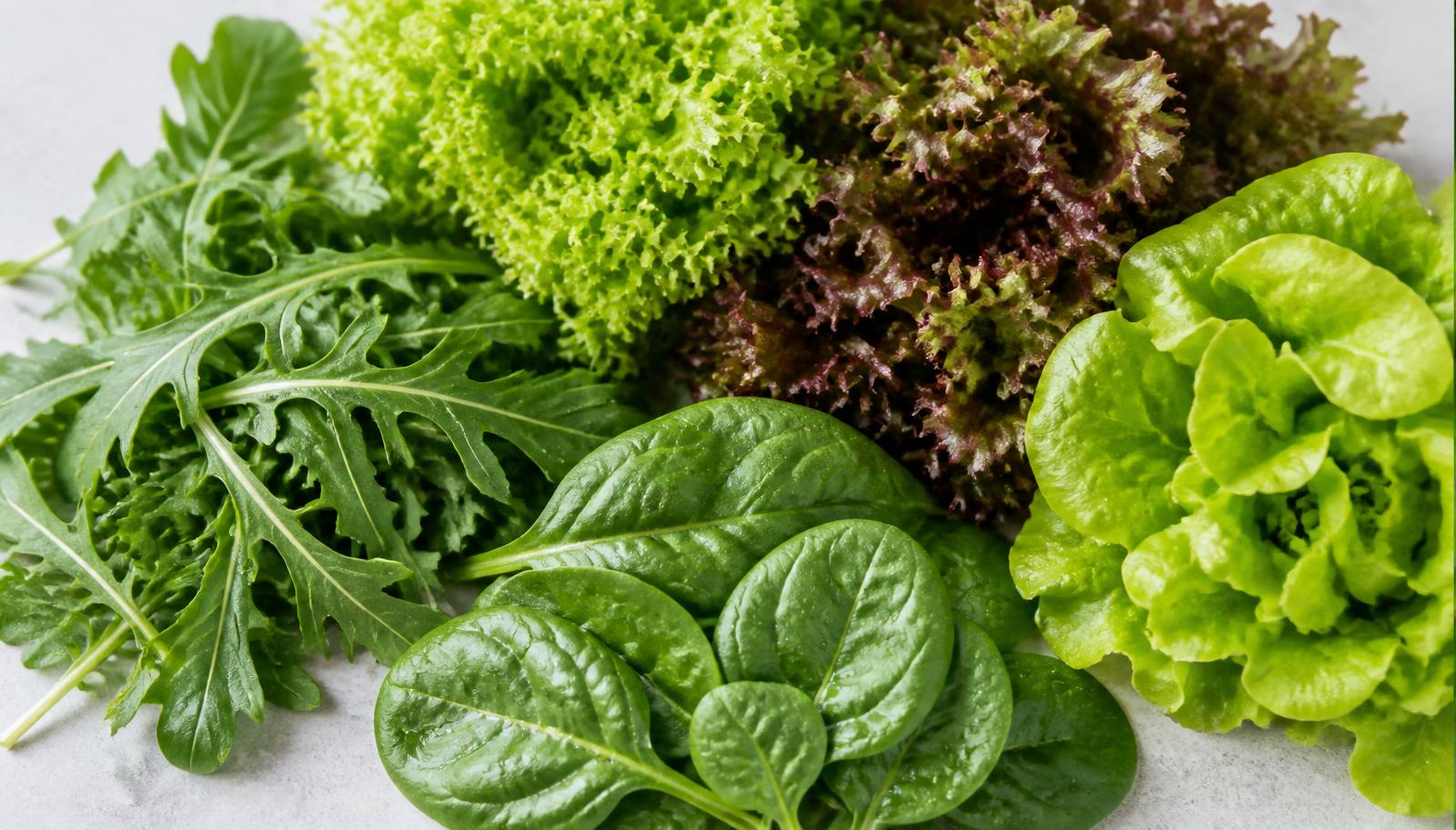
When scientists study foods and nitric oxide, one group repeatedly attracts attention: green leafy vegetables. Many leafy vegetables naturally accumulate inorganic nitrate from the soil, because plants use nitrogen as part of normal growth.
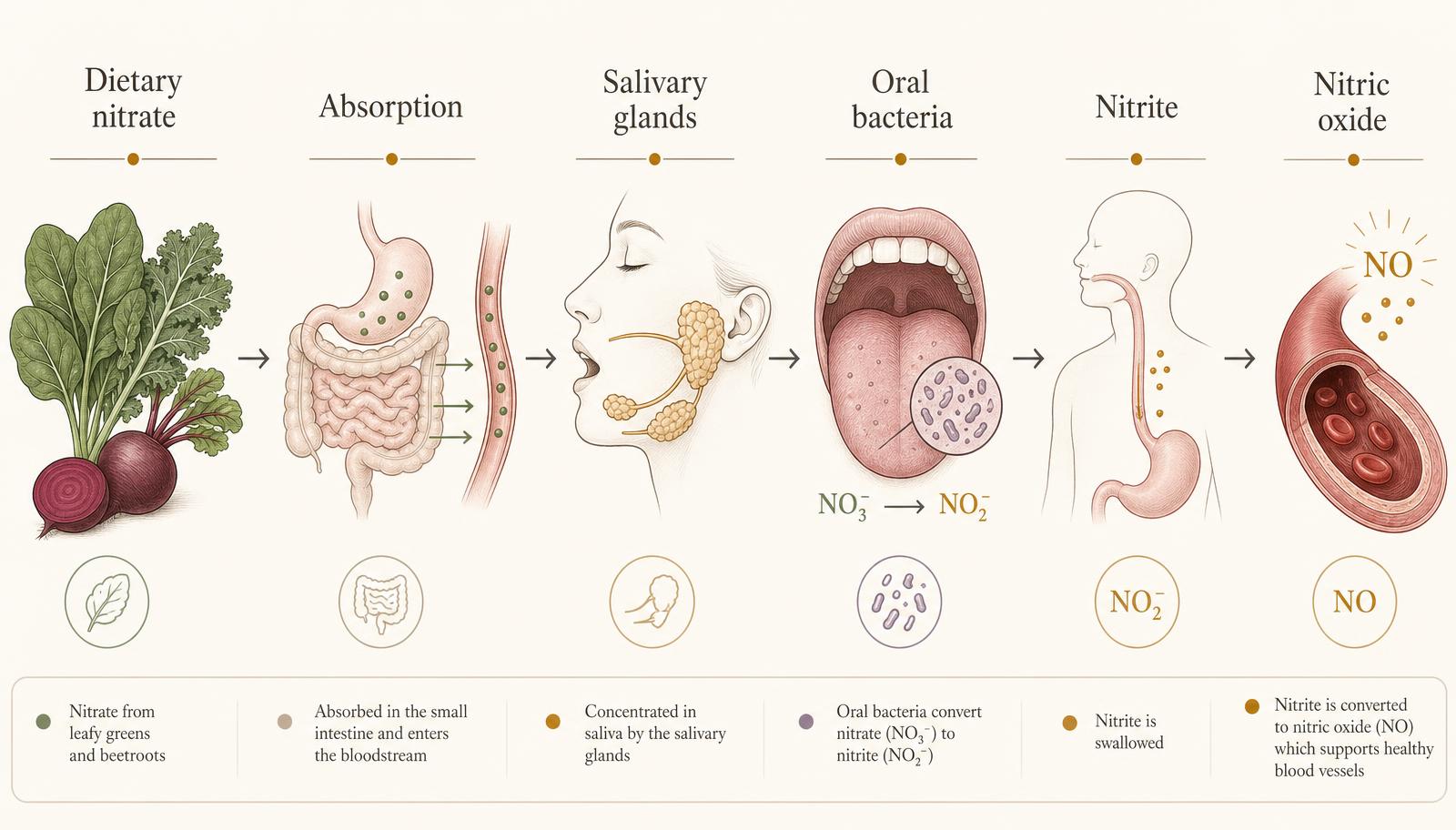
When we eat nitrate-rich vegetables, some of that nitrate can enter a fascinating biological pathway:
This is called the nitrate–nitrite–NO pathway. [1][2] Vegetables frequently identified as meaningful nitrate sources include arugula / rocket, spinach, lettuce, celery and certain other leafy greens. [2]
The exact nitrate content can vary substantially according to growing conditions, soil, season, storage and preparation. So it would be misleading to assign one fixed nitrate number to every serving of spinach or arugula. But as a food category, leafy greens are among the most important natural dietary sources.
Arugula: A Small Leaf With an Interesting Secret
Arugula — known as rocket in Australia and the United Kingdom — deserves special attention. It may look like an ordinary salad green, but research measuring nitrate concentrations in vegetables has repeatedly identified rocket/arugula among foods capable of containing relatively high nitrate concentrations. [2][3]
That makes it remarkably easy to incorporate nitrate-containing food into everyday meals. Add it to:
- salads
- sandwiches
- wraps
- eggs
- grain bowls
- or use it as a fresh topping on cooked dishes
No exotic protocol required. Just food.
Beetroot: The Celebrity of Nitric-Oxide Nutrition
If one food has become synonymous with dietary nitrate research, it is beetroot. Beetroot can contain substantial quantities of nitrate, which is why beetroot and beetroot juice have been extensively studied in cardiovascular and exercise research.
Beetroot does not contain nitric oxide. It provides nitrate. The body then processes that nitrate through the nitrate–nitrite–NO pathway.
Systematic reviews and meta-analyses of randomized trials have examined beetroot-derived nitrate in relation to vascular measures, blood pressure and exercise physiology. [4][5] The results vary according to dose, population and outcome measured, but the research has firmly established beetroot as one of the major foods studied in nutritional NO science.
Raw, Roasted, Juiced — Does It Matter?
Beetroot is versatile. It can be:
- roasted
- grated raw
- added to salads
- blended into smoothies
- or consumed as beetroot juice
Preparation and processing can influence nutritional composition, and nitrate content varies considerably among products and individual vegetables. So don't think of beetroot as a precisely dosed medication. Think of it as a nutrient-rich whole food that can contribute dietary nitrate.
Celery: The Quiet Nitrate Contributor
Celery receives much less publicity than beetroot. But it can also contribute meaningful dietary nitrate. That makes celery an easy everyday addition:
- chopped into salads
- served with dips
- added to soups
- included in vegetable dishes
- or simply eaten raw
This illustrates an important point. A nitric-oxide-supportive diet doesn't require constantly drinking concentrated beet juice. Ordinary vegetables can contribute too.
Here's Where Your Mouth Joins the Meal
The nitrate story has an unexpected twist. After you eat nitrate-rich vegetables, nitrate is absorbed into the bloodstream. Some of it is then actively concentrated by your salivary glands and returned to your mouth in saliva. And that's where bacteria enter the picture.
Certain bacteria living on the tongue convert nitrate into nitrite. The nitrite is swallowed and can subsequently participate in reactions that generate nitric oxide. [1][6] This process is called the enterosalivary nitrate cycle.
It is one of the more surprising connections between nutrition, the oral microbiome and cardiovascular physiology.
Does Mouthwash Matter?
Possibly — depending on the product and how it is used. Because oral bacteria participate in nitrate reduction, researchers have investigated what happens when antibacterial mouthwash suppresses those bacteria. Human studies have shown that antibacterial mouthwash can reduce oral nitrate-to-nitrite conversion, with some studies also observing small changes in blood pressure. [7]
This does not mean people should stop using mouthwash prescribed or recommended by their dentist. Oral health is extremely important, and antimicrobial products have legitimate clinical uses. The research simply illustrates something fascinating: some of the bacteria living in our mouths participate in normal human physiology. The microbiome story is more complicated than "bacteria are bad."
What About Protein Foods?
Vegetables support one NO pathway. Protein foods can support another. The body also produces nitric oxide through an enzyme called nitric oxide synthase. Within blood-vessel endothelial cells, eNOS — endothelial nitric oxide synthase — uses the amino acid L-arginine as substrate.
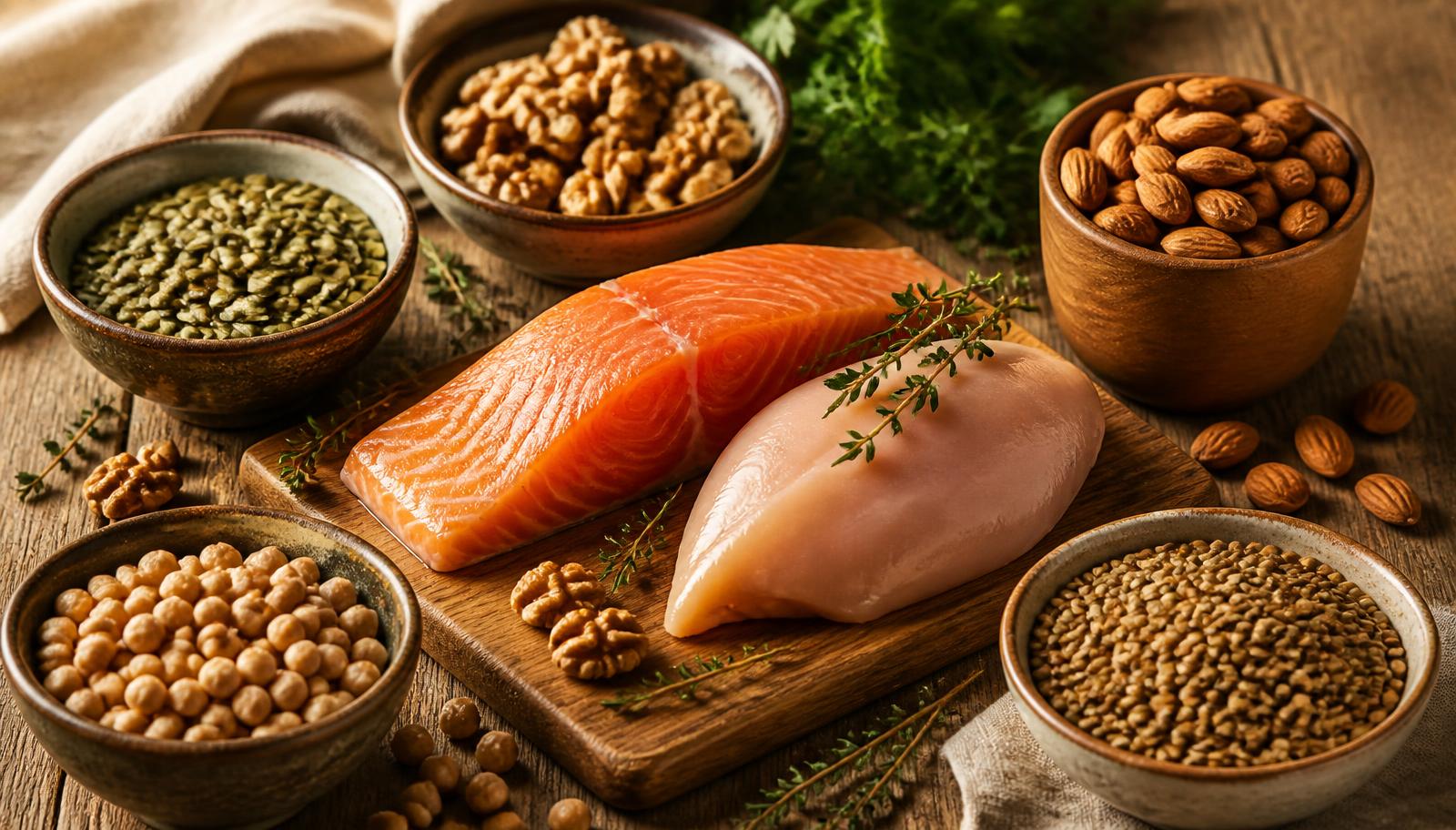
Arginine occurs naturally in many protein-containing foods. Good dietary sources can include:
- nuts and seeds
- legumes
- fish
- poultry
- meat
- dairy products
Whole-food diets therefore contribute arginine as part of normal protein nutrition.
Nuts and Seeds Deserve a Place on the List
Nuts and seeds are especially useful because they combine arginine with other nutrients. Examples include:
- pumpkin seeds
- sesame seeds
- peanuts
- walnuts
- almonds
- and other nuts and seeds
They can also provide unsaturated fats, minerals, fiber and various plant compounds. Rather than thinking of them as an "arginine supplement in food form," it is more useful to appreciate the nutritional package. A handful of nuts or seeds can contribute to a cardiovascular eating pattern from several directions.
Watermelon Has a Different Trick
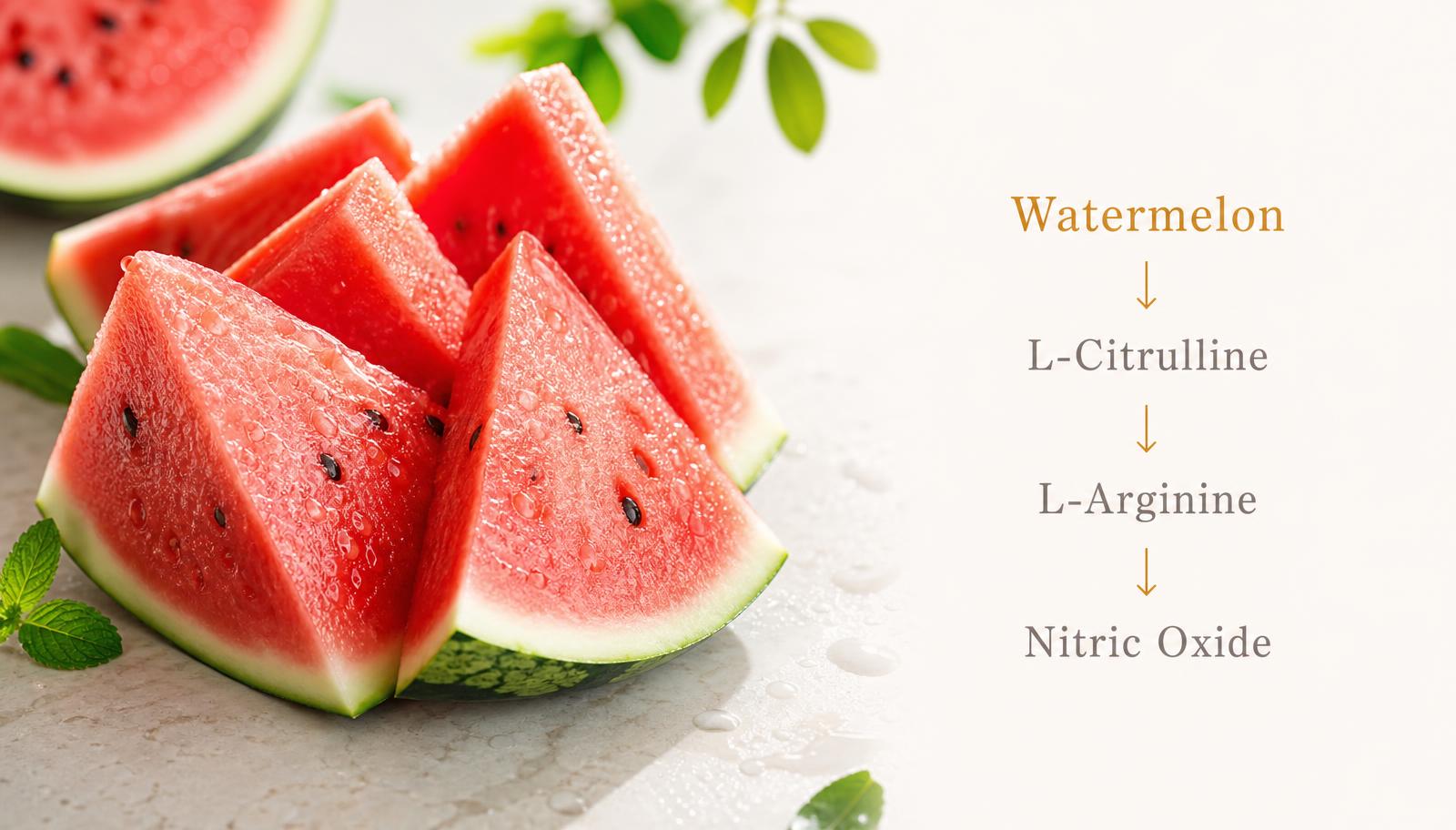
Watermelon stands apart from most of the foods in this article. Its special connection to nitric-oxide biology is L-citrulline. Watermelon is the best-known natural dietary source of citrulline.
Citrulline is interesting because the body can convert it into L-arginine, importantly through metabolism involving the kidneys. That arginine can then become available to nitric oxide synthase.
Human research confirms that citrulline can increase circulating arginine availability. [8] Watermelon therefore reaches the arginine/NO story from a different nutritional direction than protein foods.
And Yes, the Name Is Connected to Watermelon
The scientific name for watermelon is Citrullus lanatus. That botanical relationship is reflected in the name citrulline. It is a memorable connection: Citrullus → Citrulline → Watermelon.
Color Matters Too — But for a Different Reason
Not every food needs to directly supply nitrate or an NO precursor to belong in a vascular-supportive diet. Colorful plant foods contain numerous phytochemicals. These include:
- polyphenols
- flavonoids
- anthocyanins
- carotenoids
- and many other plant compounds
Berries, grapes, citrus, pomegranate, plums and colorful vegetables are examples. Nitric-oxide biology does not occur in isolation. The endothelium exists within a cellular environment influenced by oxidative stress, inflammation, metabolic health and overall nutrition. A varied plant-rich diet supports that environment much more broadly than focusing on one molecule.
Vitamin C Has an Interesting Supporting Role
Vitamin C is another nutrient relevant to the broader NO environment. Oxidative stress can reduce nitric-oxide bioavailability. Vitamin C participates in antioxidant biology and has been studied in relation to endothelial function and NO-dependent vascular responses. [9]
Good food sources include:
- citrus fruits
- kiwifruit
- berries
- capsicum / bell peppers
- broccoli
- tomatoes
- and numerous other fruits and vegetables
The message isn't "take vitamin C and make nitric oxide." It is: support the biological environment in which normal nitric-oxide signaling occurs.
Australian Superfruits: A Different Kind of Contribution
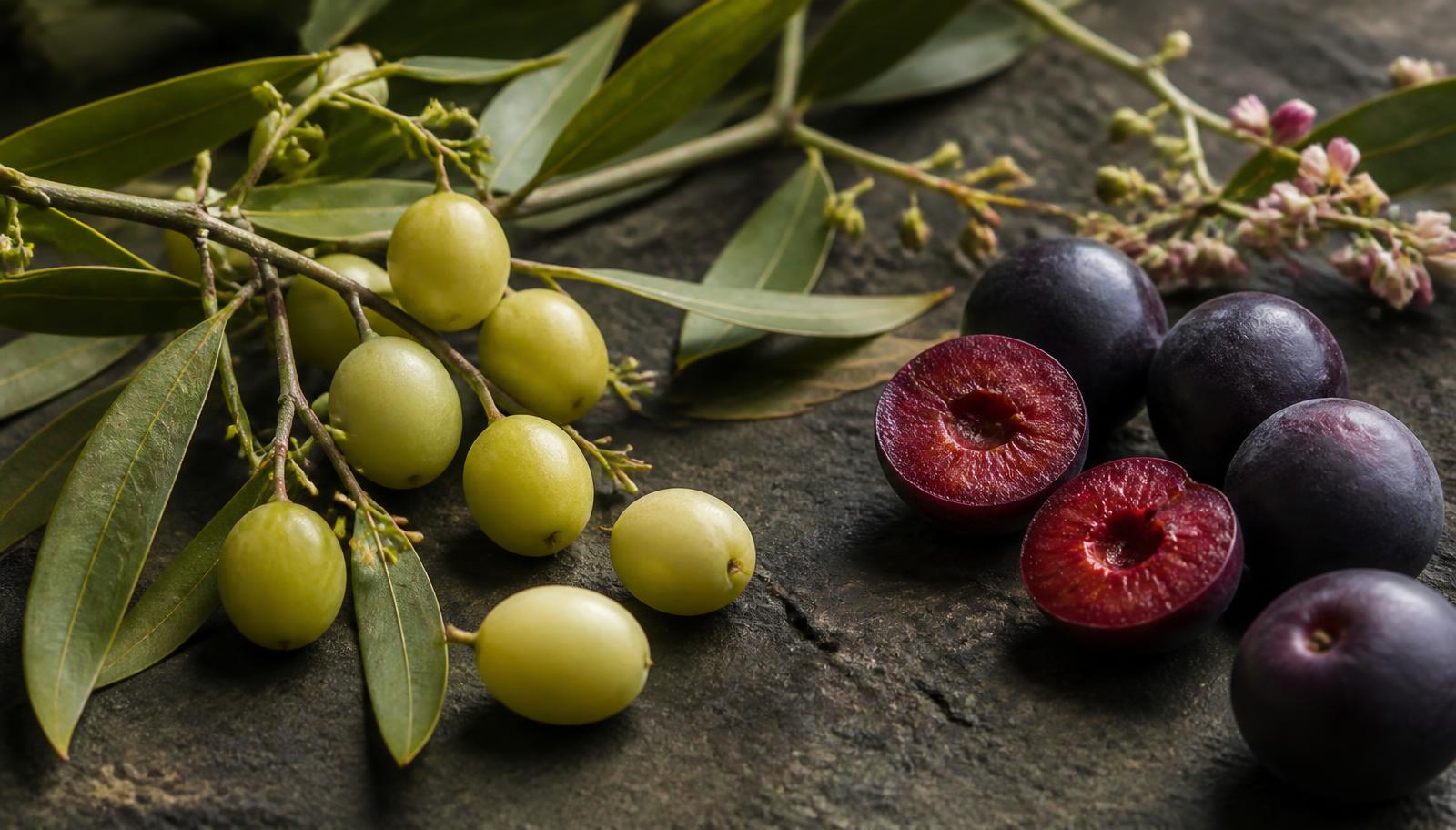
Australia has produced some remarkable native fruits with unusually rich phytochemical profiles. Two of particular interest are Kakadu Plum and Davidson's Plum.
Kakadu Plum is notable for its exceptionally high natural vitamin C content as well as a range of polyphenolic compounds. Davidson's Plum contains anthocyanins and other plant phytochemicals associated with its deep purple coloration.
These fruits should not be described as direct nitric-oxide generators. Their relevance is different. They contribute to the broader antioxidant and phytonutrient environment surrounding cardiovascular nutrition. This distinction is important because not every ingredient needs to perform the same job. Good nutrition works through complementary roles.
A Better Question Than "Which Food Makes the Most NO?"
Internet nutrition often turns foods into rankings. Which food is best? Which contains the most nitrate? Which "boosts" nitric oxide fastest? That can miss the bigger picture. Consider what different foods contribute:
Leafy Greens and Beetroot
Dietary nitrate → nitrate–nitrite–NO pathway
Nuts, Seeds and Protein Foods
L-arginine → eNOS pathway
Watermelon
L-citrulline → arginine availability → eNOS pathway
Colorful Fruits and Vegetables
Vitamins + polyphenols + phytochemicals → broader nutritional support for vascular health
These are not competing strategies. They are complementary.
What Might a Nitric-Oxide-Friendly Day of Eating Look Like?
No special diet is required. Here's one example.
Breakfast
Greek yogurt with berries, walnuts and seeds. Or eggs with spinach and tomatoes.
Lunch
A large salad with arugula/rocket, leafy greens, beetroot, vegetables, pumpkin seeds and a protein source.
Snack
Watermelon. Or fruit with a handful of nuts.
Dinner
Fish, poultry, legumes or another appropriate protein source with a generous serving of leafy or colorful vegetables.
Throughout the Day
Choose a variety of plant foods rather than repeatedly eating the same one. That gives you:
- dietary nitrate
- amino acids
- vitamins
- minerals
- fiber
- polyphenols
- and other phytochemicals
This is much closer to how human nutrition actually works.
Five Easy Ways to Put This Into Practice
- Add greens to something you already eat. Spinach in eggs. Arugula on a sandwich. Leafy greens beside dinner.
- Use beetroot as food, not medicine. Roast it, grate it or add it to salads.
- Keep nuts or seeds available. They are an easy way to add protein, arginine and other nutrients.
- Eat watermelon when it's in season. It's refreshing, hydrating and naturally provides citrulline.
- Think in colors. Green, red, purple, orange and yellow plant foods bring different nutritional profiles to the plate.
A healthy diet becomes much easier when the objective is variety rather than perfection.
Foods First, Supplements Second
For most people, a healthy diet should provide the foundation. Whole foods bring combinations of nutrients that isolated ingredients cannot fully reproduce.
But there is an important distinction between general nutrition and targeted nutritional formulation. The amounts of arginine, citrulline, nitrate and phytochemicals obtained from food vary enormously. Food composition changes according to:
- portion size
- variety
- growing conditions
- preparation
- season
- and the rest of the diet
Targeted supplementation can provide selected nutrients in defined amounts. That doesn't make supplements a replacement for food. The two serve different purposes.
From the Plate to ėNOS
The food science described throughout this article reflects an important principle behind ėNOS by Australiana Life: different nutrients can support the body's natural nitric-oxide and vascular systems through different routes.
ėNOS uses L-arginine and L-citrulline because their roles are complementary. Arginine provides substrate more directly to the eNOS pathway. Citrulline can be converted into arginine, helping replenish circulating arginine availability. The formulation also includes selected nutritional ingredients and Australian superfruits, including Kakadu Plum and Davidson's Plum, as part of its broader nutritional approach.
The objective isn't to replace a plate filled with vegetables, fruit and healthy foods. It is to complement that foundation with a deliberately formulated approach to nutritional NO support.
If You Remember One Shopping List…
You don't need to memorize nitric-oxide biochemistry before going to the grocery store. Remember these four groups:
GREENS
Arugula, spinach and leafy vegetables for dietary nitrate.
BEETROOT + CELERY
Additional whole-food sources of nitrate.
NUTS, SEEDS + PROTEIN FOODS
Natural sources of L-arginine.
WATERMELON
The standout food source associated with L-citrulline.
Then surround those foods with plenty of colorful fruits and vegetables.
That isn't a "nitric oxide diet." It's simply a very good way to eat — with the added benefit of supporting several of the nutritional pathways involved in your body's natural NO biology.
Scientific References
[1] The nitrate–nitrite–nitric oxide pathway in physiology and therapeutics
Lundberg JO, Weitzberg E, Gladwin MT. Nature Reviews Drug Discovery. 2008;7:156–167. Foundational review of the alternative nitrate–nitrite–NO pathway.
PubMed / National Library of Medicine →[2] Vascular effects of dietary nitrate (as found in green leafy vegetables and beetroot) via the nitrate–nitrite–nitric oxide pathway
Lidder S, Webb AJ. British Journal of Clinical Pharmacology. 2013;75(3):677–696. PMID: 22882425.
PubMed / National Library of Medicine →[3] Food sources of nitrates and nitrites: the physiologic context for potential health benefits
Hord NG, Tang Y, Bryan NS. American Journal of Clinical Nutrition. 2009;90(1):1–10. PMID: 19439460. Review of nitrate and nitrite concentrations across food categories.
PubMed / National Library of Medicine →[4] The effect of beetroot inorganic nitrate supplementation on cardiovascular risk factors: a systematic review and meta-regression of randomized controlled trials
Bahrami LS, Arabi SM, Feizy Z, Rezvani R. Nitric Oxide. 2021;115:8–22. PMID: 34119659.
PubMed / National Library of Medicine →[5] Dietary nitrate, beetroot supplementation and exercise physiology
Jones AM, et al. Contemporary reviews of dietary nitrate and beetroot supplementation in exercise and vascular physiology have examined effects on NO bioavailability, oxygen utilization and cardiovascular measures.
PubMed / National Library of Medicine →[6] The oral microbiome and nitric oxide homeostasis
Hezel MP, Weitzberg E. Oral Diseases. PMID: 23837897.
PubMed / National Library of Medicine →[7] Antibacterial mouthwash blunts oral nitrate reduction and increases blood pressure in treated hypertensive men and women
Bondonno CP, Liu AH, Croft KD, et al. American Journal of Hypertension. PMID: 25359409.
PubMed / National Library of Medicine →[8] Pharmacokinetic and pharmacodynamic properties of oral L-citrulline and L-arginine: impact on nitric oxide metabolism
Schwedhelm E, Maas R, Freese R, et al. British Journal of Clinical Pharmacology. 2008;65(1):51–59. PMID: 17662090.
PubMed / National Library of Medicine →[9] Vitamin C, oxidative stress and endothelial function
Scientific literature examining vitamin C and endothelial function has explored the relationship among oxidative stress, antioxidant biology and NO-dependent vascular responses.
PubMed / National Library of Medicine →
Continue Through the Nutrition & NO Story
- How to Increase Nitric Oxide Naturally →
Go beyond food and explore exercise, lifestyle and the body's complementary NO pathways.
- L-Arginine + L-Citrulline: Two Pathways Supporting Nitric Oxide →
Discover why these two amino acids reach the NO system differently.
- The Endothelium: The Hidden Key to Healthy Blood Vessels →
Meet the cellular system where endothelial nitric-oxide production takes place.
- What Is eNOS? The Enzyme Behind Natural Nitric Oxide Production →
Understand the enzyme that uses L-arginine to produce vascular nitric oxide.
NUTRITION INSPIRED THE ĖNOS APPROACH
Discover how amino-acid metabolism, cardiovascular nutrition and Australian superfruits influenced the formulation philosophy behind ėNOS.
EXPLORE ĖNOS →This article is provided for educational purposes only and is not intended as medical advice or to diagnose, treat, cure or prevent disease. ėNOS is a dietary supplement. Food composition and individual nutritional needs vary. Dietary supplements should complement rather than replace a varied, balanced diet and appropriate medical care.
More in Nutrition & NO Support
- How to Increase Nitric Oxide Naturally
- L-Arginine + L-Citrulline: Two Pathways Supporting Nitric Oxide
- Arginine vs. Citrulline: What's the Difference?
- L-Citrulline Explained: From Citrulline to Arginine to Nitric Oxide
- L-Arginine & Nitric Oxide Explained
- Why Combine L-Arginine & L-Citrulline?
- Dietary Nitrates & the Nitrate–Nitrite–Nitric Oxide Pathway
- Nitric Oxide Supplements: What Should You Look For?
About Our Health & Science Content
Australiana Life Health & Science articles are based on published scientific research and written to make complex health and nitric oxide science easier to understand. Our educational content undergoes scientific review for accuracy and appropriate interpretation of the evidence and is updated as relevant scientific understanding evolves.