
How Your Body Makes Nitric Oxide
From Amino Acids and Vegetables to One of the Body's Most Important Signaling Molecules
Your body is making nitric oxide right now.
Not storing it. Not waiting for you to consume it. Making it.
Nitric oxide — abbreviated NO — is a short-lived signaling molecule produced throughout the body when and where it is needed. Within the cardiovascular system, NO helps blood vessels communicate and respond to changing demands. In the nervous system, nitric oxide participates in signaling. Other forms of nitric-oxide production participate in immune and inflammatory responses.
But unlike many nutrients, NO is not something the body simply stores in a reservoir. It must be continually produced through biological pathways. And there is more than one way to make it.
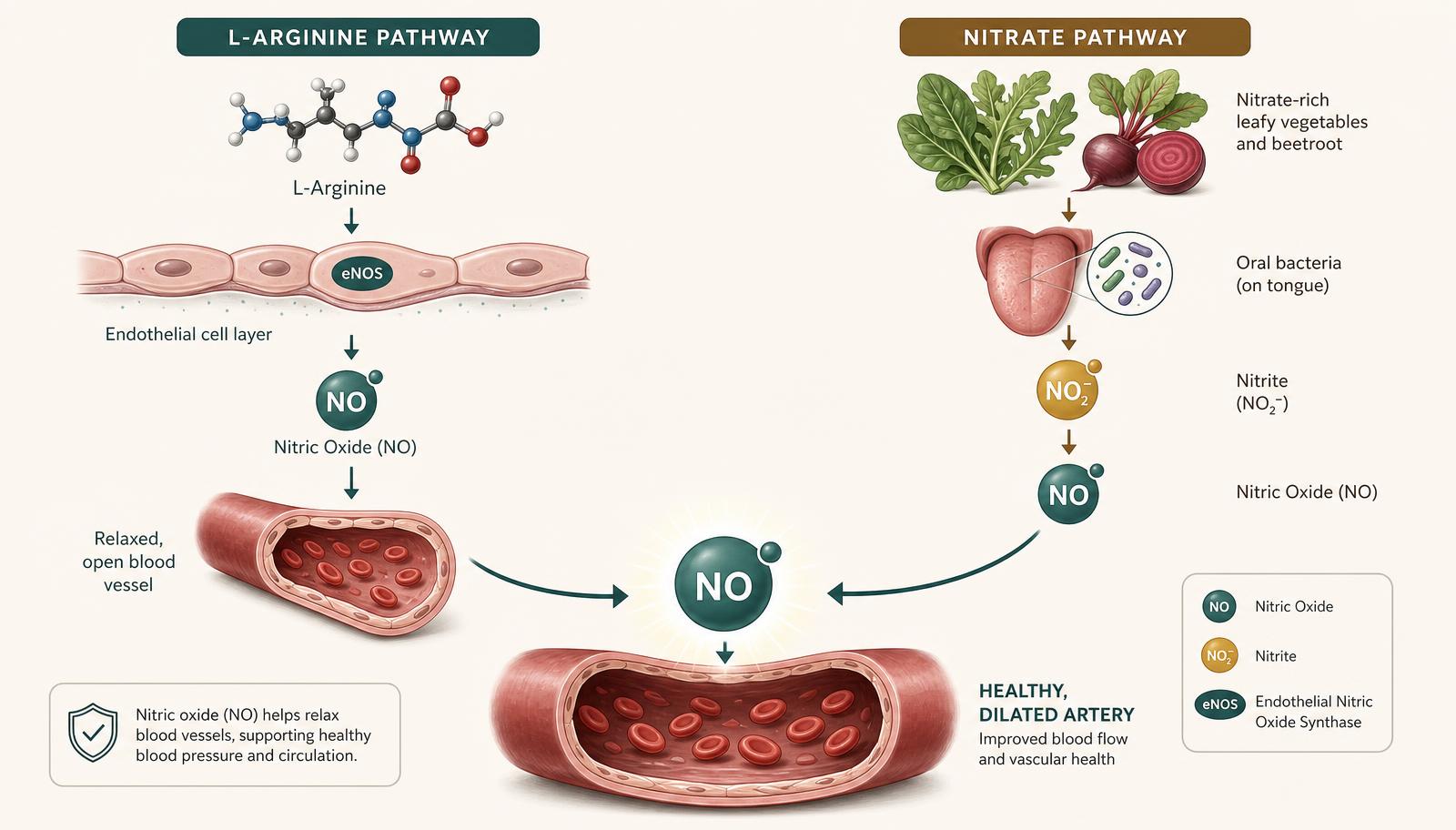
The two routes particularly relevant to cardiovascular nutrition are the nitric oxide synthase pathway and the nitrate → nitrite → nitric oxide pathway. Understanding those two systems explains much of what makes nitric-oxide biology so interesting.
Pathway One Begins With an Amino Acid
The classical nitric-oxide pathway begins with L-arginine, an amino acid naturally present in the body and found in many protein-containing foods. Inside certain cells are enzymes known as nitric oxide synthases — NOS enzymes. These enzymes help convert L-arginine through a biochemical reaction that produces nitric oxide.
That is the basic pathway. But the real chemistry is considerably more sophisticated.
There Is More Than One Nitric Oxide Synthase
Nitric oxide synthase is actually a family of related enzymes. Three major forms are commonly discussed.
| Enzyme | Full name | Gene | Major context |
|---|---|---|---|
| eNOS | Endothelial nitric oxide synthase | NOS3 | Blood vessels and vascular regulation |
| nNOS | Neuronal nitric oxide synthase | NOS1 | Nervous-system signaling |
| iNOS | Inducible nitric oxide synthase | NOS2 | Immune and inflammatory responses |
They all have the ability to produce nitric oxide. But they do not operate identically. They are expressed in different tissues, activated differently and can generate NO under very different biological circumstances. [1]
This is why the statement "nitric oxide is good" is too simplistic. The effect of NO depends upon where it is produced, how much is produced, which enzyme produces it, and the biological environment surrounding it.
eNOS: The Cardiovascular NO Factory
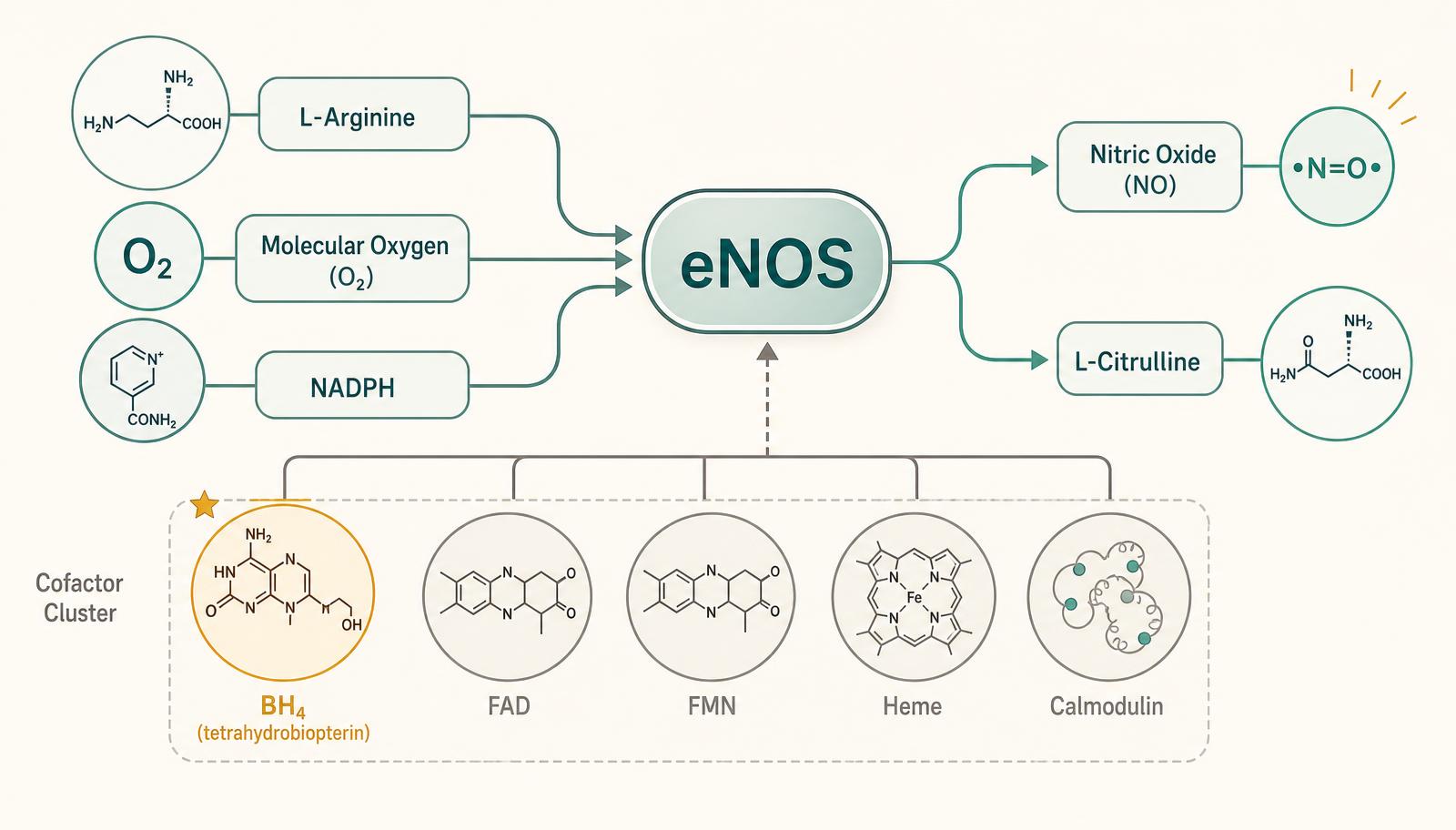
For cardiovascular health, the enzyme of greatest interest is eNOS — endothelial nitric oxide synthase. eNOS is strongly associated with endothelial cells. The endothelium is the extremely thin cellular lining covering the inside of blood vessels.
When appropriately activated, eNOS uses L-arginine in the biochemical production of nitric oxide.
Several important cofactors and enzyme components help the reaction function normally, including:
- tetrahydrobiopterin — BH4
- NADPH
- FAD
- FMN
- heme
- calmodulin
[1] [2] So even though we often simplify the pathway to arginine → eNOS → NO, the enzyme does not work alone.
Why Does the Body Produce NO in the Endothelium?
Because endothelial cells need to communicate with the rest of the blood-vessel wall. Once NO is produced, it diffuses rapidly out of the endothelial cell and can enter the smooth-muscle cells surrounding the vessel. There, nitric oxide activates an enzyme called soluble guanylate cyclase, which increases a signaling molecule known as cyclic GMP — cGMP. The signaling sequence contributes to vascular smooth-muscle relaxation.
This mechanism was central to the scientific discoveries that transformed modern understanding of vascular biology. [3]
Your Blood Flow Helps Activate the System
What tells endothelial cells to produce nitric oxide? Several signals can influence eNOS. One of the most interesting is simply blood moving through the vessel.
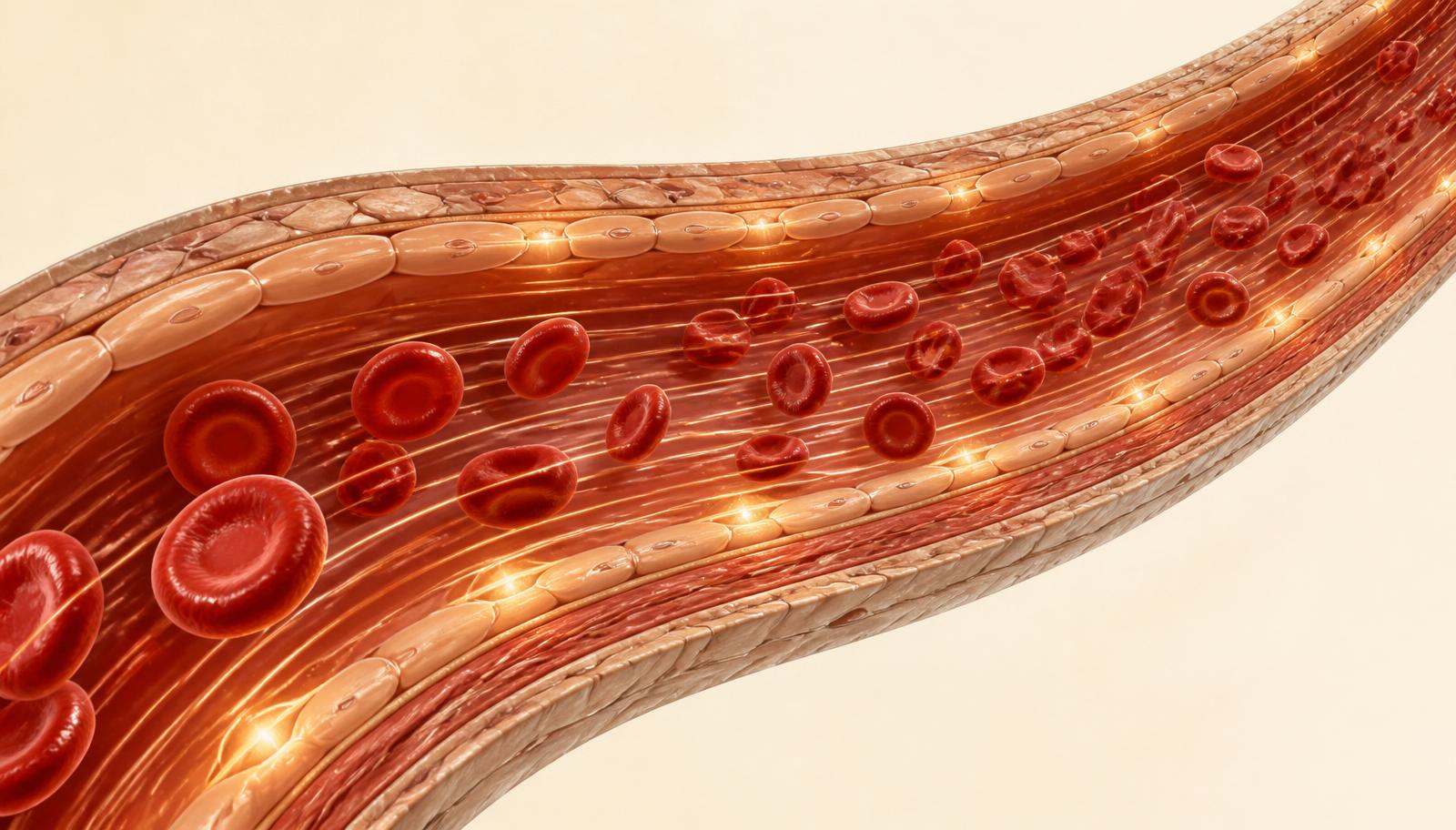
As blood flows across the endothelial surface, it creates mechanical force called shear stress. Endothelial cells can sense that force. When blood flow increases — during exercise, for example — shear stress changes. That activates intracellular signaling capable of increasing eNOS activity. [4]
This is one reason regular physical activity is so closely connected with vascular function.
What Happens to the Citrulline Produced by eNOS?
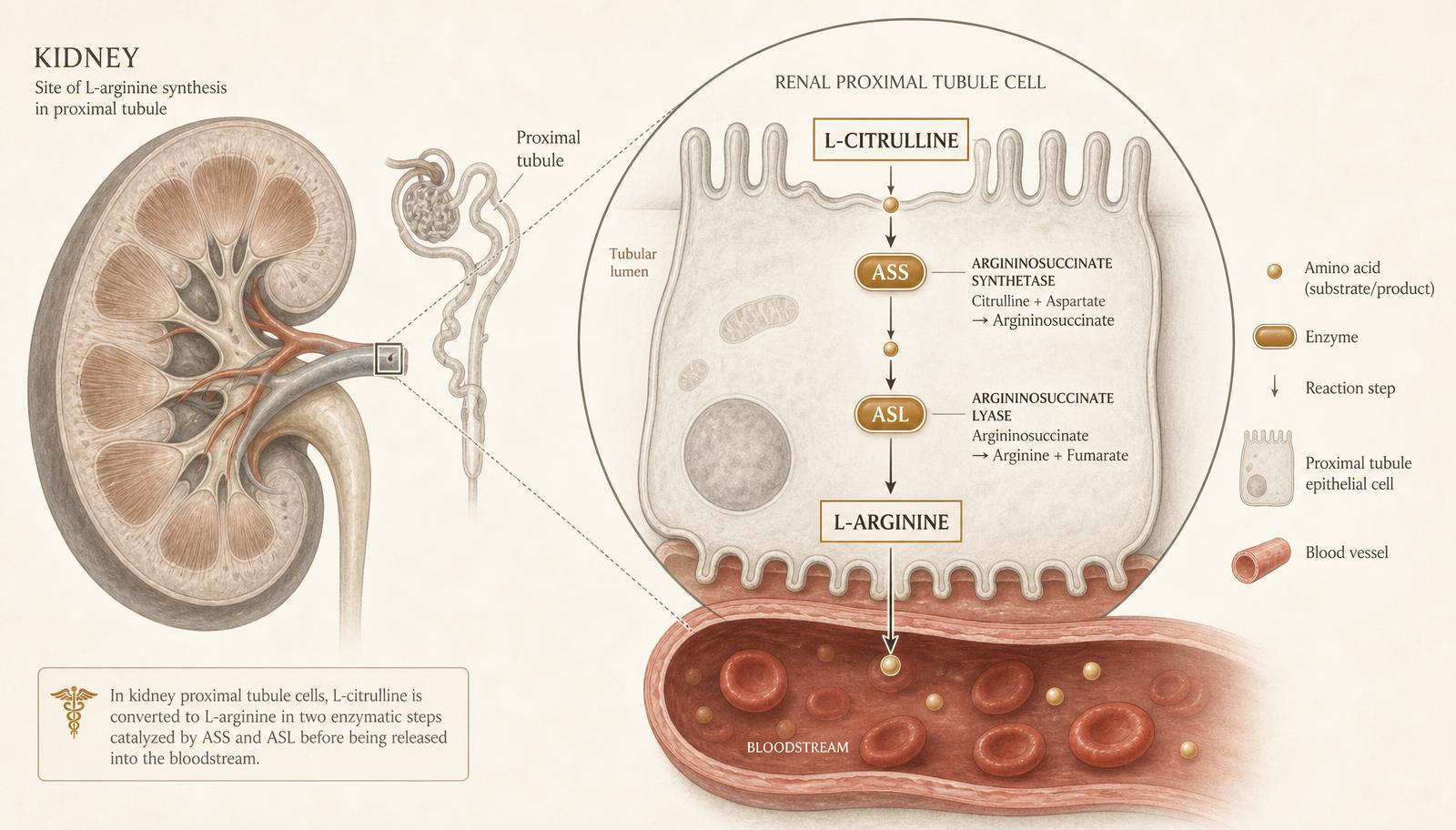
Here is an elegant piece of the biology. When nitric oxide synthase uses L-arginine to make NO, L-citrulline is produced as part of the reaction. That citrulline does not necessarily become metabolic waste. Cells possess enzymatic machinery capable of recycling citrulline back toward arginine — sometimes described as the citrulline–NO cycle.
Citrulline Can Also Arrive From Outside the Cell
Citrulline also enters the story through diet and supplementation. Unlike arginine, orally consumed citrulline largely avoids the extensive presystemic metabolism experienced by oral arginine. After absorption, citrulline enters the circulation, and the kidneys play an important role in converting it into L-arginine. Human pharmacokinetic research demonstrates that oral citrulline can increase circulating arginine concentrations and markers of NO-dependent signaling. [5]
Arginine
Already in the form used directly by eNOS.
Citrulline
Can be converted into arginine, helping replenish the available arginine pool.
This distinction becomes very important when designing nutritional strategies intended to support natural NO production.
Then Scientists Discovered Another Way to Make NO
For many years, the L-arginine/NOS pathway was considered the principal route for biological nitric-oxide production. Then our understanding expanded. Researchers established that nitrate and nitrite — substances once regarded largely as inactive end products of NO metabolism — can be recycled back toward nitric oxide. [6]
It does not simply duplicate the NOS pathway. It operates through different chemistry, giving the body an additional route to NO formation.
Pathway Two Begins With Nitrate
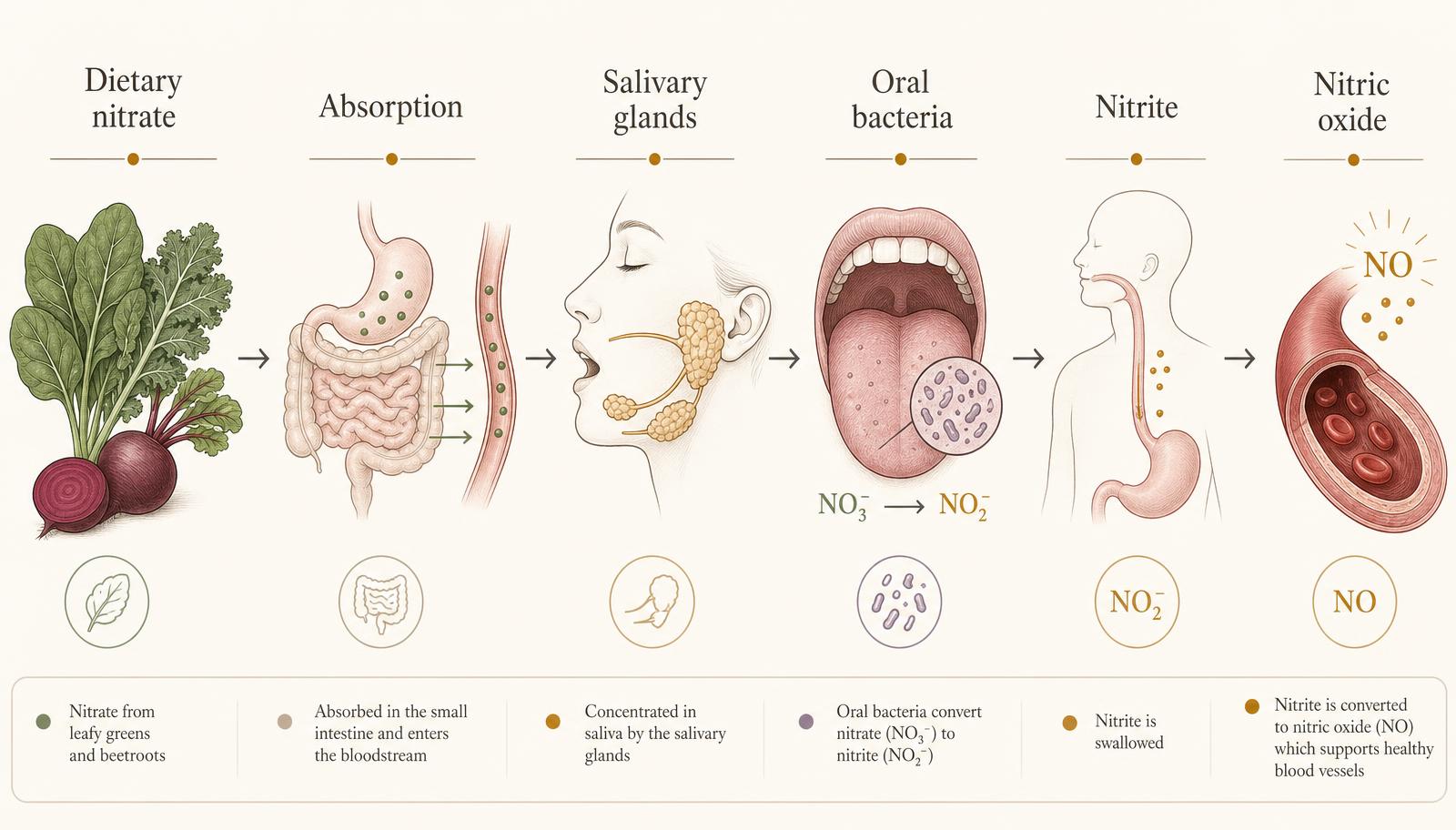
Nitrate can originate from metabolism within the body. But for nutrition, one of its most interesting sources is vegetables. Leafy greens and beetroot can contain substantial amounts of naturally occurring inorganic nitrate.
- arugula / rocket
- spinach
- lettuce
- beetroot
- celery
- other leafy greens
After these foods are consumed, nitrate is absorbed into the bloodstream. Then something unexpected happens. Some of it comes back to your mouth.
Your Salivary Glands Recycle Nitrate
The body actively concentrates a portion of circulating nitrate into saliva, so nitrate that has already been swallowed and absorbed returns to the oral cavity. Why? Because certain bacteria living on the tongue possess enzymes capable of converting nitrate into nitrite. Humans themselves do not efficiently perform this first conversion through our own enzymes — we rely substantially on members of the oral microbiome.
Part of your nitric-oxide-production system involves a cooperative relationship with bacteria living in your mouth. [6] [7]
From Nitrite to Nitric Oxide
Once nitrite is swallowed, it can participate in further reactions. Under particular physiological conditions — especially lower oxygen availability and more acidic environments — nitrite can be reduced toward nitric oxide. Several proteins and chemical systems can participate in this conversion. [6] [8]
The interesting part is that this pathway can become particularly active under conditions where oxygen availability is lower. That makes the nitrate–nitrite–NO pathway complementary to the oxygen-dependent NOS pathway.
Two Systems With Different Strengths
The NOS pathway
- Requires nitric oxide synthase.
- Uses L-arginine.
- Requires oxygen and appropriate enzyme cofactors.
- Highly regulated.
- Important in normal endothelial signaling.
The nitrate–nitrite pathway
- Begins with nitrate.
- Uses oral bacterial conversion as part of the process.
- Does not require NOS in the same way.
- Can become particularly relevant under lower-oxygen conditions.
[6] [8] So nature has provided the body with more than one strategy. That is an important theme throughout human physiology: redundancy can provide resilience.
Where Does Nitric Oxide Go After It Is Made?
NO does not hang around for long. It is highly reactive and short-lived. That is one reason the body tends to produce it close to where it is needed. NO can:
- activate nearby signaling pathways
- react with proteins
- interact with reactive oxygen species
- be oxidized into nitrite and nitrate
- participate in numerous other biochemical reactions
Some of its metabolites can themselves become part of NO-related biology. The nitric-oxide system is therefore not a simple one-way production line. It is a dynamic chemical cycle.
Production Is Only Half the Story
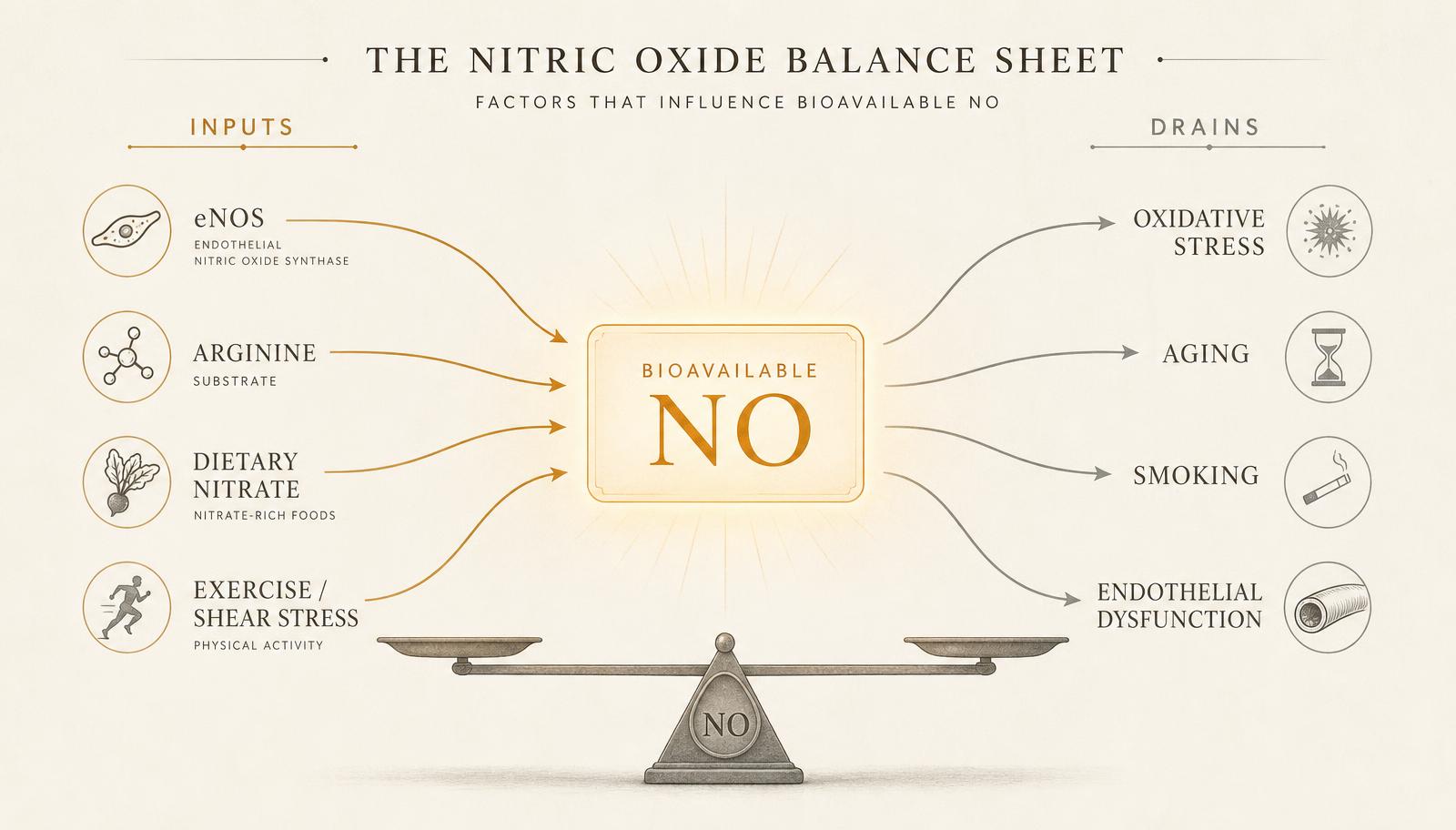
Imagine two people producing the same initial amount of NO. One may still have greater bioavailable NO than the other. Why? Because nitric oxide can be consumed or inactivated rapidly. One important influence is oxidative stress: superoxide can react with NO, reducing the amount available for normal signaling.
That is why scientists often talk about NO bioavailability rather than production alone.
What Happens When eNOS Does Not Function Normally?
eNOS requires an appropriate biochemical environment. One particularly important factor is the cofactor BH4 — tetrahydrobiopterin. When the enzyme functions normally, it is described as coupled. Under unfavorable oxidative conditions, BH4 can become less available and eNOS may become partially uncoupled. Instead of efficiently producing NO, uncoupled eNOS can generate more superoxide. [9]
- less efficient NO production
- more oxidative stress
- potentially lower NO availability
It is one reason endothelial health matters just as much as providing arginine.
What About ADMA?
There is also a natural endogenous inhibitor of nitric oxide synthase called asymmetric dimethylarginine — ADMA. ADMA can compete in ways that reduce NOS activity. Researchers therefore sometimes examine the relationship between arginine availability and ADMA when studying NO biology.
NO production is regulated. It does not simply increase in direct proportion to how much arginine someone consumes.
Why Aging Can Affect NO Production
The NO-production system changes with age. Research in humans has documented:
- reduced endothelial function
- changes in eNOS regulation
- greater oxidative stress
- reduced NO bioavailability
- progressive changes in arterial function
[10] This does not mean NO production suddenly collapses after a particular birthday. It means the biological environment can become progressively less favorable — and that makes supporting the pathways increasingly relevant through midlife and later adulthood.
Why Exercise Helps From the Inside Out
Exercise doesn't supply nitric oxide. It stimulates the systems that use it. When you move:
- blood flow increases
- shear stress increases
- endothelial cells receive the signal
- eNOS pathways respond
- vascular adaptation occurs over time
Exercise also affects metabolic health, blood pressure, muscle function and many other systems relevant to the endothelial environment. So physical activity is not merely an NO "booster." It is part of maintaining the biological machinery that produces and responds to NO.
Why Food Helps From More Than One Direction
Food can interact with NO biology through several routes.
- Protein foods can provide L-arginine.
- Watermelon provides L-citrulline, which can contribute to circulating arginine.
- Leafy greens and beetroot provide dietary nitrate.
- Fruits and vegetables provide vitamins, minerals and phytochemicals contributing to the broader vascular environment.
That means there is no single "nitric oxide food." Different foods interact with different parts of the system.
Nitric Oxide Is Made — Not Simply Consumed
This is perhaps the most important consumer distinction. A typical nutritional product described as supporting nitric oxide does not contain a reservoir of NO gas that enters your bloodstream and dilates your arteries. Instead, nutritional approaches generally provide substrates, precursors, or nutrients associated with the pathways the body uses to make NO.
That is why understanding the pathway matters. When you understand how NO is produced, supplement labels become much easier to evaluate.
How the Science Informed ėNOS
This biology is central to the formulation philosophy behind ėNOS by Australiana Life. The product name reflects the importance of the body's natural endothelial nitric-oxide pathway, while the spelling makes an important distinction: eNOS is endothelial nitric oxide synthase, the natural enzyme; ėNOS is Australiana Life's nutritional formulation.
ėNOS is designed to support, not replace, the body's own NO-production system. At the center of that approach are L-arginine and L-citrulline. Arginine provides substrate directly relevant to eNOS. Citrulline follows a complementary metabolic route and can be converted into arginine, helping replenish circulating arginine availability. Additional deliberately selected nutrients and Australian plant ingredients support the broader nutritional environment associated with cardiovascular wellness.
The benefit of that approach is not that ėNOS "contains nitric oxide." It is that the formulation is designed around nutritionally supporting the natural pathway your body already uses to produce it.
From Raw Material to Biological Signal
Nitric oxide begins with chemistry. But it ends with communication. Arginine enters an enzymatic pathway. eNOS catalyzes a reaction. NO appears. The molecule travels only a short distance. A neighboring cell receives the signal. A blood vessel responds.
Elsewhere, vegetables supply nitrate. Oral bacteria convert it to nitrite. The body can reduce nitrite back toward NO. Different pathways. Different chemistry. One shared molecule.
Your body does not simply "have" nitric oxide. It continually creates it, uses it, transforms it and creates it again.
Scientific References
[1] Nitric oxide synthases: regulation and function
Förstermann U, Sessa WC. European Heart Journal. 2012;33(7):829–837. Comprehensive review of NOS isoforms, endothelial NO production and regulation.
PubMed / National Library of Medicine →[2] Nitric oxide synthases: structure, function and inhibition
Alderton WK, Cooper CE, Knowles RG. Biochemical Journal. 2001;357:593–615. Detailed review of NOS enzymology, cofactors and reaction mechanisms.
PubMed / National Library of Medicine →[3] The Nobel Prize in Physiology or Medicine 1998
Robert F. Furchgott, Louis J. Ignarro and Ferid Murad. Awarded for discoveries concerning nitric oxide as a signaling molecule in the cardiovascular system.
NobelPrize.org →[4] eNOS activation by physical forces: from short-term regulation of contraction to chronic remodeling of cardiovascular tissues
Balligand JL, Feron O, Dessy C. Physiological Reviews. 2009;89(2):481–534.
PubMed / National Library of Medicine →[5] Pharmacokinetic and pharmacodynamic properties of oral L-citrulline and L-arginine: impact on nitric oxide metabolism
Schwedhelm E, Maas R, Freese R, et al. British Journal of Clinical Pharmacology. 2008;65(1):51–59. PMID: 17662090. This randomized controlled crossover study found that oral L-citrulline increased plasma L-arginine and augmented markers of NO-dependent signaling.
PubMed / National Library of Medicine →[6] The nitrate–nitrite–nitric oxide pathway in physiology and therapeutics
Lundberg JO, Weitzberg E, Gladwin MT. Nature Reviews Drug Discovery. 2008;7:156–167. PMID: 18167491. Landmark review describing nitrate and nitrite as an alternative in-vivo source of NO complementary to the classical L-arginine/NOS pathway.
PubMed / National Library of Medicine →[7] The oral microbiome and nitric oxide homeostasis
Hezel MP, Weitzberg E. Oral Diseases. Review of oral nitrate-reducing bacteria and the enterosalivary pathway.
PubMed / National Library of Medicine →[8] The Noncanonical Pathway for In Vivo Nitric Oxide Generation: The Nitrate-Nitrite-Nitric Oxide Pathway
Kapil V, Khambata RS, Jones DA, Rathod K, Primus C, Massimo G, Fukuto JM, Ahluwalia A. Pharmacological Reviews. 2020. PMID: 32576603. Modern review detailing nitrate/nitrite bioactivation and NO formation, including enhanced nitrite reduction under acidic and hypoxic conditions.
PubMed / National Library of Medicine →[9] Endothelial nitric oxide synthase in vascular disease: from marvel to menace
Förstermann U, Münzel T. Circulation. 2006;113(13):1708–1714. Review of eNOS dysfunction, oxidative stress and enzyme uncoupling.
PubMed / National Library of Medicine →[10] Aging and vascular endothelial function in humans
Seals DR, Jablonski KL, Donato AJ. Clinical Science. 2011;120(9):357–375. Review of age-related endothelial changes and reduced NO bioavailability.
PubMed / National Library of Medicine →
Choose Your Next Path
- What Is eNOS? The Enzyme Behind Natural Nitric Oxide Production →
Take a closer look at the enzyme responsible for the endothelial pathway.
- What Affects Nitric Oxide Production? →
Explore what can support — or interfere with — the body's ability to produce and preserve NO.
- L-Arginine + L-Citrulline: Two Pathways Supporting Nitric Oxide →
Follow the complementary amino-acid routes into the eNOS pathway.
- Foods That Support Natural Nitric Oxide Production →
See how vegetables, protein foods and watermelon connect with different parts of NO biology.
- The Endothelium: The Hidden Key to Healthy Blood Vessels →
Discover the living cellular surface where endothelial NO production occurs.
SUPPORT THE PATHWAY YOUR BODY ALREADY HAS
ėNOS was formulated around a simple biological principle: help provide nutritional support to the body's own natural nitric-oxide system rather than trying to replace it. Discover how L-arginine, L-citrulline and complementary nutritional ingredients fit into that strategy.
EXPLORE ĖNOS →This article is provided for informational purposes only and is not intended as medical advice or to diagnose, treat, cure or prevent disease. ėNOS is a dietary supplement formulated to support the body's natural nitric-oxide system and healthy cardiovascular function. Dietary supplements should complement rather than replace appropriate nutrition, physical activity and medical care.
More in Nitric Oxide Science
About Our Health & Science Content
Australiana Life Health & Science articles are based on published scientific research and written to make complex health and nitric oxide science easier to understand. Our educational content undergoes scientific review for accuracy and appropriate interpretation of the evidence and is updated as relevant scientific understanding evolves.