
What Affects Nitric Oxide Production?
Why Your Body's Ability to Make — and Preserve — Nitric Oxide Is Not Fixed
Your body makes nitric oxide every day.
But the amount available for biological signaling is not necessarily the same at age 60 as it was at 25. It is not necessarily the same in an active person as in someone who rarely exercises.
And it can be influenced by what you eat, the condition of your blood vessels, oxidative stress, metabolic health — and even bacteria living in your mouth.
That is because nitric oxide isn't produced by one simple switch. It comes from multiple biological pathways operating within a changing physiological environment.
To understand what can lower nitric oxide, we therefore need to ask two different questions:
- How effectively is the body producing NO?
- How much of the NO being produced remains biologically available?
Those aren't quite the same thing. And the difference explains a great deal about nitric-oxide health.
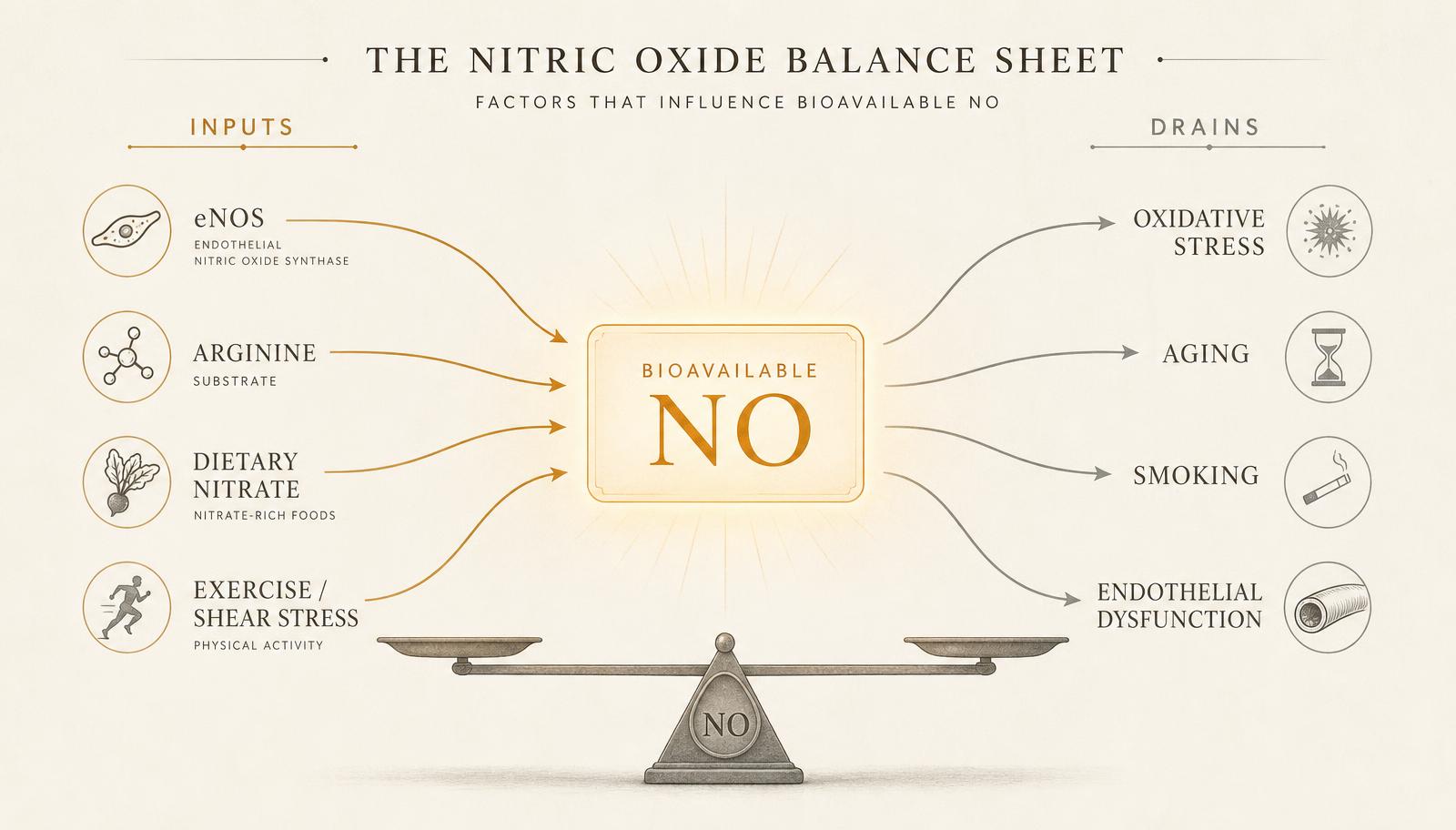
The NO Balance Sheet
Think of nitric-oxide availability as a balance between supply and loss.
Things that can support the supply side
- Healthy endothelial function
- eNOS activity
- L-arginine availability
- L-citrulline metabolism
- Dietary nitrate
- Physical activity and blood-flow signaling
- Appropriate enzyme cofactors
Things that can work against availability
- Aging
- Oxidative stress
- Smoking
- Endothelial dysfunction
- Certain metabolic and cardiovascular risk factors
- eNOS uncoupling
- Reduced physical activity
- Interference with the oral nitrate pathway
The amount of useful NO signaling at any moment reflects interactions among these systems.
That is why simply asking, “How much nitric oxide am I producing?” doesn't tell the entire story.
1. The Health of Your Endothelium
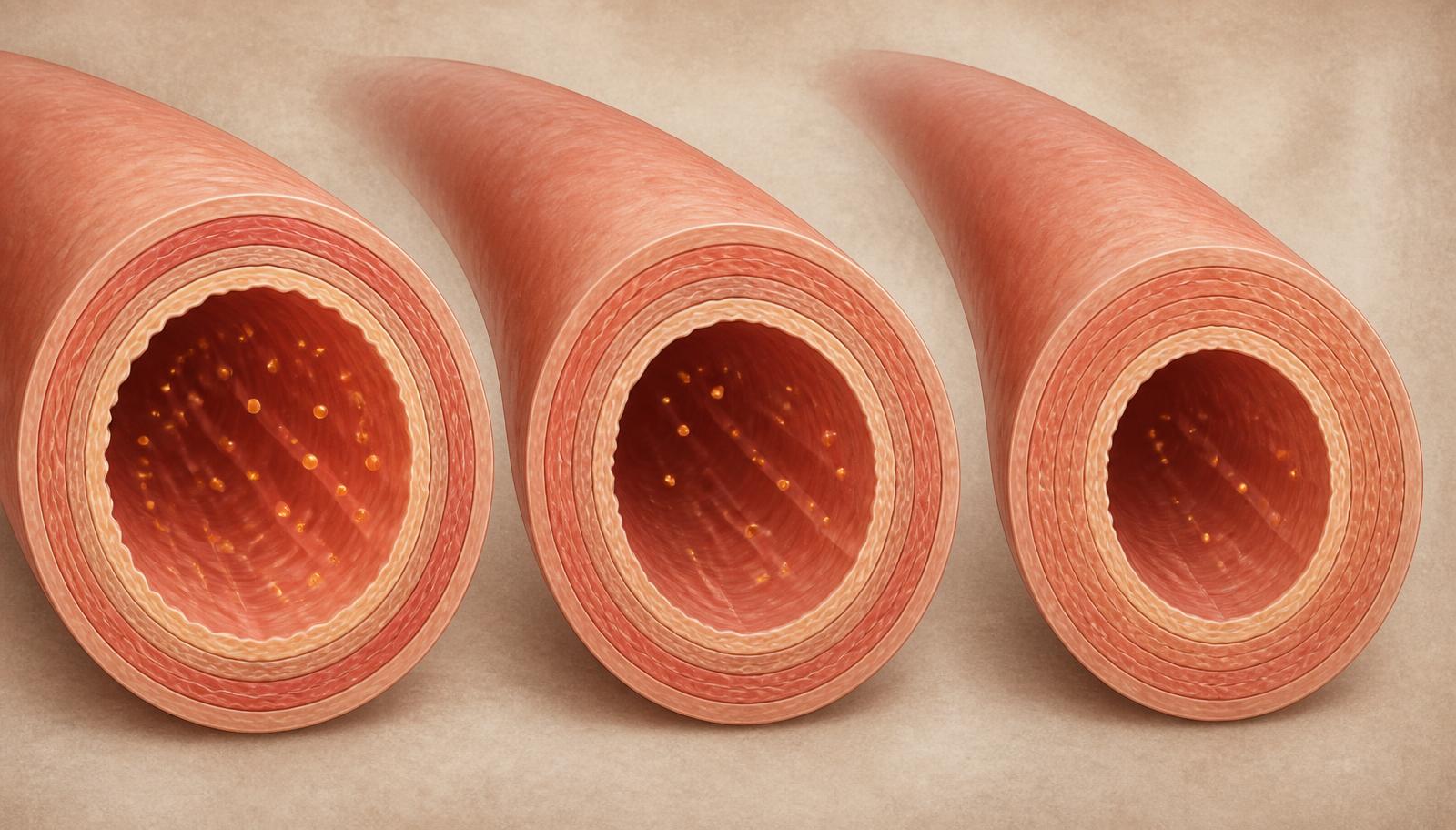
One of the most important places to begin is somewhere most people never think about: the inside surface of the blood vessels.
Every blood vessel is lined with specialized cells collectively called the endothelium. Within these cells is an enzyme called eNOS — endothelial nitric oxide synthase. eNOS helps produce NO using the amino acid L-arginine as substrate.
Healthy endothelial function therefore matters to normal vascular NO signaling. When endothelial function becomes impaired, the NO system can become less effective. That is why researchers frequently describe reduced NO bioavailability as a central feature of endothelial dysfunction. [1,2]
2. Age Changes the Environment
Does nitric oxide decline with age?
Broadly, research supports an age-related reduction in endothelial NO bioavailability.
But beware of overly precise internet claims such as “NO falls by exactly X percent at age 40.” Human biology doesn't operate according to one universal birthday schedule.
What research shows is a progressive change in endothelial function with advancing age, involving altered eNOS signaling, oxidative stress and reduced NO availability. [2]
Some people experience healthier vascular aging than others. Physical activity, smoking, metabolic health, blood pressure and other factors can influence the trajectory.
So age matters. But age is not acting alone.
3. Oxidative Stress Can Reduce NO Availability
This is one of the most important concepts in nitric-oxide biology.
The problem is not always failure to produce NO. Sometimes NO is produced but is rapidly consumed by other molecules.
One important example involves superoxide, a reactive oxygen species. Superoxide can react rapidly with nitric oxide. This reduces the NO available for normal signaling and can form peroxynitrite, a highly reactive nitrogen species. [1,3]
This creates an important distinction:
- NO production — how much nitric oxide is being generated?
- NO bioavailability — how much remains available to perform normal signaling?
A person can therefore have a problem with NO biology even if nitric-oxide production has not simply “stopped.”
4. eNOS Can Make the Wrong Molecule
Here's one of the more surprising parts of the story.
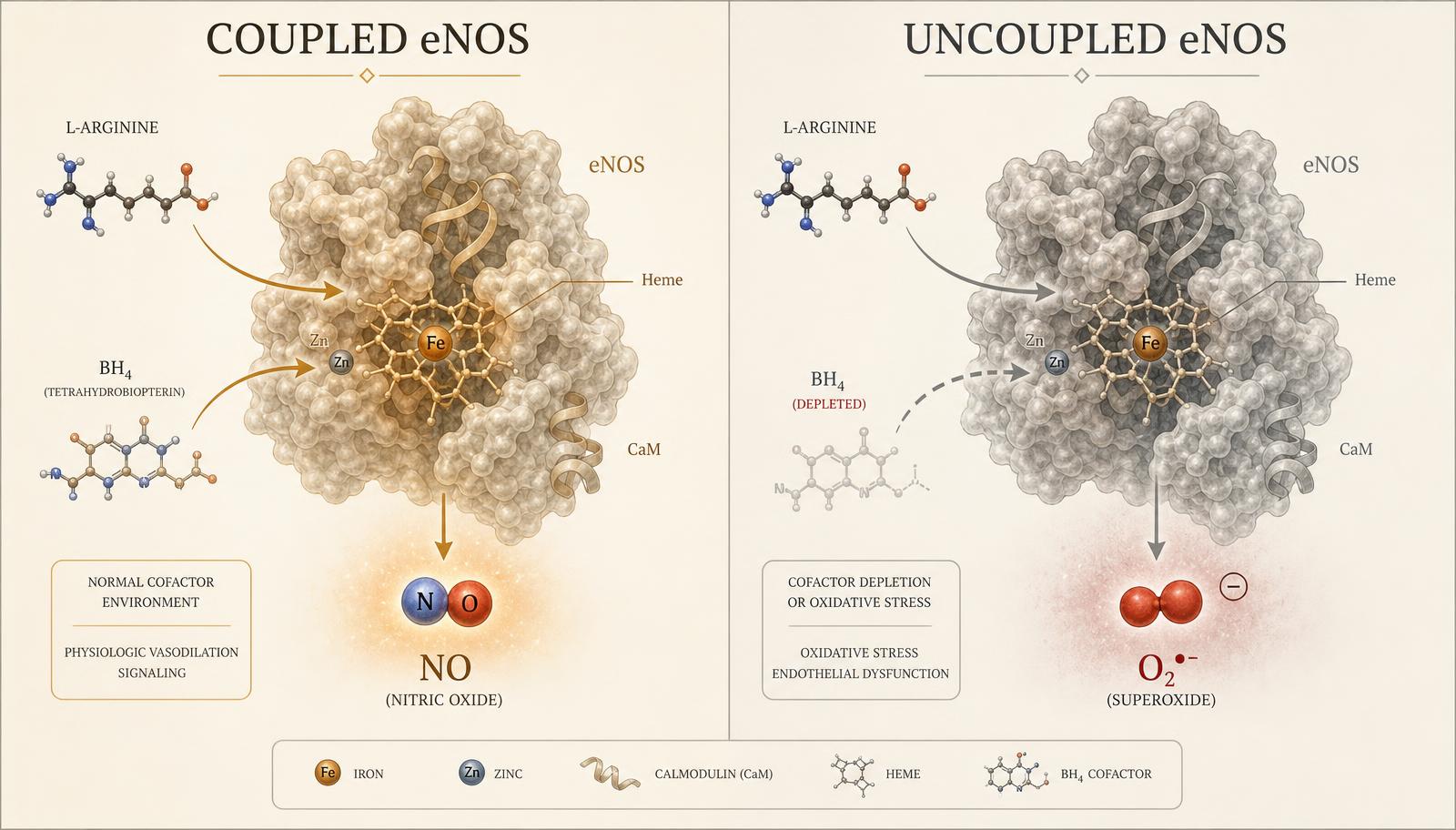
eNOS normally helps produce nitric oxide. But under certain unfavorable biochemical conditions, the enzyme can become uncoupled. One factor involved is availability of a cofactor called tetrahydrobiopterin — BH4.
- When eNOS is appropriately coupled: eNOS → NO production
- When eNOS becomes uncoupled: eNOS → increased superoxide production rather than efficient NO production
That creates an especially unhelpful cycle. More superoxide can reduce NO availability. Oxidative conditions can further disrupt eNOS function. NO signaling becomes less effective.
Research into vascular dysfunction and aging has identified eNOS uncoupling as an important mechanism affecting endothelial NO biology. [1,3]
5. Arginine Availability Matters — But It Isn't the Whole Answer
Because eNOS uses L-arginine, substrate availability obviously matters.
Arginine comes from several sources. We consume it in protein-containing foods. The body also participates in arginine synthesis and recycling.
But simply having arginine somewhere in the body does not guarantee unlimited NO production. Cellular transport, compartmentalization, enzyme activity, cofactors and endogenous inhibitors all influence the pathway.
This helps explain a long-standing scientific observation known as the L-arginine paradox. Intracellular arginine concentrations can appear sufficient for eNOS, yet additional extracellular arginine can sometimes still influence NO-dependent responses. [4]
Researchers have proposed several explanations. For the everyday reader, the lesson is simpler: biological availability is more complicated than ingredient quantity.
6. Citrulline Can Help Replenish the Arginine Pool
L-citrulline is not directly used by eNOS to make NO. Instead, it follows another route.
Citrulline is efficiently absorbed and can subsequently be converted into L-arginine, importantly through metabolism involving the kidneys. Human pharmacokinetic research has demonstrated that oral citrulline can increase circulating arginine concentrations and influence biochemical markers associated with NO metabolism. [5]
This is why nitric-oxide nutrition isn't necessarily an arginine-only story.
7. There Is a Natural Brake on the System
The body also produces molecules that regulate nitric oxide synthase. One particularly interesting example is ADMA — asymmetric dimethylarginine.
ADMA is an endogenous inhibitor of nitric oxide synthase. Because it can compete with arginine in relation to NOS activity, researchers sometimes examine the arginine-to-ADMA relationship when studying NO biology. [6] Higher circulating ADMA concentrations have been associated with cardiovascular risk and impaired endothelial function in numerous studies.
Again, this reinforces a recurring theme: NO production depends upon more than simply having arginine present. The pathway is regulated.
8. Exercise Sends a Physical Signal to Make NO
Not every influence on nitric oxide comes from something you eat. Some come from something you do.
When you exercise, blood flow increases. As blood moves more rapidly across the endothelial lining, it creates mechanical force known as shear stress. Endothelial cells sense this force, and cellular signaling associated with shear stress can activate eNOS and stimulate endothelial NO production. [7]
This means exercise isn't simply burning calories.
9. Inactivity Removes Some of That Stimulus
If movement creates repeated increases in blood flow and shear stress, prolonged physical inactivity means the vascular system receives less of that exercise-related stimulus.
This doesn't mean sitting for an afternoon “turns off” nitric oxide. But habitual inactivity is associated with poorer vascular function, while regular exercise training can improve measures of endothelial function. [8]
This is especially relevant as people get older because everyday movement often declines gradually without being noticed. Less walking. More sitting. Less demanding work. Less recreation.
Exercise can therefore become increasingly intentional with age.
10. Smoking Works Against Endothelial NO Biology
Smoking is one of the clearest lifestyle factors associated with endothelial dysfunction. Cigarette smoke increases oxidative stress and can interfere with normal endothelial NO signaling through multiple mechanisms. [9]
This makes smoking particularly relevant to the NO story because it can affect both the endothelial environment and NO bioavailability. From a vascular-health perspective, avoiding tobacco is far more consequential than searching for a food or supplement capable of compensating for continued smoking.
There is no nutritional shortcut around that.
11. Metabolic Health Matters
The endothelium lives in whatever metabolic environment the body creates.
- Elevated blood glucose
- Insulin resistance
- Abnormal blood lipids
- Excess visceral adiposity
- High blood pressure
These factors can interact with oxidative stress, inflammatory signaling and endothelial biology. That is why nitric-oxide health cannot be separated completely from overall cardiovascular and metabolic health.
NO isn't an isolated system. It lives inside the system you live in.
12. Your Vegetables Offer an Alternative Route
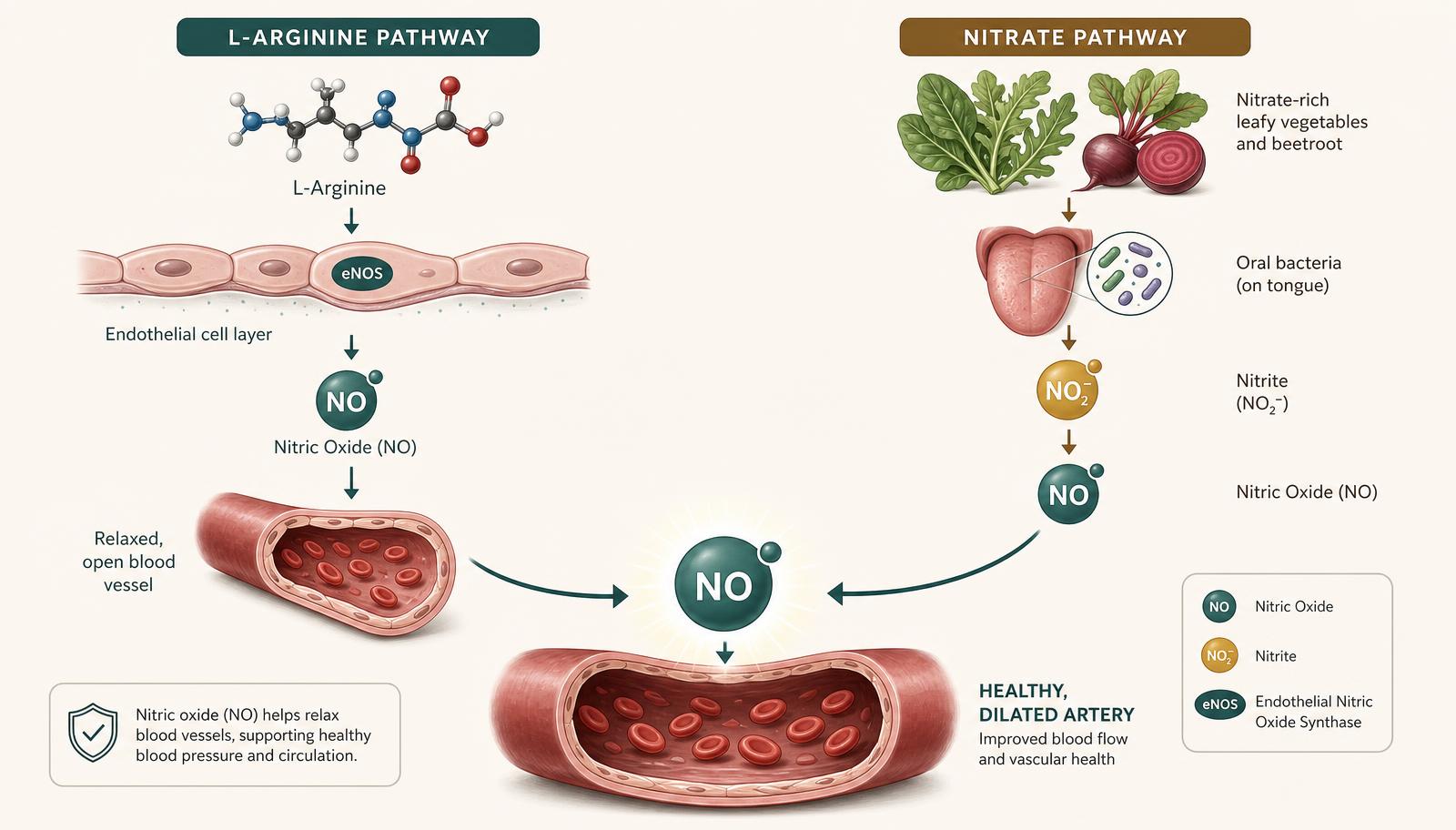
Until now, much of this article has focused on eNOS. But the body has another important way to generate nitric oxide. It begins with dietary nitrate.
Vegetables such as arugula / rocket, spinach, lettuce, beetroot and celery can provide nitrate.
That nitrate can enter the nitrate → nitrite → nitric oxide pathway. [10] This route is particularly interesting because it does not depend upon eNOS in exactly the same manner as the arginine/eNOS pathway.
So when endothelial eNOS function becomes less efficient, the body still possesses a complementary route toward NO formation.
13. Your Mouth Is Part of the Nitrate Pathway
Here is something most people don't expect. Your oral bacteria participate in nitric-oxide biology.
After dietary nitrate is absorbed, some is concentrated into saliva. Certain bacteria on the tongue convert nitrate to nitrite. That nitrite is swallowed and can subsequently contribute to NO formation. Researchers call this the enterosalivary nitrate cycle. [11]
This means that the journey from spinach to nitric oxide can involve:
- your digestive system
- your bloodstream
- your salivary glands
- your tongue bacteria
- and then your gastrointestinal and circulatory systems again
That is a remarkable amount of biological cooperation from one serving of vegetables.
14. Antibacterial Mouthwash Can Affect That Route
Because oral bacteria participate in nitrate reduction, scientists have investigated whether antibacterial mouthwash can interfere with the process.
Studies have shown that antibacterial mouthwash can suppress nitrate-reducing oral bacteria and reduce conversion of nitrate to nitrite. Some studies have also observed small increases in blood pressure under these experimental conditions. [12]
This does not mean people should abandon medically or dentally appropriate mouthwash. Oral health matters. It does mean the oral microbiome has physiological functions that scientists are still learning to understand.
The mouth is not separate from cardiovascular biology.
15. What About Diet Beyond Nitrate?
A healthy NO environment is broader than eating beetroot. Plant-rich diets provide:
- vitamin C
- polyphenols
- flavonoids
- anthocyanins
- minerals
- fiber
- and numerous other phytochemicals
These compounds participate in the wider nutritional and antioxidant environment affecting endothelial health. This is why it is generally more useful to think about a dietary pattern than a single “NO superfood.”
Leafy greens matter. But so do the rest of the plants on your plate.
What Doesn't Work: Thinking of NO as a Fuel Tank
Nitric oxide is sometimes marketed as though the body contains an NO reservoir: low NO? Fill the tank.
That's not how it works. Nitric oxide is a short-lived signaling molecule. The body produces it when and where it is needed through regulated pathways.
The objective therefore isn't to permanently “fill yourself with nitric oxide.” A more scientifically useful goal is to support:
- the pathways that produce it
- the endothelial environment in which it is produced
- and the conditions that help preserve its biological availability
That is a very different concept.
Can You Tell If Your Nitric Oxide Is “Low”?
Not reliably from ordinary symptoms. Internet lists sometimes attribute:
- fatigue
- cold hands
- poor exercise performance
- brain fog
- sexual changes
- high blood pressure
- and many other symptoms
to “low nitric oxide.” Those symptoms are nonspecific. They can arise from many different physiological or medical causes. There is no simple symptom checklist that allows someone to diagnose themselves as nitric-oxide deficient.
Researchers can measure various NO metabolites and endothelial responses, but interpreting NO biology clinically is much more complex than taking a consumer “NO level” test.
This is another area where scientific caution improves credibility.
So What Can You Influence?
This is where a complicated article becomes surprisingly practical.
You cannot control every variable affecting nitric oxide. You cannot stop chronological aging. You cannot change all your genetics. But several important influences are modifiable.
Move
Exercise provides blood-flow and shear-stress signals to the endothelium.
Eat plants
Especially include leafy greens and other vegetables that naturally provide dietary nitrate.
Support good nutrition
Adequate protein and a varied diet provide amino acids, vitamins, minerals and phytochemicals.
Don't smoke
Smoking works directly against vascular and endothelial health.
Manage cardiovascular risk
Blood pressure, blood glucose, lipids and body composition influence the environment in which the endothelium operates.
Stay consistent
Nitric-oxide biology is not a one-day project. It is part of long-term vascular health.
Where Targeted Nutrition Fits
Once the broader system is understood, targeted NO nutrition makes more sense.
Instead of asking, “What ingredient makes nitric oxide?” we can ask, “Which parts of the pathway can nutrition support?”
- L-arginine provides substrate directly relevant to eNOS.
- L-citrulline can help replenish circulating arginine through a complementary metabolic route.
- Dietary nitrate provides another pathway toward NO.
- Plant nutrients contribute to the broader nutritional environment.
That is a much more complete model than relying on one ingredient or one mechanism.
Why This Matters to the ėNOS Formulation
The idea that nitric-oxide production depends upon an interconnected system influenced the formulation philosophy behind ėNOS by Australiana Life.
At its center are L-arginine and L-citrulline. Arginine supplies the amino acid directly used by eNOS. Citrulline takes a complementary metabolic route, being converted into arginine and helping replenish arginine availability. Additional selected nutrients and Australian plant ingredients complement the broader nutritional strategy.
The objective is not to force the body to produce nitric oxide continuously. Nor is it to replace exercise, vegetables or appropriate cardiovascular care. It is to provide nutritional support for the body's natural NO-production system.
The Better Question
We started by asking: what affects nitric oxide production?
But after looking more closely, an even better question emerges: what affects healthy nitric-oxide signaling?
That includes production. But it also includes:
- the health of the endothelium
- eNOS function
- substrate availability
- enzyme cofactors
- oxidative stress
- NO destruction
- physical activity
- dietary nitrate
- oral bacteria
- aging
- and metabolic health
Nitric oxide isn't a switch. It isn't a tank. And it isn't controlled by one ingredient.
It is a dynamic biological system. Understanding that system is the first step toward supporting it intelligently.
Scientific References
[1] Nitric oxide synthases: regulation and function
Förstermann U, Sessa WC. European Heart Journal. 2012;33(7):829–837. Comprehensive review of NOS biology, endothelial NO production, oxidative stress and eNOS regulation.
PubMed / National Library of Medicine →[2] Aging and vascular endothelial function in humans
Seals DR, Jablonski KL, Donato AJ. Clinical Science. 2011;120(9):357–375. Review of age-related endothelial dysfunction and reduced NO bioavailability.
PubMed / National Library of Medicine →[3] Endothelial nitric oxide synthase in vascular disease: from marvel to menace
Förstermann U, Münzel T. Circulation. 2006;113(13):1708–1714. Review of oxidative stress, eNOS uncoupling and vascular NO biology.
PubMed / National Library of Medicine →[4] The pharmacodynamics of L-arginine
Böger RH. Journal of Nutrition. 2007;137:1650S–1655S. Discussion of arginine metabolism, NO synthesis and the “L-arginine paradox.”
PubMed / National Library of Medicine →[5] Pharmacokinetic and pharmacodynamic properties of oral L-citrulline and L-arginine: impact on nitric oxide metabolism
Schwedhelm E, Maas R, Freese R, et al. British Journal of Clinical Pharmacology. 2008;65(1):51–59. PMID: 17662090.
PubMed / National Library of Medicine →[6] Asymmetric dimethylarginine (ADMA): a novel risk marker in cardiovascular medicine and beyond
Böger RH. Annals of Medicine. 2006;38(2):126–136. Review of ADMA as an endogenous NOS inhibitor and its relationship with cardiovascular biology.
PubMed / National Library of Medicine →[7] eNOS activation by physical forces: from short-term regulation of contraction to chronic remodeling of cardiovascular tissues
Balligand JL, Feron O, Dessy C. Physiological Reviews. 2009;89(2):481–534. Detailed review of shear stress and eNOS regulation.
PubMed / National Library of Medicine →[8] Effect of exercise training on endothelium-derived nitric oxide function in humans
Green DJ, Maiorana A, O'Driscoll G, Taylor R. Journal of Physiology. 2004;561:1–25. Review of exercise training and endothelial NO-dependent function.
PubMed / National Library of Medicine →[9] Smoking and cardiovascular disease: mechanisms of endothelial dysfunction and early atherogenesis
Messner B, Bernhard D. Arteriosclerosis, Thrombosis, and Vascular Biology. 2014;34:509–515.
PubMed / National Library of Medicine →[10] Vascular effects of dietary nitrate (as found in green leafy vegetables and beetroot) via the nitrate-nitrite-nitric oxide pathway
Lidder S, Webb AJ. British Journal of Clinical Pharmacology. 2013;75(3):677–696. PMID: 22882425.
PubMed / National Library of Medicine →[11] The nitrate–nitrite–nitric oxide pathway in physiology and therapeutics
Lundberg JO, Weitzberg E, Gladwin MT. Nature Reviews Drug Discovery. 2008;7:156–167.
PubMed / National Library of Medicine →[12] Antibacterial mouthwash blunts oral nitrate reduction and increases blood pressure in treated hypertensive men and women
Bondonno CP, Liu AH, Croft KD, et al. American Journal of Hypertension. 2015;28(5):572–575. PMID: 25359409.
PubMed / National Library of Medicine →
Follow One Part of the System
- How to Increase Nitric Oxide Naturally →
Turn the biology into practical food, exercise and lifestyle strategies.
- What Is eNOS? The Enzyme Behind Natural Nitric Oxide Production →
Take a closer look at the enzyme at the center of endothelial NO synthesis.
- The Endothelium: The Hidden Key to Healthy Blood Vessels →
Discover the cellular environment in which vascular NO signaling begins.
- Foods That Support Natural Nitric Oxide Production →
Explore nitrate-rich vegetables, arginine-containing foods, watermelon and other nutritional contributors.
- Nitric Oxide and Aging: What Changes After 40, 50 and Beyond? →
Understand why NO bioavailability can become less efficient with advancing age.
- Explore the ėNOS Approach →
See how substrate availability, complementary amino-acid metabolism and the broader nitric-oxide system shaped the formulation philosophy behind ėNOS.
EXPLORE THE SCIENCE BEHIND ĖNOS
See how understanding substrate availability, complementary amino-acid metabolism and the broader nitric-oxide system helped shape the formulation philosophy behind ėNOS.
EXPLORE ĖNOS →This article is provided for educational purposes only and is not intended as medical advice or to diagnose, treat, cure or prevent disease. There is no simple symptom-based diagnosis of “low nitric oxide.” ėNOS is a dietary supplement and should complement rather than replace a healthy diet, physical activity, appropriate cardiovascular risk management or medical care.
More in Nitric Oxide Science
About Our Health & Science Content
Australiana Life Health & Science articles are based on published scientific research and written to make complex health and nitric oxide science easier to understand. Our educational content undergoes scientific review for accuracy and appropriate interpretation of the evidence and is updated as relevant scientific understanding evolves.