
What Is Nitric Oxide and Why Does It Matter?
The Essential Molecule Behind Healthy Circulation
Nitric oxide — usually abbreviated NO — is a tiny molecule with an extraordinarily important job.
Your body produces nitric oxide naturally every day. Among its many biological roles, NO helps blood vessels relax and respond to changing demands, supports healthy circulation, participates in communication between cells, and contributes to normal cardiovascular function.
It is so important to cardiovascular biology that discoveries involving nitric oxide were recognized with the 1998 Nobel Prize in Physiology or Medicine. [1]
Yet nitric oxide is not a vitamin, mineral or nutrient stored away for later use. It is a short-lived signaling molecule. Your body makes it when and where it is needed.
That simple fact helps explain why supporting the body's ability to produce nitric oxide has become such an important area of cardiovascular, exercise and healthy-aging research.
Nitric Oxide in Plain English
Imagine your arteries were nothing more than rigid pipes. Every time your muscles needed more oxygen, the heart's only option would be to pump harder through the same fixed-size tubes.
Fortunately, blood vessels are not rigid. They are living, responsive structures capable of changing their diameter. One of the signals helping them do that is nitric oxide.
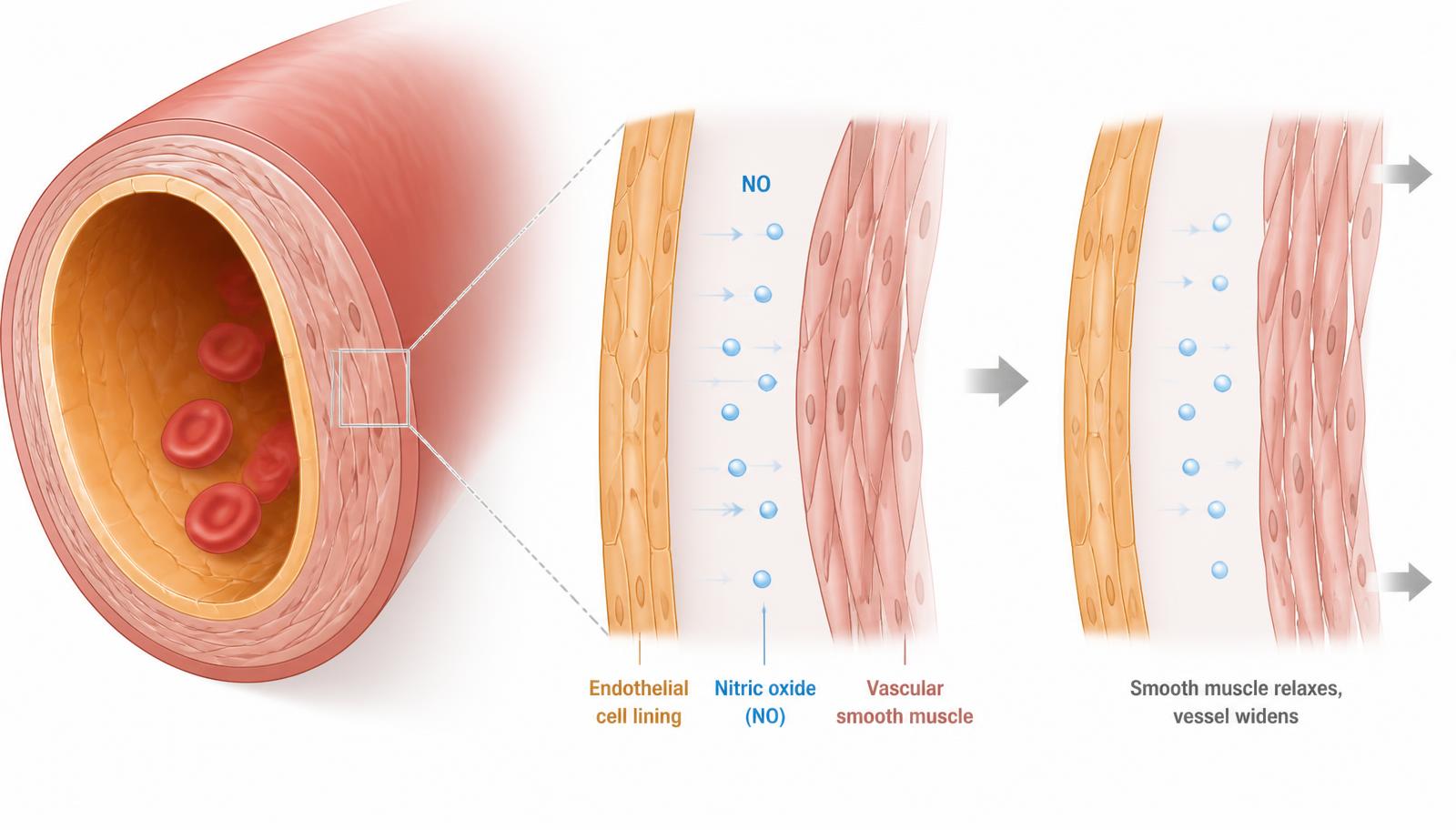
NO produced within the blood-vessel wall can signal the surrounding smooth muscle to relax. As that smooth muscle relaxes, the vessel can widen. This process is called vasodilation.
Vasodilation helps the circulatory system adjust blood flow according to the body's needs:
- supplying more blood to working leg muscles during a walk
- helping regulate blood flow through the skin when you're hot
- adjusting circulation as you stand, move or exercise
- continually fine-tuning vascular tone while you are simply sitting quietly
Nitric oxide is one of the molecules helping make those adjustments possible.
Where Is Nitric Oxide Made?
For cardiovascular purposes, one of the most important sites is the endothelium — a single-cell-thick layer lining the inside of arteries, veins and capillaries.
For many years, scientists thought of it largely as a passive barrier between blood and the vessel wall. We now know it is an active biological organ. Endothelial cells:
- sense blood flow
- respond to hormones and chemical signals
- communicate with surrounding tissues
- help regulate vascular tone
- and produce nitric oxide
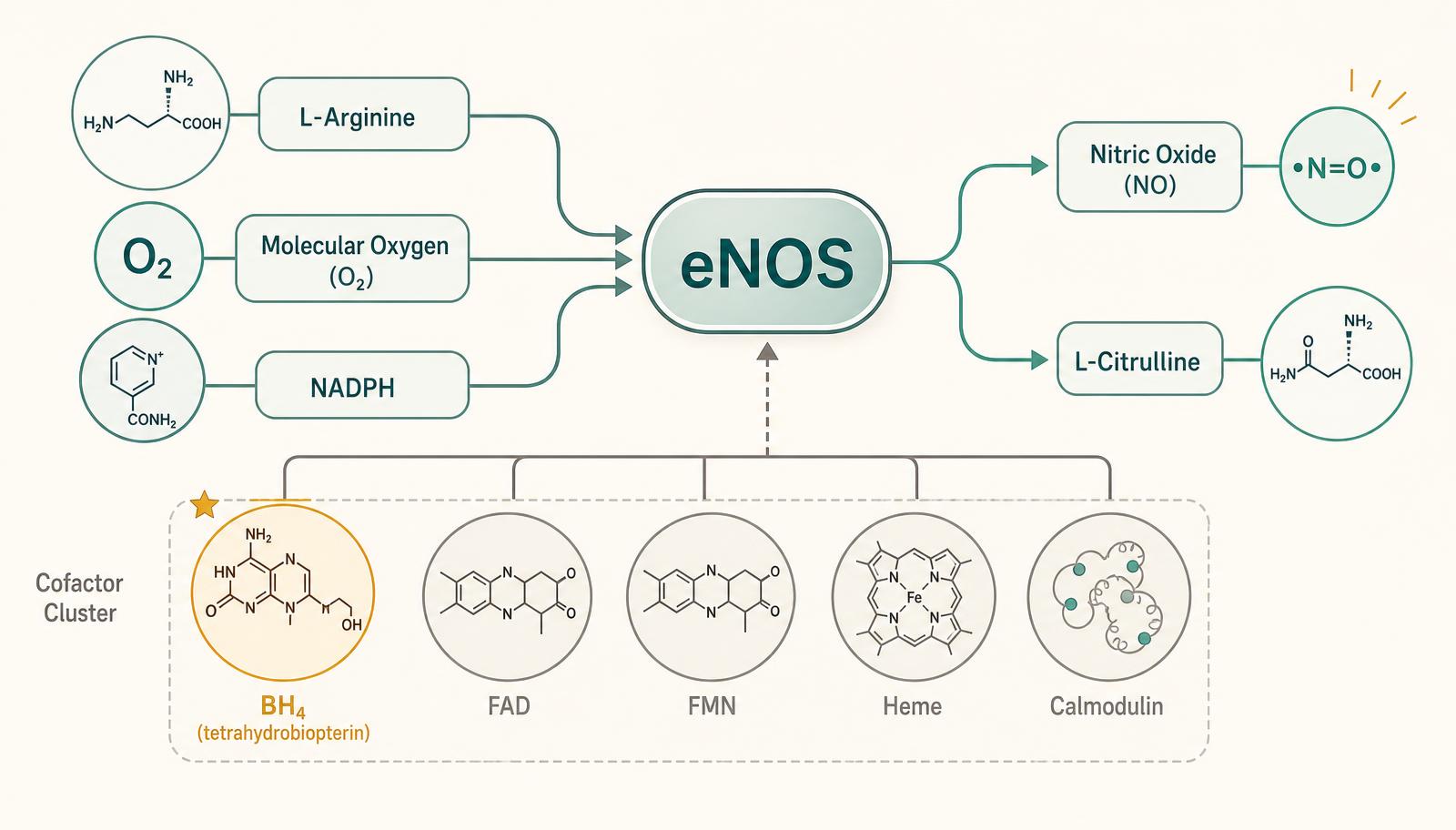
Inside these cells is an enzyme called eNOS — endothelial nitric oxide synthase. eNOS is central to natural endothelial NO production.
How Does the Body Make Nitric Oxide?
One important route begins with the amino acid L-arginine. The enzyme eNOS uses L-arginine as substrate to produce nitric oxide. In simplified form:
The actual reaction also requires oxygen and a number of enzyme cofactors, but this simple sequence captures the basic idea. Arginine supplies the raw material. eNOS performs the enzymatic work. NO is one of the resulting products.
Interestingly, the reaction also produces another amino acid: L-citrulline. [2] That creates an important relationship between arginine, citrulline and NO that we will return to later.
What Happens After NO Is Produced?
Nitric oxide doesn't need to travel very far. Because it is a small gaseous signaling molecule, NO can diffuse from the endothelial cell into nearby vascular smooth muscle. There it activates an enzyme called soluble guanylate cyclase (sGC), which increases another signaling molecule called cyclic GMP (cGMP). The sequence contributes to relaxation of the vascular smooth muscle.
This signaling pathway is one of the fundamental mechanisms underlying normal vascular relaxation. [2][3]
Why Was the Discovery of Nitric Oxide Such a Big Deal?
Because scientists did not originally know what was making blood vessels relax.
In 1980, Robert F. Furchgott and John Zawadzki demonstrated that the endothelial lining of blood vessels was necessary for certain forms of arterial relaxation. [4] Researchers began referring to the unknown substance released by endothelial cells as EDRF — endothelium-derived relaxing factor.
Later work by Furchgott, Louis Ignarro and other researchers established that EDRF was nitric oxide. It was a major change in cardiovascular science. A substance previously known mostly as a simple gas had turned out to be a molecule deliberately produced inside the human body to communicate between cells.
The discoveries led to the 1998 Nobel Prize in Physiology or Medicine, awarded to Robert F. Furchgott, Louis J. Ignarro and Ferid Murad "for their discoveries concerning nitric oxide as a signalling molecule in the cardiovascular system." [1]
Why Nitric Oxide Matters to Healthy Circulation
Blood flow cannot remain identical throughout the body all day. Different tissues need different amounts at different times. When muscles begin working, their demand rises. When you digest a meal, blood-flow requirements change. When you become hot, skin circulation changes. When you exercise, the cardiovascular system redistributes blood dramatically.
Healthy circulation therefore depends partly upon the ability of vessels to respond. NO contributes to that responsiveness by helping regulate vascular tone. This is why nitric oxide is closely connected to discussions of:
- healthy circulation
- blood flow
- endothelial function
- arterial health
- exercise physiology
- cardiovascular wellness
Nitric Oxide and the Heart
Nitric oxide isn't produced by the heart simply to "make the heart stronger." Its cardiovascular role is broader. The heart and blood vessels operate as one integrated system. When resistance in blood vessels changes, the heart responds. When tissues need more oxygen, cardiac output and vascular distribution adjust.
Healthy endothelial signaling helps vessels regulate their tone and therefore contributes to the environment in which the heart performs its work. NO also participates in signaling within the coronary circulation and cardiovascular tissues themselves. [5]
So when discussing nitric oxide and heart health, it makes more sense to think about the heart and vascular system together rather than treating the heart as an isolated pump.
Nitric Oxide and Your Arteries
Arteries are sometimes described as plumbing. That analogy is useful — but incomplete. Healthy arteries are dynamic. Their walls contain smooth muscle. Their endothelial lining senses blood moving across it. They respond to chemical and mechanical signals.
One of those mechanical signals is called shear stress. As blood flows across endothelial cells, it creates a friction-like force. The endothelium can sense changes in that force. Increased blood flow, such as during exercise, can stimulate cellular pathways associated with eNOS activation and nitric-oxide production. [6]
Your arteries are not merely being used during exercise. They are being stimulated by it.

Does Nitric Oxide Decline as We Age?
One of the most important areas of NO research involves aging. With advancing age, endothelial function tends to become less efficient. Research has found age-related reductions in NO bioavailability, influenced by factors including oxidative stress, changes in eNOS regulation and broader alterations in vascular biology. [7]
That does not mean nitric-oxide production suddenly collapses when someone turns 40, 50 or 60. There is no universal birthday at which the NO system switches off. The change is more gradual. And people age differently:
- physical activity
- smoking
- blood pressure
- metabolic health
- diet
- body composition
- genetics
These and other factors can influence the vascular environment. So while biological aging matters, lifestyle also matters.
Production and Availability Are Not the Same Thing
This distinction is central to understanding NO. The body may produce nitric oxide, but that does not mean all of it remains available for biological signaling.
One important reason is oxidative stress. A reactive oxygen species called superoxide can react very rapidly with NO. This reduces NO availability and can generate a highly reactive compound called peroxynitrite. So scientists often talk about NO bioavailability rather than just NO production.
PRODUCTION
How much NO is being generated?
BIOAVAILABILITY
How much remains available to do its signaling job?
Both matter.
The Body Has More Than One Way to Make NO
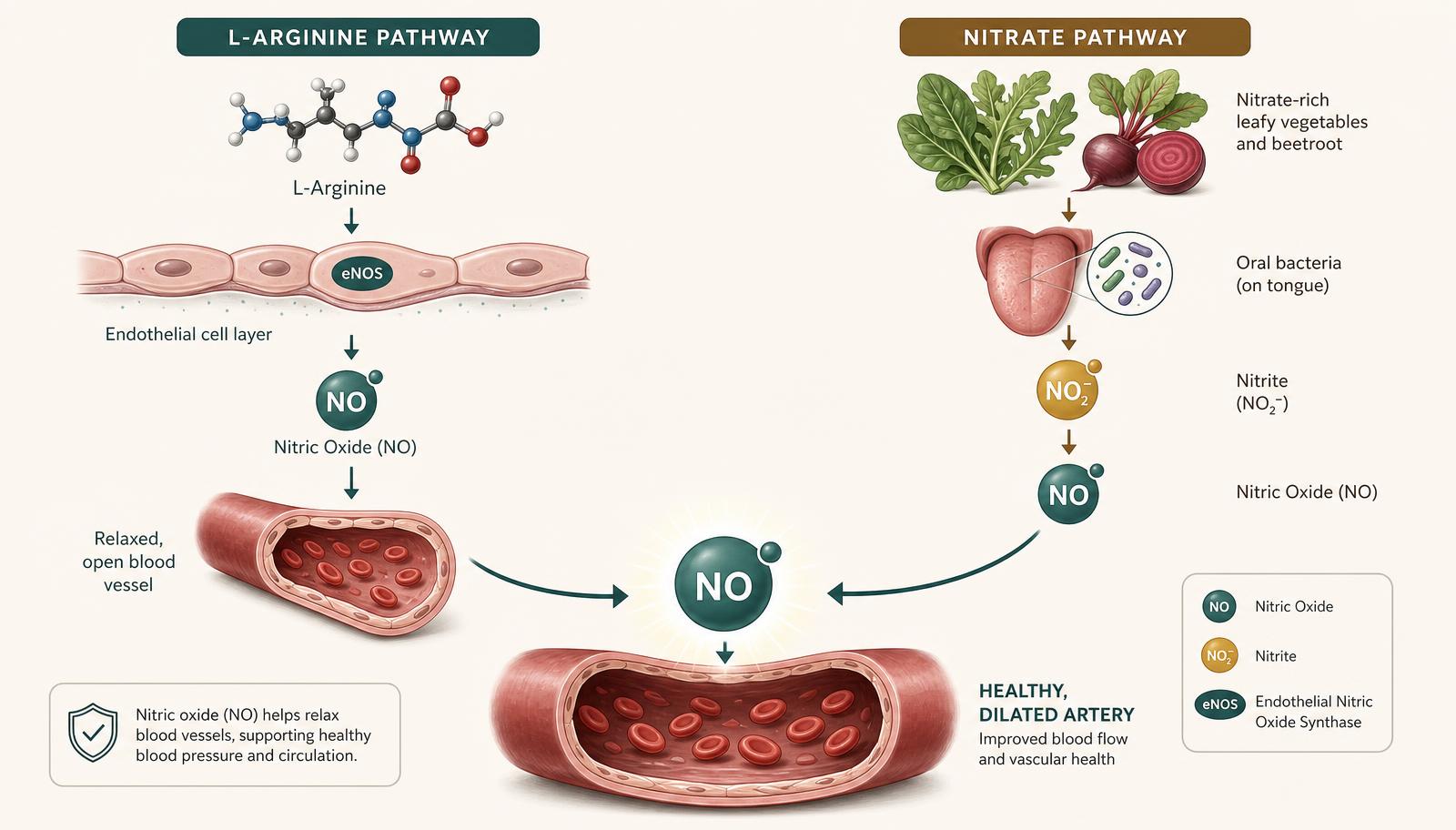
The arginine/eNOS pathway is extremely important. But it is not the body's only route. There is another pathway involving nitrate and nitrite:
This route has become a major area of nutritional research. [8] And one of its most interesting starting points is vegetables.
Vegetables and the Nitrate–Nitrite–NO Pathway
Leafy green vegetables and beetroot can contain naturally occurring inorganic nitrate. Examples include:
- arugula / rocket
- spinach
- lettuce
- beetroot
- celery
- other leafy vegetables
After nitrate is consumed, it is absorbed into the bloodstream. A portion is then concentrated into saliva. And this is where the story becomes surprising. Certain bacteria living in the mouth can convert nitrate into nitrite. That nitrite is swallowed and can subsequently participate in reactions that generate NO. [8][9]
So part of the body's NO-production system involves cooperation between:
- food
- the digestive system
- the bloodstream
- salivary glands
- bacteria living on your tongue
Human biology is wonderfully interconnected.
Does Oral Health Affect Nitric Oxide?
Potentially, yes. Because nitrate-reducing oral bacteria contribute to the nitrate pathway, researchers have investigated what happens when those bacteria are strongly suppressed. Studies using antibacterial mouthwash have shown reductions in oral nitrate-to-nitrite conversion, and some research has found small changes in blood pressure under experimental conditions. [10]
That does not mean people should stop using a mouthwash recommended by a dentist or healthcare professional. Oral health remains important. It does show that the oral microbiome performs biological functions extending beyond teeth and gums. The mouth is part of the NO story.
Where L-Citrulline Fits
L-citrulline has become particularly interesting because the body can convert it into L-arginine. After oral intake, citrulline is efficiently absorbed and largely avoids the extensive first-pass metabolism experienced by oral arginine. It enters systemic circulation. The kidneys then play an important role in converting citrulline into arginine.
Human research has demonstrated that citrulline can effectively increase circulating arginine. [11] This creates a useful nutritional relationship.
Arginine and Citrulline: Complementary Rather Than Competing
Arginine is the amino acid eNOS directly uses. Citrulline takes another route toward arginine. So instead of asking "which one is the nitric-oxide amino acid?", a better understanding is:
L-ARGININE
Provides more directly available substrate for the NOS pathway.
L-CITRULLINE
Provides a complementary route for replenishing arginine availability.
Human research comparing the two confirms that their pharmacokinetics differ substantially. [11] Other human research has found that combining arginine and citrulline can increase circulating arginine more effectively than the same total amount of either amino acid alone under the conditions studied. [12]
That makes their relationship particularly interesting when considering NO-focused nutritional formulations.
Nitric Oxide and Exercise
Exercise and NO have a two-way relationship. Nitric oxide participates in the vascular responses that help deliver blood to working tissue. At the same time, exercise stimulates the vascular environment associated with NO production. During physical activity:
- muscles require more oxygen
- blood-flow demand increases
- the heart pumps more blood
- shear stress rises
- endothelial signaling adapts
Regular exercise has been associated with improvements in endothelial function across numerous studies. [6][13] So exercise isn't merely something NO may help support. Exercise itself is one of the most important natural stimuli for vascular function.
Nitric Oxide and the Brain
The brain also depends upon a sophisticated vascular supply. Nitric oxide participates in regulation of cerebral circulation, while a different NOS enzyme — nNOS, or neuronal nitric oxide synthase — produces NO involved in nervous-system signaling.
This illustrates an important point. There isn't one nitric-oxide enzyme doing one job everywhere. Three major NOS isoforms are commonly discussed:
| eNOS | Endothelial nitric oxide synthase | Particularly important in vascular endothelial biology. |
|---|---|---|
| nNOS | Neuronal nitric oxide synthase | Important in neuronal and other physiological signaling. |
| iNOS | Inducible nitric oxide synthase | Associated particularly with immune and inflammatory responses. |
The biological effects of NO depend upon where, when and how it is produced.
Is More Nitric Oxide Always Better?
No. This is a crucial point. Nitric oxide is a regulated signaling molecule. Its usefulness depends upon:
- location
- concentration
- timing
- the enzyme producing it
- the surrounding oxidative environment
- the physiological circumstances
The objective is not to produce the maximum amount of nitric oxide possible. It is to support healthy natural nitric-oxide biology.
Can You Tell If Your Nitric Oxide Is Low?
Not simply by symptoms. Online discussions sometimes attribute a wide range of complaints to "low nitric oxide," including:
- fatigue
- cold hands and feet
- poor exercise performance
- brain fog
- sexual changes
- high blood pressure
But these symptoms are nonspecific. They can arise from many medical, neurological, metabolic, circulatory or lifestyle causes. There is no reliable symptom checklist that allows a person to diagnose themselves as nitric-oxide deficient.
NO metabolites and endothelial function can be studied scientifically, but this is much more complex than a simple home "NO level." Persistent symptoms deserve appropriate medical evaluation rather than self-diagnosis.
How Can You Support Natural NO Production?
Fortunately, many of the most useful strategies are also basic healthy-lifestyle strategies.
Exercise regularly
Movement increases blood flow and provides endothelial shear-stress signals.
Eat plenty of vegetables
Especially leafy greens and other nitrate-containing vegetables.
Include appropriate protein foods
These provide amino acids, including L-arginine.
Eat a varied plant-rich diet
Plants supply vitamins, minerals, polyphenols and other compounds relevant to the vascular environment.
Don't smoke
Smoking strongly works against endothelial and cardiovascular health.
Manage cardiovascular risk factors
Blood pressure, blood glucose, blood lipids and body composition matter to vascular aging.
Stay consistent
The endothelial system experiences your lifestyle every day. Healthy vascular support is not a one-time intervention.
Nitric Oxide Is Part of a Bigger System
It can be tempting to discover an important molecule and make it the explanation for everything. Nitric oxide deserves its reputation as an extraordinarily important signaling molecule. But cardiovascular health depends upon much more.
- Arterial structure matters.
- Blood pressure matters.
- Cholesterol and lipoproteins matter.
- Glucose regulation matters.
- Exercise matters.
- Body composition matters.
- Smoking matters.
- Sleep matters.
- Genetics matter.
- Nutrition matters.
NO operates within all of that biology. It should be understood as an important component of the cardiovascular system, not a replacement for the cardiovascular system. That distinction is one of the foundations of credible NO science.
Why Nitric Oxide Matters More Than Most People Realize
Most people never consciously think about endothelial signaling. Yet every day your blood vessels are continuously adjusting — when you walk, when you exercise, when you're hot, when tissues require more oxygen, when your heart changes its output, when local metabolism changes.
NO is one of the signals helping coordinate that remarkable system. Its discovery fundamentally changed how scientists think about blood vessels. The endothelium went from being considered a passive lining to being understood as an active signaling surface. And nitric oxide became one of the central molecules in modern vascular biology.
That is why NO matters. Not because it is a trendy "boost." But because it is part of the language your cardiovascular system uses to regulate itself.
Where ėNOS Fits
The science behind natural nitric-oxide production also explains the formulation philosophy behind ėNOS by Australiana Life. There is an important distinction:
- eNOS is endothelial nitric oxide synthase — the natural enzyme involved in vascular NO production.
- ėNOS is Australiana Life's nutritional supplement formulated to support the body's natural nitric-oxide system.
At the center of ėNOS are L-arginine and L-citrulline. Arginine supplies substrate directly relevant to eNOS. Citrulline provides a complementary metabolic route that can help replenish circulating arginine availability. Additional deliberately selected nutritional ingredients, including Australian plant ingredients, complement the broader formulation.
The purpose is not to artificially force the body to make unlimited NO. It is more physiologically sensible: provide nutritional support for the natural pathways the body already uses.
For people interested in healthy circulation, cardiovascular wellness and staying active as they age, supporting that natural system can be a valuable part of a broader healthy lifestyle.
The Bigger Picture
Nitric oxide is almost unimaginably small. It lasts only briefly. It travels only short distances. Yet its effects reach across cardiovascular physiology, exercise, brain signaling and many other areas of human biology.
It teaches us something important about the body. Sometimes the most powerful biological systems do not depend upon large structures or long-lived molecules. They depend upon communication.
A cell produces a message. Another cell receives it. A blood vessel responds. Blood flow changes. And life continues. That is nitric oxide — a tiny molecule carrying an enormously important message.
Scientific References
[1] The Nobel Prize in Physiology or Medicine 1998
Robert F. Furchgott, Louis J. Ignarro and Ferid Murad. Awarded for discoveries concerning nitric oxide as a signalling molecule in the cardiovascular system.
NobelPrize.org →[2] Nitric oxide synthases: regulation and function
Förstermann U, Sessa WC. European Heart Journal. 2012;33(7):829–837. Comprehensive review of nitric-oxide synthase biology and endothelial NO signaling.
PubMed / National Library of Medicine →[3] cGMP-dependent protein kinases and cGMP phosphodiesterases in nitric oxide and cGMP action
Francis SH, Busch JL, Corbin JD, Sibley D. Pharmacological Reviews. 2010;62:525–563.
PubMed / National Library of Medicine →[4] The obligatory role of endothelial cells in the relaxation of arterial smooth muscle by acetylcholine
Furchgott RF, Zawadzki JV. Nature. 1980;288:373–376.
PubMed / National Library of Medicine →[5] eNOS activation by physical forces: from short-term regulation of contraction to chronic remodeling of cardiovascular tissues
Balligand JL, Feron O, Dessy C. Physiological Reviews. 2009;89:481–534.
PubMed / National Library of Medicine →[6] Cardiovascular effects of exercise: role of endothelial shear stress
Niebauer J, Cooke JP. Journal of the American College of Cardiology. 1996;28:1652–1660.
PubMed / National Library of Medicine →[7] Aging and vascular endothelial function in humans
Seals DR, Jablonski KL, Donato AJ. Clinical Science. 2011;120:357–375.
PubMed / National Library of Medicine →[8] The nitrate–nitrite–nitric oxide pathway in physiology and therapeutics
Lundberg JO, Weitzberg E, Gladwin MT. Nature Reviews Drug Discovery. 2008;7:156–167.
PubMed / National Library of Medicine →[9] Vascular effects of dietary nitrate via the nitrate–nitrite–nitric oxide pathway
Lidder S, Webb AJ. British Journal of Clinical Pharmacology. 2013;75(3):677–696.
PubMed / National Library of Medicine →[10] Antibacterial mouthwash blunts oral nitrate reduction and increases blood pressure in treated hypertensive men and women
Bondonno CP, Liu AH, Croft KD, et al. American Journal of Hypertension. 2015;28(5):572–575.
PubMed / National Library of Medicine →[11] Pharmacokinetic and pharmacodynamic properties of oral L-citrulline and L-arginine: impact on nitric oxide metabolism
Schwedhelm E, Maas R, Freese R, et al. British Journal of Clinical Pharmacology. 2008;65(1):51–59. PMID: 17662090.
PubMed / National Library of Medicine →[12] The effects on plasma L-arginine levels of combined oral L-citrulline and L-arginine supplementation in healthy males
Suzuki T, Morita M, Hayashi T, Kamimura A. Bioscience, Biotechnology, and Biochemistry. 2017;81(2):372–375. PMID: 27667025.
PubMed / National Library of Medicine →[13] Effect of exercise training on endothelium-derived nitric oxide function in humans
Green DJ, Maiorana A, O'Driscoll G, Taylor R. Journal of Physiology. 2004;561:1–25.
PubMed / National Library of Medicine →
Explore Nitric Oxide in More Detail
- How Your Body Makes Nitric Oxide →
Follow the two major natural pathways the body uses to produce NO.
- What Is eNOS? The Enzyme Behind Natural Nitric Oxide Production →
Explore the endothelial enzyme at the center of vascular NO biology.
- The Endothelium: The Hidden Key to Healthy Blood Vessels →
Meet the cellular lining that senses blood flow and produces vascular signals.
- Nitric Oxide and Heart Health →
Explore the relationship between NO, blood vessels and the cardiovascular system.
- Nitric Oxide and Aging: What Changes After 40, 50 and Beyond? →
See why endothelial function and NO bioavailability become increasingly relevant through midlife and later adulthood.
- Foods That Support Natural Nitric Oxide Production →
Explore leafy greens, beetroot, arginine-containing foods, watermelon and other nutritional contributors.
SUPPORTING YOUR NATURAL NITRIC-OXIDE SYSTEM
ėNOS was formulated around the biology of the body's own NO-production pathways, combining L-arginine + L-citrulline with deliberately selected complementary nutrients to support natural nitric-oxide production, healthy circulation and cardiovascular wellness.
EXPLORE ĖNOS →This article is provided for informational purposes only and is not intended as medical advice or to diagnose, treat, cure or prevent disease. ėNOS is a dietary supplement formulated to support the body's natural nitric-oxide system, healthy circulation and cardiovascular wellness. Dietary supplements should complement, rather than replace, appropriate nutrition, physical activity and medical care.
More in Nitric Oxide Science
About Our Health & Science Content
Australiana Life Health & Science articles are based on published scientific research and written to make complex health and nitric oxide science easier to understand. Our educational content undergoes scientific review for accuracy and appropriate interpretation of the evidence and is updated as relevant scientific understanding evolves.