
What Is eNOS? The Enzyme Behind Natural Nitric Oxide Production
Meet One of the Most Important Enzymes in Vascular Biology
If you have been reading about nitric oxide, cardiovascular health or endothelial function, sooner or later you are likely to encounter four letters: eNOS. They stand for endothelial nitric oxide synthase.
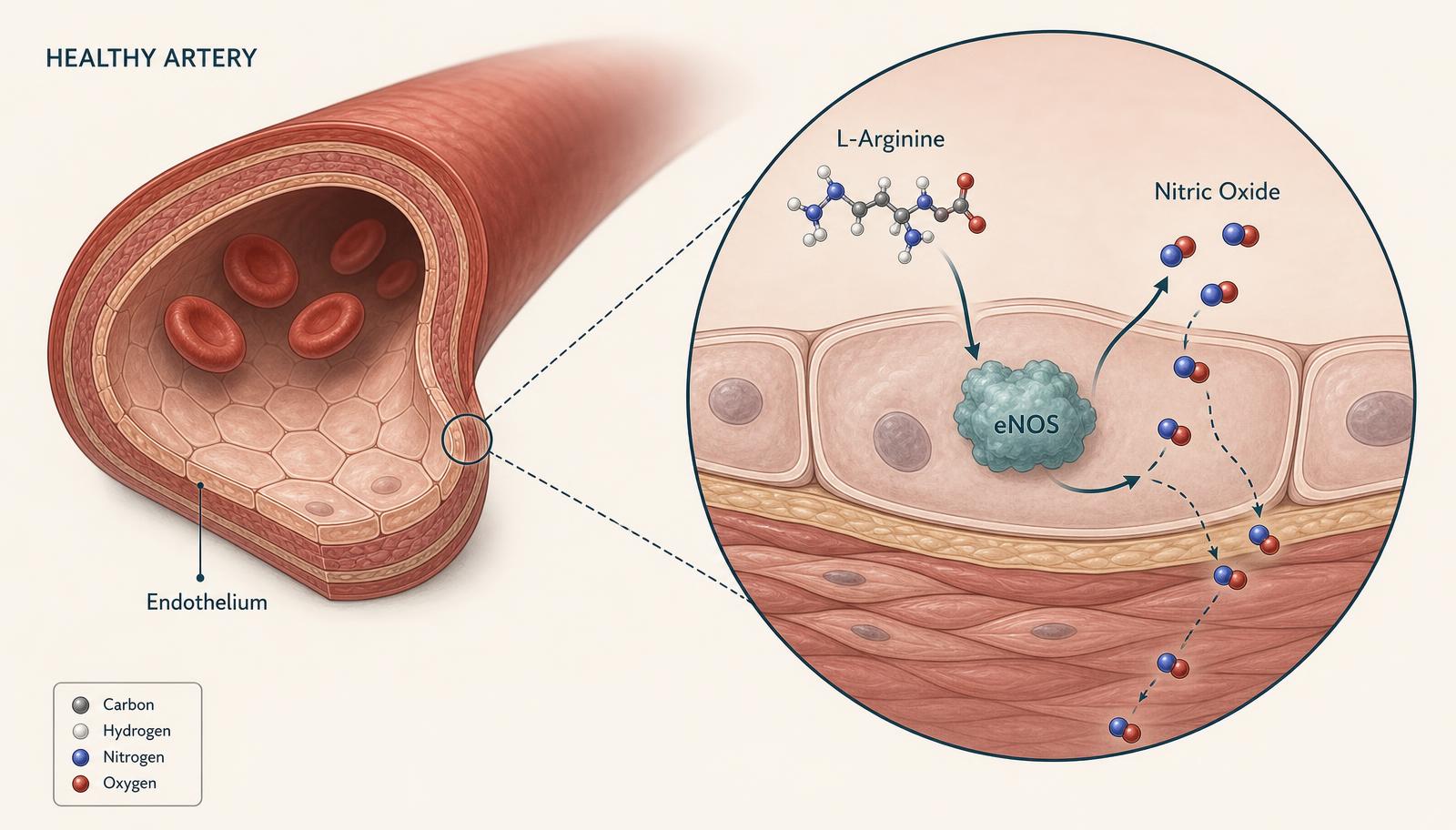
That is quite a name for something most people have never heard of. But eNOS performs a remarkable job. It is an enzyme found predominantly in endothelial cells — the cells lining the inside of our blood vessels — and it helps produce nitric oxide (NO) from the amino acid L-arginine. [1]
That nitric oxide then participates in signaling that helps vascular smooth muscle relax, allowing blood vessels to adjust their diameter. So if nitric oxide is the messenger, one useful way to think about eNOS is: eNOS helps make the message.
ENOS — QUICK DEFINITION
- Full name
- Endothelial Nitric Oxide Synthase
- Abbreviation
- eNOS
- Gene
- NOS3
- Primary substrate
- L-arginine
- Major product
- Nitric oxide (NO)
- Where it is important
- Vascular endothelium
- Primary relevance here
- Regulation of vascular tone and endothelial function
First, What Is an Enzyme?
Before going deeper into eNOS, it helps to understand what an enzyme actually does. An enzyme is a biological catalyst. It helps a particular chemical reaction occur efficiently without itself being consumed in the process.
The human body contains thousands of enzymes.
- They help digest food.
- They help generate energy.
- They help build and break down molecules.
- They help regulate cellular processes.
- And some enzymes help create important signaling molecules.
eNOS belongs to that last category. It catalyzes a biochemical reaction involved in producing nitric oxide.
Where Is eNOS Found?
The name gives us a clue: endothelial nitric oxide synthase. The endothelium is the thin cellular layer lining the interior surface of blood vessels. If you could look inside an artery at microscopic scale, the blood would not be flowing directly against the muscular artery wall. It would be flowing across this specialized cellular lining.
For many years, scientists thought the endothelium was largely a passive barrier. We now know it is anything but passive. The endothelium senses:
- blood flow
- mechanical forces
- circulating hormones
- chemical signals
- metabolic conditions
It then produces signals that influence vascular behavior. Nitric oxide is one of the most important of those signals — and eNOS is one of the enzymes responsible for producing it.
The Reaction at the Center of the Story
At its simplest, the pathway is often presented as:
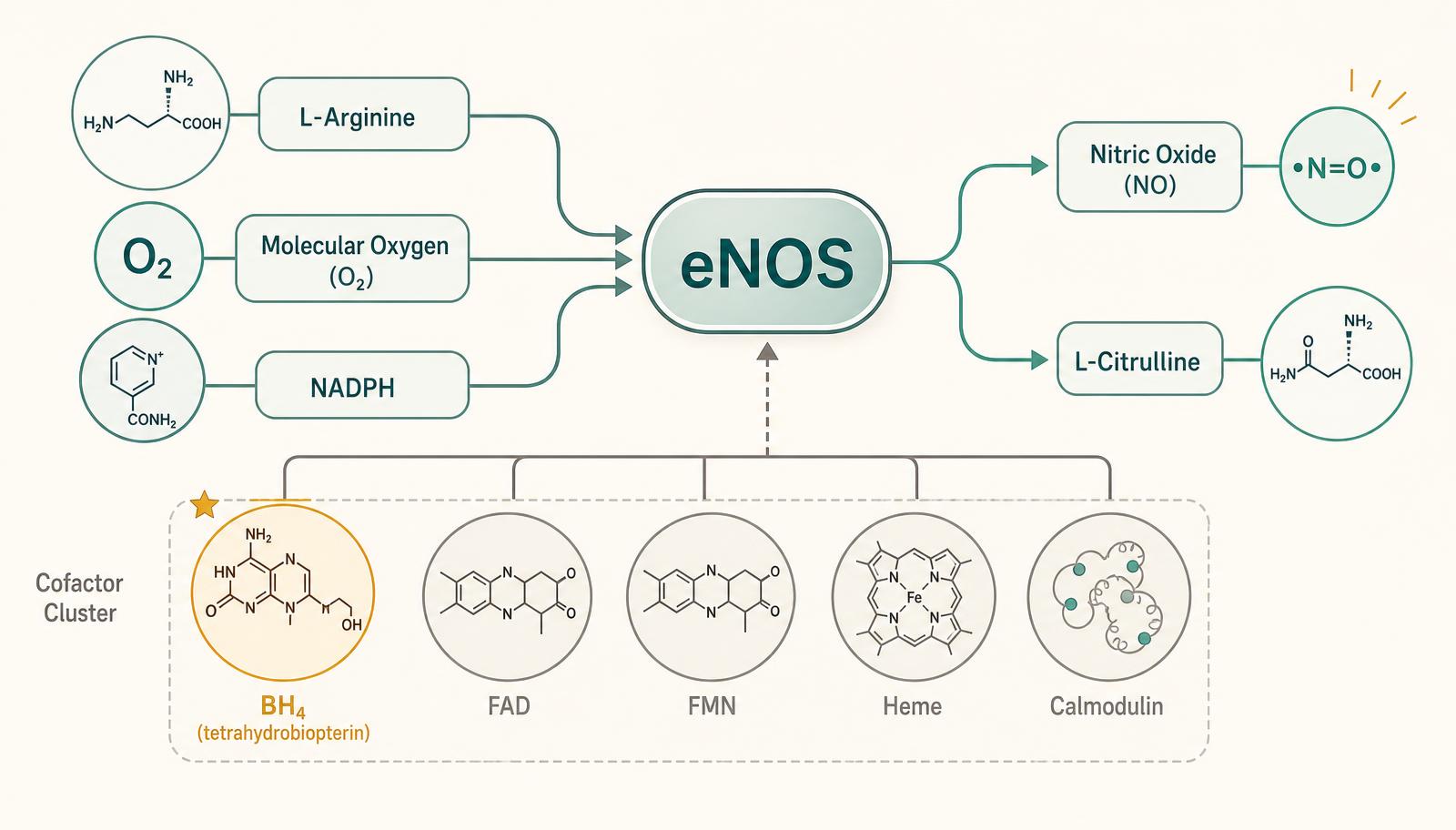
That is useful for explaining the concept. The actual chemistry is more complex. eNOS catalyzes the oxidation of L-arginine, ultimately producing nitric oxide and L-citrulline. The reaction requires molecular oxygen, NADPH and several cofactors and prosthetic groups for normal enzyme activity. [1][2]
Among these are:
- tetrahydrobiopterin (BH4)
- flavin adenine dinucleotide (FAD)
- flavin mononucleotide (FMN)
- heme
- calmodulin
eNOS does not simply need arginine. It operates within an entire biochemical system.
What Happens to the Nitric Oxide?
Producing NO is only the beginning. Nitric oxide is a small, highly diffusible signaling molecule. After being produced by endothelial eNOS, NO can diffuse from the endothelial cell into nearby vascular smooth muscle. There, NO activates an enzyme called soluble guanylate cyclase. This increases production of the signaling molecule cyclic guanosine monophosphate — cGMP. The downstream signaling helps vascular smooth muscle relax. [3]
Why Was This Such an Important Discovery?
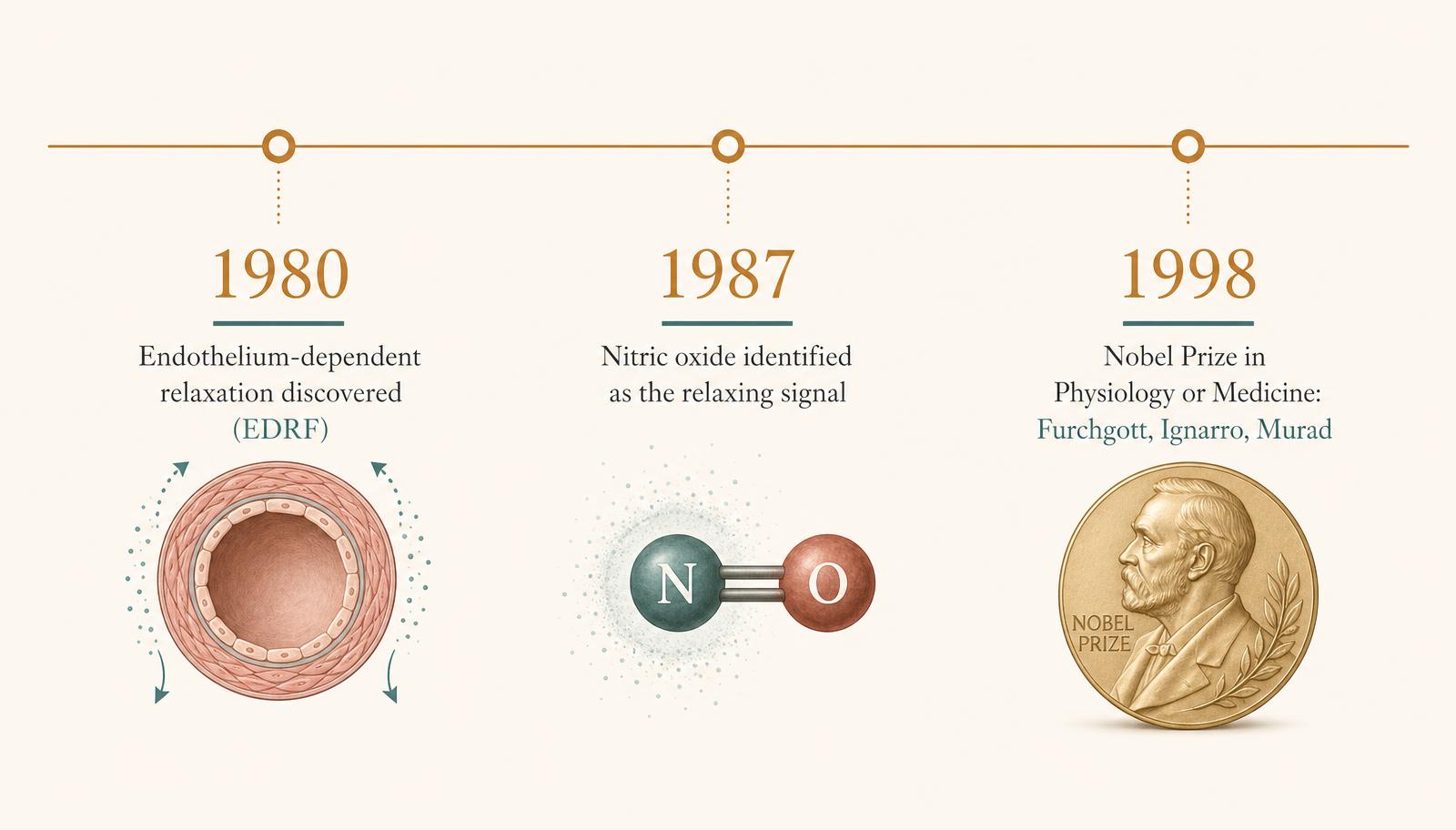
Because scientists didn't always know the endothelium controlled blood-vessel relaxation this way. In 1980, Robert F. Furchgott and John V. Zawadzki published landmark research showing that relaxation of arterial smooth muscle in response to acetylcholine depended upon the presence of endothelial cells. [4]
At the time, the mysterious substance responsible was called endothelium-derived relaxing factor — EDRF. Scientists knew the endothelium was releasing something that caused vascular smooth muscle to relax. The identity of that "something" became one of the great questions in cardiovascular research.
By the late 1980s, research established that EDRF was nitric oxide or a closely related NO species. [5][6] That discovery fundamentally changed our understanding of blood vessels. They weren't passive tubes. The vessel wall was actively communicating with itself.
A Discovery Worthy of a Nobel Prize
The significance of nitric oxide signaling was eventually recognized with science's highest honor. The 1998 Nobel Prize in Physiology or Medicine was awarded jointly to Robert F. Furchgott, Louis J. Ignarro and Ferid Murad for their discoveries concerning "nitric oxide as a signalling molecule in the cardiovascular system." [7]
The Nobel Assembly described NO as the first gaseous molecule identified as acting as a biological signal. What had once seemed improbable — that a simple gas could serve as a critical biological messenger — had become established cardiovascular science. And endothelial nitric oxide synthase sits directly upstream of that signaling system.
eNOS Is One Member of a Family
eNOS isn't the body's only nitric oxide synthase. Humans have three major NOS isoforms.
| Enzyme | Full name | Gene | Common association |
|---|---|---|---|
| eNOS | Endothelial nitric oxide synthase | NOS3 | Vascular / endothelial NO signaling |
| nNOS | Neuronal nitric oxide synthase | NOS1 | Nervous-system signaling |
| iNOS | Inducible nitric oxide synthase | NOS2 | Immune and inflammatory responses |
All three can produce nitric oxide. But they are regulated differently and serve different physiological roles. [1] For cardiovascular and endothelial health, eNOS is the enzyme of particular interest.
What Turns eNOS On?
eNOS is not simply operating at one constant speed. Its activity is dynamically regulated. One especially important stimulus is blood flow itself. As blood moves through an artery, it exerts frictional force along the endothelial surface. This is called shear stress.
When blood flow increases — during physical activity, for example — endothelial cells sense that increased shear stress. Intracellular signaling can then activate eNOS and increase NO production. [8]
This is one reason physical activity is so closely connected with endothelial health.

When eNOS Doesn't Work Efficiently
Healthy eNOS function requires more than simply having the enzyme present. The surrounding biological environment matters. Oxidative stress can interfere with normal NO signaling. Availability of appropriate substrate matters. Availability of essential cofactors matters. And one cofactor deserves particular attention: BH4 — tetrahydrobiopterin.
BH4 helps eNOS function normally. When BH4 availability is inadequate or its oxidation increases, eNOS can enter a state known as eNOS uncoupling. [9] That sounds technical, but the concept is important.
Superoxide can then react with NO, further reducing NO bioavailability. So eNOS biology is not simply "give the body arginine and make NO." The enzyme itself needs an appropriate biochemical environment.
Why "More Arginine" Isn't the Whole Story
Because L-arginine is the substrate used by eNOS, it might seem logical that simply consuming more arginine should always produce proportionally more nitric oxide. Biology rarely works so simply. eNOS function can also be influenced by:
- enzyme activity
- substrate availability
- cofactors
- oxidative stress
- endogenous inhibitors
- endothelial health
- cellular signaling
This is one reason modern NO science increasingly looks at the entire pathway, not one ingredient in isolation.
Where Does Citrulline Fit?
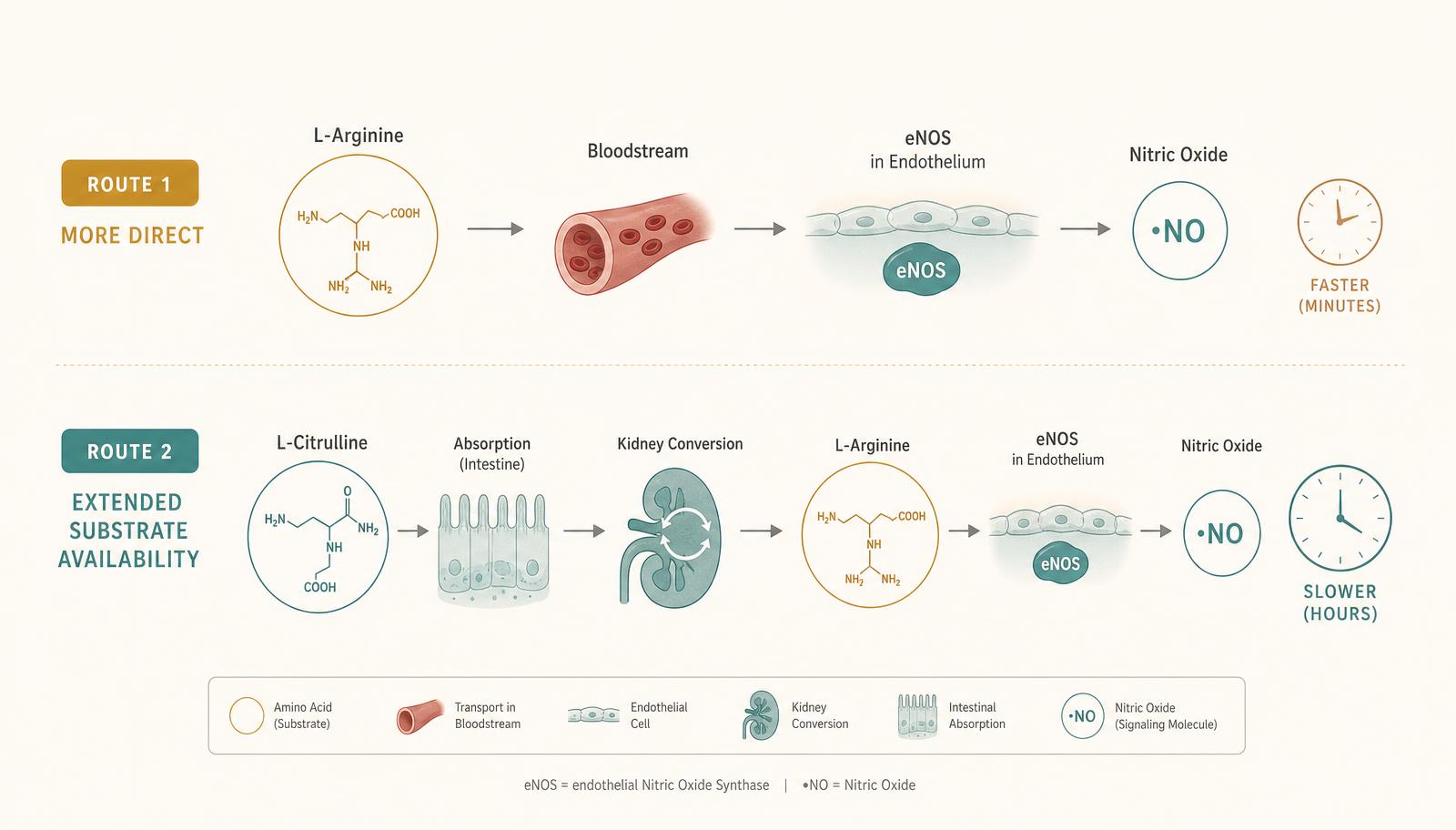
eNOS does not use L-citrulline as its direct substrate. It uses L-arginine.
But citrulline can still play an important role in arginine availability. After oral consumption, L-citrulline is efficiently absorbed and can subsequently be converted into L-arginine — importantly through metabolism involving the kidneys. Human pharmacokinetic research has shown that oral citrulline can increase circulating arginine concentrations and markers of NO-dependent signaling. [10]
Citrulline does not bypass eNOS and magically turn into nitric oxide. Instead, it can help replenish the arginine pool available to the NO-production pathway.
The Arginine Paradox
Endothelial cells often contain intracellular arginine concentrations that appear sufficient for eNOS activity. Yet in some experimental and clinical settings, providing additional extracellular L-arginine can still influence NO-dependent responses. Researchers have called this apparent contradiction the "L-arginine paradox." [11]
Several explanations have been proposed, involving arginine transport, compartmentalization within cells, endogenous inhibitors such as asymmetric dimethylarginine (ADMA), and other regulatory mechanisms. For a consumer reader, the important point is simpler: having an ingredient present somewhere in the body does not automatically mean every enzyme has unlimited functional access to it. Biochemistry is organized and regulated at the cellular level.
eNOS and Aging
Human research has documented declining endothelial function and reduced NO bioavailability with advancing age. [12] Several processes appear to contribute:
- increased oxidative stress
- changes in eNOS regulation
- reduced NO availability
- changes in cofactors
- greater potential for eNOS uncoupling
This does not mean eNOS simply "switches off" after a certain birthday. There is no universally accepted age at which that happens. Instead, vascular function changes progressively and varies considerably among individuals. Physical activity, nutrition, metabolic health, smoking and cardiovascular risk factors can all influence the environment in which eNOS operates.
eNOS and the Foods You Eat
The direct eNOS pathway is only one route through which the body can generate NO. Vegetables such as leafy greens and beetroot provide dietary nitrate. That nitrate can enter the nitrate–nitrite–nitric oxide pathway, which is particularly interesting because it does not require eNOS to produce NO in the same way as the L-arginine/eNOS pathway. [13]
The body rarely relies on just one mechanism.
Why eNOS Matters to More Than Blood-Vessel Diameter
The role of endothelial NO extends beyond acute vasodilation. Scientific literature has linked normal endothelial NO signaling to broader aspects of vascular homeostasis, including interactions involving:
- platelet activity
- leukocyte-endothelial interactions
- vascular smooth-muscle behavior
- vascular remodeling
- endothelial function
This is one reason reduced NO bioavailability is considered an important feature of endothelial dysfunction and cardiovascular aging. [1][12] It also explains why eNOS has been studied so extensively. This one enzyme sits at an important intersection between cellular biochemistry and whole-body vascular physiology.
Five Questions People Commonly Ask About eNOS
Is eNOS the same thing as nitric oxide?
No. eNOS is an enzyme. NO is a signaling molecule produced through the reaction eNOS catalyzes. Think of eNOS as part of the biological machinery and NO as one of its important products.
Is eNOS only found in arteries?
No. The name reflects its strong association with endothelial cells, but eNOS expression is not exclusively limited to arterial endothelium. It has been identified in several cell and tissue types. For understanding cardiovascular physiology, however, endothelial eNOS is the central story.
Does eating arginine automatically create nitric oxide?
Not automatically. Arginine supplies substrate for eNOS, but NO production also depends upon enzyme activity, cofactors, cellular conditions and other regulatory mechanisms.
Does citrulline make nitric oxide?
Indirectly. Citrulline can be converted into arginine, and that arginine can subsequently serve as substrate for nitric oxide synthase.
Can exercise influence eNOS?
Yes. Increased blood flow creates shear stress on endothelial cells, and this is an important physiological stimulus for eNOS/NO signaling. [8]
eNOS and ėNOS: Similar Names, Very Different Things
eNOS is the scientific abbreviation for endothelial nitric oxide synthase, the naturally occurring enzyme discussed throughout this article. ėNOS — with the distinctive dot over the "e" — is the name of Australiana Life's nutritional product. They are not the same thing.
The relationship is conceptual. The scientific eNOS pathway is central to the body's natural production of vascular nitric oxide. The nutritional formulation ėNOS was developed around supporting the body's natural NO-production system. That distinction is why we write them differently:
- eNOS = the enzyme
- ėNOS = the product
From Understanding the Enzyme to Supporting the System
The science behind eNOS influenced the formulation philosophy behind ėNOS by Australiana Life. A central consideration is substrate availability. L-arginine provides the amino acid directly used by eNOS. L-citrulline provides a complementary metabolic route because it can subsequently be converted into arginine, helping replenish circulating arginine availability. Additional selected nutrients and Australian plant ingredients complement the broader nutritional environment associated with cardiovascular wellness.
But the biology described throughout this article also explains why we don't think about nitric oxide as a single-ingredient story.
- The substrate matters.
- The enzyme matters.
- The cofactors matter.
- The endothelium matters.
- Oxidative balance matters.
- Exercise matters.
- Nutrition matters.
ėNOS is intended to complement — not replace — those foundations.
The Bigger Picture
A four-letter abbreviation can hide a remarkable amount of biology. eNOS helps endothelial cells convert L-arginine into nitric oxide. That NO carries a signal from the endothelial lining into the surrounding vascular smooth muscle. The vessel can respond. Blood flow can adjust. Exercise can stimulate the pathway through shear stress. Nutrition can influence substrate availability. Aging and oxidative stress can make the system less efficient. And alternative pathways, including dietary nitrate, provide additional routes for NO production.
The technical answer is endothelial nitric oxide synthase. The more meaningful answer is that eNOS is part of the biological machinery that allows the lining of your blood vessels to communicate with the vessel wall.
That is why an enzyme most people have never heard of became part of one of the most important discoveries in modern cardiovascular science.
Scientific References
[1] Nitric oxide synthases: regulation and function
Förstermann U, Sessa WC. European Heart Journal. 2012;33(7):829–837. Comprehensive review of NOS enzymes, eNOS regulation and NO biology.
PubMed / National Library of Medicine →[2] Nitric oxide synthases: structure, function and inhibition
Alderton WK, Cooper CE, Knowles RG. Biochemical Journal. 2001;357:593–615. Detailed review of NOS structure, cofactors and enzymatic function.
PubMed / National Library of Medicine →[3] cGMP-dependent protein kinases and cGMP phosphodiesterases in nitric oxide and cGMP action
Francis SH, Busch JL, Corbin JD, Sibley D. Pharmacological Reviews. 2010;62(3):525–563.
PubMed / National Library of Medicine →[4] The obligatory role of endothelial cells in the relaxation of arterial smooth muscle by acetylcholine
Furchgott RF, Zawadzki JV. Nature. 1980;288:373–376. Landmark discovery of endothelium-dependent vascular relaxation.
PubMed / National Library of Medicine →[5] Nitric oxide release accounts for the biological activity of endothelium-derived relaxing factor
Palmer RMJ, Ferrige AG, Moncada S. Nature. 1987;327:524–526.
PubMed / National Library of Medicine →[6] Endothelium-derived relaxing factor produced and released from artery and vein is nitric oxide
Ignarro LJ, Buga GM, Wood KS, Byrns RE, Chaudhuri G. Proceedings of the National Academy of Sciences USA. 1987;84:9265–9269.
PubMed / National Library of Medicine →[7] The Nobel Prize in Physiology or Medicine 1998
Robert F. Furchgott, Louis J. Ignarro and Ferid Murad, awarded for discoveries concerning nitric oxide as a signalling molecule in the cardiovascular system. Nobel Assembly at Karolinska Institutet.
NobelPrize.org →[8] eNOS activation by physical forces: from short-term regulation of contraction to chronic remodeling of cardiovascular tissues
Balligand JL, Feron O, Dessy C. Physiological Reviews. 2009;89(2):481–534.
PubMed / National Library of Medicine →[9] Endothelial nitric oxide synthase in vascular disease: from marvel to menace
Förstermann U, Münzel T. Circulation. 2006;113(13):1708–1714. Review of eNOS dysfunction and uncoupling.
PubMed / National Library of Medicine →[10] Pharmacokinetic and pharmacodynamic properties of oral L-citrulline and L-arginine: impact on nitric oxide metabolism
Schwedhelm E, Maas R, Freese R, et al. British Journal of Clinical Pharmacology. 2008;65(1):51–59. PMID: 17662090.
PubMed / National Library of Medicine →[11] The pharmacodynamics of L-arginine
Böger RH. Journal of Nutrition. 2007;137:1650S–1655S. Discussion of L-arginine biology and the "arginine paradox."
PubMed / National Library of Medicine →[12] Aging and vascular endothelial function in humans
Seals DR, Jablonski KL, Donato AJ. Clinical Science. 2011;120(9):357–375. PMID: 21244363.
PubMed / National Library of Medicine →[13] The nitrate–nitrite–nitric oxide pathway in physiology and therapeutics
Lundberg JO, Weitzberg E, Gladwin MT. Nature Reviews Drug Discovery. 2008;7:156–167.
PubMed / National Library of Medicine →
Go Deeper Into the Science
- What Is Nitric Oxide? →
Begin with the signaling molecule itself and discover why NO transformed cardiovascular science.
- How to Increase Nitric Oxide Naturally →
Explore food, exercise and nutritional strategies that support natural NO production.
- Nitric Oxide and Arterial Health →
See how the endothelium and nitric-oxide signaling contribute to vascular responsiveness.
- Nitric Oxide and Aging: After 40, 50 and Beyond →
Explore what happens to endothelial NO biology as we grow older.
- Nitric Oxide and Blood Flow →
Follow the signal from endothelial NO production to vascular relaxation and changing blood flow.
- Why the Supplement Was Also Named ėNOS →
The name ėNOS reflects the science that inspired its formulation philosophy — supporting the body's own natural nitric-oxide system.
DISCOVER THE SCIENCE OF ĖNOS
The name ėNOS reflects the science that inspired its formulation philosophy — supporting the body's own natural nitric-oxide system.
EXPLORE ĖNOS →This article is provided for educational purposes only and is not intended as medical advice or to diagnose, treat, cure or prevent disease. ėNOS is a dietary supplement. Individual physiology varies, and dietary supplements should complement rather than replace appropriate nutrition, physical activity and medical care.
More in Nitric Oxide Science
About Our Health & Science Content
Australiana Life Health & Science articles are based on published scientific research and written to make complex health and nitric oxide science easier to understand. Our educational content undergoes scientific review for accuracy and appropriate interpretation of the evidence and is updated as relevant scientific understanding evolves.