
Dietary Nitrates & the Nitrate–Nitrite–Nitric Oxide Pathway
How Leafy Greens, Beetroot, Oral Bacteria and Your Own Biology Turn Food Into a Vascular Signal
A bowl of spinach does not contain nitric oxide.
Neither does beetroot.
And arugula does not somehow release NO directly into your bloodstream.
Something far more interesting happens.
These foods can contain dietary nitrate — NO₃⁻. Your body then takes that nitrate through a remarkable biological relay involving your digestive system, bloodstream, salivary glands, bacteria living on your tongue, and eventually your tissues.
The result can be the formation of nitric oxide — NO.
But behind those three steps is one of the most fascinating connections between food, the oral microbiome and cardiovascular physiology.
And as we grow older, this pathway may become particularly valuable, because the body's other major route for producing vascular NO — the endothelial eNOS pathway — tends to become less efficient with age. Recent research continues to identify declining NO bioavailability as an important feature of cardiovascular aging. [9]
It Starts With Vegetables
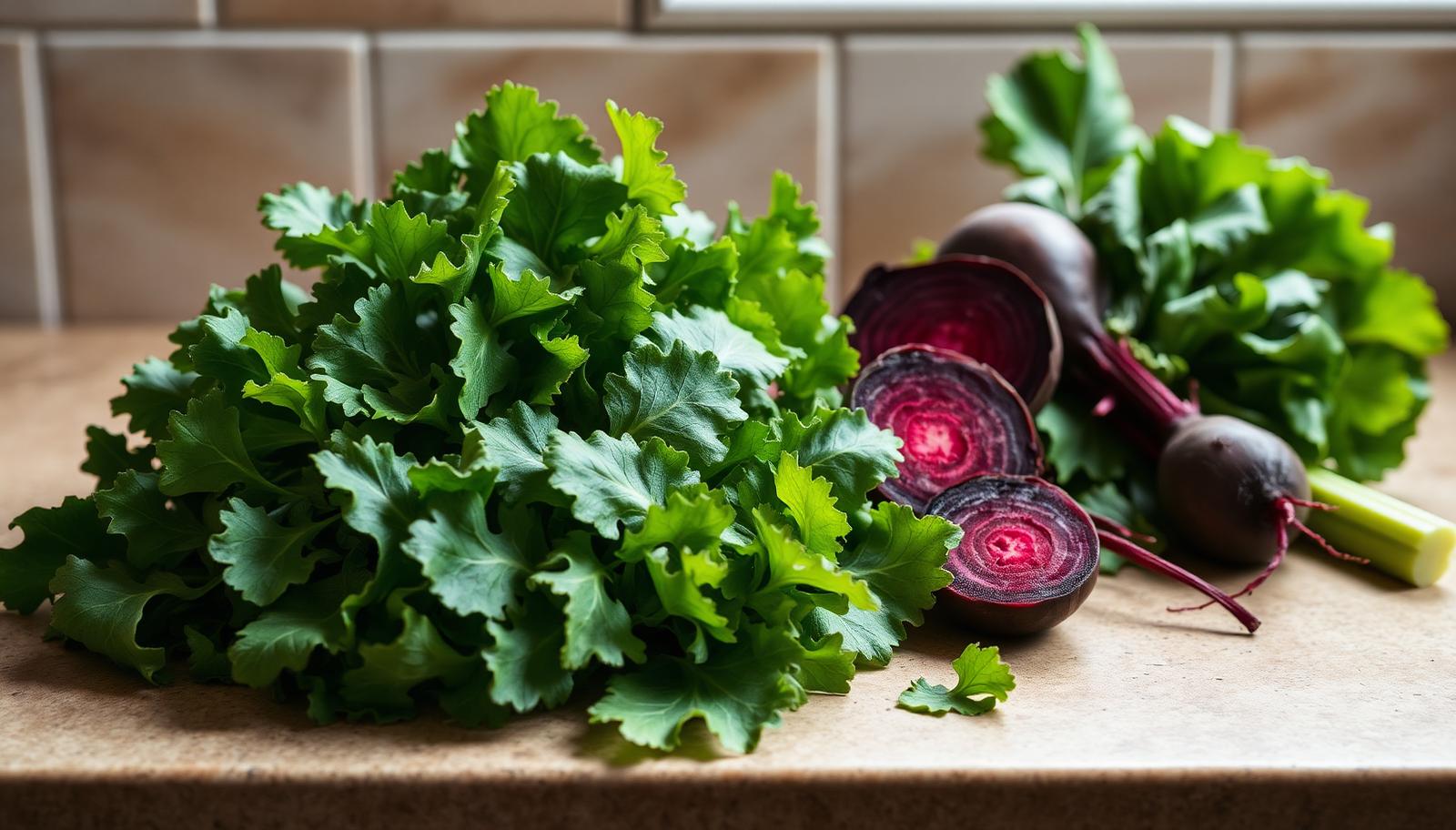
Plants take up nitrogen from the soil. Some vegetables accumulate relatively high concentrations of nitrate.
Common nitrate-rich foods include
- Arugula / rocket
- Spinach
- Lettuce
- Beetroot
- Celery
- And other leafy greens
The nitrate content of an individual vegetable can vary substantially according to growing conditions, season, soil, storage and preparation. [1]
That means one serving of spinach will not necessarily contain exactly the same nitrate concentration as another. But as a dietary category, leafy vegetables and beetroot are well-established sources of nitrate.
The Journey of a Nitrate Molecule
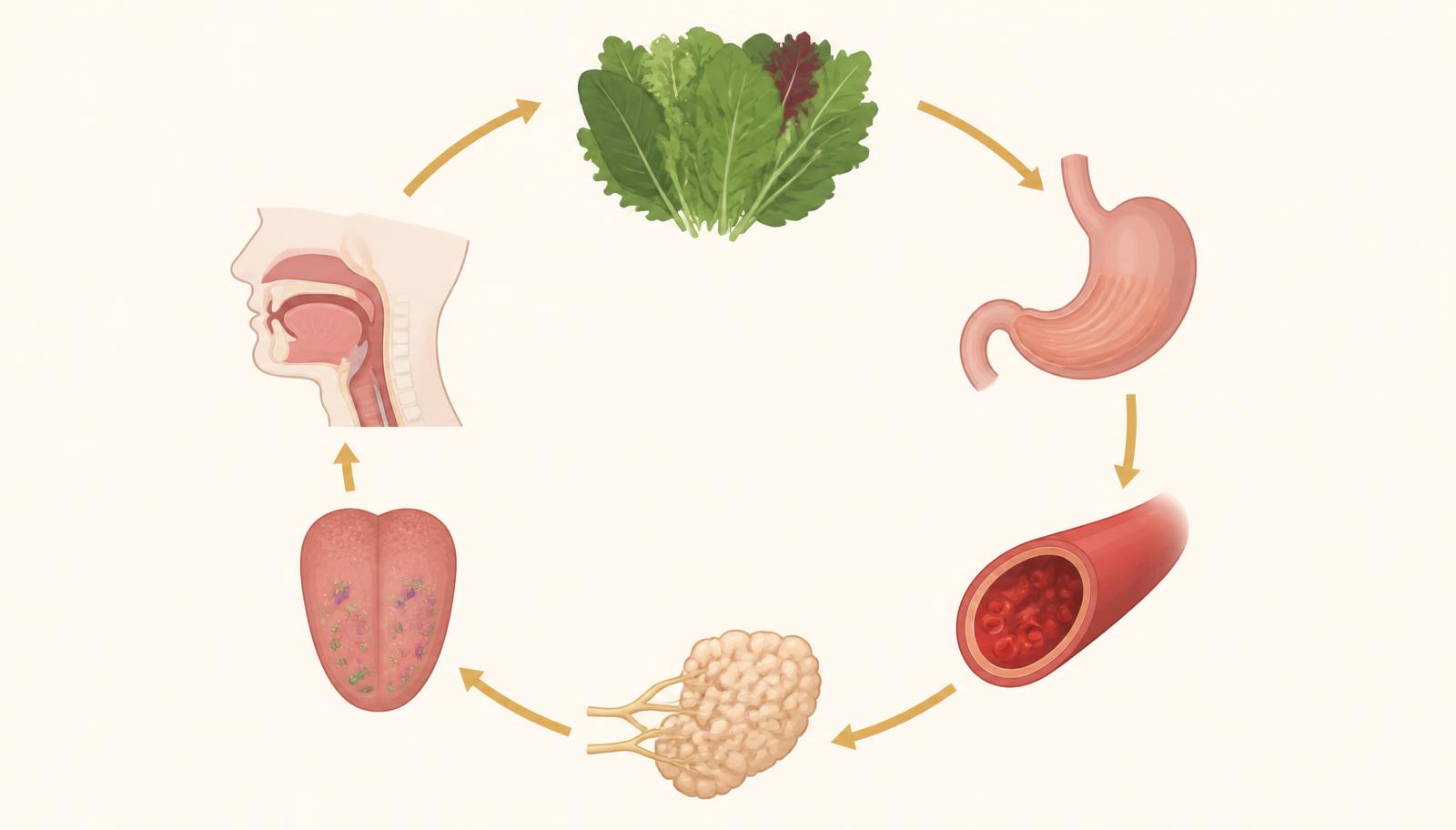
Rather than looking at the pathway as another biochemical diagram, let's follow one nitrate molecule after lunch.
You eat a salad containing arugula and spinach. The vegetables are digested. Nitrate is absorbed through the gastrointestinal tract and enters your bloodstream.
At this point, something unusual happens.
Your body deliberately sends some of that nitrate back toward your mouth.
Stop 1 — The Salivary Glands
A portion of circulating nitrate is actively concentrated into saliva. So nitrate that has already passed through your digestive tract and entered the bloodstream comes back into the oral cavity.
Why would the body do that? Because the next part of the reaction requires biological help that human cells do not efficiently provide on their own. It requires bacteria.
Stop 2 — Your Tongue
The mouth contains a complex microbial community. Certain bacteria living particularly on the tongue possess enzymes capable of reducing nitrate to nitrite.
This is a crucial step in the process. Without nitrate-reducing oral bacteria, the nitrate–nitrite–NO pathway becomes substantially less efficient. Researchers refer to this recycling process as the enterosalivary nitrate cycle. [2]
The discovery that oral bacteria participate in cardiovascular NO biology dramatically changed the way researchers think about the oral microbiome. Your mouth is not simply the entrance to the digestive tract. It participates in systemic physiology.
Stop 3 — Nitrite Is Swallowed
The nitrite produced in the mouth is swallowed. In the acidic environment of the stomach, some nitrite can undergo chemical reactions leading toward nitric oxide and other nitrogen oxides. Other nitrite remains available in circulation.
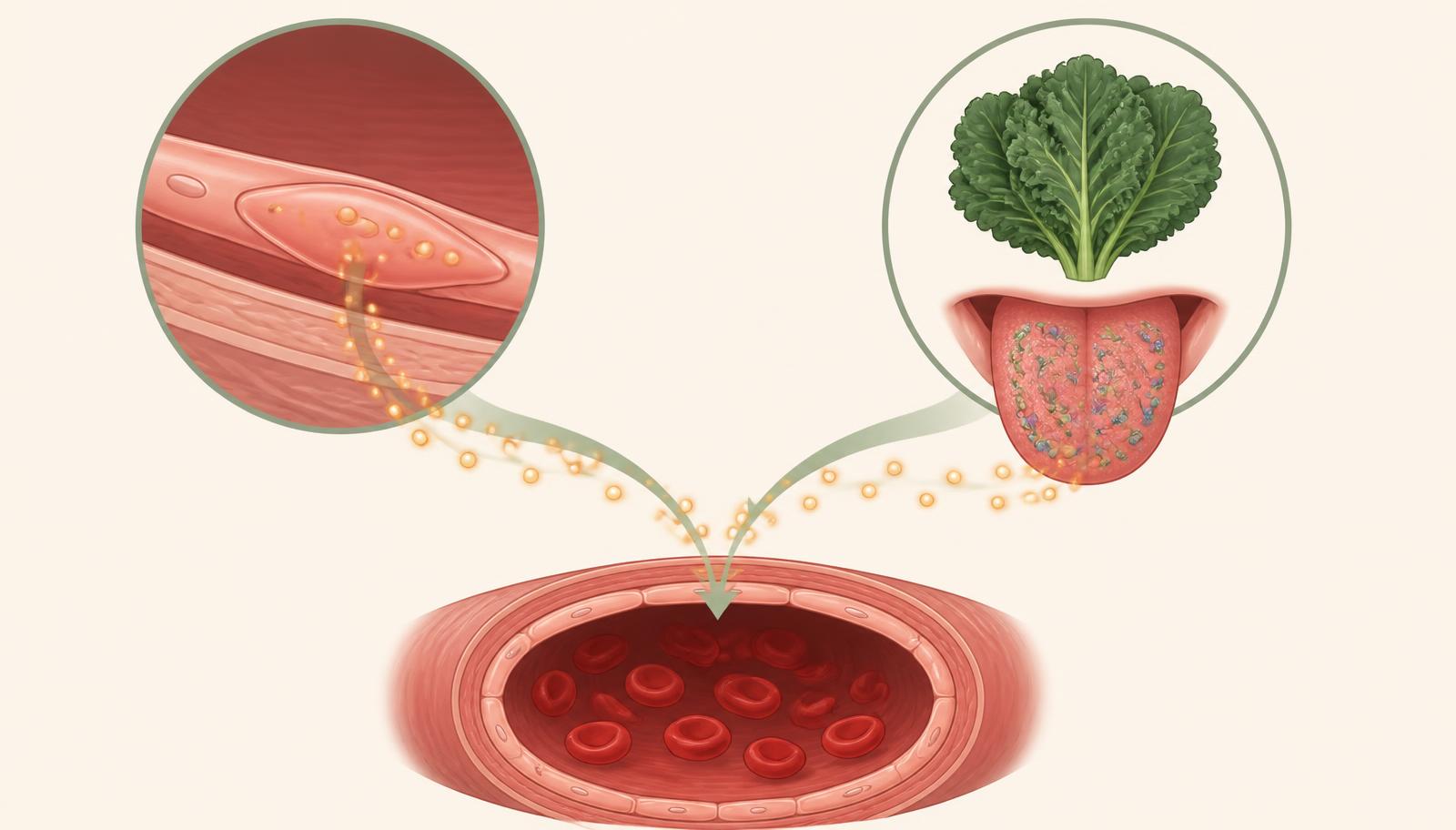
This becomes especially interesting because nitrite is not simply a dead-end metabolite. It can act as a reservoir from which NO can be regenerated. [3]
That changed an older scientific view in which nitrate and nitrite were regarded largely as inactive end-products of nitric-oxide metabolism. They are now understood as part of a biologically active cycle.
Stop 4 — Nitrite Can Become NO Where Conditions Favor It
Nitrite can be reduced toward nitric oxide through several mechanisms. Proteins and enzymes involved can include:
- Deoxygenated hemoglobin
- Deoxygenated myoglobin
- Xanthine oxidoreductase
- And other systems
One particularly interesting feature is that nitrite reduction toward NO can become more favorable when oxygen levels are lower and the environment is more acidic. That means the nitrate–nitrite pathway possesses a useful characteristic: it can contribute to NO formation under circumstances where the oxygen-dependent NOS pathway may be less efficient. [3]
This makes the two systems highly complementary.
Two Different Ways to Reach Nitric Oxide
Your vascular system therefore has at least two major routes relevant to nutrition.
The Endothelial Pathway
L-Arginine → eNOS → Nitric Oxide
This route takes place inside endothelial cells and requires L-arginine, oxygen, functional eNOS, appropriate enzyme cofactors and a favorable cellular environment.
The Nitrate Pathway
Dietary Nitrate → Nitrite → Nitric Oxide
This route depends partly upon dietary nitrate, oral bacteria, salivary recycling and subsequent nitrite reduction.
These are not competing pathways. They give the body different ways to support NO signaling. That becomes especially relevant later in life.
Why Dietary Nitrate Becomes Especially Interesting After 50
This is where the story becomes more important than simply knowing which vegetables contain nitrate. The classical endothelial pathway tends to become less efficient with age.
Research associates advancing age with
- Reduced eNOS activity
- Greater oxidative stress
- Reduced BH4 availability
- Greater eNOS uncoupling
- Increased endogenous inhibition of NOS
- And lower overall NO bioavailability
This does not mean your body stops producing nitric oxide after 50. Nor does it mean vegetables stop working. It means the biological machinery responsible for producing and preserving NO can face increasing challenges. [9]
That makes having more than one nutritional route toward NO particularly valuable.
An alternative pathway when the main route is under more pressure
One of the attractive features of the nitrate–nitrite pathway is that it does not depend on eNOS in exactly the same way as the classical arginine pathway. A review specifically examining nitrate and healthy aging concluded that nitrate-derived NO has shown potential to improve several physiological functions that commonly decline in older adults. [4]
As the endothelial pathway becomes less efficient, the nitrate pathway may become increasingly relevant. That is one reason nitrate-rich nutrition deserves particular attention after midlife.
But Aging Can Affect the Nitrate Pathway Too
There is another layer. The nitrate pathway relies heavily on your oral microbiome. And that biological environment can change with age.
Older adults may experience changes in
- Oral bacterial populations
- Salivary production
- Dental health
- Medication exposure
- And mouthwash use
A 2026 review noted that age-related changes in the oral microbiome and other oral-health factors may influence the efficiency of nitrate-to-nitrite conversion. [5]
So aging can potentially influence both major NO pathways. That gives us a more sophisticated reason to think about nutrition after 50. It is not simply "eat nitrate-rich food because NO declines." It is: support several parts of NO biology, because relying on one pathway alone may become less dependable with age.
A Fascinating 2025 Human Study
A recent randomized controlled crossover study compared nitrate supplementation in young adults aged 18–30 and older adults aged 67–79. Participants consumed nitrate-rich beetroot juice for two weeks.
Researchers found age-related differences in oral-microbiome responses. Most interestingly, blood-pressure effects were seen in the older participants but not in the younger adults under the study conditions. Increased plasma nitrite in the older group was associated with the vascular response. [5]
This doesn't mean every older person will respond identically. But it strongly reinforces an important point: older adults can remain responsive to dietary nitrate supplementation — and in some circumstances may derive greater measurable vascular effects than younger adults.
Food First Does Not Have to Mean Food Only
This distinction is important. A diet rich in vegetables should remain the foundation. Supplements should not be used as an excuse to stop eating leafy greens.
Vegetables provide
- Fiber
- Vitamins
- Minerals
- Polyphenols
- Carotenoids
- And many other nutrients beyond nitrate
But there is also a practical reality. Most people do not eat exactly the same quantity of nitrate-rich vegetables every day. Nitrate concentrations in plants vary. Meals vary. Appetite varies. Travel happens. Busy days happen.
And as NO biology becomes less efficient with age, consistency of nutritional support becomes increasingly valuable. That is where thoughtful supplementation can add something that diet alone may not reliably provide: repeatability.
Food provides variability. Supplementation can provide consistency.
Consider beetroot. One beet grown in one location may contain a different nitrate concentration from another beet grown under different conditions. Cooking and storage can also influence nitrate concentrations. [1]
That is perfectly acceptable nutritionally. Food doesn't need to be standardized to be healthy. But if a person is deliberately using nutrition to support a particular physiological pathway, a thoughtfully formulated supplement can provide a more consistent daily strategy. For adults over 50 — when maintaining NO bioavailability becomes increasingly relevant — that consistency can be especially useful.
Does Beetroot Powder Automatically Mean "High Nitrate"?
No. This is a useful distinction for consumers.
A supplement can list beetroot powder without telling you exactly how much nitrate the powder supplies. Natural nitrate content varies.
So if the central claim of a product is based specifically on dietary nitrate, ideally the manufacturer should know or disclose something about the nitrate content rather than expecting the word "beetroot" to do all the marketing work. This is particularly important when comparing a product with clinical studies that used measured quantities of nitrate.
More Is Not Necessarily Better
A very recent 2026 randomized controlled trial examined several acute doses of nitrate-rich beetroot powder. All doses increased circulating nitrate and nitrite, but different vascular outcomes responded differently to different doses; the highest dose was not uniformly superior across measures. [6]
A separate 13-week study in older adults also found that moderate and lower nitrate doses produced favorable blood-pressure effects under the study conditions, rather than demonstrating a simple "highest dose wins" relationship. [4]
Biology favors appropriate support, not necessarily maximum intake.
What Do Studies in Older Adults Show?
Results are not identical in every trial. Some studies report improvements in blood pressure or vascular measures. Others find increases in nitrate/nitrite bioavailability without significant changes in exercise capacity or other outcomes.
For example, a placebo-controlled study in healthy older adults found that beetroot supplementation increased plasma nitrate and was associated with reductions in blood pressure during the intervention. [4] Another trial in older adults found increased NO bioavailability but no improvement in the physical-performance outcomes measured. [6]
That is not contradictory science. It simply means increasing NO-related biomarkers does not guarantee every possible downstream benefit. Different outcomes have different determinants.
Your Mouthwash May Be Part of the Experiment
Because oral bacteria perform the crucial nitrate → nitrite conversion, researchers have tested what happens when strong antibacterial mouthwash suppresses them.
In one randomized crossover trial involving treated hypertensive adults with an average age of about 65, antibacterial mouthwash reduced oral nitrate reduction and altered NO-related markers and blood pressure. [7]
This is biologically important. But it is not a recommendation to stop using a mouthwash prescribed or recommended for dental reasons. The useful message is that the oral microbiome performs functions that extend beyond oral hygiene. The bacteria living in your mouth are part of the dietary nitrate pathway.
"Nitrate" Sounds Like Something We Were Told to Avoid
This creates understandable confusion. For decades, nitrate and nitrite have been discussed in connection with:
- Processed meats
- Food preservatives
- And potentially harmful nitrosamines
Yet nitrate from vegetables is also associated with NO production and cardiovascular effects. How can both be true? Because nutritional context matters.
Vegetable nitrate is not the same dietary package as processed meat
Leafy vegetables deliver nitrate together with:
- Vitamin C
- Polyphenols
- Fiber
- And numerous plant compounds
Processed meats provide a very different chemical and nutritional environment. Reviews examining nitrate and nitrite by dietary source have found that the health associations differ substantially according to where those compounds come from. Plant-derived nitrate has generally been associated with favorable cardiovascular findings, whereas concerns remain around nitrate/nitrite in processed meats and the formation of N-nitroso compounds. [8]
So it is misleading to treat spinach nitrate and processed-meat nitrite as nutritionally identical exposures simply because both involve nitrogen compounds.
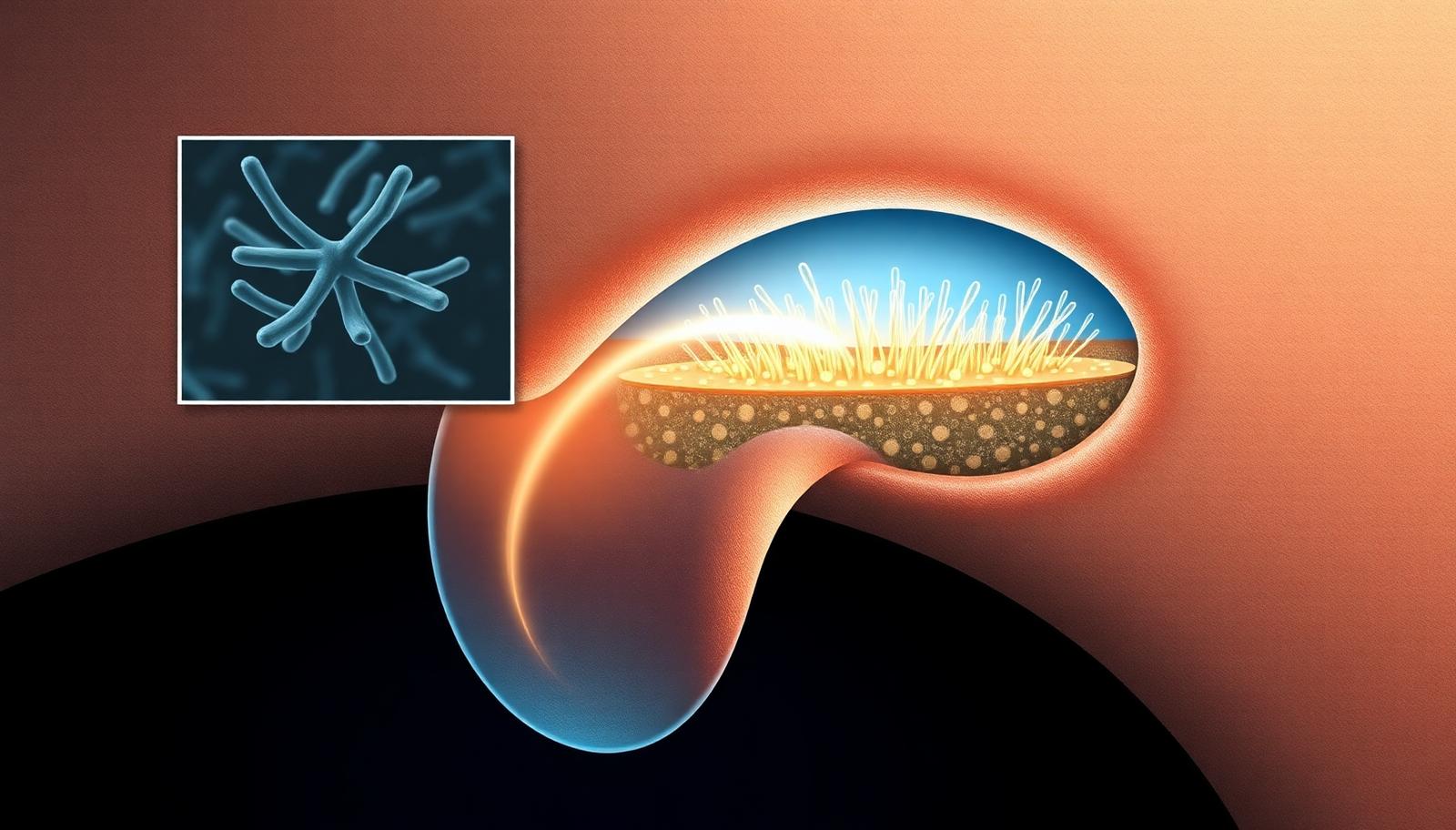
The Oral Microbiome Makes the Whole Story Different
Most nutrient stories go: food → digestion → absorption.
Nitrate has an extra character. Your bacteria.
That makes this pathway unlike arginine or citrulline metabolism. It also explains why individual responses may vary. Two people can consume similar nitrate amounts yet differ in:
- Oral bacterial composition
- Salivary flow
- Diet
- Medication exposure
- And subsequent nitrite generation
This is one reason researchers continue to study the oral microbiome as a determinant of nitrate responsiveness.
So Is Food Enough After 50?
For many people, a very good diet can provide substantial nutritional support. But this may be the wrong question. The issue is not whether vegetables suddenly become inadequate after 50. They don't.
The issue is that NO biology itself becomes more challenging with age.
- Endothelial NO production tends to decline
- Oxidative stress can increase
- Oral biology can change
- Dietary intake is inconsistent
- And different pathways contribute to total NO availability
This makes a more comprehensive strategy increasingly attractive
- Eat nitrate-rich vegetables
- Exercise to stimulate endothelial eNOS signaling
- Support arginine availability
- Support the complementary citrulline → arginine pathway
- Maintain good oral health
- Avoid smoking
- Manage cardiovascular risk factors
- Use targeted nutritional supplementation when appropriate
That is a stronger strategy than expecting one plate of beetroot to compensate for every age-related change affecting NO biology.
Why Supplementation Becomes More Valuable With Age
The argument for supplementation after 50 does not need exaggeration. It is quite logical.
At 25, a healthy active person may have:
- Excellent endothelial function
- Strong eNOS responsiveness
- Lower oxidative stress
- And robust vascular adaptability
At 55, 65 or 75, the same biological pathways may not operate with quite the same efficiency. Research consistently demonstrates declining endothelial NO bioavailability with advancing age. [9]
That creates a rational role for consistent, targeted nutritional support alongside a healthy diet. Not instead of food. In addition to it. The older we get, the more valuable it can become to support the system from multiple complementary directions.
This Is Where ėNOS Takes a Broader Approach
A nitrate-only supplement principally asks the body to use the nitrate → nitrite → NO pathway. That is a legitimate strategy. But nitric-oxide biology is bigger than one pathway.
ėNOS by Australiana Life takes a broader formulation approach by placing L-arginine and L-citrulline at the center of its NO-support strategy.
L-Arginine
Provides the substrate directly used by endothelial nitric oxide synthase.
L-Citrulline
Uses a complementary metabolic route and can be converted into L-arginine, helping replenish circulating arginine availability.
So while nitrate-rich foods can support the nitrate pathway, ėNOS provides targeted nutritional support for the arginine/eNOS side of natural NO biology. For someone over 50, that complementarity is particularly attractive.
You do not have to choose vegetables OR supplementation. A stronger strategy is nitrate-rich nutrition + physical activity + targeted substrate support.
Why that makes ėNOS a particularly strong NO-support formula
There is no responsible basis for claiming that one supplement is universally superior to every other NO product without direct head-to-head clinical trials. But ėNOS has a clear formulation advantage over approaches that depend upon one NO precursor alone: it is built around complementary amino-acid metabolism rather than a single nutritional route.
Human research shows that combining arginine and citrulline can increase circulating arginine more effectively than the same total amount of either amino acid alone under studied conditions.
That makes the ėNOS approach particularly well suited to people who want consistent nutritional support for their natural NO system, rather than relying exclusively on variable dietary nitrate intake. Its deliberately selected additional nutrients and Australian plant ingredients broaden the formulation beyond the two amino acids while keeping the central NO-support rationale clear.
For adults over 50, this creates a positive and practical strategy: continue eating NO-supportive foods — and reinforce the body's natural NO-production system with targeted daily nutritional support.
Nitrate Is One Route. Healthy NO Biology Is the Goal.
Dietary nitrate deserves its place in nitric-oxide science. It demonstrates beautifully how food can become physiology.
- A leaf of spinach becomes nitrate
- Nitrate enters the blood
- The salivary glands recycle it
- Oral bacteria create nitrite
- Nitrite becomes a reservoir for NO
- And vascular signaling can change
But the most important lesson is larger. Your body does not rely on one route to nitric oxide. It has:
- The arginine/eNOS pathway
- The nitrate–nitrite pathway
- Recycling mechanisms
- Vascular signals
- Microbial partners
- And metabolic controls
As we age, maintaining strong NO biology increasingly means supporting the whole system, not searching for one magic ingredient.
Eat your greens. Stay active. Protect your cardiovascular health. And when appropriate, use thoughtful supplementation to provide consistent support to pathways that can become increasingly valuable with age.
Scientific References
[1] Food sources of nitrates and nitrites: the physiologic context for potential health benefits
Hord NG, Tang Y, Bryan NS. American Journal of Clinical Nutrition. 2009;90:1–10. Foundational discussion of dietary nitrate sources, particularly vegetables.
PubMed / National Library of Medicine →[2] The oral microbiome and nitric oxide homeostasis
Hezel MP, Weitzberg E. Oral Diseases. Review of nitrate-reducing oral bacteria and the enterosalivary nitrate pathway.
PubMed / National Library of Medicine →[3] The nitrate–nitrite–nitric oxide pathway in physiology and therapeutics
Lundberg JO, Weitzberg E, Gladwin MT. Nature Reviews Drug Discovery. 2008;7:156–167. Landmark review establishing nitrate and nitrite as biologically active reservoirs capable of contributing to NO production.
PubMed / National Library of Medicine →[4] The Nitrate–Nitrite–Nitric Oxide Pathway on Healthy Ageing: A Review of Pre-clinical and Clinical Data on the Impact of Dietary Nitrate in the Elderly
Rocha BS. Frontiers in Aging. 2021. PMID: 35821990. Review specifically addressing nitrate-derived NO and healthy aging.
PubMed / National Library of Medicine →[5] Ageing modifies the oral microbiome, nitric oxide bioavailability and vascular responses to dietary nitrate supplementation
Vanhatalo A, L'Heureux JE, Black MI, et al. Free Radical Biology and Medicine. 2025;238:682–696. PMID: 40615058. Randomized crossover trial comparing young and older adults and demonstrating age-related differences in microbiome and vascular responses to nitrate supplementation.
PubMed / National Library of Medicine →[6] The dose-response effects of nitrate-rich beetroot ingestion on cardiovascular and endothelial function: a randomised controlled trial
McLellan AG, Acton JP, O'Donnell E, et al. Food & Function. 2026;17:2372–2383. PMID: 41704173. Recent trial showing that vascular responses do not necessarily increase linearly with nitrate dose.
PubMed / National Library of Medicine →[7] Antibacterial mouthwash blunts oral nitrate reduction and increases blood pressure in treated hypertensive men and women
Bondonno CP, Liu AH, Croft KD, et al. American Journal of Hypertension. 2015;28(5):572–575. PMID: 25359409.
PubMed / National Library of Medicine →[8] Dietary nitrate and nitrite and human health: a narrative review by intake source
Kotopoulou S, Zampelas A, Magriplis E. Nutrition Reviews. 2022;80(4):762–773. Review emphasizing that health associations differ according to nitrate/nitrite food source.
PubMed / National Library of Medicine →[9] Declining nitric oxide bioavailability in cardiovascular aging: mechanistic insights and emerging interventions
Patel P, et al. 2025. PMID: 41953454. Contemporary review of declining NOS-mediated NO availability with age and emerging approaches including dietary nitrate supplementation.
PubMed / National Library of Medicine →
Follow the Nutritional NO Story
- Foods That Support Natural Nitric Oxide Production →
See where nitrate-rich vegetables fit within a broader NO-supportive diet.
- How Your Body Makes Nitric Oxide →
Compare the nitrate–nitrite pathway with the classical arginine/eNOS pathway.
- L-Citrulline Explained: From Citrulline to Arginine to Nitric Oxide →
Follow an entirely different nutritional route toward NO substrate availability.
- Why Combine L-Arginine and L-Citrulline? →
Discover why supporting the endothelial pathway from two complementary amino-acid routes can make formulation sense.
- Nitric Oxide and Aging: What Changes After 40, 50 and Beyond? →
Understand why supporting multiple NO pathways becomes increasingly relevant with age.
FOOD BUILDS THE FOUNDATION. ĖNOS ADDS TARGETED SUPPORT.
Nitrate-rich vegetables are an excellent part of an NO-supportive diet. But especially after 50, there is a strong rationale for supporting nitric-oxide biology from more than one direction. ėNOS combines L-arginine and L-citrulline with deliberately selected complementary nutrients to support the body's natural endothelial NO system alongside the benefits of an NO-supportive diet and active lifestyle.
EXPLORE ĖNOS →This article is provided for informational purposes only and is not intended as medical advice or to diagnose, treat, cure or prevent disease. Dietary nitrate and nutritional supplements can affect cardiovascular physiology and may be inappropriate for some individuals or interact with medications. ėNOS is a dietary supplement formulated to support the body's natural nitric-oxide system, healthy circulation and cardiovascular wellness. People with cardiovascular disease, low blood pressure, or those taking cardiovascular or blood-pressure medications should discuss supplementation with an appropriate healthcare professional.
More in Nutrition & NO Support
- How to Increase Nitric Oxide Naturally
- Foods That Support Natural Nitric Oxide Production
- L-Arginine + L-Citrulline: Two Pathways Supporting Nitric Oxide
- Arginine vs. Citrulline: What's the Difference?
- L-Citrulline Explained: From Citrulline to Arginine to Nitric Oxide
- L-Arginine & Nitric Oxide Explained
- Why Combine L-Arginine & L-Citrulline?
- Nitric Oxide Supplements: What Should You Look For?
About Our Health & Science Content
Australiana Life Health & Science articles are based on published scientific research and written to make complex health and nitric oxide science easier to understand. Our educational content undergoes scientific review for accuracy and appropriate interpretation of the evidence and is updated as relevant scientific understanding evolves.