
L-Citrulline Explained: From Citrulline to Arginine to Nitric Oxide
Why Taking the Longer Metabolic Route Can Be an Efficient Way to Support the Body's Natural NO System
L-citrulline has an unusual job.
Unlike L-arginine, it is not the amino acid that endothelial nitric oxide synthase directly uses to produce nitric oxide. Instead, citrulline takes another route.
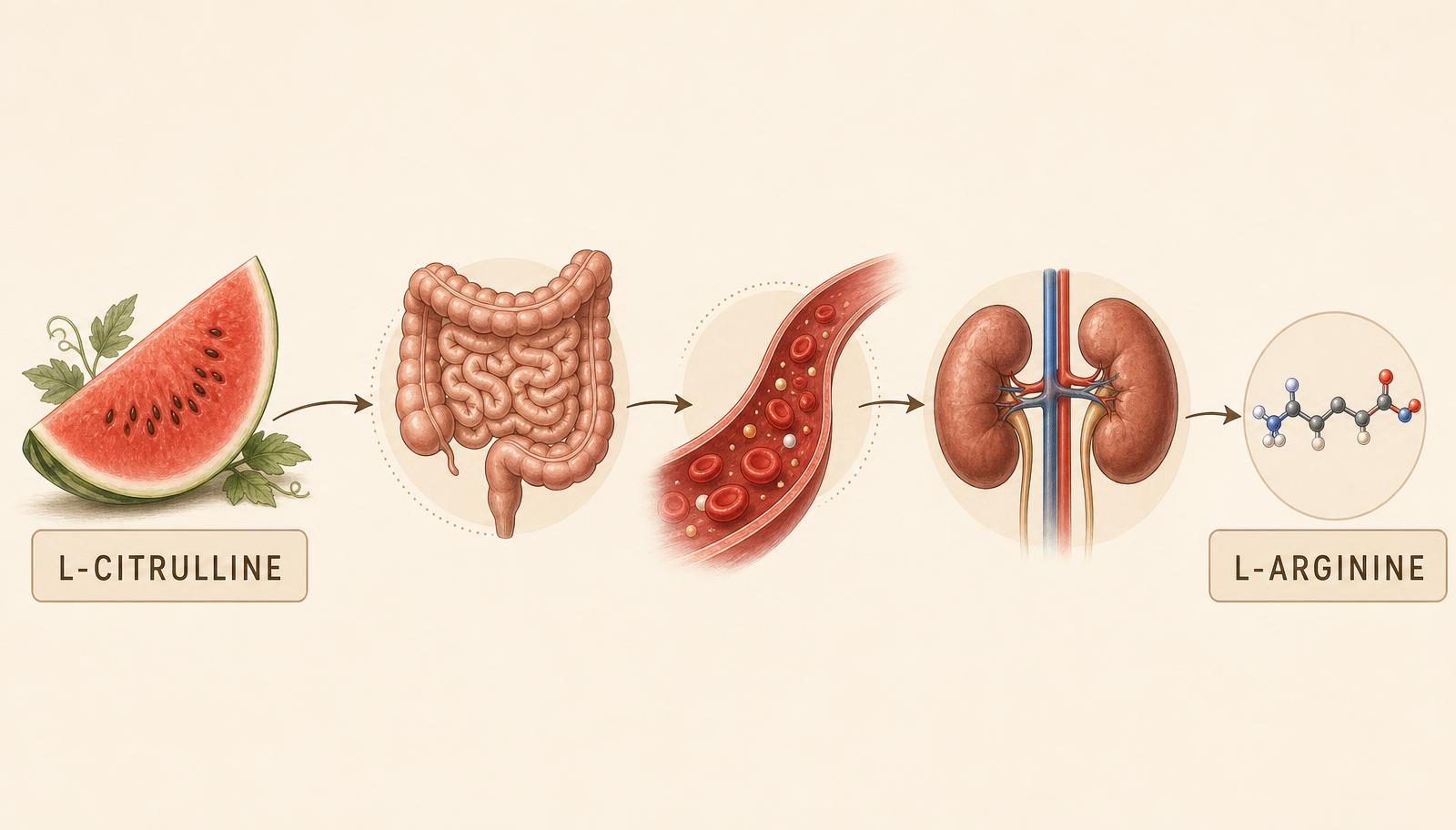
You consume L-citrulline. It is absorbed efficiently. It enters the circulation. A substantial part reaches the kidneys. There, enzymes convert it into L-arginine.
That newly available arginine can then circulate throughout the body and become available as substrate for nitric-oxide synthase enzymes — including eNOS, endothelial nitric oxide synthase.
At first glance, this seems unnecessarily complicated. Why not simply consume arginine? The answer reveals why L-citrulline has become one of the most interesting amino acids in nitric-oxide nutrition.
Sometimes the longer route is the more efficient route.
First: What Is L-Citrulline?
L-citrulline is a naturally occurring non-protein amino acid.
Unlike many familiar amino acids, citrulline is not primarily used as a building block for proteins. Instead, it participates in several important metabolic pathways involving:
- Arginine
- The urea cycle
- Nitrogen metabolism
- Nitric-oxide biology
The human body also produces citrulline naturally. The small intestine is an important source of circulating citrulline, while the kidneys play a major role in converting that citrulline into arginine. Human studies support this intestine → citrulline → kidney → arginine relationship as an important pathway of endogenous arginine synthesis. [2][3]
So citrulline is not simply a supplement ingredient invented for sports nutrition. It is already part of normal human metabolism.
Citrulline Has a Famous Food Source
The name itself provides a clue. Watermelon belongs to the botanical genus Citrullus, and watermelon is particularly notable among foods for containing L-citrulline. Modern research continues to identify watermelon as an important dietary source of both citrulline and arginine-related NO precursors. [5]
That does not mean eating watermelon is nutritionally identical to taking a measured quantity of supplemental L-citrulline. Food delivers citrulline within a complex nutritional matrix, and concentrations vary. But watermelon provides a useful natural example of a compound that is already part of the human diet.
Step 1: You Swallow L-Citrulline
This is where citrulline immediately begins distinguishing itself from arginine.
When oral L-arginine enters the digestive system, a substantial portion can undergo metabolism in the intestinal wall and liver before reaching systemic circulation. This is often described as first-pass or presystemic metabolism.
Citrulline behaves differently. It is efficiently absorbed through the intestine and undergoes relatively little first-pass extraction compared with arginine. Reviews of citrulline pharmacology identify its high intestinal absorption and low first-pass metabolism as major reasons it can be effective at increasing systemic arginine availability. [6][5]
Citrulline has an unusual nutritional advantage: it is not yet arginine — and that can help it survive the journey that ultimately leads to more circulating arginine.
Step 2: Citrulline Enters the Circulation
Once absorbed, L-citrulline enters systemic circulation relatively intact. The liver does not remove it to the same extent it removes many other amino acids. This allows more citrulline to remain available for transport to other tissues.
One particularly important destination is the kidneys.
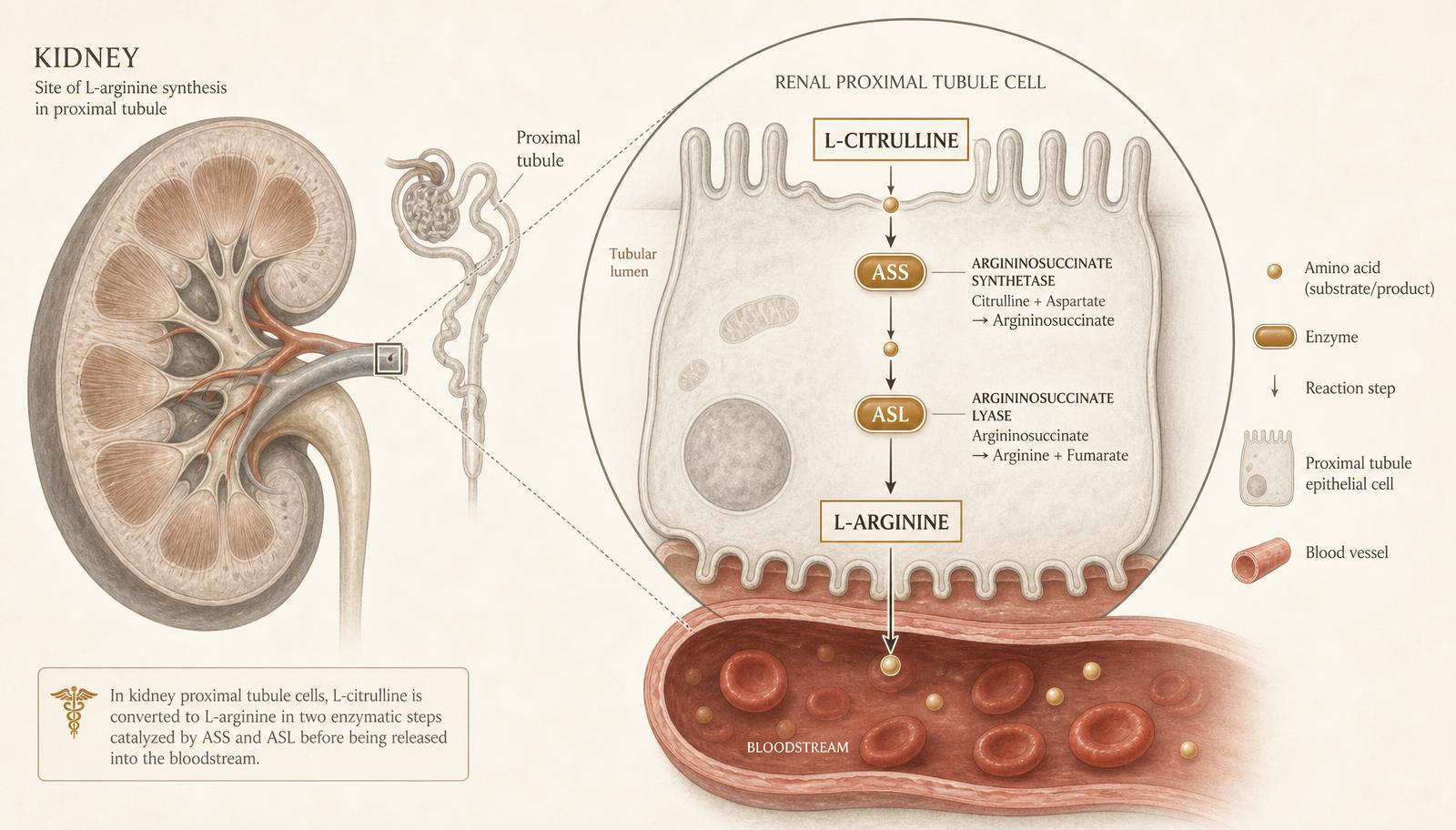
The kidneys are often thought of mainly as filtration organs. But metabolically, they do much more. They are important participants in amino-acid metabolism — and they are a major site of endogenous arginine synthesis. [1]
Step 3: The Kidneys Convert Citrulline Into Arginine
Inside cells of the renal proximal tubule, citrulline can be converted into arginine through two important enzymes: argininosuccinate synthetase (ASS) and argininosuccinate lyase (ASL).
The kidney then releases newly synthesized arginine into the circulation. Research on human renal metabolism has demonstrated that appreciable quantities of arginine are synthesized from circulating citrulline, making this pathway an important endogenous source of arginine. [1][2]
Citrulline isn't competing with arginine. It becomes arginine.
Step 4: Arginine Returns to the Bloodstream
Now the amino acid that began the journey as citrulline has become L-arginine. That circulating arginine can participate in many physiological processes. One of them is the production of nitric oxide.
Within endothelial cells, the enzyme eNOS — endothelial nitric oxide synthase — uses L-arginine as substrate.
Yes — citrulline appears again. That makes the relationship even more interesting.
Citrulline Is Both a Precursor and a Product of NO Metabolism
When nitric-oxide synthase converts L-arginine toward nitric oxide, L-citrulline is produced alongside NO. So the pathway contains a natural recycling relationship: arginine can become nitric oxide plus citrulline, and citrulline can subsequently contribute toward regeneration of arginine.
This is sometimes described as part of the citrulline–arginine cycle.
The exact handling differs among tissues, but the central principle is important: arginine and citrulline are metabolically connected components of the body's NO system.
So Why Not Just Take Arginine?
This is perhaps the most important consumer question. Arginine is already the substrate. Why take something that needs to be converted into it?
Because what happens after swallowing matters.
Oral arginine and oral citrulline have different pharmacokinetics. Arginine encounters substantial intestinal and hepatic metabolism. Citrulline largely avoids those same losses and can reach the systemic circulation more efficiently before being converted toward arginine.
A randomized controlled pharmacokinetic study by Schwedhelm and colleagues demonstrated that oral citrulline increased plasma arginine in a dose-dependent fashion and could increase arginine availability effectively because of its different metabolic handling. [4]
The lesson is not that arginine is unimportant. Quite the opposite. Citrulline is valuable largely because arginine is so important.
The Scenic Route Can Be the Efficient Route
Imagine two travelers trying to reach the same city. One takes the direct highway — but encounters several toll booths and exits along the way. The other takes a longer route that bypasses much of that traffic and arrives with less lost along the journey.
Arginine is already at the destination chemically. But some oral arginine is metabolized before reaching systemic circulation. Citrulline begins one metabolic step farther away. Yet because of the route it takes, it can become a particularly effective way of supporting circulating arginine.
“Direct” does not necessarily mean “more efficient after swallowing.”
What Does Citrulline Actually Do for Nitric Oxide?
Precision matters here. It is common to see advertising say: “Citrulline makes nitric oxide.” That is an oversimplification.
A more accurate sequence is:
So L-citrulline's most clearly established role is supporting arginine availability.
The downstream effect on NO depends on the state of the NOS system, endothelial function, cofactors, oxidative environment, physiological demand and other variables. That makes citrulline an NO-supporting amino acid, not nitric oxide itself.
Citrulline Does Not “Slow Release” Nitric Oxide
Another common description is: “Arginine provides fast NO and citrulline provides slow-release NO.” That is easy to understand — but not physiologically accurate.
Citrulline is not a time-release container filled with nitric oxide. It undergoes:
- Absorption
- Circulation
- Renal metabolism
- Conversion to arginine
- Subsequent participation in the body's regulated NO pathway
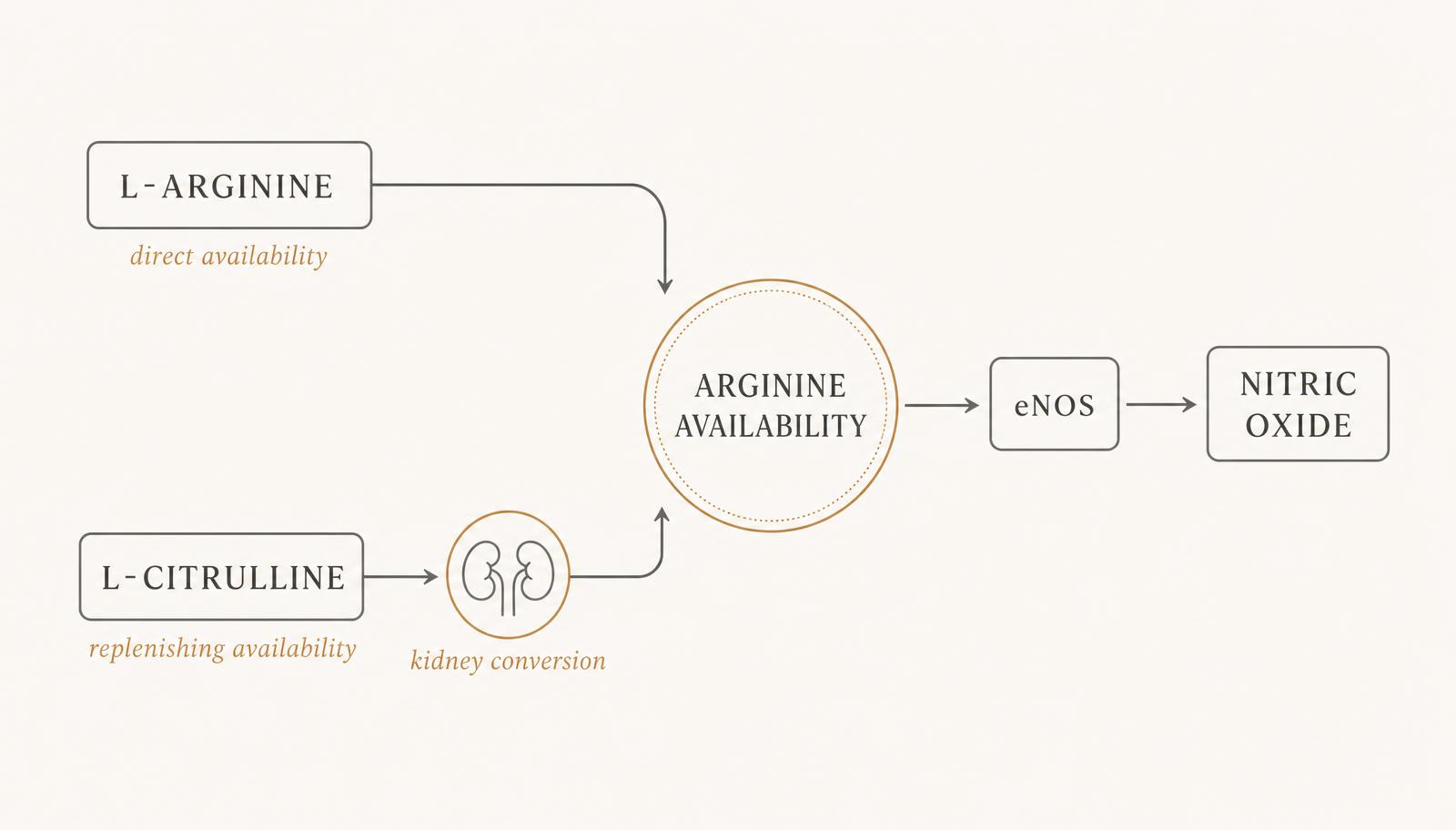
A better description: arginine provides more direct substrate availability, and citrulline provides a complementary route for replenishing arginine availability. That distinction is both more accurate and more interesting.
Does Citrulline Raise Arginine in Humans?
Yes. This is one of the stronger parts of the evidence.
Controlled human pharmacokinetic research has demonstrated that oral citrulline raises circulating arginine. In the Schwedhelm trial, citrulline produced dose-dependent increases in plasma arginine and improved the arginine-to-ADMA relationship and NO-related biochemical markers under the study conditions. Importantly, the study did not show improvement in flow-mediated dilation over baseline, illustrating why improved substrate availability should not automatically be translated into every possible cardiovascular outcome. [4]
That nuance strengthens the science. We can confidently say citrulline can increase arginine availability. We should not automatically say that therefore every person experiences the same measurable vascular benefit.
What About Cardiovascular Benefits?
Clinical research is promising but not uniform. Studies have investigated L-citrulline in relation to:
- Endothelial function
- Blood pressure
- Arterial stiffness
- Exercise
- Cardiometabolic health
Results differ according to population, dose, duration, baseline cardiovascular status, age and measurement method. Earlier systematic reviews of blood-pressure trials reached somewhat different conclusions, reflecting the relatively small and heterogeneous clinical literature. [5]
That is a good reminder that ingredient science should not be reduced to “one nutrient = one guaranteed outcome.”
Newer Research in Middle-Aged and Older Adults Is Particularly Interesting
Citrulline becomes especially relevant when viewed through the lens of aging. Nitric-oxide bioavailability and endothelial function tend to become more challenging with advancing age. That raises an obvious nutritional question: can increasing arginine availability through citrulline help support vascular function later in life?
A 2025 systematic review and meta-analysis examined randomized controlled trials involving middle-aged and older adults. Across eight RCTs totaling 176 participants, L-citrulline supplementation significantly improved flow-mediated dilation, a measure of endothelial function. Overall pulse-wave velocity did not significantly improve, although some subgroup findings were favorable. The authors also emphasized that more research is needed. [8]
That is encouraging evidence — but still evidence that deserves proportionate interpretation.
Citrulline and Postmenopausal Women
This is another area of growing interest. A controlled study involving hypertensive postmenopausal women found that four weeks of L-citrulline supplementation increased circulating arginine and evaluated effects on endothelial function, arterial stiffness and blood pressure. [5]
A more recent systematic review of randomized controlled trials involving postmenopausal women found promising but variable vascular findings, with some studies reporting improvements in blood pressure or flow-mediated dilation while other outcomes were inconsistent. Reviews have also highlighted the potential relevance of combining citrulline supplementation with exercise in older and postmenopausal women while calling for larger and higher-quality trials. [8]
So the evidence supports continued interest — not exaggerated certainty.
Why Citrulline May Matter More After 50
The value of citrulline after midlife is not that older adults suddenly become unable to make arginine. They do not. Rather, several parts of NO biology become less favorable with age.
- Endothelial function can decline
- NO bioavailability can fall
- Oxidative stress may increase
- Vascular responsiveness can become less efficient
- Physical activity may decrease
Against that background, providing reliable nutritional support for arginine availability becomes increasingly logical. Citrulline offers one particularly efficient route for doing that.
It does not reverse cardiovascular aging. It helps support one important nutritional part of a system that becomes more valuable to support as we age.
Is Citrulline Better Than Arginine?
This question sounds logical but creates a false competition. Citrulline may be more efficient than oral arginine at increasing circulating arginine under certain conditions because of its absorption and metabolism. But arginine is still the actual substrate used by eNOS.
L-Arginine
Direct substrate
Already chemically ready for nitric-oxide synthase.
L-Citrulline
Efficient arginine precursor
Travels through a route that can effectively replenish circulating arginine.
The most interesting question therefore becomes: why choose one if the biology gives them complementary strengths?
Human Research Gives the Combination a Strong Rationale
A particularly useful randomized human study tested exactly that question. Healthy men received 2 g L-citrulline, or 2 g L-arginine, or 1 g L-citrulline + 1 g L-arginine. The combination increased plasma L-arginine more effectively than the same total amount of either amino acid alone. [7]
That does not prove every arginine+citrulline formula will produce superior clinical outcomes. But it provides direct human evidence for an important formulation principle: complementary metabolic routes can outperform simply increasing one ingredient.
Citrulline Is Not Simply “Arginine in Disguise”
It has its own metabolic identity. Citrulline:
- Is absorbed differently
- Largely bypasses extensive first-pass hepatic extraction
- Circulates effectively
- Is taken up by the kidneys
- Is converted through ASS and ASL
- Supports systemic arginine availability
- Participates in cellular arginine recycling
Those differences explain why citrulline has value alongside arginine rather than merely replacing it.
What About Citrulline Malate?
Consumers will frequently encounter both L-citrulline and citrulline malate. They are not identical.
Pure L-citrulline provides citrulline itself. Citrulline malate combines citrulline with malate, an intermediate involved in cellular energy metabolism. Citrulline-malate products are especially common in sports supplements.
A label stating 6 g citrulline malate does not necessarily provide 6 g of actual L-citrulline. The amount depends on the ratio and composition of the ingredient.
For someone evaluating an NO-support supplement, the useful question is: how much actual L-citrulline am I receiving? Clear labeling matters.
Can You Get Citrulline From Food?
Yes. Watermelon is the best-known dietary source. Both its flesh and rind contain citrulline, although concentrations vary according to variety, ripeness, growing conditions and the part of the fruit consumed. [5]
Watermelon is an excellent food. But dietary and supplemental use serve somewhat different purposes. Food contributes hydration, vitamins, minerals, carotenoids, plant compounds and citrulline. Supplementation can provide a more consistent and measurable amount of L-citrulline. The two strategies do not need to compete.
Why Consistency Matters
Nitric-oxide biology is ongoing. The body does not create a month's supply of NO and store it. NO is produced as needed and is extremely short-lived.
Likewise, circulating amino-acid availability changes throughout the day according to food intake, metabolism, activity and physiological demand.
This creates a reasonable role for consistent nutritional support. Particularly for adults interested in cardiovascular wellness after 50, supplementation can provide a repeatable source of citrulline even when dietary intake varies from day to day.
More Citrulline Does Not Automatically Mean More Benefit
This principle applies throughout NO biology. Once enough substrate is available, other factors can become limiting. eNOS still depends upon:
- Enzyme function
- Oxygen
- BH4
- Cellular signaling
- Redox balance
- The broader endothelial environment
So there is no scientifically sound reason to assume twice the citrulline = twice the NO = twice the benefit. The body remains in control. That is precisely how regulated physiology should work.
Citrulline Supports the Pathway — Exercise Supports the System
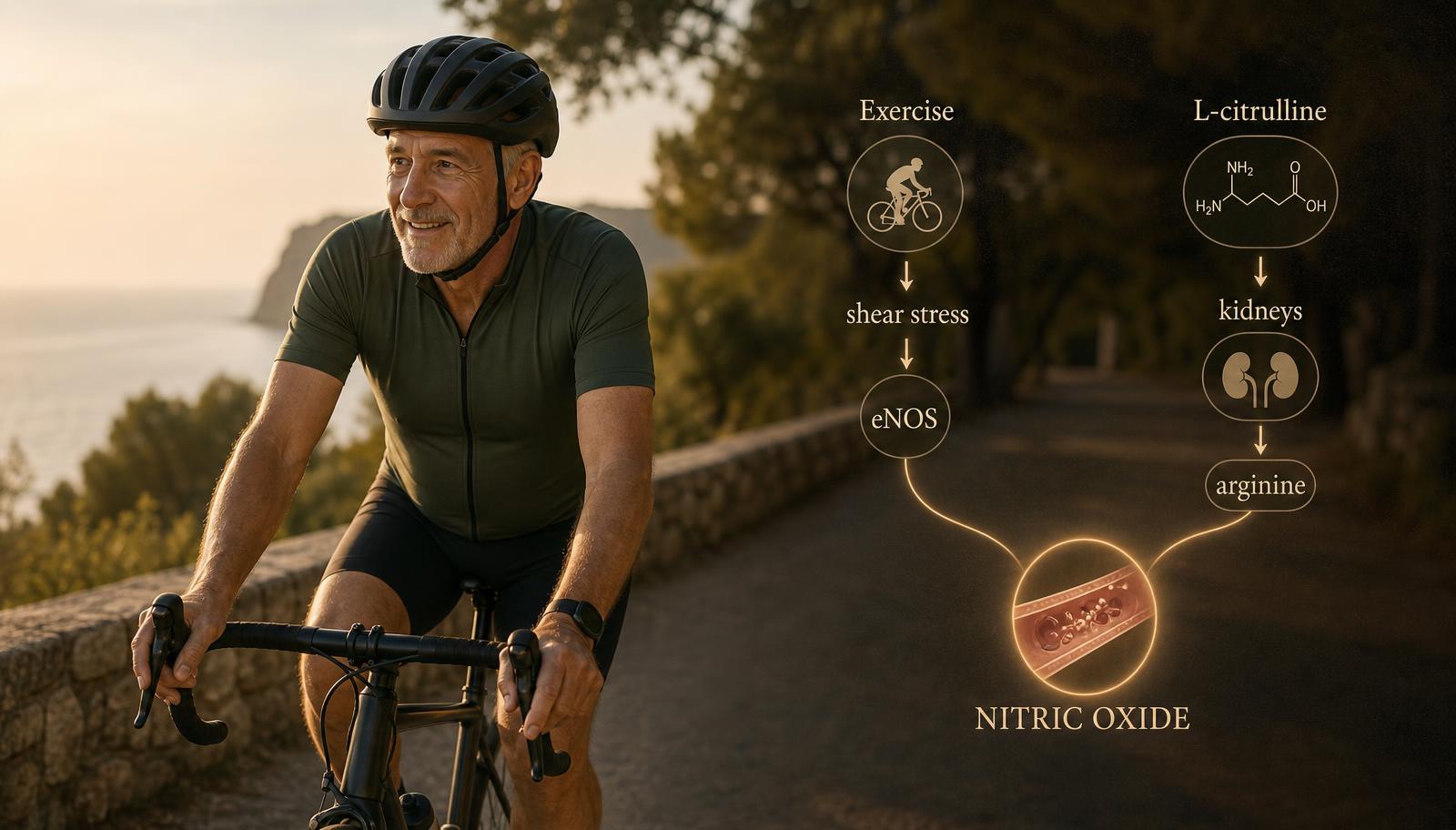
Citrulline nutrition becomes even more interesting when combined conceptually with physical activity. Exercise increases blood flow. That produces shear stress on endothelial cells. Shear stress stimulates endothelial signaling involving eNOS. Citrulline, meanwhile, can help support the arginine substrate pool available to the system.
Two Complementary Forms of Support
- Exercise provides a physiological stimulus
- Citrulline provides nutritional substrate support
This is why supplementation makes the most sense alongside an active lifestyle, not as a substitute for one.
Where ėNOS Fits
An important naming distinction: eNOS is endothelial nitric oxide synthase — the natural enzyme involved in vascular nitric-oxide production. ėNOS is a dietary supplement from Australiana Life, specifically formulated around the established science of nitric oxide and the nutritional pathways that support the body's natural NO-production system.
L-citrulline is an important part of that formulation precisely because of the biology described in this article. But ėNOS does not rely on citrulline alone. It combines L-citrulline, for its efficient route toward replenishing arginine availability, with L-arginine, the direct physiological substrate used by eNOS.
That complementary approach reflects both human metabolism and direct human research showing that the two amino acids can work effectively together to increase circulating arginine availability. [7]
Why Citrulline Strengthens the ėNOS Formulation
If a nitric-oxide supplement contained only arginine, it would address one obvious part of the pathway: provide the substrate. Adding citrulline addresses another question: how can we support that substrate pool through a different metabolic route?
The goal is not simply to put two similar-sounding amino acids on a label. The goal is to use direct availability plus replenishing availability within one deliberate NO-support strategy.
L-citrulline is not a secondary ingredient in the scientific story behind ėNOS. It is a complementary part of the formulation logic.
The Long Way Around Can Be the Efficient Way
Citrulline teaches an important lesson about nutritional physiology. The most direct route on paper is not always the most efficient route through the human body.
L-citrulline begins one step removed from arginine. Yet because it is:
- Efficiently absorbed
- Less affected by first-pass metabolism
- Transported through the circulation
- Converted by the kidneys
it can become a highly effective nutritional route toward increasing arginine availability. And that arginine can then become available to the body's natural nitric-oxide system.
Not because citrulline is nitric oxide. Not because it releases NO automatically. But because human metabolism has created an elegant pathway connecting one amino acid to another — and ultimately to one of the cardiovascular system's most important signaling molecules.
Scientific References
[1] Brosnan ME, Brosnan JT. Renal arginine metabolism.
Journal of Nutrition. 2004;134(10 Suppl):2791S–2795S. PMID: 15465786. Review describing the kidney's major role in synthesizing arginine from circulating citrulline.
PubMed / National Library of Medicine →[2] van de Poll MCG, et al. Interorgan amino acid exchange in humans: consequences for arginine and citrulline metabolism.
American Journal of Clinical Nutrition. 2007. Human organ-balance research demonstrating intestinal citrulline release, renal citrulline uptake and renal arginine release.
PubMed / National Library of Medicine →[3] van de Poll MCG, et al. Intestinal and hepatic metabolism of glutamine and citrulline in humans.
Journal of Physiology. 2007. PMID: 17347276. Human study supporting the intestinal–citrulline–arginine pathway.
PubMed / National Library of Medicine →[4] Schwedhelm E, Maas R, Freese R, et al. Pharmacokinetic and pharmacodynamic properties of oral L-citrulline and L-arginine: impact on nitric oxide metabolism.
British Journal of Clinical Pharmacology. 2008;65(1):51–59. PMID: 17662090. Randomized human research demonstrating efficient, dose-dependent elevation of circulating arginine after oral citrulline, without improvement in flow-mediated dilation over baseline under the study conditions.
PubMed / National Library of Medicine →[5] Allerton TD, Proctor DN, Stephens JM, et al. L-Citrulline Supplementation: Impact on Cardiometabolic Health.
Nutrients. 2018;10(7):921. PMID: 30029482. Review of citrulline absorption, arginine conversion, dietary sources such as watermelon and cardiometabolic research.
PubMed / National Library of Medicine →[6] Rashid J, et al. Endogenous flux of nitric oxide: Citrulline is preferred to Arginine.
Acta Physiologica. 2021. PMID: 33089645. Review examining citrulline's high intestinal absorption, low first-pass metabolism and role as an NO precursor through arginine availability.
PubMed / National Library of Medicine →[7] Suzuki T, Morita M, Hayashi T, Kamimura A. The effects on plasma L-arginine levels of combined oral L-citrulline and L-arginine supplementation in healthy males.
Bioscience, Biotechnology, and Biochemistry. 2017;81(2):372–375. PMID: 27667025. Randomized human study showing that 1 g L-citrulline + 1 g L-arginine increased plasma arginine more effectively than 2 g of either amino acid alone.
PubMed / National Library of Medicine →[8] Luo P, Li Z, Liu K, Gao W. Effects of L-citrulline supplementation and watermelon intake on arterial stiffness and endothelial function in middle-aged and older adults: a systematic review and meta-analysis of randomized controlled trials.
Frontiers in Nutrition. 2025;12:1632952. PMID: 41323997. Meta-analysis of eight RCTs (176 participants) finding improved flow-mediated dilation with L-citrulline in middle-aged and older adults, with mixed effects on arterial-stiffness measures.
PubMed / National Library of Medicine →
Continue Exploring the Amino-Acid Pathway
- L-Arginine and Nitric Oxide Explained →
See what happens once citrulline's journey reaches arginine.
- Arginine vs Citrulline: What's the Difference? →
Compare the two amino acids directly.
- Why Combine L-Arginine and L-Citrulline? →
Explore the human evidence supporting their complementary use.
- How Your Body Makes Nitric Oxide →
Follow the complete arginine/eNOS and nitrate–nitrite pathways.
- Why Nitric Oxide Production Changes With Age →
See why supporting substrate availability becomes increasingly relevant through midlife and beyond.
DISCOVER WHY ĖNOS USES BOTH L-CITRULLINE + L-ARGININE
ėNOS by Australiana Life combines L-citrulline with L-arginine because the two amino acids reach the body's NO system differently. Arginine provides the direct substrate used by eNOS. Citrulline provides an efficient complementary route toward replenishing arginine availability.
EXPLORE ĖNOS →This article is provided for informational purposes only and is not intended as medical advice or to diagnose, treat, cure or prevent disease. Research on L-citrulline includes a variety of populations, doses and outcomes, and individual responses may differ. ėNOS is a dietary supplement formulated to support the body's natural nitric-oxide system, healthy circulation and cardiovascular wellness. Dietary supplements should complement, rather than replace, appropriate nutrition, physical activity and medical care.
More in Nutrition & NO Support
- How to Increase Nitric Oxide Naturally
- Foods That Support Natural Nitric Oxide Production
- L-Arginine + L-Citrulline: Two Pathways Supporting Nitric Oxide
- Arginine vs. Citrulline: What's the Difference?
- L-Arginine & Nitric Oxide Explained
- Why Combine L-Arginine & L-Citrulline?
- Dietary Nitrates & the Nitrate–Nitrite–Nitric Oxide Pathway
- Nitric Oxide Supplements: What Should You Look For?
About Our Health & Science Content
Australiana Life Health & Science articles are based on published scientific research and written to make complex health and nitric oxide science easier to understand. Our educational content undergoes scientific review for accuracy and appropriate interpretation of the evidence and is updated as relevant scientific understanding evolves.