
Why Nitric Oxide Production Changes With Age
The Biology Behind Declining NO — and Why Supporting the System Becomes More Important After 50
There is no birthday when your body suddenly stops making nitric oxide.
Not at 40. Not at 50. Not at 65.
The change is more gradual — and more interesting.
As we age, several parts of the biological system responsible for producing and preserving nitric oxide can become less efficient at the same time:
- The endothelial cells lining our blood vessels change
- The enzyme that produces vascular NO can become less responsive
- Oxidative stress can increase
- Important enzyme cofactors can become less available
- The balance between arginine and natural inhibitors of nitric-oxide synthase can shift
- Physical activity may decrease
- Hormonal changes can influence vascular biology
- And even when NO is produced, more of it may be lost before it can signal
A major 2025 review of cardiovascular aging describes declining NO bioavailability as an important feature of vascular aging, involving impaired nitric-oxide synthase activity, oxidative stress, metabolic changes, BH4 depletion and other regulatory changes. [1]
The real question is not simply "why does the body make less nitric oxide as we get older?" A better question is: what happens to the entire NO-production system as we age?
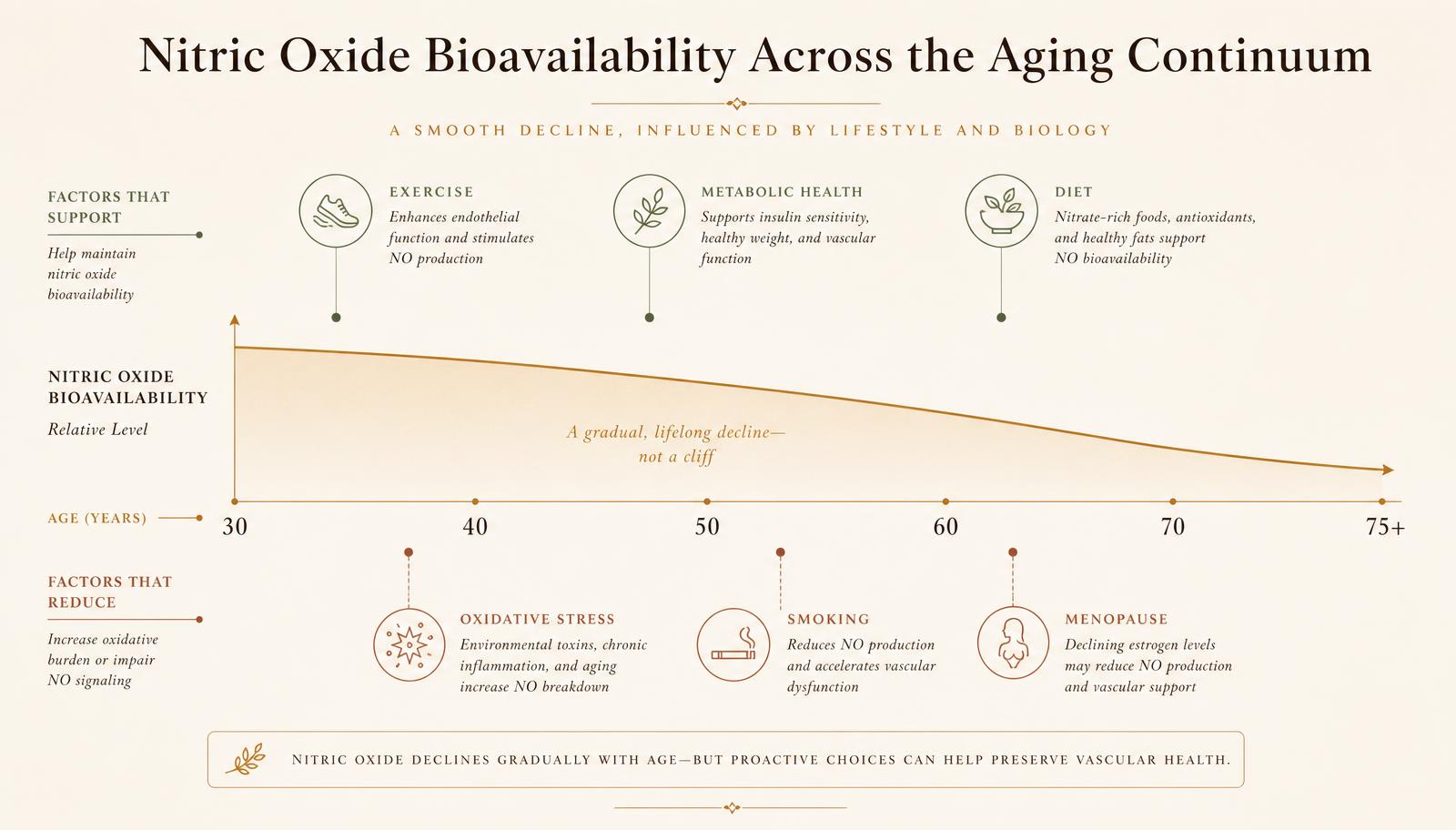
There Isn't an "NO Cliff"
You may see claims suggesting nitric oxide drops by a precise percentage when you reach a particular age. Human aging is not that uniform.
Research does show a progressive decline in endothelium-dependent vasodilation and NO bioavailability with advancing age. But the degree of decline varies according to physical activity, metabolic health, blood pressure, smoking, menopause and other factors. [2][3]
Two 65-year-olds can therefore have very different vascular function. Age sets the stage. Lifestyle and biology influence how the story develops.
Think of NO Production as a Four-Part System
To understand aging, it helps to break the endothelial NO pathway into four requirements.
1. Raw material
The system needs L-arginine.
2. Functioning machinery
The enzyme eNOS — endothelial nitric oxide synthase — must work efficiently.
3. The right biochemical environment
eNOS needs cofactors such as BH4, and NO needs protection from excessive oxidative destruction.
4. Appropriate signaling
Blood flow, shear stress and other signals need to activate the endothelial system.
With age, pressure can develop at all four levels. That is why aging-related NO decline cannot be solved by thinking about one ingredient alone.
Change #1: eNOS Can Become Less Efficient
For vascular NO production, one of the most important enzymes in the body is eNOS — endothelial nitric oxide synthase. It is found prominently within endothelial cells, where it uses L-arginine and oxygen, together with several cofactors, to produce nitric oxide.
With advancing age, eNOS regulation can change. Current research describes alterations in:
- eNOS activation
- Protein interactions that regulate the enzyme
- Phosphorylation of eNOS
- Cellular signaling controlling its activity
So one contributor to reduced NO availability is simply that the NO-producing machinery may not operate as efficiently as it once did. [1]
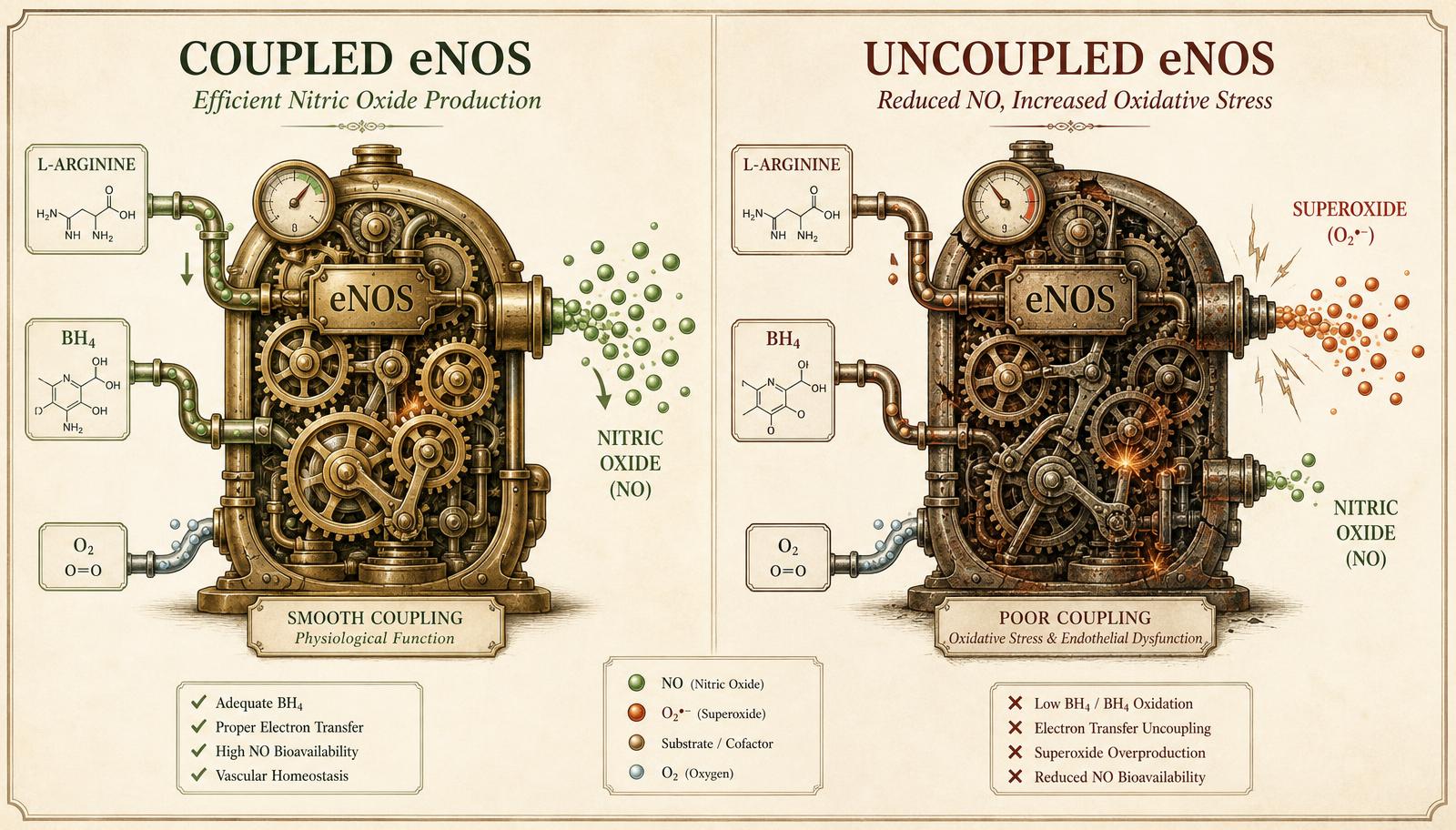
Change #2: The Enzyme Can Become "Uncoupled"
Healthy eNOS is described as coupled: its internal chemistry is coordinated toward the production of nitric oxide. But eNOS depends on an important cofactor called tetrahydrobiopterin — BH4.
As oxidative stress increases and functional BH4 availability falls, eNOS can become uncoupled. Instead of efficiently generating nitric oxide, uncoupled eNOS can produce more superoxide.
Younger / favorable environment
eNOS → nitric oxide
Unfavorable redox environment
eNOS → less NO + more superoxide
That is a particularly difficult change, because superoxide can itself react with nitric oxide and reduce its availability. [1][2]
Change #3: More NO Can Be Lost After It Is Made
Production is only half the equation. Imagine two endothelial cells producing the same quantity of NO. In one, relatively little is destroyed. In the other, oxidative stress is high and NO reacts rapidly with superoxide. Those cells can have very different amounts of bioavailable NO.
NO production − NO loss = bioavailable NO
Superoxide reacts rapidly with nitric oxide and can form peroxynitrite. The reaction removes NO from normal signaling. This is one reason aging research focuses so heavily on NO bioavailability rather than simply measuring production. [2]
With age, the problem can therefore become: make somewhat less, plus lose somewhat more.
Change #4: Oxidative Stress Tends to Increase
Reactive oxygen species are a normal part of biology. The problem occurs when production and control become imbalanced. With vascular aging, research has identified increased activity of oxidant-producing systems including NADPH oxidases, mitochondrial sources and uncoupled eNOS itself. [2]
This can create an unfavorable cycle:
- More oxidative stress
- More NO consumed
- More peroxynitrite
- Less functional BH4
- Greater eNOS uncoupling
- More superoxide
- Still less bioavailable NO
That feedback loop helps explain why age-related endothelial changes can become self-reinforcing.
Change #5: Arginine Availability Is More Complicated Than "Do I Eat Protein?"
L-arginine remains the substrate used by eNOS. But having arginine somewhere in the bloodstream does not guarantee that every endothelial cell has unlimited usable substrate. Arginine metabolism is affected by:
- Cellular transport
- Arginase activity
- Compartmentalization
- Endogenous inhibitors of nitric oxide synthase
One particularly important inhibitor is ADMA — asymmetric dimethylarginine — which can inhibit nitric oxide synthase. Contemporary research on vascular aging identifies increased ADMA-related inhibition as another potential contributor to impaired NOS-mediated NO production with age. [1]
So again, the story is not simply that older people don't eat enough arginine. It is that the entire environment regulating arginine → eNOS → NO can become less favorable.
Change #6: Blood Vessels Receive Less Exercise-Related Stimulation
When exercise increases blood flow, that blood creates greater shear stress along the endothelial surface. Endothelial cells sense this mechanical force, and shear stress activates pathways associated with eNOS and vascular adaptation.
But activity often declines with age. People may:
- Walk less
- Sit more
- Retire from physically demanding work
- Lose muscle
- Exercise less vigorously
- Or gradually become deconditioned
Aging and inactivity are not the same thing.
Research suggests the age-related decline in NO bioavailability is particularly apparent in sedentary individuals, while physically active older adults can preserve better NO-related vascular function. [8] Recent randomized-trial meta-analyses also show that aerobic and combined exercise can improve endothelial function in older adults. [6][7]
One of the Most Encouraging Facts About Aging NO Biology
The vascular system remains responsive to intervention. Older arteries are not simply finished adapting, and exercise studies repeatedly demonstrate that older adults can improve measures of endothelial function.
So the age-related NO story is not decline → decline → decline. A more accurate sequence is: aging creates additional challenges, while lifestyle and nutritional support can still influence the system.
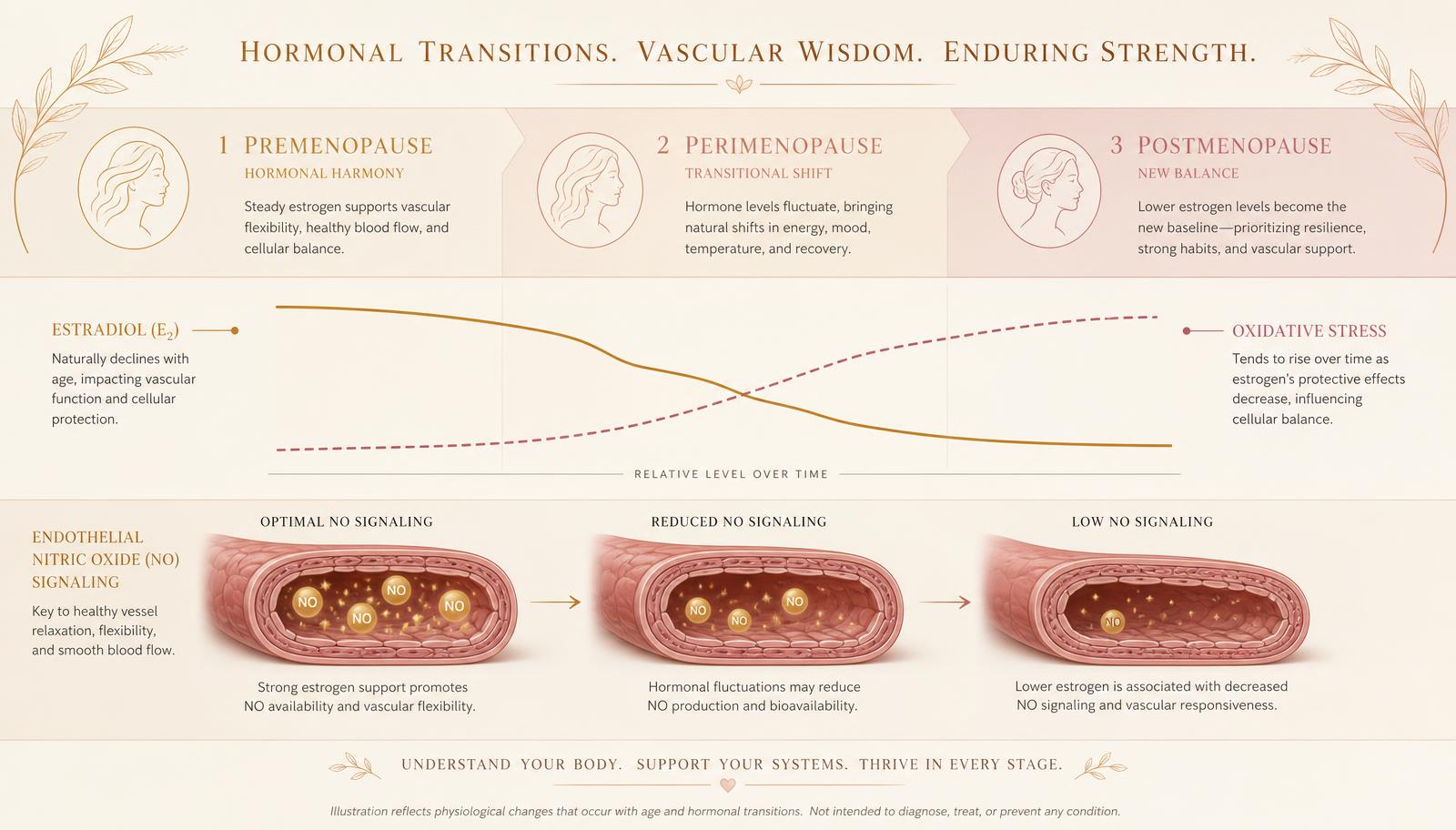
Change #7: Menopause Adds Another Layer for Women
Estradiol interacts with endothelial biology and NO signaling. Across the menopausal transition, research has observed progressive declines in endothelial function associated with decreasing estradiol and increasing oxidative stress. [5]
Human research in postmenopausal women has also demonstrated relationships among oxidative stress, BH4 availability, NO bioavailability and endothelial function. [4]
This helps explain why cardiovascular-health strategies can become especially relevant for women after menopause. It does not mean menopause causes an "NO deficiency." It means the vascular environment changes in ways that can affect normal NO signaling.
Change #8: Arterial Stiffness Changes the Environment Around the Endothelium
Aging also changes the physical arterial wall. Elastin becomes less effective, collagen characteristics change and large arteries tend to become stiffer. This alters the mechanical environment in which endothelial cells operate.
Arterial stiffness and endothelial dysfunction are related but distinct processes. Reduced NO bioavailability contributes to impaired vasodilation, while structural vascular aging can further change blood-flow and pressure patterns.
Vascular structure affects vascular signaling — and vascular signaling affects vascular function. This is why healthy aging requires thinking beyond one molecule.
The Body Still Has Another Route to NO
The age-related decline in endothelial eNOS efficiency makes another pathway particularly interesting. It begins not with arginine, but with nitrate. Leafy greens and beetroot supply dietary nitrate, and the body can convert it onward:
A 2025 review of cardiovascular aging specifically identifies dietary nitrate as one of the emerging approaches capable of supporting NO signaling as NOS-mediated bioavailability declines. [1]
That gives older adults a useful nutritional principle: support more than one NO pathway. Eat nitrate-rich vegetables. Support the endothelial pathway. Exercise. Maintain metabolic health. The systems complement one another.
But Food Alone Is Not Always Consistent
A good diet remains foundational, and no supplement replaces vegetables. But nutritional physiology and everyday life are different things. Vegetable intake changes. Nitrate content varies substantially among individual vegetables. Protein intake varies. Travel happens. Appetite changes. Meals are missed. And the underlying endothelial machinery itself may be less efficient than decades earlier.
Nutritional consistency becomes more valuable as the NO system becomes less efficient.
Why L-Citrulline Becomes Particularly Interesting With Age
L-citrulline is efficiently absorbed and can be converted into L-arginine, which can increase circulating arginine availability.
Recent human research continues to find vascular effects of citrulline in selected middle-aged and older populations. Randomized studies in older adults with type 2 diabetes have reported increases in plasma arginine and improvements in measures of microvascular or endothelial function following citrulline supplementation. Those findings apply to the studied populations and should not be generalized to every healthy older adult, but they provide useful evidence that the pathway remains nutritionally responsive later in life. A 2025 meta-analysis also evaluated randomized trials of citrulline or watermelon in middle-aged and older adults in relation to endothelial function and arterial stiffness. [10]
Why Use Arginine Too?
Because arginine remains the actual substrate used by eNOS.
L-Arginine
Provides the substrate in its directly usable form.
L-Citrulline
Provides a complementary metabolic route toward replenishing that substrate.
Human randomized research has directly compared the combination and found that 1 g of L-arginine + 1 g of L-citrulline increased plasma arginine more efficiently than 2 g of either amino acid alone under the study conditions. [9] That becomes particularly relevant when the objective is not a temporary "NO boost," but consistent substrate support for an aging NO system.
The Aging NO Problem Is Bigger Than Substrate
Arginine and citrulline can help address substrate availability. They do not independently correct:
- eNOS uncoupling
- BH4 deficiency
- Smoking
- Uncontrolled blood pressure
- Poor glucose regulation
- Sedentary behavior
- Or every source of oxidative stress
That is why a strong healthy-aging strategy needs layers.
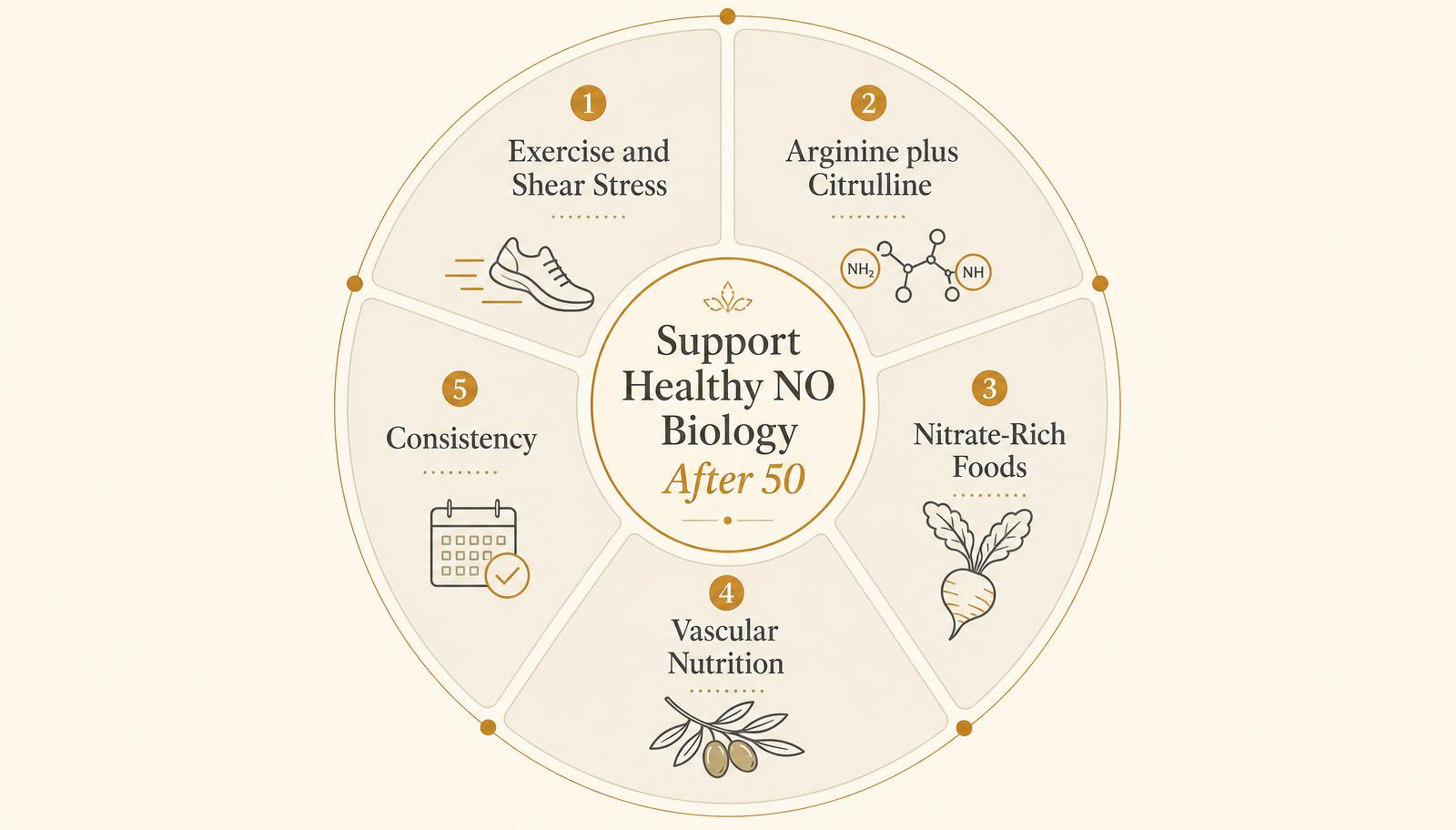
A Better NO Strategy After 50
1. Keep the endothelium active
Exercise creates blood flow and shear stress.
2. Provide the raw materials
Arginine is the direct NOS substrate; citrulline can replenish it.
3. Use the alternative route
Leafy greens and beetroot provide dietary nitrate.
4. Support the vascular environment
Eat a plant-rich diet, avoid smoking and manage metabolic and cardiovascular risk factors.
5. Be consistent
Age-related vascular change happens over decades. Support should be thought about the same way.
Where the Australian Plant Ingredients Fit
The broader nutritional environment matters because NO does not operate in isolation from redox biology. This is where plant ingredients such as Kakadu Plum and Davidson's Plum fit appropriately into a cardiovascular formulation. They contain naturally occurring phytonutrients, and Kakadu Plum is particularly notable for its vitamin C content.
Their role should not be exaggerated. They are not substitutes for eNOS, they do not convert directly into nitric oxide and they should not be described as reversing vascular aging. Their value is broader: they contribute plant-based phytonutrients to a nutritional strategy designed around cardiovascular wellness and the environment surrounding normal NO biology.
How ėNOS Addresses the Aging NO Story
The age-related changes described in this article help explain why the formulation philosophy behind ėNOS by Australiana Life becomes increasingly relevant after midlife. ėNOS approaches NO support from several deliberately selected nutritional angles:
- L-arginine — substrate directly relevant to endothelial nitric-oxide synthase
- L-citrulline — a complementary route to replenish circulating arginine availability
- The combination — human research supports the rationale for combining the two rather than treating them as interchangeable
- Australian plant ingredients — Kakadu Plum and Davidson's Plum contribute to the broader phytonutrient character of the formula
- Consistent daily support — repeatable nutritional support even when day-to-day food intake varies
That makes ėNOS well suited to the healthy-aging objective: supporting the natural NO-production system consistently at a time when the body's own NO biology may no longer operate with the efficiency of earlier adulthood.
No dietary supplement can control substrate supply, eNOS regulation, oxidative stress, physical activity, metabolic health, dietary nitrate and the vascular environment all at once. But a well-designed supplement can make a valuable contribution where nutrition has leverage — an addition to exercise, healthy food, risk-factor management and active living, not a substitute for them.
Age Changes the System. It Doesn't Eliminate the Opportunity.
Perhaps the most important thing to understand about nitric oxide and aging is that decline does not mean disappearance.
- The endothelium still responds
- Muscles still respond to exercise
- Blood flow still creates shear stress
- Citrulline can still become arginine
- Arginine can still serve as substrate for eNOS
- Dietary nitrate can still become nitrite and NO
The system is still there. What changes is the efficiency and environment in which it operates. That is why supporting nitric oxide becomes more interesting — not less — as we grow older.
At 25, biology may provide a large margin for error. At 55, 65 and beyond, deliberate support matters more. The objective isn't to turn back the clock. It is to give an aging vascular system the best nutritional and lifestyle environment in which to continue doing its job.
Scientific References
[1] Declining nitric oxide bioavailability in cardiovascular aging: mechanistic insights and emerging interventions
Patel P, et al. Journal of Cardiovascular Aging. 2025. PMID: 41953454. Recent comprehensive review describing age-related changes in NOS regulation, ADMA, BH4, oxidative stress, eNOS uncoupling and emerging interventions including exercise and dietary nitrate.
PubMed / National Library of Medicine →[2] Aging and vascular endothelial function in humans
Seals DR, Jablonski KL, Donato AJ. Clinical Science. 2011;120:357–375. PMID: 21244363. Major review identifying oxidative-stress-related reductions in endothelial NO bioavailability as an important mechanism of vascular aging.
PubMed / National Library of Medicine →[3] Endothelial dysfunction and aging: an update
Herrera MD, Mingorance C, Rodríguez-Rodríguez R, Alvarez de Sotomayor M. Ageing Research Reviews. 2010. Review of the progressive loss of NO bioavailability, reactive oxygen and nitrogen species and age-related endothelial dysfunction.
PubMed / National Library of Medicine →[4] Role of BH4 deficiency as a mediator of oxidative stress-related endothelial dysfunction in menopausal women
DuBose LE, Ozemek C, Wick T, et al. American Journal of Physiology — Heart and Circulatory Physiology. 2022;323:H975–H982. PMID: 36149770. Human study examining oxidative stress, BH4 availability and endothelial function across menopausal groups.
PubMed / National Library of Medicine →[5] Decline in endothelial function across the menopause transition is related to decreased estradiol and increased oxidative stress
Moreau KL, et al. 2020. PMID: 32770384. Human research demonstrating progressive changes in endothelial function across the menopause transition.
PubMed / National Library of Medicine →[6] Effects of aerobic, resistance and combined training on endothelial function and arterial stiffness in older adults
da Silva RSN, da Silva DS, de Oliveira PC, et al. PLoS ONE. 2024;19:e0308600. PMID: 39621701. Systematic review and meta-analysis of randomized trials supporting improvements in vascular measures from aerobic and combined exercise in older adults.
PubMed / National Library of Medicine →[7] Influence of different exercise types on vascular endothelial function in middle-aged and older adults
Chen Q, Gao X, Wang C, Zhang P. Archives of Gerontology and Geriatrics. 2025;128:105624. PMID: 39288582. Systematic review and network meta-analysis of exercise modalities and endothelial function.
PubMed / National Library of Medicine →[8] Nitric oxide, aging and aerobic exercise: sedentary individuals to Master's athletes
Nyberg M, et al. PMID: 35705144. Review discussing age-related NO decline, physical activity and nutritional strategies including nitrate, arginine and citrulline.
PubMed / National Library of Medicine →[9] The effects on plasma L-arginine levels of combined oral L-citrulline and L-arginine supplementation in healthy males
Suzuki T, Morita M, Hayashi T, Kamimura A. Bioscience, Biotechnology, and Biochemistry. 2017;81(2):372–375. PMID: 27667025. Randomized human study showing the combined amino acids increased plasma arginine more efficiently than the same total amount of either alone under the study conditions.
PubMed / National Library of Medicine →[10] L-citrulline as a nitric oxide-modulating therapeutic adjunct to exercise in postmenopausal and older women
Chen Z. Amino Acids. 2026. PMID: 42423997. Recent review examining citrulline, NO biology, exercise, vascular function and arterial stiffness in older and postmenopausal women.
PubMed / National Library of Medicine →
Explore the Aging NO System Further
- Nitric Oxide and Aging: What Changes After 40, 50 and Beyond? →
A broader guide to what vascular aging means in everyday life.
- Nitric Oxide and Oxidative Stress →
Go deeper into superoxide, BH4, peroxynitrite and eNOS uncoupling.
- What Is eNOS? The Enzyme Behind Natural Nitric Oxide Production →
Understand the enzyme whose function becomes increasingly important with age.
- Why Combine L-Arginine and L-Citrulline? →
See the human research behind complementary substrate support.
- Dietary Nitrates and Nitric Oxide →
Explore the alternative nitrate–nitrite pathway that becomes especially interesting as endothelial NO efficiency changes.
GIVE AN AGING NO SYSTEM MORE SUPPORT — NOT LESS
The body continues producing nitric oxide throughout life, but the environment becomes more challenging with age. ėNOS combines L-arginine + L-citrulline with deliberately selected complementary nutrients and Australian plant ingredients to provide consistent nutritional support for the body's natural NO-production system, healthy circulation and cardiovascular wellness.
EXPLORE ĖNOS →This article is provided for informational purposes only and is not intended as medical advice or to diagnose, treat, cure or prevent disease. Aging-related changes in nitric-oxide biology vary considerably among individuals. ėNOS is a dietary supplement formulated to support the body's natural nitric-oxide system, healthy circulation and cardiovascular wellness; it is not intended to reverse vascular aging or replace appropriate nutrition, physical activity, cardiovascular risk management or medical care.
More in Lifestyle & Healthy Aging
- Nitric Oxide & Exercise Performance
- Nitric Oxide & Exercise Recovery
- Lifestyle Habits That Support Healthy Nitric Oxide Production
- Exercise & Nitric Oxide: Why Movement Matters
- Can a Sedentary Lifestyle Affect Nitric Oxide & Circulation?
- Diet & Nitric Oxide: How Everyday Food Choices Matter
- Sleep, Cardiovascular Health & Nitric Oxide: What Do We Know?
- Smoking, Vascular Health & Nitric Oxide
- Nitric Oxide, Energy & Staying Active as We Age
- Nitric Oxide & Men's Sexual Health: The Blood-Flow Connection
- Nitric Oxide & Oral Health: The Surprising Connection
- Nitric Oxide & Aging: What Changes After 40, 50 and Beyond?
- Healthy Aging: Supporting Circulation, Blood Flow & Nitric Oxide After 50
- Nitric Oxide and Brain Health/Cognition
About Our Health & Science Content
Australiana Life Health & Science articles are based on published scientific research and written to make complex health and nitric oxide science easier to understand. Our educational content undergoes scientific review for accuracy and appropriate interpretation of the evidence and is updated as relevant scientific understanding evolves.