
Nitric Oxide, Energy and Staying Active as We Age
How Healthy Blood Flow, Oxygen Delivery and Nitric-Oxide Biology Help Support an Active Life After 50
Most people want more energy as they get older. But what does energy actually mean? It might mean having enough stamina for a long walk, getting through a busy day without feeling exhausted, keeping up while travelling, playing golf, gardening, cycling, working out, climbing stairs — or simply feeling capable of doing the things you enjoy.
That kind of energy is not produced by one molecule. It depends upon an entire system involving the heart, lungs, blood vessels, muscles, mitochondria, nutrition, sleep, metabolism and physical conditioning. One important part of that system is nitric oxide — NO.
Nitric oxide does not provide calories. It is not caffeine. It does not directly "give you energy." Instead, NO helps support the vascular system that delivers oxygen and nutrients to tissues when they need them. And as we age — when nitric-oxide bioavailability and exercising muscle blood flow can become less efficient — that relationship becomes particularly relevant. [1] [2] [3]
The more accurate healthy-aging question is not "Will nitric oxide give me energy?" It is: "Can supporting healthy nitric-oxide biology help maintain the circulation and physiological capacity that allow me to stay active?"
First, Nitric Oxide Is Not an Energy Drink
When people hear the word energy they often think of stimulants: caffeine, energy drinks, sugar — something that makes them feel more awake or temporarily more stimulated. Nitric oxide works differently. NO is a signaling molecule. Within the cardiovascular system, it helps blood vessels respond to changing physiological demand.
When muscles become active, they require more oxygen, glucose, fatty acids and other nutrients. They also need metabolic products carried away. That requires blood flow, and nitric oxide participates in the vascular signaling that helps make that increased delivery possible. So NO supports an important part of the infrastructure of activity. It is not itself the fuel.
Think of Energy as a Supply Chain
Imagine a factory. Having plenty of fuel at a warehouse somewhere else does not help if trucks cannot deliver it. The working muscle faces a similar problem. Energy production inside muscle cells requires substrates and oxygen, and those materials have to arrive through the circulation.
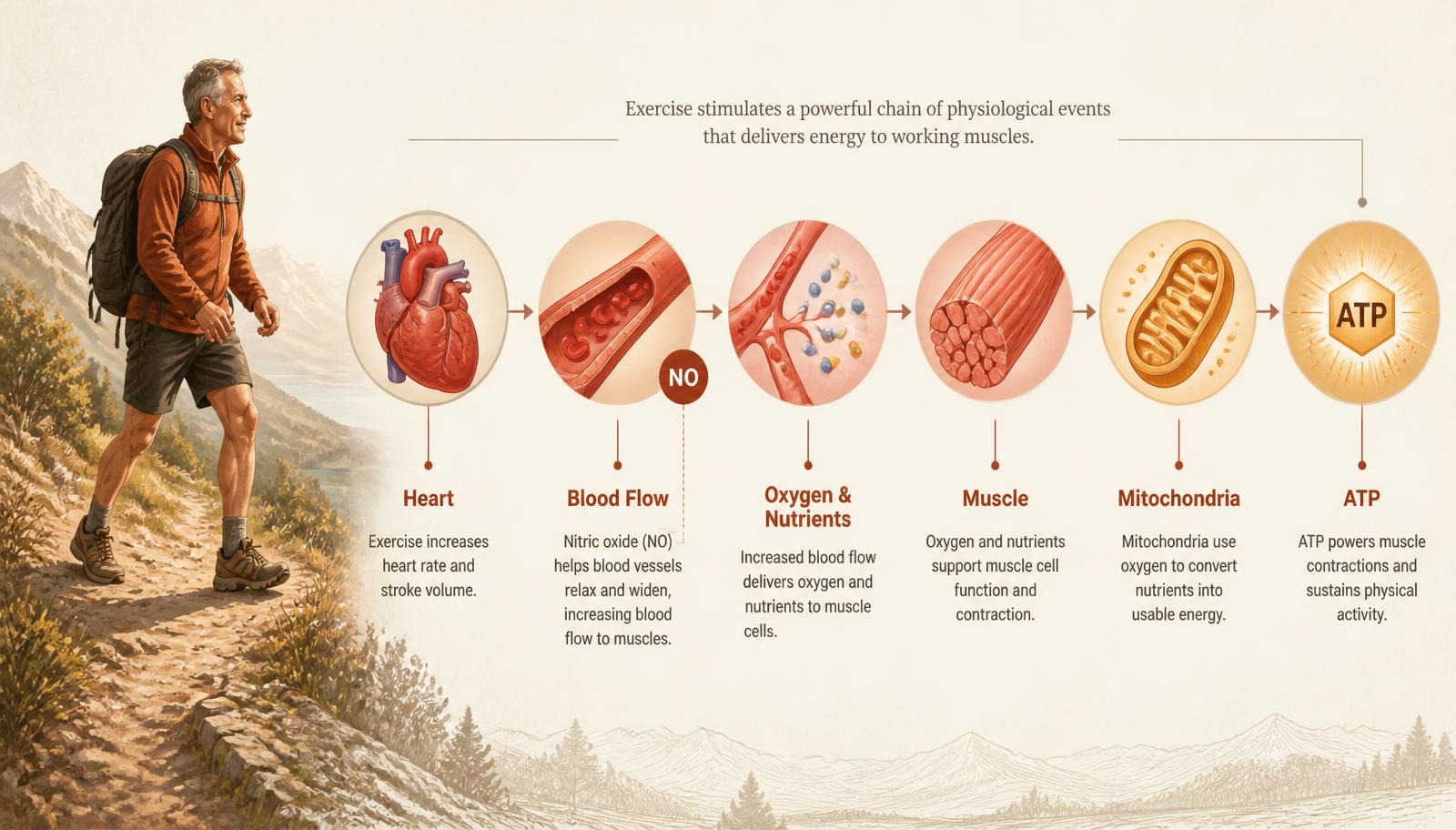
The heart provides the pumping force. Blood carries oxygen and nutrients. Blood vessels distribute the flow. The microcirculation brings blood close to individual muscle fibres. And mitochondria inside the muscle use oxygen and nutrients to help generate ATP — adenosine triphosphate, the immediate energy currency used by cells.
Nitric oxide participates primarily in the delivery and signaling side of this system, while emerging research also suggests more complex roles in metabolism and mitochondrial adaptation. [4] [5]
What Happens When You Start Moving?
Imagine you are sitting comfortably. Then you stand up and begin walking briskly. Within seconds, muscle contraction increases, energy demand rises, oxygen consumption increases, heart rate begins adjusting and blood flow toward active muscles increases.
That blood-flow increase requires the cardiovascular system to coordinate the heart, larger arteries, small resistance vessels, capillaries and local chemical signals. NO is one of those signals. The body is essentially trying to solve a continuously changing equation: how much blood does this tissue need right now?
Nitric Oxide Helps Match Blood Flow With Demand
Inside the endothelial cells lining blood vessels is an enzyme called eNOS — endothelial nitric oxide synthase. eNOS uses L-arginine as substrate for nitric-oxide production.
NO can then signal nearby vascular smooth muscle, contributing to the ability of vessels to relax appropriately and adjust blood flow. During exercise, several regulatory systems work together to increase circulation toward active muscle. Nitric oxide is not the only mechanism — but it is an important contributor to the fine-tuning of muscle blood flow. [2] [3]
Why Blood Flow Matters to How Much You Can Do
Working muscle needs oxygen, and the harder you work the more rapidly oxygen demand can rise. Oxygen reaches muscle through the bloodstream, which means exercise capacity depends partly upon a chain.
Healthy circulation is therefore one part of staying energetic and active. Not the whole story — but an important part.
The Microcirculation Is Where Delivery Gets Personal
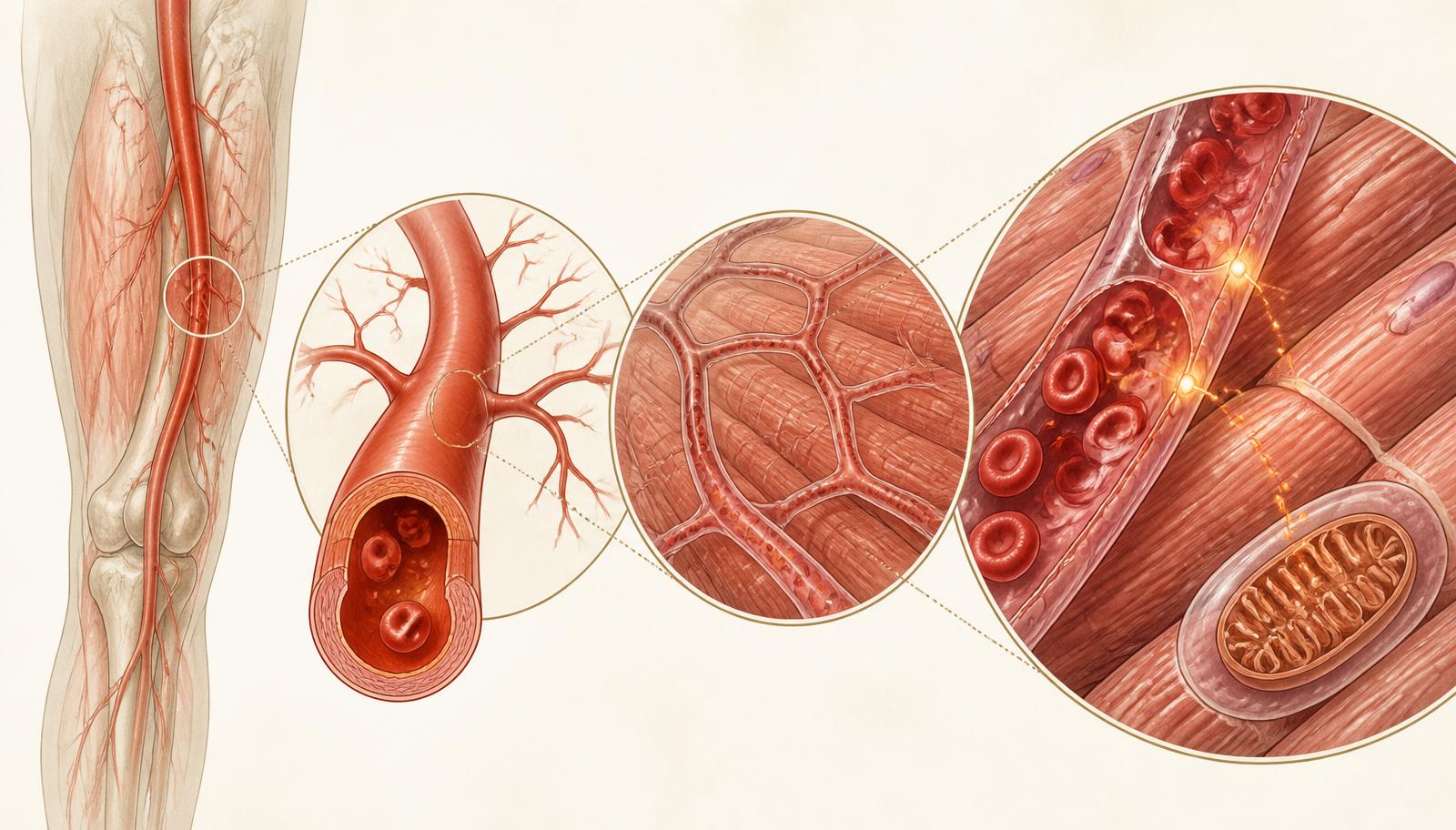
Most cardiovascular illustrations show the heart and large arteries. But oxygen does not leap from a large artery directly into a muscle fibre. Blood travels through progressively smaller vessels until it reaches capillaries.
Skeletal muscle contains an extensive microvascular network designed to match blood supply with rapidly changing metabolic demand. Research identifies nitric oxide as an important regulator within this microcirculation and as a contributor to the vasodilatory response of skeletal muscle. [6] That makes the smallest blood vessels enormously important to everyday activity. They are where cardiovascular delivery reaches working tissue.
What Changes With Age?
With advancing age, exercising muscle blood flow often becomes less efficient. Researchers have found age-related changes involving reduced endothelial NO availability, greater vasoconstrictor signaling, oxidative stress and altered regulation of skeletal-muscle blood flow during exercise. [2] [7]
This does not mean an older person's muscles suddenly stop receiving enough blood. Nor does it mean every decline in energy is caused by nitric oxide. It means that one of the physiological systems supporting exercise capacity changes gradually with age. A 2025 review of cardiovascular aging similarly identifies declining NO bioavailability as an important feature of aging blood vessels, linked with endothelial dysfunction and vascular stiffening. [1] That gives us a sensible reason to pay more attention to NO biology after 50.
Why the Same Hill Can Feel Different at 65 Than at 35
Most people recognise this experience. A hill that once required little thought suddenly feels like work. Several things may have changed.
- Cardiorespiratory fitness
- Muscle mass
- Mitochondrial capacity
- Body composition
- Joint function
- Blood-flow regulation
- Physical activity levels
- The ability to deliver and use oxygen
Nitric oxide belongs within that larger physiological picture. It should not be singled out as the explanation for every change. But declining NO availability may contribute to age-related reductions in the ability to regulate blood flow toward contracting skeletal muscle. [3]
Staying Active Can Help Preserve the System
Here is the encouraging part. Older adults who remain physically active often retain better vascular function than sedentary adults of similar age. A review specifically examining nitric oxide, aging and aerobic exercise found that age-related reductions in NO bioavailability appear particularly pronounced in sedentary individuals, while older adults who remain physically active tend to preserve higher NO availability. [8]
This does not mean exercise stops vascular aging. It means how we age is influenced by how we live — one of the strongest positive messages in healthy-aging physiology.
Movement Creates the Stimulus
Every time you become physically active, muscles require more blood, blood flow increases, endothelial shear stress changes and vascular signaling responds. Regular exercise repeatedly exposes the cardiovascular system to this healthy demand. A 2026 review of exercise training and nitric-oxide pathways concluded that physical exercise can modulate both major NO pathways and contributes to broader physiological adaptations involving vascular and redox biology. [9]
So movement is not merely something that requires energy. It helps train the systems that allow activity to happen.
This Creates a Healthy Cycle
"I Don't Have the Energy to Exercise"
This is one of the most common barriers to staying active — and sometimes it is entirely understandable. Fatigue can result from poor sleep, stress, low fitness, medications, anaemia, thyroid problems, illness, depression, inadequate nutrition, cardiovascular conditions or numerous other causes. That is why persistent or unexplained fatigue should never automatically be blamed on "low nitric oxide."
But there is also a lifestyle paradox: being inactive can make activity feel increasingly difficult. Starting with manageable movement can gradually rebuild capacity. Five minutes may become ten. Ten may become twenty. A flat walk may eventually become a hill. The body adapts to what it repeatedly does.
Fitness Creates Energy Capacity Without Being a Stimulant
Consider two people walking at the same speed. For one, that speed represents 40% of their maximum capacity. For the other, it represents 75%. The second person will probably feel much more fatigued.
Improving fitness increases reserve capacity. Everyday tasks then require a smaller percentage of what you are capable of doing. That can feel like having more energy — but physiologically what has changed is conditioning, muscle, oxygen utilisation, cardiovascular capacity and movement efficiency. That distinction changes the goal from "How can I feel stimulated?" to "How can I increase my capacity?"
Nitric Oxide May Also Interact With Muscle Metabolism
The traditional NO story focuses on blood vessels. But research now suggests that NO biology extends further. A 2025 review examined the role of eNOS-derived nitric oxide in glucose uptake, fatty-acid metabolism, metabolic flexibility, mitochondrial remodeling and exercise adaptation, concluding that eNOS appears to play an important but context-dependent role, with some findings still mixed across experimental models. [4]
We should not say "NO makes mitochondria produce more energy." A more accurate description is that nitric-oxide signaling appears to participate in several metabolic and mitochondrial processes involved in exercise adaptation, but the exact role depends on tissue and physiological context.
What Are Mitochondria?
Mitochondria are cellular structures heavily involved in aerobic energy metabolism. They use products derived from carbohydrates, fats and other substrates, along with oxygen, to help generate ATP. Muscle cells contain large numbers of mitochondria because movement requires substantial energy, and mitochondrial function can change with age, exercise, disease and physical inactivity.
Regular exercise remains one of the strongest known lifestyle stimuli for maintaining mitochondrial function during aging. A 2026 review highlighted exercise-induced mitochondrial remodeling across energy-demanding organs, including skeletal muscle, heart and brain. [10] So again: NO belongs in the story, but exercise is doing much more than manipulating one molecule.
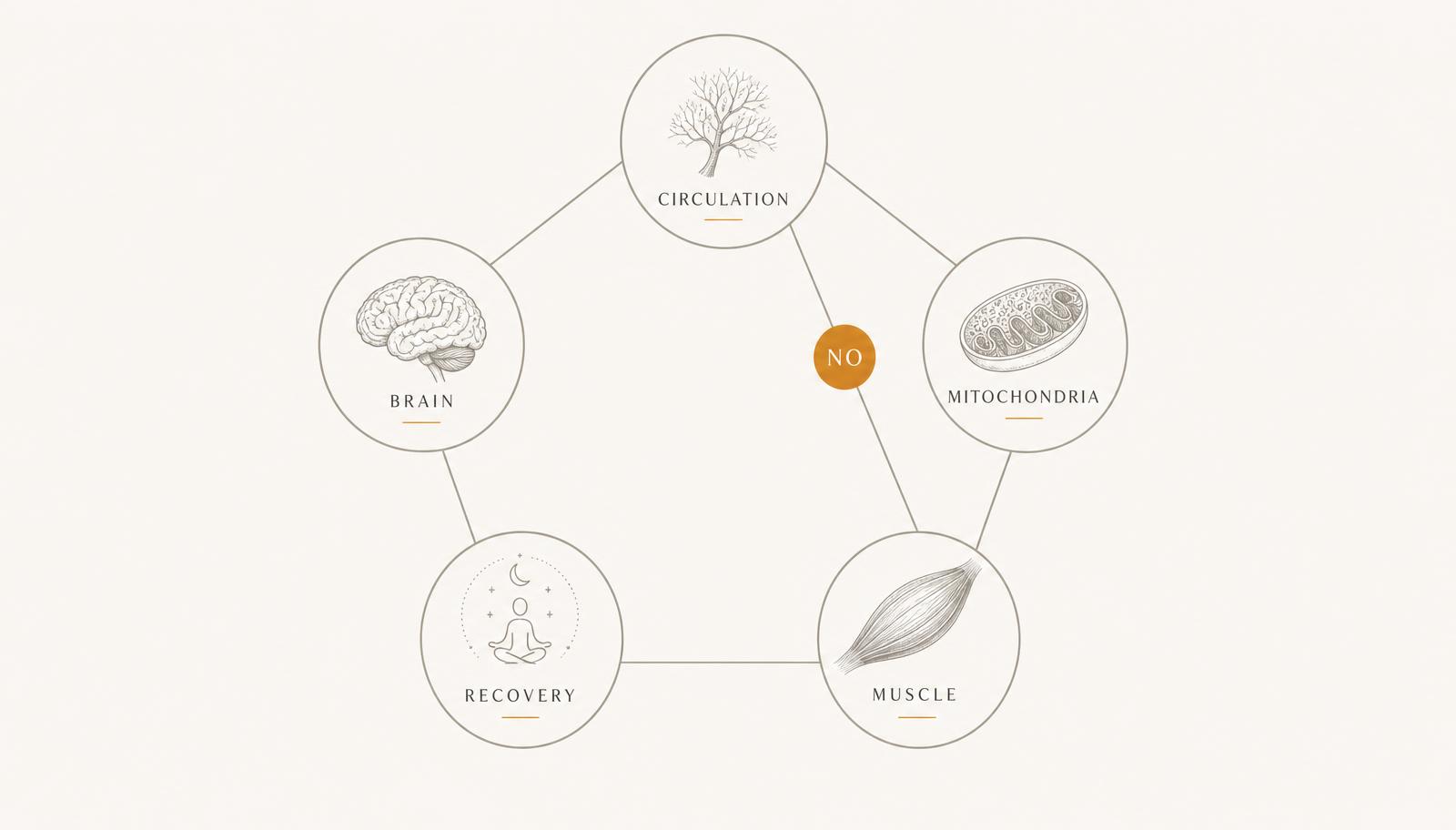
Energy Is Delivery Plus Production Plus Capacity
- DELIVERY — blood flow brings oxygen and nutrients toward tissues
- PRODUCTION — cells convert nutrients into usable energy
- CAPACITY — fitness and muscle determine how much work you can perform
- RECOVERY — sleep and nutrition help restore the system
- MOTIVATION AND BRAIN FUNCTION — determine whether you feel like moving in the first place
Nitric oxide contributes especially to the vascular delivery and signaling component. That is valuable without needing to claim it does everything.
Why Muscle Becomes More Important After 50
Aging is commonly accompanied by a gradual loss of muscle mass, strength and power. The rate differs enormously between individuals. Physical inactivity accelerates the problem; resistance exercise helps oppose it.
Why does this matter to energy? Because stronger muscles make activity less expensive relative to your capacity. Getting out of a chair. Carrying luggage. Climbing stairs. Walking through an airport. Lifting groceries. If those tasks require less of your maximum strength, they feel easier — and that leaves more reserve for everything else you want to do.
Blood Flow and Muscle Work as a Team
Muscle cannot perform well without circulation. Circulation has little reason to increase toward muscle that is never used. Muscle contraction creates demand; circulation meets demand; NO helps regulate part of the vascular response; repeated activity trains the system. This is why healthy aging should support both vascular health and muscular health — the delivery system and the tissue doing the work.
Walking May Be the Most Underestimated Energy Strategy
Walking is not glamorous. It does not require specialised equipment or a complicated program. But regular walking can help maintain cardiorespiratory fitness, leg strength and endurance, glucose regulation, vascular stimulus, mobility and confidence in movement. And as walking becomes easier, many people naturally do more of it — exactly the kind of positive feedback loop we want after 50.
Don't Forget Strength Training
Aerobic activity challenges circulation and oxygen delivery. Resistance exercise challenges muscle strength, neuromuscular function and physical capacity. Both matter. A strong 65-year-old who walks regularly has a different functional reserve than someone of the same age who has gradually become sedentary. Healthy aging therefore benefits from moving the cardiovascular system and maintaining the machinery that uses it.
Food Supplies the Fuel
Blood flow cannot deliver nutrients that were never consumed. Healthy activity depends upon adequate nutrition: appropriate protein, carbohydrate according to individual needs, healthy fats, vitamins, minerals and adequate overall food intake. Protein becomes particularly important after midlife because maintaining muscle requires a resistance stimulus plus appropriate nutritional support. NO is not a substitute for food — it helps support one part of the system that delivers what food provides.
Food Also Supports NO Biology Directly
- L-arginine is the direct substrate used by eNOS
- L-citrulline can be converted into arginine, importantly through kidney metabolism
- Dietary nitrate from leafy greens and beetroot can participate in the nitrate → nitrite → NO pathway
So someone interested in active aging can support NO biology through both healthy food and targeted nutrition.
Why Citrulline Is Interesting for Active Aging
L-citrulline deserves particular attention because it can efficiently increase circulating arginine availability. Research involving adults over 50 has examined citrulline alone and combined with exercise for outcomes including muscle mass, strength, walking speed and physical performance. A systematic review found some promising results, particularly when citrulline was combined with exercise, but emphasised that only a small number of heterogeneous randomized trials were available and that stronger evidence is still needed. [11] That is the appropriate interpretation: promising nutritional support — not a guaranteed performance effect.
Exercise Still Comes First
If the goal is staying active, maintaining capacity, preserving muscle and supporting cardiovascular fitness, then a supplement cannot replace movement. Exercise generates adaptations that no nutritional product can reproduce completely. But nutrition can complement those adaptations: exercise creates demand and stimulates adaptation, while nutrition helps provide the materials needed to support the system.
Why NO Can Matter More to Active Aging Than to "Feeling Energized"
The phrase "more energy" is vague. A more useful objective after 50 is greater functional capacity. Can you walk farther? Can you climb stairs? Can you exercise regularly? Can you recover and do it again? Can you maintain independence? Can your cardiovascular system respond when demand rises?
Those are meaningful outcomes. Nitric oxide belongs in that discussion because healthy vascular responsiveness supports blood-flow delivery during activity. That connection is far more important than trying to make NO sound like a stimulant.
Active Older Adults Offer an Important Lesson
Some adults remain remarkably active well into their 60s, 70s, 80s and beyond. Genetics certainly play a role — but lifestyle does too. Research comparing sedentary aging with highly active older individuals suggests that maintaining physical activity can attenuate aspects of the age-related decline in NO bioavailability. [8]
The lesson is not that everyone needs to become a Masters athlete. It is that age and inactivity are not the same thing. Some changes are associated with aging. Others are amplified by not using the body.
Where ėNOS Fits Into the Active-Aging Picture
An important distinction: eNOS is endothelial nitric oxide synthase — the natural enzyme involved in vascular nitric-oxide production. ėNOS is a dietary supplement from Australiana Life, specifically formulated around nitric-oxide science to provide nutritional support for the body's natural NO system, healthy circulation and cardiovascular wellness.
At the centre of the formula are L-arginine + L-citrulline. These amino acids provide complementary nutritional support for arginine availability relevant to the natural eNOS pathway.
Why ėNOS Can Be Particularly Relevant After 50
As we age, several things can happen at once: NO bioavailability may decline, endothelial function can become less efficient, muscle blood flow during exercise can change, physical activity may decrease and maintaining muscle becomes more challenging. [1] [2] [3] That is exactly when supporting the systems behind an active lifestyle becomes more important.
ėNOS does not create fitness. It does not replace exercise. And it is not a stimulant. Its value is different: it provides consistent nutritional support for a cardiovascular pathway that becomes increasingly relevant as we age.
What Benefits Can ėNOS Reasonably Support for an Active Adult?
- HEALTHY CIRCULATION — NO contributes to normal vascular responsiveness and blood-flow regulation
- NATURAL NO PRODUCTION — L-arginine provides the physiological substrate used by eNOS, while L-citrulline offers a complementary route toward replenishing arginine availability
- CARDIOVASCULAR WELLNESS — the vascular system and heart operate together to support physical activity
- AN ACTIVE LIFESTYLE — healthy circulation helps support the delivery system muscles depend upon as demand increases
- CONSISTENT NUTRITIONAL SUPPORT AFTER 50 — a measured daily formulation can provide greater consistency than variable dietary intake alone
Those are meaningful benefits without needing to claim that ėNOS directly produces "energy."
Why Not Call ėNOS an Energy Supplement?
Because that would miss what makes the product interesting. Traditional energy products often rely on stimulants, caffeine or rapidly absorbed carbohydrate. ėNOS is built around a different idea: supporting the natural nitric-oxide and cardiovascular system behind healthy circulation. That can be highly relevant to an energetic, active lifestyle — but through physiology rather than stimulation.
ėNOS is not designed to create the acute stimulant rise-and-fall associated with high doses of caffeine or sugar. Its purpose is to provide nutritional ingredients supporting the body's own NO pathways. The objective is not a temporary rush; it is consistent nutritional support for normal physiology.
Morning and Evening: Consistency Over Intensity
ėNOS is intended for regular daily use rather than occasional use as a pre-workout stimulant. That philosophy fits healthy aging particularly well. One walk does not create fitness. One healthy meal does not create cardiovascular health. One good night's sleep does not repair months of poor sleep. And one serving of nutritional support should not be expected to transform physiology instantly. Consistency builds the routine.

ėNOS Works Best in the Lifestyle It Was Designed to Complement
- MOVE — give the cardiovascular system a reason to respond
- EAT WELL — provide energy, protein, vegetables and plant nutrients
- MAINTAIN MUSCLE — preserve physical capacity
- SLEEP — support recovery
- DON'T SMOKE — protect endothelial function
- SUPPORT NO NUTRITION — provide relevant nutritional ingredients consistently
What If You Feel Persistently Tired?
This article should not encourage someone to assume "I need more nitric oxide." Persistent or unexplained fatigue can have many causes, including anaemia, thyroid problems, sleep apnoea, medications, heart or lung conditions, infection, nutrient deficiencies, depression, metabolic problems or other medical issues.
If energy or exercise tolerance changes significantly or unexpectedly — especially alongside chest discomfort, unusual shortness of breath, dizziness, palpitations or weakness — appropriate evaluation matters. Healthy-aging education should encourage attention to symptoms rather than disguising them with supplements or stimulants.
Energy Is Not the Goal. Living Is.
Few people actually want "more cellular ATP." What they want is to travel, walk, play, work, exercise, socialise, remain independent — and to say yes when someone asks, "Do you want to come?" That is why energy matters: it represents the physical capacity to participate in life. Circulation contributes to that capacity. Nitric oxide contributes to healthy circulation.
Think Capacity, Not Stimulation
Stimulation gives you a temporary feeling. Capacity gives you ability. Healthy aging should aim to build cardiovascular reserve, muscle strength, endurance, mobility, metabolic health and vascular responsiveness. So instead of asking "What can make me feel energised right now?" consider asking: "What can help me maintain the ability to keep doing what I enjoy for years to come?"
Scientific References
[1] Adhikari H, Patel P, Javvaji N, Crabtree MJ, Simon JN. Declining nitric oxide bioavailability in cardiovascular aging: mechanistic insights and emerging interventions.
Journal of Cardiovascular Aging. 2025;5(4):20. PMID: 41953454. Contemporary review identifying reduced NO bioavailability, altered NOS activity, oxidative stress and vascular dysfunction as important features of cardiovascular aging.
PubMed / National Library of Medicine →[2] Trinity JD, Richardson RS. Fine-tuning blood flow to the exercising muscle with advancing age: an update.
Experimental Physiology. 2015. PMID: 25858164. Review describing age-related changes in nitric-oxide signaling and regulation of skeletal-muscle blood flow during exercise.
PubMed / National Library of Medicine →[3] Mortensen SP, Nyberg M, Winding K, Saltin B. Regulation of skeletal muscle blood flow during exercise in ageing humans.
Journal of Physiology. 2015. PMID: 26332887. Review describing reduced exercising muscle blood flow with aging and the contribution of impaired NO availability and altered vascular regulation.
PubMed / National Library of Medicine →[4] Laird PAR, Wall RM, Craige SM. The intersection of exercise, nitric oxide, and metabolism: unraveling the role of eNOS in skeletal muscle and beyond.
Metabolism. 2025;173:156360. PMID: 40749966. Review examining eNOS-derived NO in glucose uptake, fatty-acid metabolism, mitochondrial remodeling and exercise adaptation, while emphasizing that effects are context dependent.
PubMed / National Library of Medicine →[5] Mueller SM, Roberts MD, Mobley CB, et al. Nitric oxide in exercise physiology: past and present perspectives.
Frontiers in Physiology. 2025. PMID: 39850450. Review examining NO in skeletal-muscle function, mitochondrial biology, redox signaling and exercise physiology.
PubMed / National Library of Medicine →[6] Hendrickse PW, Degens H. Capillary facilitation of skeletal muscle function in health and disease.
Canadian Journal of Physiology and Pharmacology. 2019. PMID: 31714799. Review describing skeletal-muscle microcirculation and NO's role in regulating capillary and vascular responses.
PubMed / National Library of Medicine →[7] Poole DC, Behnke BJ, Musch TI. Reduced blood flow to contracting skeletal muscle in ageing humans: is it all an effect of sand through the hourglass?
Journal of Physiology. 2015. PMID: 26095873. Review describing the role of habitual physical activity, endothelial function and NO signaling in age-related muscle blood-flow regulation.
PubMed / National Library of Medicine →[8] Shannon OM, Clifford T, Seals DR, Craighead DH, Rossman MJ. Nitric oxide, aging and aerobic exercise: sedentary individuals to Master's athletes.
Nitric Oxide. 2022. PMID: 35705144. Review reporting that declining NO bioavailability with age is especially apparent in sedentary individuals, while physically active older adults tend to maintain greater NO availability.
PubMed / National Library of Medicine →[9] Benjamim J, Bailey SJ, Gonçalves LDS, et al. Influence of exercise training on nitric oxide pathways and their physiological effects.
Redox Biology. 2026;90:104041. PMID: 41650701. Current review of how exercise training influences NOS-dependent and nitrate–nitrite NO pathways.
PubMed / National Library of Medicine →[10] Exercise-induced mitochondrial remodeling in energy-demanding organs during aging.
2026. PMID: 42519021. Review describing age-associated changes in mitochondrial function and the capacity of regular exercise to support mitochondrial homeostasis across skeletal muscle and other energy-demanding organs.
PubMed / National Library of Medicine →[11] Aubertin-Leheudre M, Buckinx F. Effects of citrulline alone or combined with exercise on muscle mass, muscle strength, and physical performance among older adults: a systematic review.
Current Opinion in Clinical Nutrition and Metabolic Care. 2020;23(1):8–16. PMID: 31714265. Review of randomized trials in adults 50 and older reporting promising but heterogeneous findings for citrulline, particularly when combined with exercise, and emphasizing the need for additional research.
PubMed / National Library of Medicine →
Continue the Lifestyle & Healthy Aging Journey
- HEALTHY AGING: SUPPORTING CIRCULATION, BLOOD FLOW & NITRIC OXIDE AFTER 50 →
See the larger cardiovascular picture behind maintaining function through midlife and beyond.
- EXERCISE & NITRIC OXIDE: WHY MOVEMENT MATTERS →
Understand how physical activity turns increased blood flow into an endothelial signal.
- CAN A SEDENTARY LIFESTYLE AFFECT NITRIC OXIDE & CIRCULATION? →
Explore what can happen when the body receives too little daily movement.
- DIET & NITRIC OXIDE: HOW EVERYDAY FOOD CHOICES MATTER →
See how nutrition supplies fuel while also supporting the pathways involved in NO production.
- SLEEP, CARDIOVASCULAR HEALTH & NITRIC OXIDE: WHAT DO WE KNOW? →
Understand why recovery and sleep belong in the same healthy-aging system.
DISCOVER HOW ĖNOS SUPPORTS HEALTHY CIRCULATION & ACTIVE AGING
Nitric oxide is not a stimulant and it does not create energy by itself. Healthy NO biology helps support vascular responsiveness and circulation — the delivery system active muscles depend upon. ėNOS by Australiana Life was specifically formulated to support that natural system, combining L-arginine + L-citrulline for complementary nutritional support of arginine availability, together with deliberately selected supporting nutrients for broader cardiovascular wellness.
EXPLORE ĖNOS →This article is provided for informational purposes only and is not intended as medical advice or to diagnose, treat, cure or prevent disease. Energy levels and exercise capacity are influenced by many factors, and persistent or unexplained fatigue or a significant change in exercise tolerance should be appropriately evaluated. ėNOS is a dietary supplement formulated by Australiana Life to support the body's natural nitric-oxide system, healthy circulation and cardiovascular wellness. It is not a stimulant or treatment for fatigue. Dietary supplements should complement, rather than replace, appropriate nutrition, physical activity, healthy sleep and medical care.
More in Lifestyle & Healthy Aging
- Nitric Oxide & Exercise Performance
- Nitric Oxide & Exercise Recovery
- Lifestyle Habits That Support Healthy Nitric Oxide Production
- Exercise & Nitric Oxide: Why Movement Matters
- Can a Sedentary Lifestyle Affect Nitric Oxide & Circulation?
- Diet & Nitric Oxide: How Everyday Food Choices Matter
- Sleep, Cardiovascular Health & Nitric Oxide: What Do We Know?
- Smoking, Vascular Health & Nitric Oxide
- Nitric Oxide & Men's Sexual Health: The Blood-Flow Connection
- Nitric Oxide & Oral Health: The Surprising Connection
- Nitric Oxide & Aging: What Changes After 40, 50 and Beyond?
- Why Does Nitric Oxide Production Change With Age?
- Healthy Aging: Supporting Circulation, Blood Flow & Nitric Oxide After 50
- Nitric Oxide and Brain Health/Cognition
About Our Health & Science Content
Australiana Life Health & Science articles are based on published scientific research and written to make complex health and nitric oxide science easier to understand. Our educational content undergoes scientific review for accuracy and appropriate interpretation of the evidence and is updated as relevant scientific understanding evolves.