
Lifestyle Habits That Support Healthy Nitric Oxide Production
How Movement, Food, Sleep and Everyday Choices Help Support Your Body's Natural NO System
Your body produces nitric oxide every day. But it does not produce it in isolation.
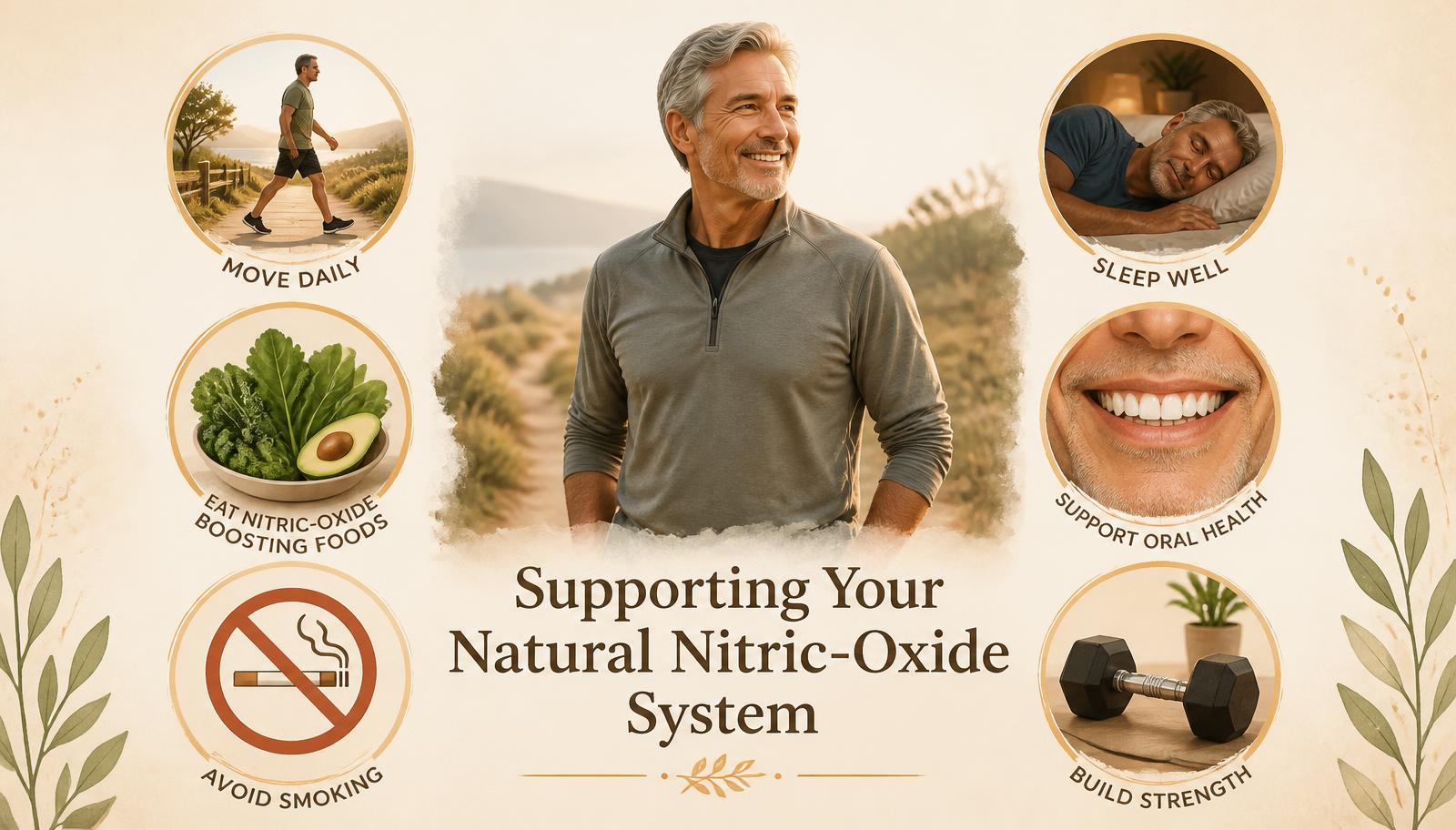
How effectively your nitric-oxide system operates is influenced by what you repeatedly do:
- How much you move
- What you eat
- How much time you spend sitting
- Whether you smoke
- How well you sleep
- The health of your mouth
- Your metabolic health
- And how those habits change as you get older
That makes nitric oxide an unusually good example of how lifestyle becomes physiology. You cannot consciously tell your endothelial cells to make more nitric oxide. But you can create conditions that help support the biological systems responsible for healthy NO production and availability.
That is especially important after 50, when research shows that endothelial function and nitric-oxide bioavailability tend to become less efficient with age. [1]
The encouraging part is that many of the same habits associated with healthy aging also support the vascular environment in which nitric oxide is produced.
The goal is not to chase a temporary "NO boost." It is to build a lifestyle that repeatedly tells your cardiovascular system: stay active, stay responsive, keep adapting.
First, Remember What Nitric Oxide Does
Nitric oxide — NO — is a short-lived signaling molecule produced throughout the body. Within the cardiovascular system, an especially important source is the endothelium: the thin cellular layer lining the inside of blood vessels.
Endothelial cells contain an enzyme called eNOS — endothelial nitric oxide synthase. eNOS uses the amino acid L-arginine as substrate in the production of nitric oxide.
NO then participates in signaling that helps vascular smooth muscle relax and allows blood vessels to adjust their diameter according to the body's needs. There is also another route:
This pathway depends partly upon bacteria living in the mouth. [4] So even before discussing lifestyle, we can see that healthy NO biology connects movement, blood flow, food, metabolism, the endothelium and even the oral microbiome. That is why daily habits matter so much.
Habit #1: Move Your Body Every Day
If you wanted to choose one lifestyle habit with an especially direct connection to endothelial NO biology, movement would be difficult to beat.
When muscles become active, they require more blood. Blood flow increases. As blood moves faster across the endothelial surface, it creates a mechanical force called shear stress. Endothelial cells can sense that force, and increased shear stress activates cellular signaling associated with eNOS and nitric-oxide production.
A 2026 review of exercise and nitric-oxide pathways describes exercise-induced enhancement of NOS-derived NO as well established, while contemporary microvascular research also shows that exercise training can increase NO-mediated vasodilation and improve endothelial function. [2]
You Don't Need to Be an Athlete
The endothelium does not require a marathon before it notices that you are moving. Walking matters. Cycling matters. Swimming matters. Gardening can matter. Dancing matters. Resistance training matters.
More vigorous exercise can provide a stronger cardiovascular stimulus, but the broader lifestyle principle is simpler: give your circulation a reason to circulate.
This becomes particularly important after retirement or later in life, when occupational movement often decreases without us noticing. A person who once walked throughout the workday can suddenly spend several additional hours sitting. That change affects more than calorie expenditure — it changes the vascular stimulus the body experiences every day.
Habit #2: Break Up Long Periods of Sitting
Exercise and sedentary behavior are related, but they are not exactly the same issue. Someone can exercise in the morning and still spend most of the remaining day sitting.
Research using periods of reduced physical activity, bed rest and immobilization has found that relatively short periods of inactivity can impair measures of endothelial and microvascular function. A 2025 systematic review found that greater duration and severity of physical inactivity were generally associated with worse endothelial outcomes. [3]
Don't only schedule exercise. Interrupt inactivity.
- Stand up
- Walk around
- Use the stairs when practical
- Carry something
- Take a short walk after a meal
- Do a few household tasks between long periods at a desk
These small movements should not be marketed as magical ways to "boost NO." Their value is more fundamental: they keep the cardiovascular system being used.
Think of Blood Vessels as Adaptable Tissue
Most people understand that muscle responds to use. Use your muscles regularly and they adapt. Stop using them and they gradually lose capacity. Blood vessels are also biologically responsive. They sense blood flow, pressure, metabolic demand, hormonal signals, inflammation, oxidative conditions and repeated exercise.
Circulation likes to have a job.
Habit #3: Eat Nitrate-Rich Vegetables Regularly
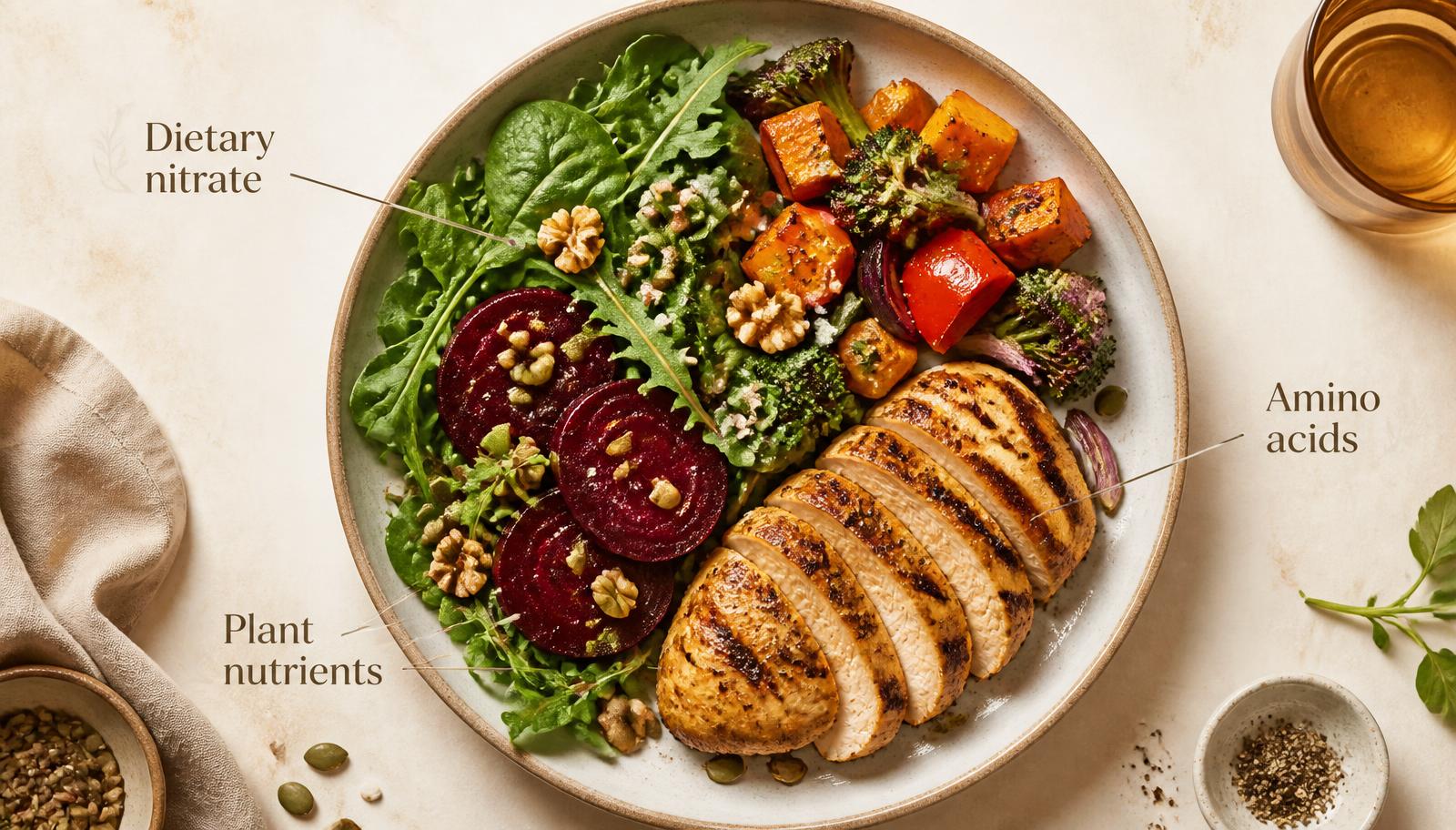
Some of the strongest food-to-NO physiology begins with vegetables. Particularly nitrate-rich choices include:
- Arugula / rocket
- Spinach
- Lettuce
- Beetroot
- Celery
- And other leafy green vegetables
These foods contain naturally occurring nitrate — NO₃⁻. After ingestion, nitrate can enter the body's nitrate → nitrite → nitric oxide pathway. This gives vegetables a biochemical relationship with NO that goes beyond simply calling them "heart healthy." Current reviews continue to identify nitrate-rich vegetables as important dietary contributors to the nitrate–nitrite–NO pathway. [5]
Vegetables Do More Than Supply Nitrate
A high-quality plant-rich diet also provides:
- Vitamin C
- Potassium
- Magnesium
- Polyphenols
- Carotenoids
- Fiber
- And thousands of other naturally occurring plant compounds
This matters because NO production occurs inside a broader endothelial and metabolic environment. A 2025 systematic review and meta-analysis of 133 randomized dietary studies found favorable effects on flow-mediated dilation — a measure of endothelial function — from several whole-food categories, including vegetables, fruits, nuts and seeds, as well as Mediterranean-style dietary patterns. The authors appropriately noted that certainty varied across the evidence. [8]
The useful takeaway is not "eat one superfood for nitric oxide." It is: build a dietary pattern that repeatedly supports vascular health.
Habit #4: Think Mediterranean — Even If You Don't Live Near the Mediterranean
You do not need to eat an exact cultural diet. The useful principles are familiar:
- Plenty of vegetables
- Fruit
- Nuts and seeds
- Legumes
- Whole foods
- Appropriate protein
- Olive oil and other suitable unsaturated fats
- And fewer heavily processed foods
Mediterranean-style dietary interventions have repeatedly been associated with improved endothelial function in randomized-trial meta-analyses. [8]
Why might that help NO biology? Probably not through one ingredient. It is more likely the combined effect of better metabolic health, plant nutrients, favorable fat composition, less oxidative pressure, dietary nitrate and the broader cardiovascular environment. That is exactly why whole dietary patterns are more valuable than obsessing over one "NO food."
Habit #5: Give Your Body the Amino Acids the eNOS Pathway Uses
Vegetables support one NO route. Protein nutrition intersects with another.
eNOS uses L-arginine as substrate for NO synthesis. Arginine occurs naturally in many protein-containing foods, including meat, fish, poultry, dairy foods, nuts, seeds, legumes and other protein sources. The body can also synthesize arginine. So maintaining adequate overall nutrition provides part of the raw-material environment required for normal NO biology.
Don't Forget Citrulline
Another amino acid deserves attention: L-citrulline. Watermelon is its best-known dietary source. Citrulline takes an indirect but useful route — after absorption it can travel through the circulation and be converted, importantly through the kidneys, into L-arginine.
L-Arginine
More direct substrate availability for the eNOS pathway.
L-Citrulline
A complementary route toward replenishing circulating arginine availability.
That relationship becomes especially relevant when considering targeted supplementation, because measured amounts of these amino acids can be provided more consistently than food intake alone may provide from day to day.
Habit #6: Take Care of the Bacteria in Your Mouth
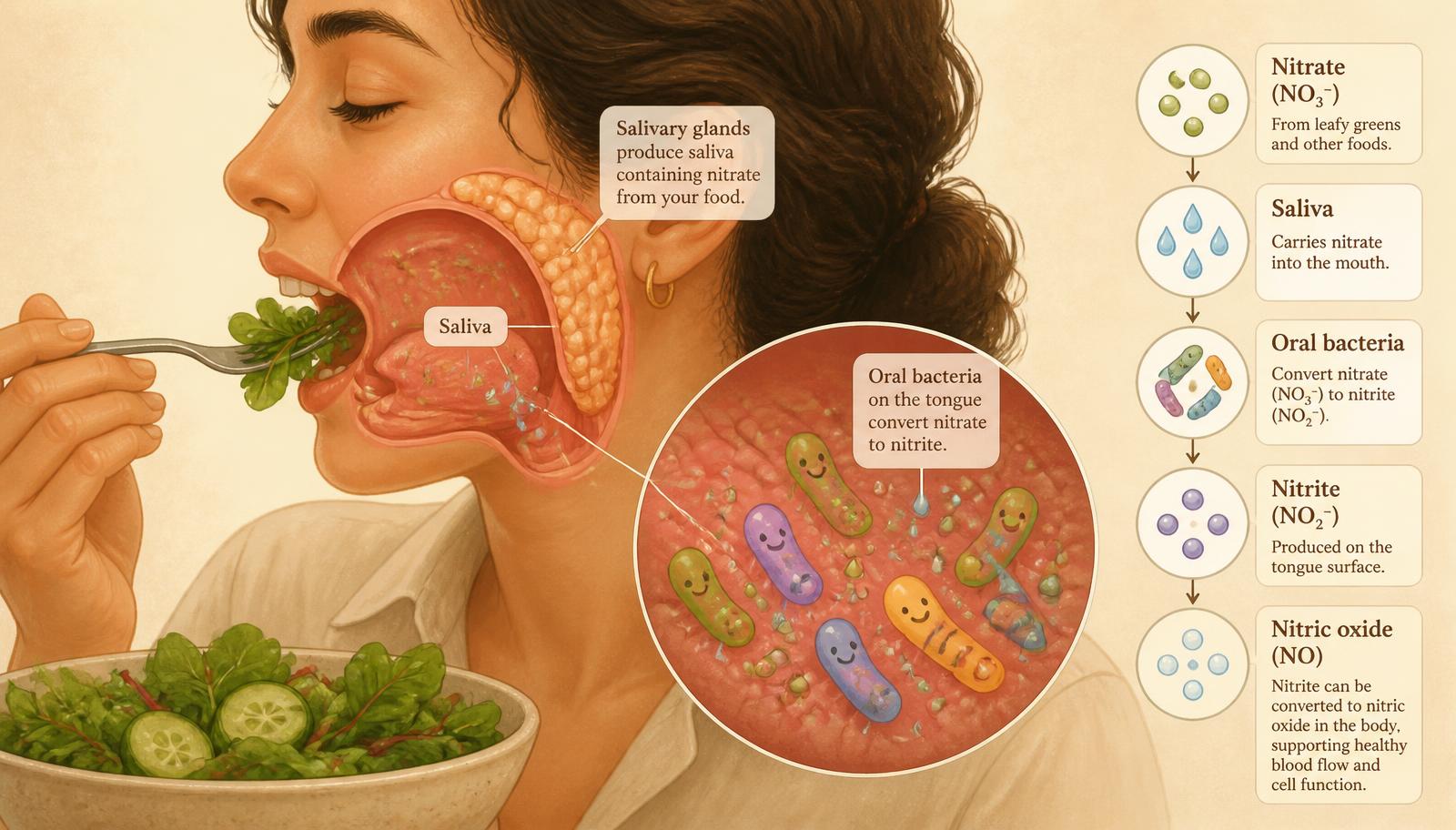
This is one of the most surprising lifestyle connections in NO science. Your mouth contains bacteria capable of converting nitrate into nitrite — an important step in the dietary nitrate pathway.
After you eat nitrate-rich vegetables, nitrate enters the bloodstream. Some is concentrated back into saliva. Nitrate-reducing bacteria on the tongue convert part of it to nitrite. That nitrite is swallowed and can participate in subsequent chemistry leading toward NO formation.
Modern reviews continue to identify the oral microbiome as an important contributor to nitrate-derived NO bioavailability. [6]
What About Antibacterial Mouthwash?
Research has shown that strong disruption of nitrate-reducing oral bacteria can suppress conversion of nitrate to nitrite. That has led to understandable interest in antiseptic mouthwash. But this subject requires common sense.
Do not stop using a medically or dentally recommended oral-care product because of an article about nitric oxide. Oral disease itself is unhealthy and can alter the oral microbiome in unfavorable ways. Healthy teeth and gums remain the priority.
Habit #7: Protect Your Sleep
Sleep may not immediately sound like a nitric-oxide habit. But vascular function does not shut down when you go to bed. Poor sleep and sleep deprivation are associated with impaired endothelial function.
A systematic review of human studies found that short sleep, sleep restriction, total sleep deprivation and shift work were associated with poorer macrovascular and/or microvascular endothelial function across many of the studies evaluated. [7]
The mechanisms are complex and probably include:
- Sympathetic nervous-system activation
- Blood-pressure changes
- Oxidative stress
- Inflammation
- Metabolic disruption
- And changes in vascular regulation
It would be an exaggeration to say "sleep more and you will produce X% more nitric oxide." Human biology is not that simple. But adequate, regular sleep belongs naturally in a lifestyle designed to support healthy endothelial function.
Habit #8: Don't Smoke
Few lifestyle behaviors work against endothelial health as strongly as smoking. Cigarette smoke exposes the vascular system to a complex mixture of reactive chemicals and contributes to:
- Oxidative stress
- Inflammation
- Endothelial dysfunction
- And reduced NO bioavailability
That makes smoking incompatible with any serious strategy for supporting cardiovascular health. Taking an NO-related supplement while continuing to smoke is not an equivalent trade. No supplement should be presented as capable of cancelling that exposure. For cardiovascular wellness, avoiding tobacco remains fundamental.
Habit #9: Pay Attention to Metabolic Health
Nitric oxide biology is connected to the body's larger metabolic environment.
- Insulin resistance
- High blood glucose
- Elevated blood pressure
- Excess visceral fat
- Poor lipid metabolism
- Chronic inactivity
These factors can interact with oxidative stress and endothelial function. Contemporary research describes reduced NO availability as one of the mechanisms linking endothelial dysfunction with a variety of cardiovascular and metabolic conditions. [1]
That means supporting healthy NO production cannot realistically be separated from supporting healthy blood pressure, healthy glucose regulation, appropriate body composition and overall cardiometabolic health.
You Don't Need a Perfect Body to Have Better Habits
"Maintain a healthy weight" can become unhelpfully simplistic. Body composition is only one factor. Someone can improve exercise capacity, blood pressure, glucose regulation, muscle strength, diet quality, sleep and cardiovascular fitness before dramatic changes appear on the scale.
The better focus is to improve the metabolic environment in which your blood vessels operate. That is a goal that can begin today.
Habit #10: Keep Your Muscle
Muscle matters increasingly with age. Loss of muscle can reduce:
- Strength
- Mobility
- Exercise capacity
- Glucose disposal
- And the amount of physical activity a person can comfortably perform
Research on vascular aging supports both aerobic and resistance activity as important components of healthy aging, although individual vascular responses vary. [9] So strength training is not merely about having bigger muscles. For adults over 50, maintaining muscle helps preserve the ability to live an active cardiovascular life.
Habit #11: Let Exercise Be Exercise
Exercise temporarily produces reactive oxygen species. That sounds alarming if we think all oxidation is harmful. But controlled oxidative signaling is part of how the body adapts to exercise. Repeated physical activity can improve endogenous antioxidant defenses and is associated with better endothelial function and NO availability with aging. [9]
This helps explain why the objective should not be to eliminate every free radical. The healthier goal is to maintain appropriate redox balance. The body needs challenge in order to adapt.
Habit #12: Stop Looking for a One-Day "NO Hack"
Many online NO recommendations promise immediate results: a special food, a breathing trick, a drink, a workout, a supplement. Some interventions really can change NO-related biomarkers acutely. But healthy-aging physiology is built over years.
Your endothelium experiences what you do repeatedly. One excellent salad does not erase months of inactivity. One workout does not overcome chronic smoking. One night of good sleep does not correct months of sleep deprivation. And one serving of a supplement is not a replacement for a cardiovascular lifestyle.
The most powerful habit may therefore be the least glamorous: consistency.
A Better Daily NO Routine
You do not need to organize your entire life around nitric oxide. Instead, build habits that support multiple aspects of health simultaneously.
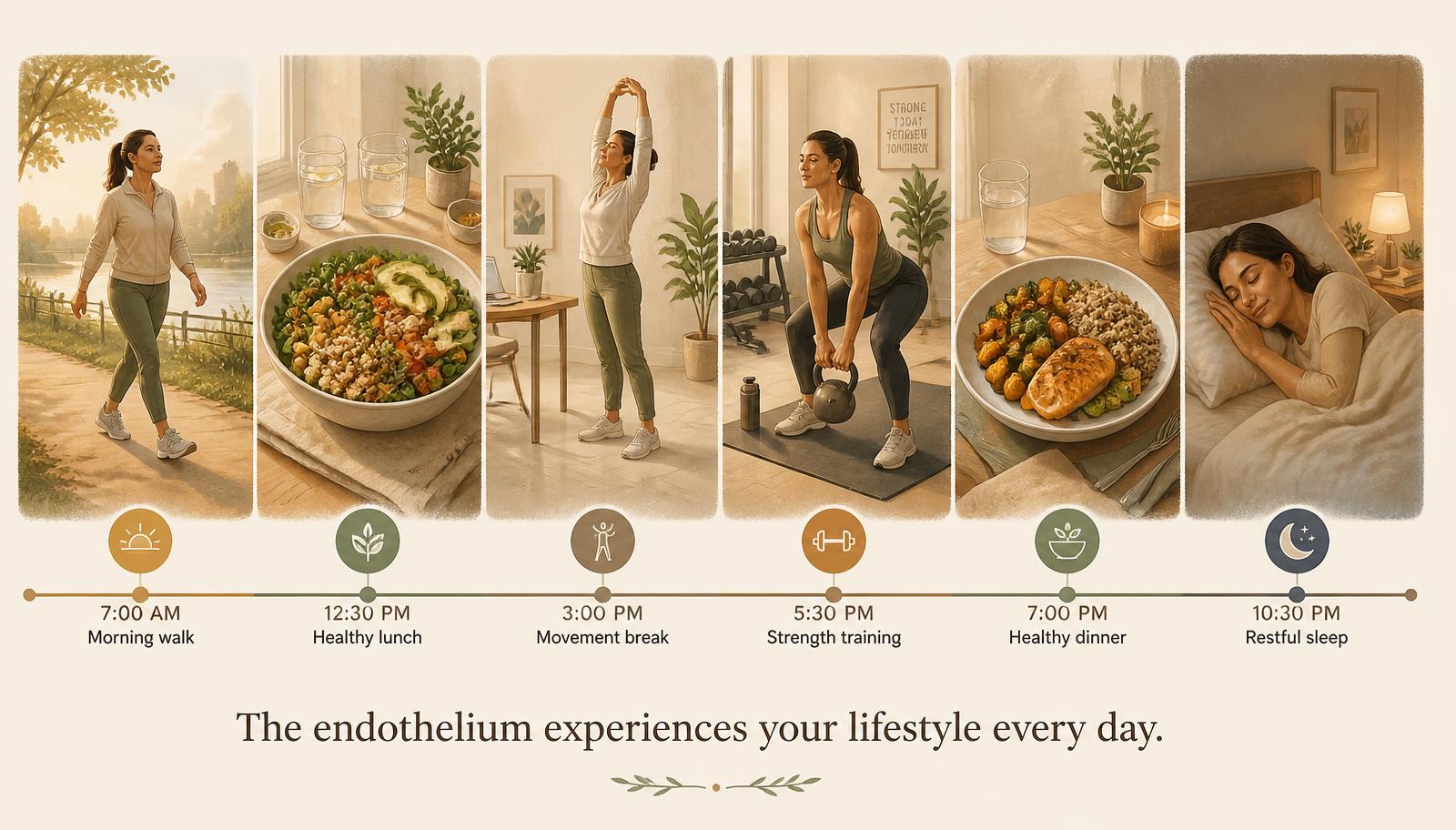
- 1
Morning
Move. Walk, exercise, stretch or do something that gets circulation working.
- 2
Throughout the day
Interrupt long sitting periods.
- 3
At meals
Eat vegetables frequently, including nitrate-rich leafy greens. Include appropriate protein and a variety of plant foods.
- 4
Several times each week
Challenge both your cardiovascular system and your muscles.
- 5
Every day
Avoid smoking. Support oral health. Pay attention to sleep.
- 6
Over time
Monitor the bigger cardiovascular picture: blood pressure, metabolic health and overall physical capacity.
This is not an NO "protocol." It is simply a healthy lifestyle viewed through the biology of nitric oxide.
Why These Habits Matter More After 50
Aging changes the margin for error. Research consistently shows that NO bioavailability and endothelial function tend to decline with advancing age. Potential contributors include:
- Increased oxidative stress
- Changes in eNOS function
- Reduced BH4 availability
- Arterial stiffening
- Metabolic changes
- And lower physical activity
A contemporary review of cardiovascular aging identifies impaired NOS activity and greater oxidative stress among the contributors to declining NO bioavailability, while highlighting interventions including exercise and dietary nitrate. [1]
This does not mean "you turn 50 and your NO disappears." It means maintaining the system becomes increasingly worth paying attention to.
The Good News: Older Blood Vessels Still Respond
This may be the most important healthy-aging message in the article. The cardiovascular system remains adaptable.
- Exercise interventions improve measures of endothelial function in many middle-aged and older adults
- Healthy dietary patterns can improve endothelial function
- Dietary nitrate can support the nitrate–nitrite–NO pathway
- Arginine availability can be nutritionally supported through both arginine and citrulline
A better perspective than "my NO declines and there is nothing I can do" is: my biology changes, so supporting it deliberately becomes more important.
Where Supplementation Fits
Lifestyle creates the foundation. Targeted supplementation can add consistency.
That distinction matters. A good supplement cannot exercise for you, make you stop smoking, put you to bed, or replace vegetables. But it can provide specific nutritional ingredients in known, repeatable amounts. And that becomes increasingly useful when daily food intake varies and when the biological system being supported may operate less efficiently with age.
Where ėNOS Fits Into a Healthy-NO Lifestyle
An important distinction: eNOS is endothelial nitric oxide synthase — the enzyme naturally involved in vascular NO production. ėNOS is a dietary supplement from Australiana Life, specifically formulated around the established science of nitric oxide and the nutritional pathways that support the body's natural NO system.
At the center of ėNOS are L-arginine and L-citrulline. Arginine provides substrate directly relevant to the eNOS pathway. Citrulline provides a complementary route toward replenishing circulating arginine availability. The formula also includes deliberately selected supporting nutrients, including magnesium and Australian plant ingredients such as Kakadu Plum and Davidson's Plum, as part of its broader cardiovascular-wellness formulation.
Lifestyle and Supplementation Should Work Together
The strongest role for ėNOS is not instead of a healthy lifestyle. It is as part of one.
Walk. Exercise. Keep your muscles. Eat leafy vegetables. Eat good food. Sleep. Don't smoke. Support your cardiovascular health. And use targeted supplementation to provide consistent nutritional support for the natural NO pathway those habits are already helping you maintain.
That is a much more complete approach than relying on either lifestyle or supplementation alone.
The Lifestyle Advantage: You Are Supporting More Than Nitric Oxide
Perhaps the most useful thing about these habits is that none of them benefits only NO. Exercise supports muscle, bone, metabolism, brain health, cardiovascular capacity and independence. Vegetables provide far more than nitrate. Sleep influences far more than endothelial function. Maintaining muscle protects far more than circulation. Avoiding smoking improves health far beyond nitric-oxide availability.
There is no need to build your life around one molecule. Build a healthy lifestyle — and nitric oxide is one of the systems likely to benefit.
Start With the Habits You Can Repeat
You do not need twelve new habits tomorrow morning. Start with what can become normal.
- Walk most days
- Sit less
- Eat more leafy greens
- Include quality protein
- Maintain your oral health
- Prioritize sleep
- Strengthen your muscles
- Avoid smoking
- Support metabolic health
- And be consistent
The human body is remarkably responsive to what it experiences repeatedly. Your cardiovascular system is no exception. Healthy nitric-oxide production is not simply something the body has. It is something your lifestyle can help support.
Scientific References
[1] Patel P, et al. Declining nitric oxide bioavailability in cardiovascular aging: mechanistic insights and emerging interventions.
2025. PMID: 41953454. Contemporary review of age-related changes in nitric-oxide production and bioavailability, including oxidative stress, NOS function, exercise and dietary nitrate.
PubMed / National Library of Medicine →[2] Chen Q, Gao X, Wang C, Zhang P. Influence of different exercise types on vascular endothelial function in middle-aged and older adults — a systematic review and network meta-analysis.
Archives of Gerontology and Geriatrics. 2025;128:105624. PMID: 39288582. Review demonstrating favorable effects of exercise on endothelial function in middle-aged and older adults.
PubMed / National Library of Medicine →[3] Harden JE, Branch JD, Reynolds LJ. Impacts of physical inactivity models on endothelial function: a systematic review.
Sports Medicine. 2025;55:1937–1952. PMID: 40388068. Systematic review showing that reduced physical activity can adversely affect endothelial and microvascular function.
PubMed / National Library of Medicine →[4] Carlström M, et al. Nitric oxide signaling and regulation in the cardiovascular system: recent advances.
Pharmacological Reviews. 2024;76(6):1038–1062. PMID: 38866562. Review of eNOS-derived NO and the complementary nitrate–nitrite–NO pathway.
PubMed / National Library of Medicine →[5] Apte M, Nadavade N, Sheikh SS. A review on nitrates' health benefits and disease prevention.
Nitric Oxide. 2023. PMID: 37981005. Review of dietary nitrate sources and nitrate-derived nitric-oxide biology.
PubMed / National Library of Medicine →[6] Kapil V, et al., and related oral-microbiome literature.
Research on the enterosalivary nitrate pathway has established the contribution of nitrate-reducing oral bacteria to nitrite and downstream NO formation. Contemporary reviews continue to examine this oral microbiome–nitrate–nitrite–NO relationship.
PubMed / National Library of Medicine →[7] Bendet A, et al.; Holmer BJ, et al. Sleep deprivation and endothelial function.
Human research and systematic-review literature associate inadequate or disrupted sleep with impaired macrovascular and microvascular endothelial function.
PubMed / National Library of Medicine →[8] Whole-food and dietary-pattern evidence.
A 2025 systematic review and meta-analysis of 133 randomized controlled trials found favorable endothelial effects (flow-mediated dilation) from several whole-food categories — vegetables, fruits, nuts and seeds — and from Mediterranean dietary patterns, while noting variability in evidence quality.
PubMed / National Library of Medicine →[9] Tanaka LY, et al., and the vascular-aging literature.
Regular physical activity is a major lifestyle strategy for countering vascular aging, with mechanisms involving oxidative stress, inflammation and nitric-oxide bioavailability.
PubMed / National Library of Medicine →
Continue the Lifestyle & Healthy Aging Journey
- Why Nitric Oxide Production Changes With Age →
Understand why supporting NO becomes increasingly relevant through midlife and beyond.
- Foods That Support Natural Nitric Oxide Production →
Explore nitrate-rich vegetables, arginine foods, watermelon and other nutritional contributors.
- Dietary Nitrates and Nitric Oxide →
Follow the remarkable vegetable → mouth → nitrite → NO pathway.
- Nitric Oxide and Exercise Performance →
See what happens to NO signaling when physical demand increases.
- Nitric Oxide and Oxidative Stress →
Understand why producing NO is only part of the story — preserving its availability matters too.
SUPPORT THE HABITS. SUPPORT THE PHYSIOLOGY.
Lifestyle remains the foundation of healthy nitric-oxide biology. ėNOS by Australiana Life complements that foundation with L-arginine + L-citrulline and deliberately selected supporting nutrients in a consistent daily formulation designed to support the body's natural nitric-oxide system, healthy circulation and cardiovascular wellness.
EXPLORE ĖNOS →This article is provided for informational purposes only and is not intended as medical advice or to diagnose, treat, cure or prevent disease. Lifestyle factors affect cardiovascular and nitric-oxide biology in complex ways, and individual needs vary. ėNOS is a dietary supplement formulated to support the body's natural nitric-oxide system, healthy circulation and cardiovascular wellness. Dietary supplements should complement, rather than replace, appropriate nutrition, physical activity and medical care.
More in Lifestyle & Healthy Aging
- Nitric Oxide & Exercise Performance
- Nitric Oxide & Exercise Recovery
- Exercise & Nitric Oxide: Why Movement Matters
- Can a Sedentary Lifestyle Affect Nitric Oxide & Circulation?
- Diet & Nitric Oxide: How Everyday Food Choices Matter
- Sleep, Cardiovascular Health & Nitric Oxide: What Do We Know?
- Smoking, Vascular Health & Nitric Oxide
- Nitric Oxide, Energy & Staying Active as We Age
- Nitric Oxide & Men's Sexual Health: The Blood-Flow Connection
- Nitric Oxide & Oral Health: The Surprising Connection
- Nitric Oxide & Aging: What Changes After 40, 50 and Beyond?
- Why Does Nitric Oxide Production Change With Age?
- Healthy Aging: Supporting Circulation, Blood Flow & Nitric Oxide After 50
- Nitric Oxide and Brain Health/Cognition
About Our Health & Science Content
Australiana Life Health & Science articles are based on published scientific research and written to make complex health and nitric oxide science easier to understand. Our educational content undergoes scientific review for accuracy and appropriate interpretation of the evidence and is updated as relevant scientific understanding evolves.