
Nitric Oxide and Exercise Recovery
What Blood Flow Can — and Cannot — Do After Your Workout
You finish the workout.
Your breathing gradually slows. Heart rate begins returning toward normal. The muscles that were working so hard finally get a break.
But your body hasn't finished. Recovery has just begun.
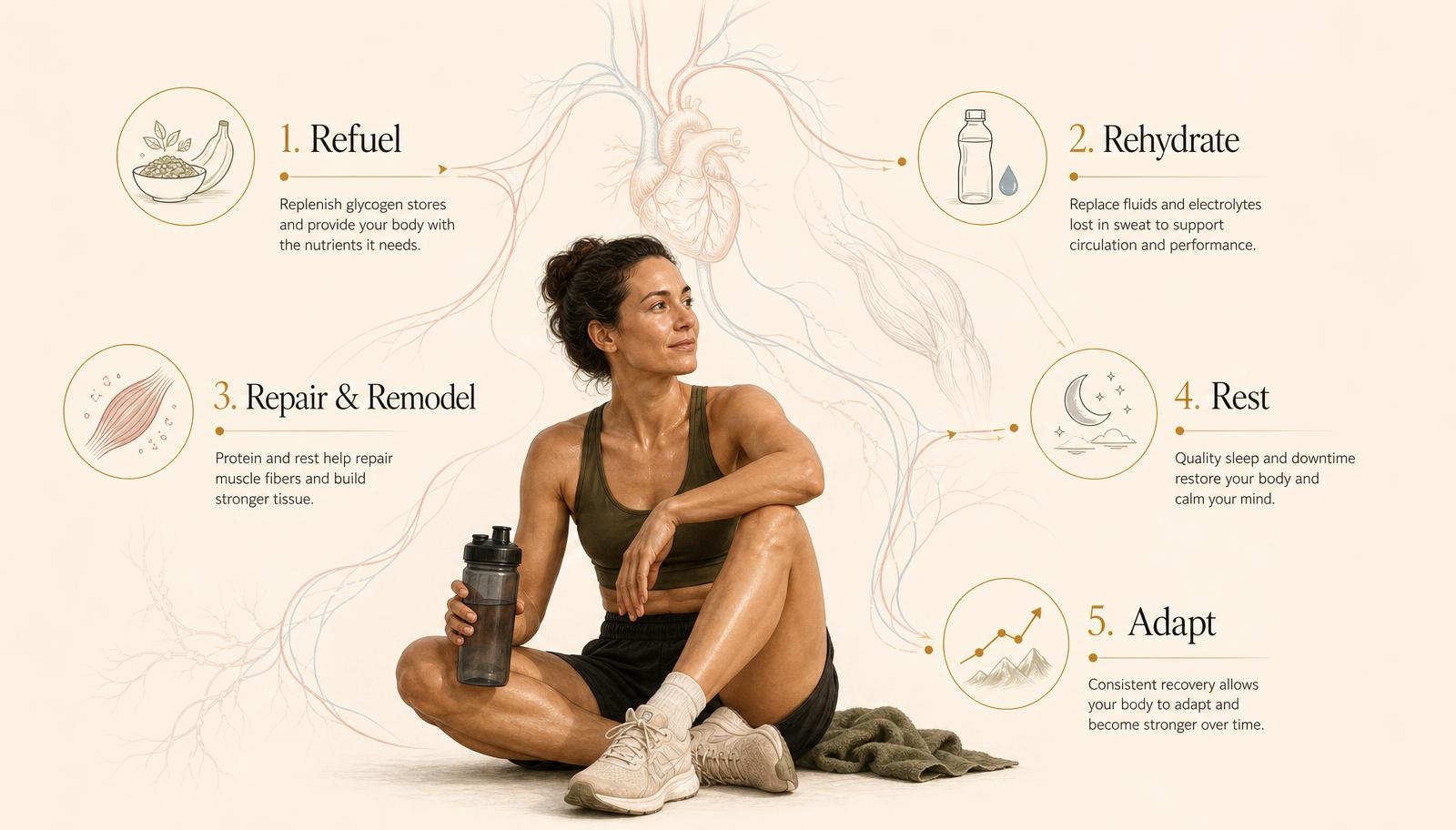
During the hours following exercise, the body is restoring energy stores, repairing and remodeling muscle tissue, replacing fluid, responding to the training stimulus and preparing itself for the next physical challenge.
Circulation is involved throughout this process.
And because nitric oxide — NO — helps regulate vascular function and blood flow, researchers have become interested in whether NO-related pathways can also influence exercise recovery.
The connection is real. But it is frequently oversimplified.
Nitric oxide does not rebuild muscle. It does not eliminate soreness. And increasing blood flow does not automatically mean faster recovery. Its role is more subtle — and more interesting.
Recovery Is Not One Thing
When people say: “I need to recover from my workout,” they may actually be describing several different processes.
- Your muscles may need to restore glycogen, one of their important stored fuels.
- Exercise may have created microscopic disruption requiring muscle remodeling and protein synthesis.
- Fluids and electrolytes may need replacing.
- The nervous system needs recovery.
- Inflammatory and immune processes participate in adaptation.
- And eventually, the body needs enough sleep to coordinate many of these processes effectively.
Recovery is therefore not one biological pathway. It is an entire post-exercise phase of adaptation.
Circulation helps provide the transportation network through which many of these processes are supported.
Blood Flow Doesn't Stop When the Workout Does
During exercise, blood flow to active muscles can increase substantially.
Once exercise ends, circulation does not immediately return to its resting state. Blood vessels in previously active tissue can remain dilated for a period, while cardiovascular regulation gradually transitions toward recovery. This post-exercise vascular response is influenced by multiple mechanisms, including local metabolites, neural regulation and nitric-oxide-related signaling. [1][2]
That transition matters because recovering tissue still requires delivery and exchange.
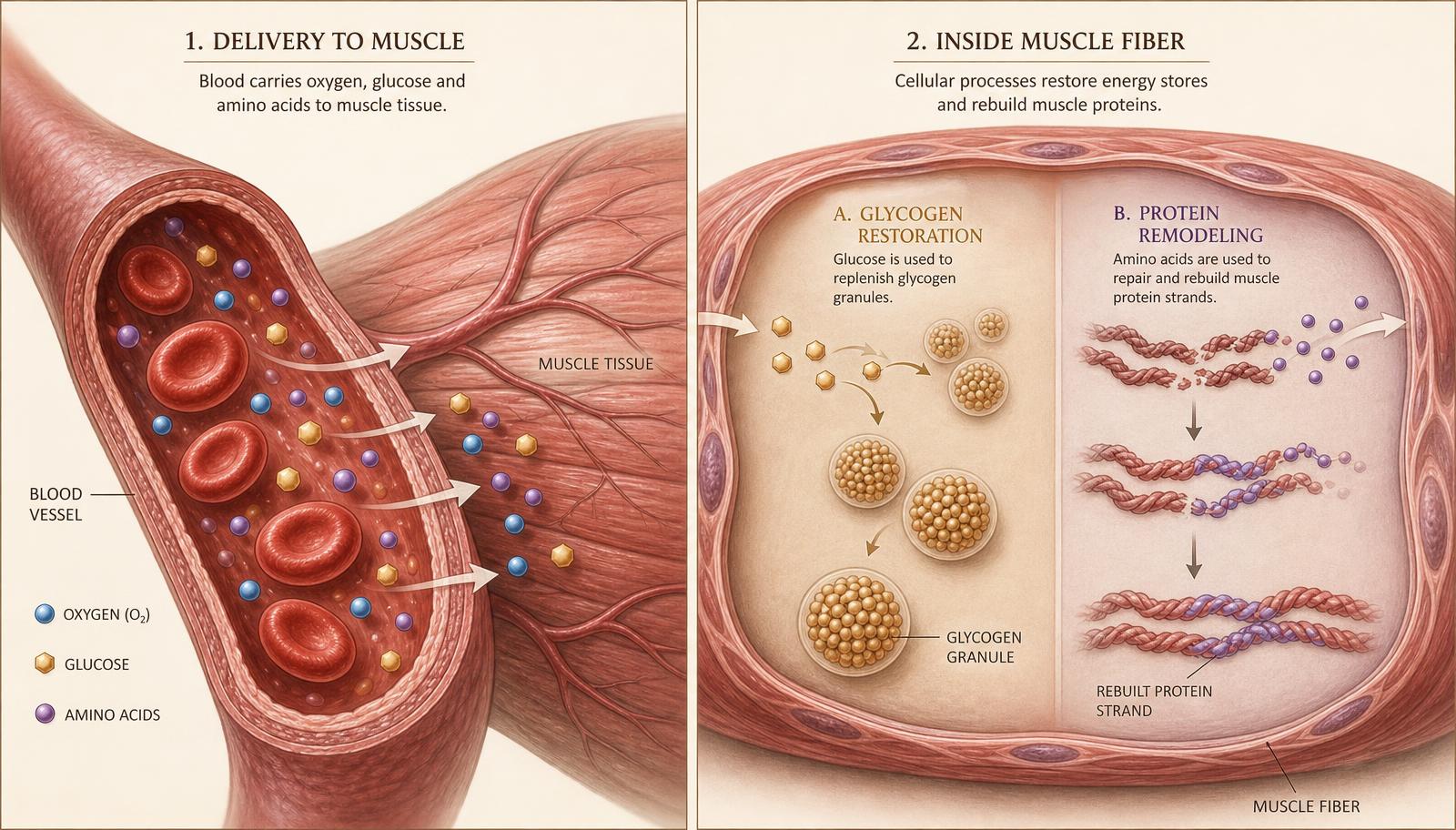
Blood continues carrying:
- oxygen
- glucose
- amino acids
- hormones
- electrolytes
- and other substances throughout the body
It also carries carbon dioxide and metabolic products away from tissues.
Circulation is therefore part of the recovery environment. But it is the transport system, not the repair crew.
Where Nitric Oxide Enters the Picture
Nitric oxide is a short-lived signaling molecule involved in vascular regulation.
Within the endothelium — the cellular lining of blood vessels — an enzyme called eNOS (endothelial nitric oxide synthase) can produce NO using L-arginine as substrate. NO then participates in signaling that influences vascular smooth-muscle relaxation and vessel diameter.
During and after exercise, NO is one of several mechanisms contributing to vascular responses.
What happens after that is where marketing claims sometimes become too ambitious.
Blood Flow Delivers the Raw Materials — It Doesn't Build the Muscle
Suppose you eat a protein-containing meal after training.
Digestion releases amino acids. Those amino acids enter the circulation. Blood transports them throughout the body. Working and recovering muscles can then use available amino acids as part of protein synthesis and tissue remodeling.
Blood flow therefore matters. But NO does not turn those amino acids into new muscle.
Similarly, glucose can be transported to muscle and used to help replenish glycogen. But NO does not itself refill glycogen stores.
Circulation delivers. Cells recover.
What About “Flushing Out Lactic Acid”?
This is one of the most persistent exercise myths.
You may have heard that increased circulation after exercise “flushes lactic acid out of the muscles.” That is not a good description of exercise physiology.
During intense exercise, lactate production increases. But lactate is not simply toxic waste sitting in muscles waiting to be flushed away. Lactate is a metabolically useful molecule. It can be transported between tissues and used as an energy substrate, and it participates in the body's broader energy metabolism. [3]
Blood lactate concentrations also generally decline relatively quickly after exercise. Meanwhile, delayed muscle soreness commonly peaks much later.
So the soreness you feel a day after a hard workout is not caused by lactic acid remaining trapped in your muscles. That matters when evaluating claims that an NO product supposedly speeds recovery by “flushing lactic acid.” The biology doesn't support that simplistic explanation.
Why Are You Sore the Next Day?
Delayed-onset muscle soreness — usually called DOMS — commonly appears after unfamiliar or demanding exercise, particularly exercise with a strong eccentric component.
Examples include:
- walking downhill
- lowering weights
- lunges
- or returning to exercise after time away
DOMS is associated with the muscle's response to mechanical stress and subsequent inflammatory and remodeling processes. It is not simply a circulation problem. And it is not caused by lactate.
This explains why increasing nitric oxide cannot reasonably be expected to make all post-exercise soreness disappear.
However, researchers have investigated whether nutritional strategies affecting blood flow, arginine availability and NO metabolism might influence some aspects of perceived soreness and recovery. The results are interesting — but mixed.
Citrulline and Muscle Soreness: What Has Research Found?
L-citrulline has attracted particular interest in recovery research. Why?
Because citrulline can be converted into L-arginine, increasing circulating arginine availability. Arginine is the substrate used by nitric oxide synthase. Citrulline therefore provides an indirect nutritional route into the arginine/NO system.
Several exercise studies have investigated citrulline malate, a combination of citrulline and malate. Some have reported reduced muscle soreness after demanding resistance exercise. For example, a frequently cited randomized study involving bench-press exercise found that citrulline malate supplementation was associated with less reported muscle soreness at 24 and 48 hours after exercise. [4]
But one study does not settle the question. Later reviews and meta-analyses have found that the overall evidence for citrulline and recovery is inconsistent, with effects depending on dose, exercise protocol and outcome measured. [5][6]
So it would be inappropriate to conclude: “Citrulline prevents muscle soreness.”
A better conclusion: citrulline has been studied for post-exercise soreness and recovery, with some promising findings but not enough consistency to guarantee an effect.
Does More Blood Flow Mean Faster Recovery?
It sounds logical. More blood flow means more nutrients. More nutrients should mean faster recovery. Therefore more blood flow must mean faster recovery.
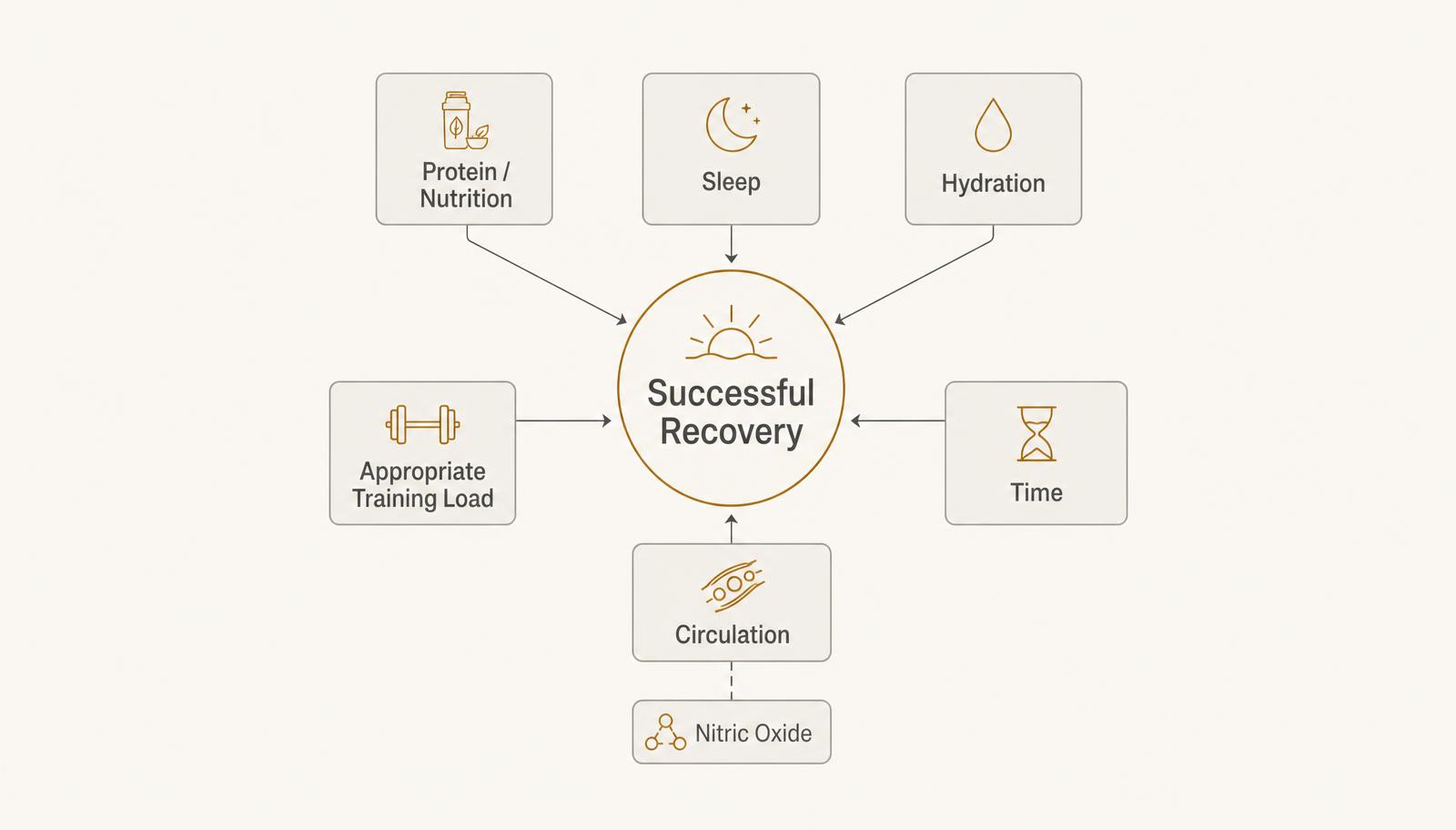
But biology does not always follow simple arithmetic. Muscle recovery can be limited by:
- training damage
- protein availability
- energy intake
- glycogen availability
- sleep
- hydration
- age
- training status
- hormonal signaling
- and the time required for cellular remodeling
Increasing one part of the delivery system does not automatically accelerate all those processes. This is why a good recovery strategy needs to be broader than: “Increase blood flow.”
The Recovery Tool That Costs Nothing: Active Recovery
After a hard workout, some people prefer complete rest. Others find gentle movement feels better. Walking, easy cycling or other low-intensity activity is commonly described as active recovery.
Active recovery keeps muscles contracting and circulation elevated compared with complete inactivity. Research suggests active recovery can accelerate blood-lactate clearance compared with passive recovery, although that does not necessarily translate into improved subsequent performance or less soreness. [7]
That's an important distinction. Something can change a physiological measurement without creating a meaningful improvement in how quickly you actually recover.
Still, gentle movement can be a practical part of a recovery routine when appropriate. For many active adults, the goal isn't another workout. It's simply: keep moving without adding significant additional stress.
Recovery After 50 Is a Different Conversation
For a 22-year-old competitive athlete, recovery might mean being ready for tomorrow's training session. After 50, the objective may be broader. Recover well enough to:
- walk again tomorrow
- play tennis later in the week
- continue strength training
- ride on the weekend
- work in the garden
- hike without lingering fatigue
- or maintain an exercise routine without constantly feeling depleted
Recovery becomes increasingly important because consistency matters more than heroic individual workouts.
A training program you repeatedly need several days to recover from may simply be too demanding for your current conditioning. The goal isn't to prove how hard you can exercise. It is to build enough fitness that you can keep exercising.

Does Age Affect Muscle Recovery?
Yes. Muscle adaptation can change with advancing age.
One important concept is anabolic resistance — the tendency for older skeletal muscle to show a reduced protein-synthetic response to certain anabolic stimuli compared with younger muscle.
This does not mean people over 50 cannot build or maintain muscle. They absolutely can. It means that:
- resistance exercise
- adequate protein
- appropriate training volume
- and recovery
become increasingly important.
Research supports resistance training combined with appropriate protein intake as an important strategy for preserving muscle mass and function with age. [8]
Nitric oxide may be part of the vascular environment supporting active muscle. But preserving muscle requires actually using the muscle.
Protein Still Deserves Top Billing
If your goal is recovery from resistance exercise, don't become so interested in NO that you forget protein.
Protein supplies essential amino acids needed for muscle-protein synthesis. For active older adults in particular, protein quantity, quality and distribution throughout the day deserve attention.
A balanced post-exercise meal might combine:
- a high-quality protein source
- carbohydrate where appropriate
- vegetables or fruit
- fluids
That single meal can address several recovery needs simultaneously. No exotic recovery stack required.
Carbohydrate Has a Job Too
Muscle stores carbohydrate as glycogen. During exercise, especially prolonged or higher-intensity activity, glycogen can be depleted. Carbohydrate consumed after exercise can contribute to glycogen restoration.
How important rapid replenishment is depends on what happens next. Someone training twice in one day has different requirements from someone taking a brisk walk every morning. For the typical active adult, an appropriate balanced diet can usually support normal glycogen restoration.
Again: NO may participate in the vascular delivery system. But glucose provides the carbohydrate substrate.
Don't Underestimate Water
Exercise creates heat. Sweating helps control body temperature. That means fluid can be lost. For longer or hotter workouts, electrolytes may also become relevant.
Dehydration can affect:
- cardiovascular strain
- perceived exertion
- exercise performance
- and recovery
So before searching for an advanced nitric-oxide recovery strategy, ask a simpler question: did I replace the fluid I lost? Basic physiology usually deserves attention before sophisticated supplementation.
Sleep May Be the Most Underrated Recovery Strategy
Recovery continues long after you finish eating your post-workout meal. Sleep influences:
- nervous-system recovery
- hormonal regulation
- metabolism
- immune function
- and muscle adaptation
Chronic inadequate sleep can compromise both exercise performance and recovery. [9]
There is no nitric-oxide strategy that substitutes for repeatedly sleeping five hours a night. That may sound obvious. Sports-nutrition marketing sometimes makes it easy to forget.
Where Dietary Nitrate Fits
Beetroot and leafy green vegetables provide dietary nitrate. The body can convert:
Most exercise research involving nitrate has focused more heavily on exercise performance, efficiency and vascular physiology than post-exercise recovery. Some studies have examined nitrate-rich interventions in relation to muscle soreness and recovery after damaging exercise, with varying results.
At present, dietary nitrate is better supported as an NO-related exercise strategy than as a guaranteed recovery intervention. [10]
That doesn't reduce the value of eating nitrate-rich vegetables. It simply keeps the claim appropriate to the evidence.
Arginine and Citrulline After Exercise
These two amino acids approach NO biology differently.
L-Arginine
is directly used as substrate by nitric oxide synthase.
L-Citrulline
is absorbed and subsequently converted into arginine, importantly through renal metabolism. Human pharmacokinetic research demonstrates that citrulline can effectively increase circulating arginine. [11]
That creates a rationale for complementary nutritional support:
- Arginine → more directly available substrate
- Citrulline → replenished arginine availability
But this should not be translated into: “Take arginine and citrulline and recover faster.”
The pathway is established. The magnitude of any exercise-recovery benefit is much less certain. Scientific credibility requires keeping those two statements separate.
What About Antioxidants After Exercise?
This is another area where more isn't always better.
Hard exercise can temporarily increase reactive oxygen species. That sounds bad. But some oxidative signaling is actually involved in the body's adaptation to exercise.
Very high doses of isolated antioxidant supplements taken chronically around training have therefore attracted concern because they may blunt some exercise-induced adaptations under certain circumstances. [12]
This doesn't mean antioxidants are bad. And it certainly doesn't mean avoid fruit and vegetables. It means: normal physiological stress is part of how training works.
The objective is not to eliminate every free radical created during exercise. Recovery involves allowing the body to respond and adapt.
The Difference Between Recovery and Adaptation
This may be the most important distinction in the article.
You don't exercise merely to return to where you started. You exercise because you want your body to adapt.
Strength training challenges muscle. The body responds by remodeling. Endurance exercise challenges cardiovascular and metabolic systems. The body responds by adapting.
Recovery is the period during which much of that adaptation takes place.
The goal isn't to recover as fast as humanly possible. It is to recover appropriately so the body can adapt and you can train consistently.
A Practical Post-Exercise Recovery Hierarchy
Before worrying about specialized NO strategies, work down this list.
1. Train appropriately
Recovery begins with not consistently exceeding what your body can adapt to.
2. Rehydrate
Replace fluid lost through exercise.
3. Eat
Provide adequate protein, energy, carbohydrate and micronutrients.
4. Move gently
When appropriate, light movement can keep circulation active without creating another hard training stimulus.
5. Sleep
Give the body time to perform the recovery processes you cannot consciously control.
6. Repeat
Consistency creates adaptation.
7. Then think about targeted nutrition
NO-related nutrition can complement the foundation. It cannot replace it.
Where ėNOS Fits Into Exercise Recovery
ėNOS by Australiana Life was designed to support the body's natural nitric-oxide system, not to promise instant recovery from exercise.
Central to the formulation are L-arginine and L-citrulline. Arginine provides substrate more directly available to the eNOS pathway. Citrulline provides a complementary route that can help replenish circulating arginine availability. The formulation also includes additional deliberately selected nutrients and Australian plant ingredients as part of its broader nutritional strategy.
For an active adult, that places ėNOS in an appropriate context:
- support the NO and vascular system consistently
- while exercise, nutrition, hydration, protein, sleep and recovery practices do their respective jobs
Tomorrow's Workout Starts Today
A good workout gets your attention. Good recovery rarely does. It happens quietly.
You eat. You drink. You rest. You sleep. Muscle remodels. Energy stores are replenished. The cardiovascular system returns toward baseline. And the body adapts.
Nitric oxide participates in that physiological environment, particularly through vascular signaling and blood-flow regulation. But it is one member of a much larger recovery team.
Perhaps the best measure of successful recovery isn't how powerful your post-workout supplement feels. It's much simpler: can you come back and move well again?
For active adults — especially after 50 — that may be the performance outcome that matters most.
Scientific References
[1] Mechanisms and clinical implications of post-exercise hypotension in humans
Halliwill JR. Exercise and Sport Sciences Reviews. 2001;29(2):65–70. Review of vascular and hemodynamic responses during the post-exercise period.
PubMed / National Library of Medicine →[2] Postexercise hypotension and sustained postexercise vasodilatation: what happens after we exercise?
Halliwill JR, Buck TM, Lacewell AN, Romero SA. Experimental Physiology. 2013;98(1):7–18. Review of sustained vasodilation and cardiovascular regulation following exercise.
PubMed / National Library of Medicine →[3] The Science and Translation of Lactate Shuttle Theory
Brooks GA. Cell Metabolism. 2018;27(4):757–785. Comprehensive review of lactate as an important metabolic intermediate rather than simply exercise waste.
PubMed / National Library of Medicine →[4] Citrulline malate enhances athletic anaerobic performance and relieves muscle soreness
Pérez-Guisado J, Jakeman PM. Journal of Strength and Conditioning Research. 2010;24(5):1215–1222. Randomized study examining resistance exercise performance and reported muscle soreness following citrulline malate.
PubMed / National Library of Medicine →[5] Effects of Citrulline Supplementation on Exercise Performance in Humans: A Review of the Current Literature
Gonzalez AM, Trexler ET. Journal of Strength and Conditioning Research. 2020;34(5):1480–1495. Review of citrulline supplementation, exercise performance, blood flow and recovery-related outcomes.
PubMed / National Library of Medicine →[6] Citrulline supplementation and post-exercise recovery: reviews and meta-analyses
Rhim HC, et al. Research reviews and meta-analyses examining citrulline supplementation and post-exercise recovery indicate heterogeneous results across exercise protocols and recovery measures.
PubMed / National Library of Medicine →[7] Active versus passive recovery and blood-lactate clearance
Ortiz RO Jr, et al. Research examining active versus passive recovery has demonstrated faster lactate clearance with appropriate low-intensity active recovery, without necessarily establishing equivalent improvements in later performance or muscle soreness.
PubMed / National Library of Medicine →[8] A systematic review, meta-analysis and meta-regression of the effect of protein supplementation on resistance training-induced gains in muscle mass and strength in healthy adults
Morton RW, Murphy KT, McKellar SR, et al. British Journal of Sports Medicine. 2018;52:376–384. Large meta-analysis supporting the interaction between resistance training and protein intake in muscle adaptation.
PubMed / National Library of Medicine →[9] Sleep Hygiene for Optimizing Recovery in Athletes: Review and Recommendations
Vitale KC, Owens R, Hopkins SR, Malhotra A. International Journal of Sports Medicine. 2019;40(8):535–543.
PubMed / National Library of Medicine →[10] Dietary Nitrate and Nitric Oxide Metabolism: Mouth, Circulation, Skeletal Muscle, and Exercise Performance
Jones AM, Vanhatalo A, Seals DR, Rossman MJ, Piknova B, Jonvik KL. Medicine & Science in Sports & Exercise. 2021;53(2):280–294. Review of dietary nitrate, NO biology, skeletal muscle and exercise physiology.
PubMed / National Library of Medicine →[11] Pharmacokinetic and pharmacodynamic properties of oral L-citrulline and L-arginine: impact on nitric oxide metabolism
Schwedhelm E, Maas R, Freese R, et al. British Journal of Clinical Pharmacology. 2008;65(1):51–59. PMID: 17662090.
PubMed / National Library of Medicine →[12] Vitamin C and E supplementation hampers cellular adaptation to endurance training in humans: a double-blind, randomized, controlled trial
Paulsen G, Cumming KT, Holden G, et al. Journal of Physiology. 2014;592(8):1887–1901. An example of research examining how high-dose antioxidant supplementation can interact with exercise adaptation.
PubMed / National Library of Medicine →
Continue the Active-Living Series
- Nitric Oxide and Exercise Performance →
See what happens to NO signaling, oxygen delivery and working muscle while you're exercising.
- Healthy Circulation After 50: Why Blood Flow Matters →
Explore why maintaining vascular responsiveness becomes increasingly relevant with age.
- L-Arginine + L-Citrulline: Two Pathways Supporting Nitric Oxide →
Understand the complementary metabolism of the two amino acids.
- Foods That Support Natural Nitric Oxide Production →
Explore nitrate-rich vegetables, arginine-containing foods and dietary sources of citrulline.
- Nitric Oxide and Aging: What Changes After 40, 50 and Beyond? →
See how NO biology and endothelial function change through midlife and beyond.
- Support an Active Life, Not Just a Workout →
Discover how the science of nitric oxide and complementary amino-acid metabolism influenced the formulation philosophy behind ėNOS.
SUPPORT AN ACTIVE LIFE, NOT JUST A WORKOUT
Discover how the science of nitric oxide and complementary amino-acid metabolism influenced the formulation philosophy behind ėNOS.
EXPLORE ĖNOS →This article is provided for educational purposes only and is not intended as medical advice or to diagnose, treat, cure or prevent disease. Research on nitric-oxide-related nutrients and exercise recovery is mixed, and individual responses vary. ėNOS is a dietary supplement and should complement rather than replace appropriate training, nutrition, hydration, sleep, recovery practices or medical care.
More in Lifestyle & Healthy Aging
- Nitric Oxide & Exercise Performance
- Lifestyle Habits That Support Healthy Nitric Oxide Production
- Exercise & Nitric Oxide: Why Movement Matters
- Can a Sedentary Lifestyle Affect Nitric Oxide & Circulation?
- Diet & Nitric Oxide: How Everyday Food Choices Matter
- Sleep, Cardiovascular Health & Nitric Oxide: What Do We Know?
- Smoking, Vascular Health & Nitric Oxide
- Nitric Oxide, Energy & Staying Active as We Age
- Nitric Oxide & Men's Sexual Health: The Blood-Flow Connection
- Nitric Oxide & Oral Health: The Surprising Connection
- Nitric Oxide & Aging: What Changes After 40, 50 and Beyond?
- Why Does Nitric Oxide Production Change With Age?
- Healthy Aging: Supporting Circulation, Blood Flow & Nitric Oxide After 50
- Nitric Oxide and Brain Health/Cognition
About Our Health & Science Content
Australiana Life Health & Science articles are based on published scientific research and written to make complex health and nitric oxide science easier to understand. Our educational content undergoes scientific review for accuracy and appropriate interpretation of the evidence and is updated as relevant scientific understanding evolves.