
Nitric Oxide and Oral Health: The Surprising Connection
How the Oral Microbiome, Dietary Nitrate and Healthy Gums Connect the Mouth to Nitric-Oxide Biology
When most people think about nitric oxide, they think about the heart, arteries, blood flow, exercise or circulation. They probably do not think about the bacteria living on their tongue. But they should.
The human mouth plays an unexpectedly important role in one of the body's two major pathways for producing nitric oxide. Certain naturally occurring oral bacteria can take nitrate — derived largely from vegetables — and convert it into nitrite. That nitrite can then participate in further reactions that generate nitric oxide, or NO.
This means the mouth is not simply the beginning of digestion. It is an active biological participant in nitric-oxide metabolism. Modern research increasingly describes this relationship as the oral microbiome–nitrate–nitrite–nitric oxide axis, and the emerging science connects it not only with cardiovascular physiology but potentially with oral health itself. [1] [2] [3] [4]
Your Mouth Contains an Ecosystem
The mouth is home to hundreds of microbial species living on the tongue, teeth, gums, cheeks and other oral surfaces. The word bacteria often makes us think immediately of disease, but that is too simple. Some oral bacteria can contribute to dental decay, gum disease or other oral problems. Others live as part of a normal, balanced oral ecosystem. And some perform potentially useful metabolic functions.
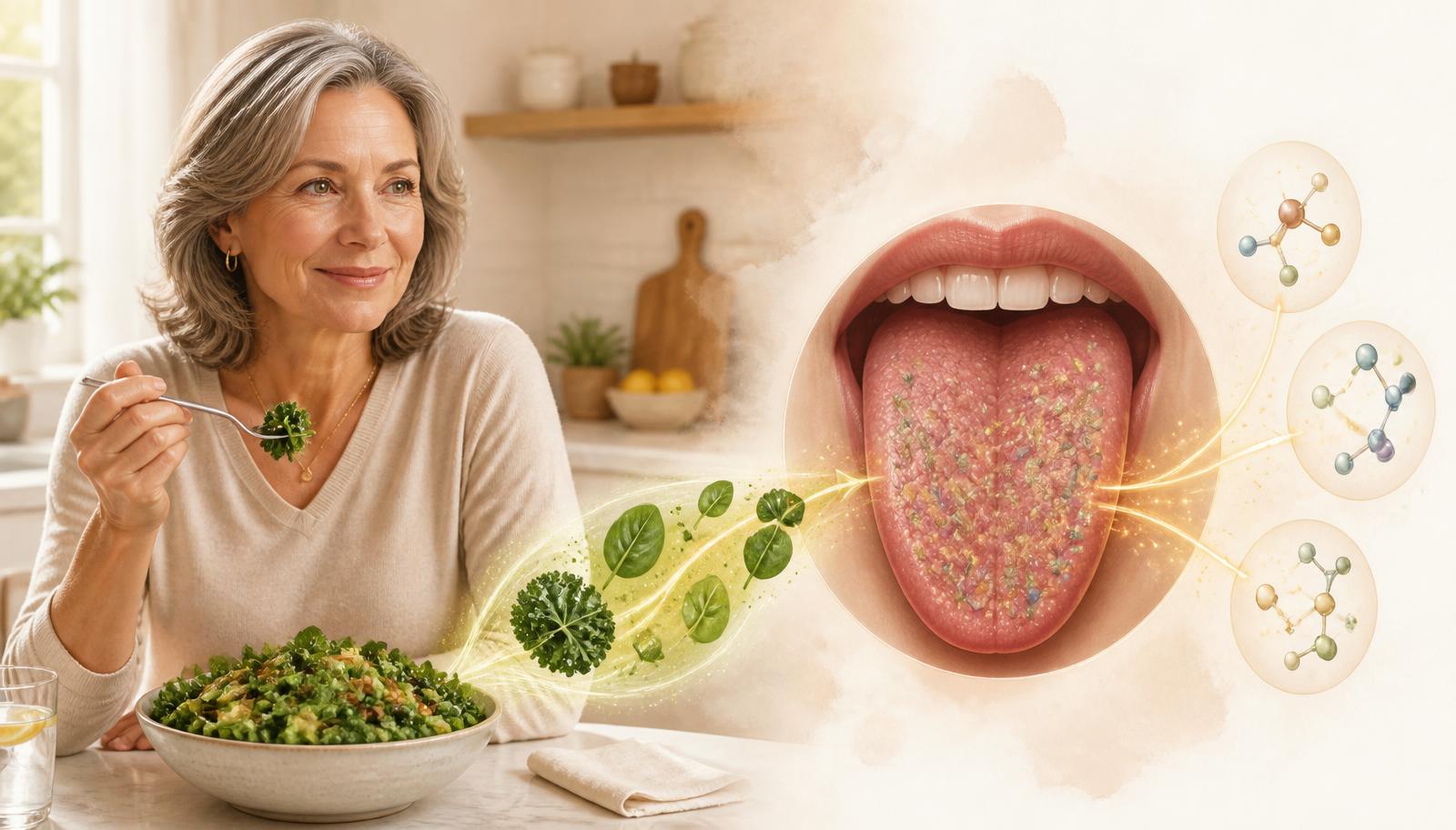
One of those functions is converting nitrate into nitrite. Humans are relatively inefficient at carrying out this first reduction step ourselves. Certain bacteria — living particularly toward the back of the tongue — possess nitrate-reductase enzymes capable of doing it for us. [3] [5]
This is a remarkable example of cooperation between human physiology and the human microbiome.
The Journey Starts With Vegetables
Many vegetables naturally contain nitrate. Especially useful sources can include:
- Arugula / rocket
- Spinach
- Lettuce
- Beetroot
- Celery
- Other leafy greens
After these foods are eaten, nitrate is absorbed from the digestive system into the bloodstream. But the story does not end there. The salivary glands actively concentrate part of that circulating nitrate and return it to the mouth through saliva. This creates a cycle known as enterosalivary circulation.
The mouth is therefore not merely where the vegetables entered. It becomes an active processing station for part of their NO-related chemistry. [2] [5]
Why Can't the Body Simply Do This Without Bacteria?
The human body has sophisticated mechanisms for producing nitric oxide. But humans lack the same efficient nitrate-reductase activity used by certain bacteria to convert nitrate directly into nitrite. That creates an unusual biological partnership: we supply the bacteria with nitrate, the bacteria perform chemistry that we perform poorly ourselves, and the resulting nitrite becomes available for further NO-related metabolism.
Researchers have identified multiple oral bacterial groups with nitrate-reducing capacity, including species within genera such as: [5]
- Neisseria
- Rothia
- Veillonella
- Actinomyces
- Haemophilus
The exact composition differs among individuals. That may help explain why two people can eat the same nitrate-rich food yet produce different biological responses.
This Is Different From the eNOS Pathway
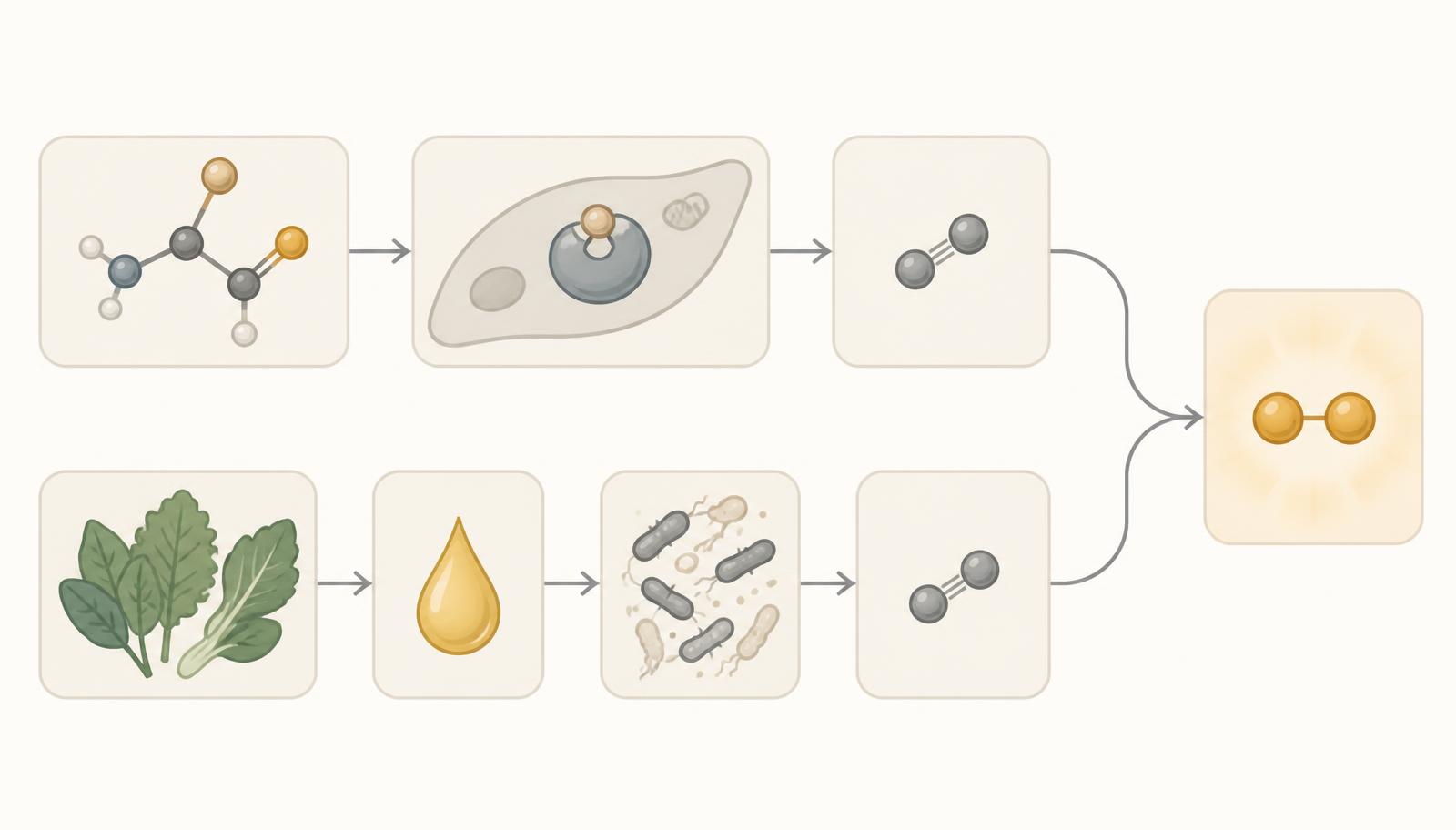
This distinction is central to understanding nitric-oxide nutrition. The body has another important NO pathway involving the enzyme eNOS — endothelial nitric oxide synthase.
So we have two complementary routes:
The Arginine / eNOS Route
Uses L-arginine and the body's own nitric-oxide-synthase machinery inside endothelial cells.
The Nitrate / Nitrite Route
Uses dietary nitrate and depends substantially on oral bacteria for the nitrate-to-nitrite step. Both eventually contribute to the larger biology of nitric oxide. But they get there differently.
Could Nitrate-Reducing Bacteria Be Good for the Mouth Too?
Researchers initially focused heavily on oral nitrate-reducing bacteria because of their possible effects on blood pressure, vascular function and systemic NO availability. But growing evidence suggests that nitrate metabolism may also influence the oral environment itself.
A 2024 systematic review found that nitrate exposure tended to increase some bacteria associated with oral health, including Neisseria and Rothia, while some studies reported reductions in organisms associated with periodontal disease. The authors described dietary nitrate as having potential prebiotic-like effects on the oral microbiome, although the clinical evidence is still developing. [6]
This does not mean nitrate is a treatment for gum disease. But it suggests the relationship between nitrate and the mouth may work in both directions: oral bacteria help us metabolise nitrate, while nitrate may help influence which oral bacteria thrive.
Nitrite and Nitric Oxide May Also Influence Oral Ecology
Nitrite is not merely an intermediate on its way toward systemic nitric oxide. Under appropriate conditions in the mouth, nitrite-derived chemistry may have antimicrobial and pH-regulating effects. NO and related nitrogen species can inhibit certain microorganisms, and researchers have proposed that bacterial nitrate metabolism may help reduce acidification within dental biofilms — potentially making the environment less favourable to some acid-producing bacteria involved in dental caries.
A 2022 review of nitrate reduction and oral health described evidence suggesting that nitrate metabolism may help suppress certain periodontal organisms, reduce acidification and influence compounds involved in bad breath. [7]
These are intriguing mechanisms. They should not be translated into the claim, "eat nitrate and you won't get cavities or gum disease." The evidence does not support that conclusion.
A 2025 Review Strengthened the Oral-Health Connection
A 2025 review specifically examining nitrate metabolism and periodontal health described a potentially important relationship. Vegetable-derived nitrate can encourage production of nitrite and NO within the oral ecosystem. In appropriate physiological amounts, this chemistry may contribute to microbial regulation, immune signalling and a healthier periodontal environment.
At the same time, chronic periodontal inflammation creates oxidative stress, reactive nitrogen species and altered microbial communities that can actually reduce healthy NO bioavailability. [8]
More Nitric Oxide Is Not Always Better — Especially During Inflammation
It would be easy to write "NO is good for gums." But that would be an oversimplification. The body has several nitric-oxide-synthase enzymes. One is eNOS, strongly associated with normal vascular physiology. Another is iNOS — inducible nitric oxide synthase.
During inflammation, immune and other cells can produce much larger amounts of NO through iNOS-related pathways. That is part of the body's defence response. But in an environment containing substantial oxidative stress, NO can react with other molecules and produce reactive nitrogen species.
So researchers have sometimes found elevated nitrate or nitrite markers in periodontal disease. That does not mean periodontal disease is producing "healthy extra NO." It reflects a very different inflammatory environment. [8] [9]
Nitric oxide works best as a regulated biological signal. More is not automatically better.
Healthy Gums and Healthy NO Biology Are Not Opposing Goals
Learning that beneficial nitrate-reducing bacteria live in the mouth might tempt someone to think, "maybe I shouldn't clean my mouth too well." That would be the wrong conclusion. Good oral health remains essential. That means:
- Brushing
- Cleaning between teeth
- Appropriate tongue hygiene
- Regular dental care
- Treating periodontal disease when present
Periodontal disease represents chronic inflammatory disruption of the oral environment. That is not the kind of microbiome we are trying to preserve. The goal is not more bacteria. It is a healthier microbial balance.
Periodontal Disease May Matter Beyond the Mouth
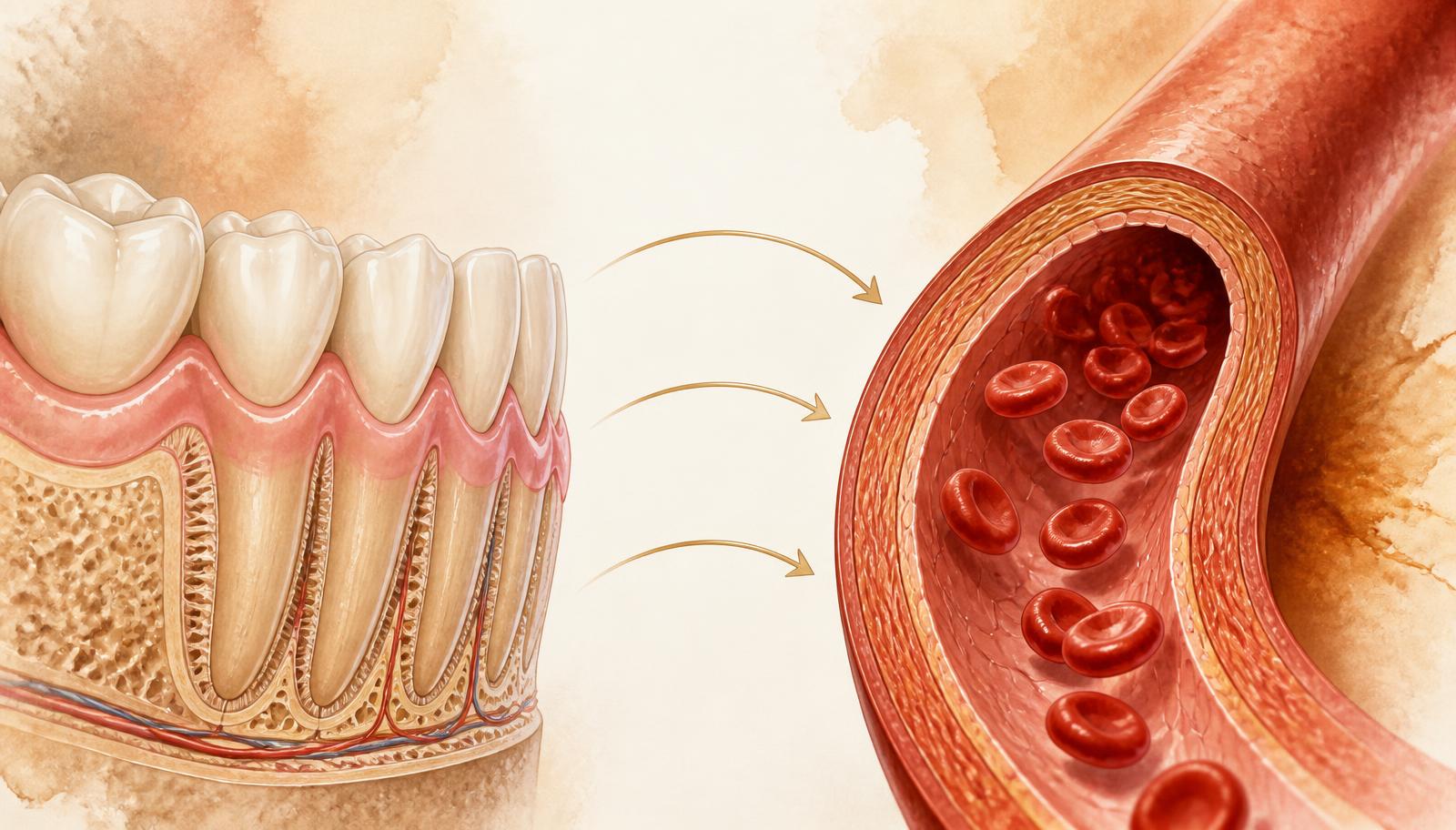
Periodontitis is a chronic inflammatory disease affecting the tissues supporting the teeth. It has also attracted substantial interest because of associations with systemic cardiovascular health.
A 2026 systematic review and meta-analysis found that people with periodontitis showed evidence of impaired endothelial function compared with controls. In the included intervention studies, periodontal therapy was associated with improvement in flow-mediated dilation, although the number of studies was limited and the results were heterogeneous. [10]
This does not prove that gum disease directly causes cardiovascular disease. The relationship involves shared factors including smoking, age, metabolic health, inflammation, and socioeconomic and lifestyle factors. But it reinforces an increasingly important idea: the mouth is not biologically isolated from the rest of the body.
Inflammation May Be One of the Bridges
Chronic periodontal inflammation can release inflammatory signals into the systemic circulation. Periodontitis is also associated with oxidative stress, microbial dysbiosis and changes in vascular markers. Those factors can create a less favourable environment for endothelial NO signalling.
A 2025 umbrella review evaluating periodontal treatment and cardiovascular biomarkers found evidence for improvements in several inflammatory and vascular measures following periodontal therapy, although certainty varied and more rigorous trials remain necessary. [11]
This makes healthy gums part of a broader healthy-aging strategy — not because brushing your teeth directly "boosts nitric oxide," but because controlling chronic oral inflammation supports a healthier systemic environment.
Now for the Mouthwash Question
This is probably the most surprising practical issue in oral NO science. Researchers have found that some strong antiseptic mouthwashes, particularly chlorhexidine-based products, can substantially reduce oral bacteria involved in nitrate conversion. If nitrate-reducing bacteria are suppressed, less nitrate may be converted into nitrite, which can reduce downstream nitrate-derived NO production.
Human studies have reported reductions in salivary or plasma nitrite following antibacterial mouthwash use, and some have observed small increases in blood pressure. A 2024 systematic review and meta-analysis examined the relationship between antiseptic mouth-rinse use and blood-pressure changes, reflecting growing concern that broad suppression of oral bacteria can interfere with the enterosalivary nitrate pathway. [12]
Should You Stop Using Mouthwash?
No — not based on an internet article. Antiseptic mouthwashes can have legitimate dental uses. Chlorhexidine, for example, may be recommended for periodontal treatment, oral surgery, infection control or other specific dental circumstances. If a dentist or physician has advised its use, do not discontinue it because of nitric-oxide research without discussing the issue with them.
The science does suggest that indiscriminate, long-term attempts to sterilise the oral microbiome may have biological consequences. But that is very different from saying "mouthwash is bad." The appropriate product, reason, frequency and duration matter.
Not All Mouthwash Is the Same
Mouthwash is a product category, not one chemical. Products differ in:
- Active ingredients
- Antimicrobial strength
- Alcohol content
- Fluoride
- Purpose
- Effect on oral bacteria
Much of the nitrate-pathway research has involved strong antibacterial rinses such as chlorhexidine. It would therefore be scientifically inappropriate to assume every rinse has the same effect. The useful question is not "should I never use mouthwash?" It is "am I using an oral-care product that I actually need, for the purpose it was designed for?"
What About Tongue Cleaning?
The back of the tongue is a particularly important habitat for nitrate-reducing bacteria. That raises another seemingly contradictory question: does cleaning the tongue remove the bacteria we need?
The relationship appears more complicated than that. One human study examining tongue-cleaning habits found that tongue-cleaning frequency influenced the microbial community and its response to chlorhexidine. Regular cleaning did not simply eliminate useful bacteria; microbial communities adapted, and nitrate-reducing organisms remained part of the ecology. [13]
Normal oral hygiene is not the enemy. Aggressive attempts to sterilise the oral ecosystem are a different issue from keeping the tongue and mouth clean.
Good Oral Hygiene and a Healthy Microbiome Can Coexist
The goal is not to preserve plaque because bacteria might be useful. Plaque accumulation can support microbial communities associated with gingivitis, periodontitis and tooth decay. A healthy oral ecosystem depends partly upon regular cleaning, saliva, diet, pH, immune function and microbial competition.
Think of it like a garden. A healthy garden contains microorganisms. That doesn't mean you stop maintaining the garden. You are trying to support a balanced ecosystem, not uncontrolled growth.
Diet Helps Shape the Oral Microbiome Too
What you eat repeatedly influences which microorganisms have favourable conditions to grow. A diet frequently exposing the mouth to fermentable sugars and prolonged acidic conditions creates a different environment from one rich in vegetables, fibre and minimally processed foods.
Nitrate-rich vegetables add another dimension. The 2024 systematic review of nitrate and the oral microbiome found that nitrate may favour certain bacteria associated with oral health and reduce some potentially unfavourable organisms. [6] So one of the same dietary habits already associated with cardiovascular health — eating vegetables — may also help shape the oral ecosystem through nitrate metabolism.
This Makes Leafy Greens Even More Interesting
Consider what happens when you eat a spinach or arugula salad. You are not only receiving vitamins, minerals, fibre and plant compounds. You may also be providing nitrate that enters the circulation, returns to saliva, feeds nitrate-reducing oral bacteria, becomes nitrite and contributes toward NO biology.
That is an extraordinary amount of biological activity from an ordinary meal. The useful lesson is not to obsess over nitrate milligrams. It is that vegetables interact with human physiology in ways far more sophisticated than their calorie count suggests.
Oral Bacteria May Become Even More Interesting After 50
Aging changes the oral environment. Factors can include:
- Changes in saliva
- Medications
- Dental restorations
- Tooth loss
- Periodontal health
- Diet
- Immune function
- Microbial composition
A 2025 systematic review confirmed that the human oral microbiome changes with aging, although the specific patterns differ between populations and studies. [14] That makes oral health increasingly worth protecting as we grow older — and NO research adds another reason to pay attention.
A 2025 Study Found Age-Related Differences in the Nitrate Pathway
Researchers recently compared younger adults aged 18–30 with older adults aged 67–79. Participants completed interventions involving nitrate-rich beetroot juice, placebo and antiseptic mouthwash. The oral microbiomes of younger and older adults responded differently to dietary nitrate. Interestingly, nitrate supplementation reduced mean arterial pressure in the older group but not the younger group under the study conditions, and changes were associated with plasma nitrite and with changes in specific oral bacterial communities. [15]
This does not mean every older adult should begin drinking beetroot juice. But it provides an intriguing demonstration that the oral microbiome, nitrate metabolism and cardiovascular physiology continue to interact later in life.
The Mouth May Be One Reason People Respond Differently to Nitrate
Imagine two people eat exactly the same nitrate-rich meal. Their nitrate intake is identical, but their oral microbiomes are different. One person may have a microbial community with substantial nitrate-reducing capacity; another may have less. They may also differ in salivary flow, oral health, age, medications, diet, smoking and mouthwash use.
So their downstream nitrite and NO responses may not be identical. This may help explain some of the person-to-person variation seen in dietary-nitrate studies. The food matters. But so does the biology processing it.
Can We Test Our Oral "NO Bacteria"?
Commercial microbiome testing is developing rapidly, but this is still an emerging field. At present, there is no widely accepted clinical test that can tell an otherwise healthy person, "your oral NO microbiome score is 82%, so you need to do X." Researchers can identify bacterial communities and nitrate-reduction capacity in laboratory studies; turning those findings into routine personalised health recommendations requires much more evidence. For now, the practical lifestyle recommendations remain surprisingly conventional.
A Sensible Oral-Health Strategy for Healthy NO Biology
- Keep your mouth healthy — brush appropriately and clean between teeth.
- Don't ignore bleeding gums — persistent bleeding or swelling deserves dental attention.
- Eat vegetables regularly — especially leafy greens and other nitrate-rich choices.
- Don't try to sterilise your mouth — a healthy mouth contains bacteria.
- Use antiseptic products for a reason — especially stronger rinses.
- Follow dental advice — do not stop recommended treatment because of NO research.
- Don't smoke — smoking damages both oral and vascular health.
- Stay hydrated — normal saliva is part of the enterosalivary nitrate cycle.

Is Nitric Oxide Good for Oral Health?
The best answer is: potentially, in the right biological context.
Physiological nitrate-derived NO and related chemistry may contribute to:
- Microbial balance
- Antimicrobial defence
- pH regulation
- Immune signalling
But NO biology in inflammatory periodontal disease is more complicated. High levels of reactive nitrogen products during inflammation are not equivalent to normal regulated NO signalling. So this is another example where more NO is not automatically better. Healthy regulation is the goal.
Can Better Oral Health Increase Nitric Oxide?
That question also requires nuance. Treating oral disease can improve the oral environment. Maintaining a healthy microbiome can preserve nitrate-reduction capacity. Avoiding unnecessary disruption of nitrate-reducing organisms may support the dietary nitrate pathway. But we should not promise that "flossing raises nitric oxide" — that goes beyond the evidence.
The stronger conclusion is this: good oral health helps preserve one of the biological environments involved in normal nitrate metabolism and systemic NO biology.
The Mouth Is Only One NO Pathway
If the oral nitrate pathway were the body's only method of producing NO, disrupting oral nitrate conversion would be an even bigger problem. Fortunately, it isn't. Remember the two major routes.
The body has complementary systems. This becomes especially relevant when thinking about a comprehensive healthy-aging strategy.
Where ĖNOS Fits
An important naming distinction: eNOS is endothelial nitric oxide synthase — the natural enzyme involved in one of the body's major nitric-oxide-production pathways. ėNOS is a dietary supplement from Australiana Life, specifically formulated around nitric-oxide science to provide nutritional support for the body's natural NO system, healthy circulation and cardiovascular wellness.
Its central ingredients include L-arginine + L-citrulline. Arginine provides the direct substrate used by eNOS. Citrulline provides a complementary metabolic route toward replenishing circulating arginine availability. That means the core ėNOS strategy supports the arginine/eNOS side of NO biology, rather than depending upon oral bacteria to convert dietary nitrate.
Why That's a Useful Complement to a Healthy Diet
A nitrate-rich vegetable diet can support the nitrate → oral bacteria → nitrite → NO pathway. ėNOS provides targeted nutritional support relevant to the arginine → eNOS → NO pathway. These are not competing ideas. They are complementary aspects of human NO biology.
That makes a lifestyle combining vegetables, good oral health, regular activity and targeted nutritional support a more comprehensive approach than relying on a single source or mechanism.
ĖNOS Is Not an Oral-Health Treatment
ėNOS is not formulated to treat gum disease, cavities, periodontal disease or other dental conditions. Its purpose is broader: to support the body's natural nitric-oxide system, healthy circulation and cardiovascular wellness. The oral-health connection matters because it helps us understand just how interconnected NO biology is.
Why Multiple NO Pathways May Matter More After 50
Nitric-oxide bioavailability tends to become less efficient with advancing age. At the same time:
- The oral microbiome changes
- Endothelial function changes
- Diet can become less consistent
- Medication use often increases
- Physical activity may decrease
This does not mean an older body loses its ability to produce NO. It means supporting healthy NO biology from multiple sensible directions becomes increasingly worthwhile: regular exercise, nitrate-rich vegetables, good oral health, avoiding smoking, healthy sleep, and targeted support for the arginine/eNOS pathway.
Your Dentist May Be Part of Your Healthy-Aging Team
Healthy aging usually brings to mind physicians, exercise, nutrition and cardiovascular screening. Perhaps dentistry belongs more clearly on that list. Healthy teeth help maintain good nutrition. Healthy gums reduce an important source of chronic oral inflammation. Saliva and the oral microbiome participate in nitrate metabolism. And emerging research continues to investigate relationships between periodontal health, endothelial function and cardiovascular physiology.
The mouth should not be treated as though it exists separately from the body — because biologically, it doesn't.
Your Mouth Is Doing More Than You Think
Every time you eat nitrate-rich vegetables, an extraordinary biological partnership can begin. Plants supply nitrate. Your digestive system absorbs it. Your blood carries it. Your salivary glands concentrate it. Your oral bacteria transform it. And the resulting nitrite can contribute to downstream nitric-oxide production.
Humans and microbes working together. It is one of the more surprising chapters in modern NO science, and it gives us another reason to view oral health as part of whole-body health.
The Better Goal Is a Healthy Mouth — Not a Sterile One
Oral care used to be framed largely as "kill bacteria." Modern microbiome science is giving us a more sophisticated understanding. Some bacteria contribute to disease. Some contribute useful metabolic functions. And their relationships with one another matter.
The objective should therefore not be to preserve every microorganism, nor to eliminate everything living in the mouth. The better goal is a healthy oral ecosystem. Brush. Clean between your teeth. Address gum disease. Eat well. Follow appropriate dental advice. And allow the normal biology of the mouth to remain part of the body's larger physiological system.
Because when it comes to nitric oxide, your mouth is not just where the pathway starts. It is part of the pathway itself.
Scientific References
[1] Salama RAA, Msalat OF, Fouad MM, et al. The Oral Microbiome–Nitrate–Nitrite–Nitric Oxide Axis and Cardiovascular Health: A Narrative Review.
Journal of Clinical Medicine. 2026;15(13):4871. PMID: 42452334. Contemporary review describing the oral microbiome's role in dietary nitrate metabolism, NO bioavailability and vascular physiology, while emphasising that much of the cardiovascular evidence still involves surrogate outcomes.
PubMed / National Library of Medicine →[2] Washio J, Takahashi N. Nitrite Production from Nitrate in the Oral Microbiome and Its Contribution to Oral and Systemic Health.
Advances in Experimental Medicine and Biology. 2025;1472:89–101. PMID: 40111687. Review of oral bacterial nitrate reduction, enterosalivary nitrate circulation and potential oral and systemic effects of nitrite-derived chemistry.
PubMed / National Library of Medicine →[3] Hezel MP, Weitzberg E. The oral microbiome and nitric oxide homoeostasis.
Oral Diseases. 2015. PMID: 23837897. Influential review describing the oral cavity as a critical site in the nitrate–nitrite–NO pathway.
PubMed / National Library of Medicine →[4] Koch CD, Gladwin MT, Freeman BA, et al. Enterosalivary nitrate metabolism and the microbiome: intersection of microbial metabolism, nitric oxide and diet in cardiac and pulmonary vascular health.
Free Radical Biology and Medicine. 2017. PMID: 27890861. Research establishing dietary nitrate metabolism as an important complement to endogenous NOS-derived nitric oxide.
PubMed / National Library of Medicine →[5] Hyde ER, Andrade F, Vaksman Z, et al. Metagenomic analysis of nitrate-reducing bacteria in the oral cavity: implications for nitric oxide homeostasis.
PLoS ONE. 2014. PMID: 24670812. Identified multiple oral bacterial species capable of reducing nitrate and helping support enterosalivary nitrate metabolism.
PubMed / National Library of Medicine →[6] Rosier BT, et al. The effects of nitrate on the oral microbiome: a systematic review investigating prebiotic potential.
Journal of Oral Microbiology. 2024. PMID: 38420038. Systematic review finding that nitrate exposure often increased health-associated bacteria such as Neisseria and Rothia while influencing species associated with oral disease.
PubMed / National Library of Medicine →[7] Rosier BT, Takahashi N, Zaura E, Krom BP, et al. The Importance of Nitrate Reduction for Oral Health.
Journal of Dental Research. 2022. PMID: 35196931. Review examining possible roles for nitrate reduction in microbial control, oral acidification, periodontal ecology and systemic NO generation.
PubMed / National Library of Medicine →[8] Mira A, et al. Nitrate metabolism and periodontal health: the roles of nitric oxide in microbial killing and immunoregulation.
Periodontology 2000. 2025. PMID: 41102935. Review explaining both potentially beneficial nitrate-derived NO biology and the altered oxidative/NO environment occurring during periodontal inflammation.
PubMed / National Library of Medicine →[9] Current clinical framework on nitric oxide role in periodontal disease and blood pressure.
2024. PMID: 39264471. Review integrating nitrate, nitrite, NO, periodontal health, chlorhexidine use and cardiovascular physiology.
PubMed / National Library of Medicine →[10] Periodontitis, Endothelial Dysfunction and Systemic Inflammation: A Systematic Review and Meta-Analysis of Flow-Mediated Dilation.
2026. PMID: 42193431. Meta-analysis finding impaired endothelial function in periodontitis and improvement in flow-mediated dilation following periodontal therapy in the included intervention studies, while emphasising substantial heterogeneity and limited study numbers.
PubMed / National Library of Medicine →[11] Shi R, Jamieson L, Nath S. Does non-surgical periodontal therapy improve biomarkers associated with cardiovascular disease? An umbrella review.
Clinical Oral Investigations. 2025. PMID: 41372459. Umbrella review examining vascular and inflammatory cardiovascular biomarkers following periodontal treatment.
PubMed / National Library of Medicine →[12] Farook FF, Alnasyan B, Alhamid R, et al. Association between mouth rinse use and changes in blood pressure: a systematic review and meta-analysis with trial sequential analysis.
International Journal of Dental Hygiene. 2024;22(1):65–77. PMID: 37486884. Review of evidence that strong antiseptic mouth rinses can disrupt nitrate-reducing oral bacteria and alter blood-pressure responses, while findings vary between studies.
PubMed / National Library of Medicine →[13] Tribble GD, Angelov N, Weltman R, et al. Frequency of Tongue Cleaning Impacts the Human Tongue Microbiome Composition and Enterosalivary Circulation of Nitrate.
Frontiers in Cellular and Infection Microbiology. 2019. PMID: 30881924. Human study examining tongue cleaning, chlorhexidine, nitrate-reducing bacteria and blood pressure.
PubMed / National Library of Medicine →[14] Human oral microbiome in aging: a systematic review.
Mechanisms of Ageing and Development. 2025. PMID: 40473000. Systematic review describing age-related changes in oral microbial communities and the growing interest in their potential relevance to healthy aging.
PubMed / National Library of Medicine →[15] Vanhatalo A, L'Heureux JE, Black MI, et al. Ageing modifies the oral microbiome, nitric oxide bioavailability and vascular responses to dietary nitrate supplementation.
Free Radical Biology and Medicine. 2025;238:682–696. PMID: 40615058. Randomised crossover study showing age-related differences in the oral microbiome and vascular response to nitrate-rich beetroot juice.
PubMed / National Library of Medicine →
Continue the Lifestyle & Healthy Aging Journey
- DIET & NITRIC OXIDE: HOW EVERYDAY FOOD CHOICES MATTER →
See how nitrate-rich vegetables fit into the larger nutritional environment supporting NO biology.
- DIETARY NITRATES AND NITRIC OXIDE →
Follow the complete vegetable → saliva → oral bacteria → nitrite → NO pathway.
- LIFESTYLE HABITS THAT SUPPORT HEALTHY NITRIC OXIDE PRODUCTION →
See how oral health fits alongside exercise, diet, sleep, smoking avoidance and metabolic health.
- HEALTHY AGING: SUPPORTING CIRCULATION, BLOOD FLOW & NITRIC OXIDE AFTER 50 →
Understand why supporting multiple NO pathways becomes increasingly relevant through midlife and beyond.
- NITRIC OXIDE AND OXIDATIVE STRESS →
Explore why producing NO is only part of the story — preserving its biological availability matters too.
DISCOVER HOW ĖNOS SUPPORTS THE BODY'S NATURAL NO SYSTEM
The oral microbiome helps convert dietary nitrate into nitrite — supporting one of the body's complementary routes toward nitric oxide. Good oral health helps maintain that biological environment. ėNOS by Australiana Life complements it from another direction, providing L-arginine + L-citrulline to support arginine availability relevant to the body's natural eNOS pathway, together with deliberately selected supporting nutrients for healthy circulation and cardiovascular wellness. Different routes. Complementary support. One natural nitric-oxide system.
EXPLORE ĖNOS →This article is provided for informational purposes only and is not intended as medical or dental advice or to diagnose, treat, cure or prevent disease. Do not discontinue prescribed or professionally recommended mouthwash, periodontal treatment or other oral care because of nitric-oxide research without consulting the appropriate dental or medical professional. ėNOS is a dietary supplement formulated by Australiana Life to support the body's natural nitric-oxide system, healthy circulation and cardiovascular wellness. It is not intended to treat periodontal disease, cavities or other oral conditions. Dietary supplements should complement, rather than replace, appropriate nutrition, oral hygiene, dental care, physical activity and medical care.
More in Lifestyle & Healthy Aging
- Nitric Oxide & Exercise Performance
- Nitric Oxide & Exercise Recovery
- Lifestyle Habits That Support Healthy Nitric Oxide Production
- Exercise & Nitric Oxide: Why Movement Matters
- Can a Sedentary Lifestyle Affect Nitric Oxide & Circulation?
- Diet & Nitric Oxide: How Everyday Food Choices Matter
- Sleep, Cardiovascular Health & Nitric Oxide: What Do We Know?
- Smoking, Vascular Health & Nitric Oxide
- Nitric Oxide, Energy & Staying Active as We Age
- Nitric Oxide & Men's Sexual Health: The Blood-Flow Connection
- Nitric Oxide & Aging: What Changes After 40, 50 and Beyond?
- Why Does Nitric Oxide Production Change With Age?
- Healthy Aging: Supporting Circulation, Blood Flow & Nitric Oxide After 50
- Nitric Oxide and Brain Health/Cognition
About Our Health & Science Content
Australiana Life Health & Science articles are based on published scientific research and written to make complex health and nitric oxide science easier to understand. Our educational content undergoes scientific review for accuracy and appropriate interpretation of the evidence and is updated as relevant scientific understanding evolves.