
Can a Sedentary Lifestyle Affect Nitric Oxide and Circulation?
What Prolonged Sitting and Too Little Daily Movement Can Do to Blood Flow, Endothelial Function and Healthy Aging
Modern life makes sitting remarkably easy. We sit while working, while driving, while eating, while watching television, while using computers and phones. It is entirely possible to reach the end of a day having spent most of it in a chair.
The issue is not that sitting itself is unhealthy. Humans need rest. The concern is prolonged, repeated sedentary behaviour with too little movement in between.
Research increasingly shows that extended periods of inactivity can affect:
- blood flow
- vascular shear stress
- endothelial function
- and the ability of blood vessels to respond normally
These processes are closely connected to the body's nitric-oxide system.
A 2025 systematic review examining short-term physical inactivity found that reducing normal activity through step reduction, detraining, bed rest or immobilization generally impaired endothelial and microvascular function, with greater inactivity tending to produce worse effects. [1]
That gives us an important healthy-aging principle: your cardiovascular system was built to experience movement.
Sedentary Behaviour and Physical Inactivity Are Not Quite the Same Thing
This distinction matters. You can be:
- Physically inactive — meaning you do not get enough exercise
- Highly sedentary — meaning you spend a large portion of the day sitting or reclining while awake
And you can actually be both — or neither. Someone might exercise for 30 minutes every morning but then spend another 10 hours sitting. That person exercises. But they also have a highly sedentary day.
So the healthier question is not only “Did I exercise today?” It is also “How much did I move during the rest of the day?”
What Happens to Circulation When You Sit for Hours?
When you are walking, climbing stairs or performing other movement, skeletal muscles repeatedly contract. Blood-flow demand changes. The cardiovascular system responds. In the legs, muscle contractions also help venous blood return toward the heart.
When you sit still for a long period, much of that muscular activity disappears. Blood-flow patterns change. Lower-limb blood flow can decrease. The pattern of mechanical forces experienced by the vascular endothelium changes as well. This matters because endothelial cells are highly sensitive to blood flow.
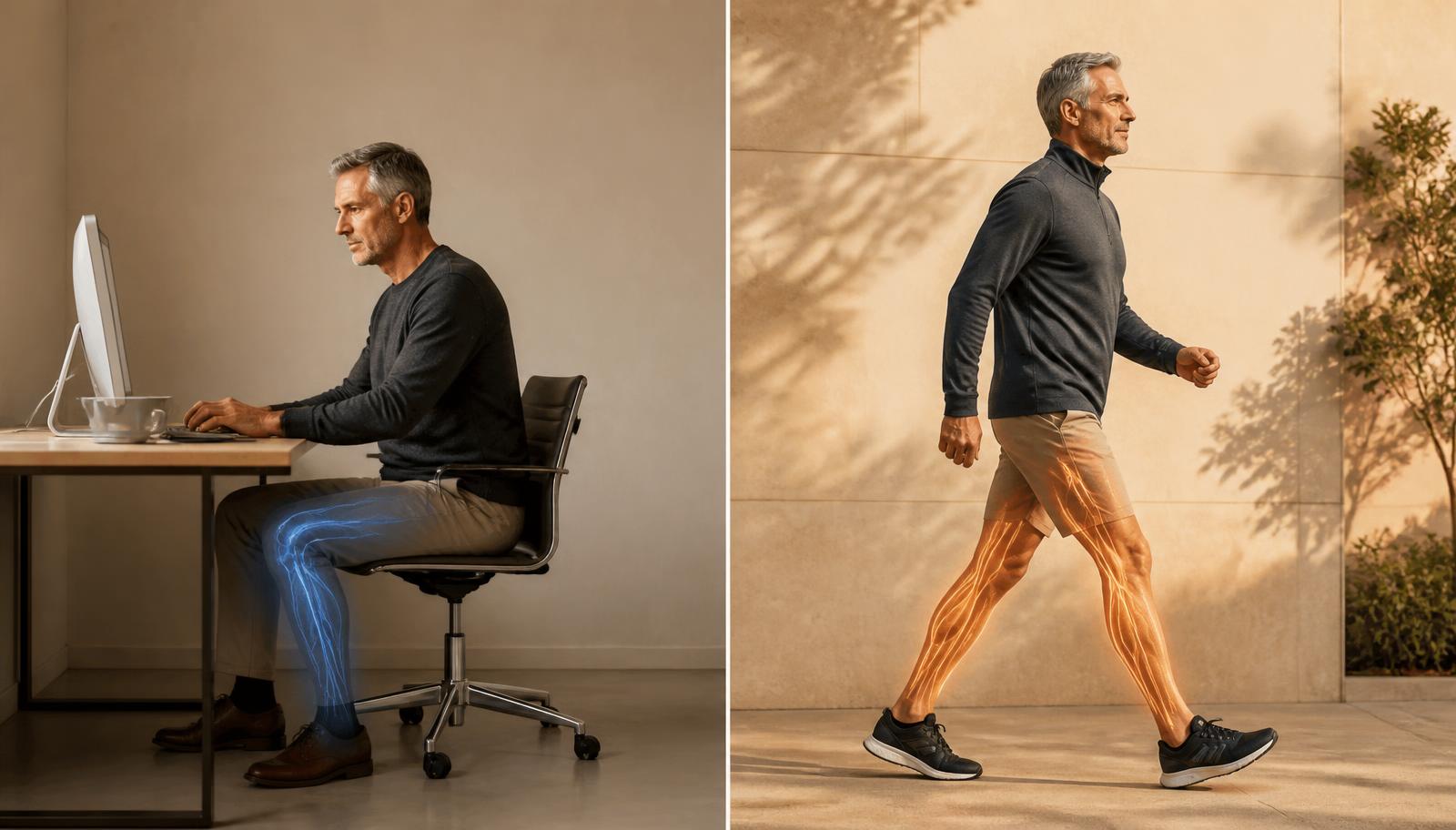
Your Blood Vessels Notice When Blood Flow Changes
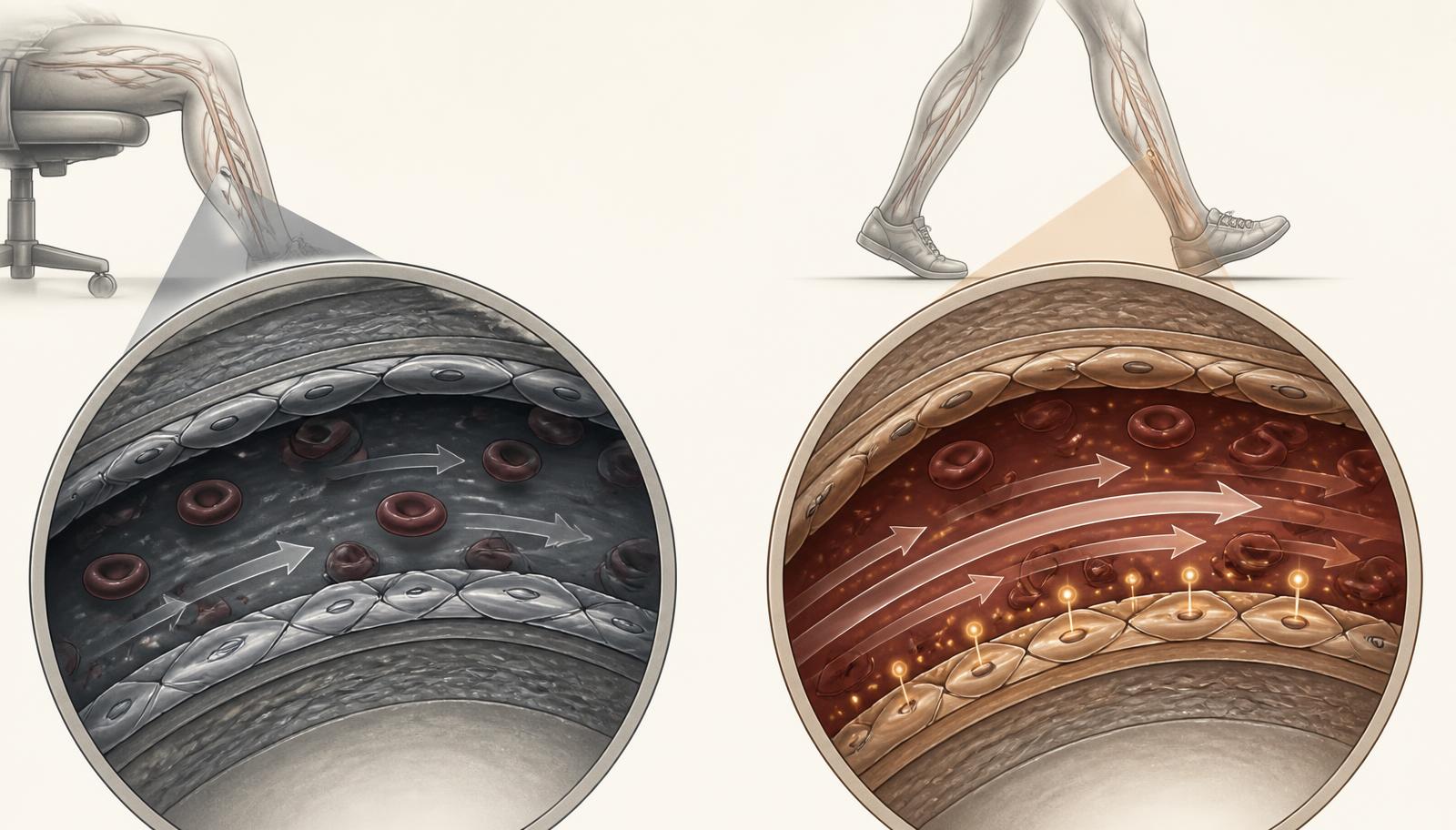
The inside of your blood vessels is lined with specialized cells called the endothelium. These cells experience blood moving directly across their surface. The physical force created by flowing blood is called shear stress.
Healthy increases in forward blood flow — such as those occurring during physical activity — can stimulate endothelial signalling. One important pathway involves an enzyme called eNOS, endothelial nitric oxide synthase, which participates in producing nitric oxide (NO).
Prolonged inactivity changes that stimulus. That does not mean sitting instantly “switches off” nitric oxide. But it helps explain why prolonged sitting can influence endothelial responsiveness and vascular function.
What Does Nitric Oxide Have to Do With Circulation?
Nitric oxide is a short-lived signalling molecule. Within blood vessels, endothelial-derived NO helps communicate with surrounding vascular smooth muscle. One downstream effect is smooth-muscle relaxation, allowing vessels to adjust their diameter according to physiological demand.
The important word is adjust. Healthy circulation is not about keeping blood vessels permanently wide open. It is about maintaining a vascular system capable of responding, relaxing, constricting and redirecting flow when appropriate. NO is one of the signals helping make that responsiveness possible.
What Happens During Prolonged Sitting in Human Studies?
Researchers have examined this experimentally. People sit continuously in a laboratory for two, three or more hours while investigators measure blood flow and vascular responsiveness.
A systematic review and meta-analysis found that prolonged uninterrupted sitting significantly reduced flow-mediated dilation (FMD) in lower-limb arteries, with impairment evident after approximately two and three hours of sitting in the studies analyzed. [2]
FMD is a commonly used research measure of endothelial function. So this finding does not mean “two hours of sitting causes vascular disease.” It means something more precise: even relatively short periods of uninterrupted sitting can temporarily alter how well lower-limb vessels respond. That is biologically meaningful.
The Effect Seems Particularly Relevant in the Legs
This makes physiological sense. During sitting, the legs are:
- relatively inactive
- positioned below the heart
- and missing much of the rhythmic skeletal-muscle contraction that accompanies walking
A 2025 study observed a significant decline in peripheral flow-mediated dilation beginning after two hours of sitting and persisting through four hours. Interestingly, the same study did not find equivalent changes in the internal carotid artery supplying the brain. [3] That reminds us that the vascular effects of sitting are not necessarily identical throughout the body. Human physiology is regional.
What Is Flow-Mediated Dilation — and Why Does It Matter Here?
Flow-mediated dilation is useful because it tests how an artery responds when blood flow suddenly increases. Researchers temporarily alter blood flow and then measure how much the artery dilates when flow returns. That response is strongly influenced by endothelial signalling, including nitric oxide.
So if prolonged sitting reduces FMD, researchers interpret that as evidence of temporarily impaired endothelial responsiveness. It does not directly tell us exactly how many molecules of nitric oxide were produced.
The best current evidence supports saying that prolonged sitting can impair endothelial function and blood-flow responses closely connected with NO biology. That is stronger scientifically than claiming sitting simply “depletes nitric oxide.”
Why Reduced Shear Stress May Be Part of the Problem
When you move, leg muscles require increased blood flow. When you sit quietly, that requirement falls. Reduced blood flow means altered shear stress along the vessel wall. And because shear stress is one of the signals that helps stimulate endothelial NO pathways, prolonged reductions in that stimulus may contribute to vascular dysfunction.
- Exercise: greater muscular demand → greater blood flow → stronger endothelial stimulus
- Prolonged sitting: low muscular demand → reduced lower-limb flow stimulus → less favourable endothelial conditions
Again, this is not an on/off switch. It is a changing biological environment.
Can Just a Few Days of Inactivity Matter?
Apparently, yes. Researchers use several models to study inactivity:
- reducing daily step counts
- stopping normal exercise
- bed rest
- limb immobilization
- and prolonged sitting
The 2025 systematic review of 20 studies found that acute reductions in physical activity were largely associated with decreases in upper- or lower-limb FMD and lower-limb microvascular function. [1] The severity of inactivity mattered: greater inactivity and longer exposure tended to produce worse endothelial outcomes.
This is a useful reminder that cardiovascular conditioning is not something the body acquires permanently. The vascular system responds to how it is currently being used.
Use It — or Gradually Lose Some of the Adaptation
Athletes call it detraining. Stop training, and some fitness adaptations gradually decline. A similar principle applies more broadly to vascular physiology. Regular movement creates repeated blood-flow changes, shear stress, metabolic demand and endothelial stimulation.
Remove much of that activity and the biological stimulus changes. That doesn't mean a few quiet days destroy cardiovascular health. It means the vascular system is dynamic. It adapts to activity. And it adapts to inactivity.
Sedentary Living Can Affect More Than Blood Flow
Long periods of sedentary behaviour are also associated with changes involving:
- glucose regulation
- insulin sensitivity
- lipid metabolism
- inflammation
- oxidative stress
- and broader cardiometabolic health
A 2025 review examining the molecular effects of sedentary behaviour highlighted potential effects involving carbohydrate metabolism, lipid metabolism, oxidative stress, inflammation, and both microvascular and macrovascular function. [4]
These mechanisms matter because nitric-oxide biology exists inside the larger metabolic environment. Poor metabolic health and greater oxidative stress can themselves work against normal endothelial NO availability. So sedentary behaviour may influence NO-related vascular function through more than one route.
The Problem Is Not Just “Poor Circulation”
People often describe sitting too much as causing “poor circulation.” That phrase is understandable but imprecise. The blood does not stop circulating because you are seated. Your heart continues pumping. Your organs continue receiving blood.
The more accurate concern is that prolonged inactivity can alter:
- regional blood flow
- muscle-pump activity
- vascular shear stress
- endothelial responsiveness
- and metabolic regulation
Your Calf Muscles Help Circulation More Than You May Realize
Walking activates the calf muscles repeatedly. Those contractions compress veins in the lower legs, and valves help direct venous blood upward. This is sometimes called the calf-muscle pump, or skeletal-muscle pump.
When you remain seated, that pumping action is greatly reduced. This does not mean everyone who sits develops a circulatory disorder. But it explains why simply getting up and walking changes lower-body circulation almost immediately. Your legs are not merely passengers in the circulatory system.
Is Standing Enough?
Standing can reduce total sitting time. But standing completely still does not provide the same muscular and blood-flow stimulus as walking. That is why the most useful replacement for prolonged sitting is often movement, not simply a different stationary posture.
Standing desks may help some people change behaviour. But a desk that raises and lowers cannot take a walk for you. Whenever practical: move the muscles.
The Good News: Sitting Is Easy to Interrupt
One of the most useful discoveries in this research is that protecting vascular function does not always require a full workout. Short bouts of physical activity can interrupt prolonged sitting.
A meta-analysis of randomized crossover trials found that breaking up prolonged sitting significantly improved shear rate, flow-mediated dilation and blood flow compared with uninterrupted sitting. [5]
That is highly practical. You do not need to change clothes. You do not need a gym. You do not need an hour. Sometimes you simply need to get up.
Newer Evidence Supports the “Exercise Snack”
A 2026 meta-analysis pooled 36 studies involving 632 participants and examined short physical-activity breaks during prolonged sitting. Compared with continuous sitting, these activity breaks improved flow-mediated dilation and peripheral blood flow, and produced a small reduction in systolic blood pressure. The authors found that activities involving larger muscle groups, such as stair climbing, and breaks lasting roughly 2–5 minutes every 30–60 minutes appeared particularly promising, although the optimum strategy is not yet fully established. [6]
How Often Should You Get Up?
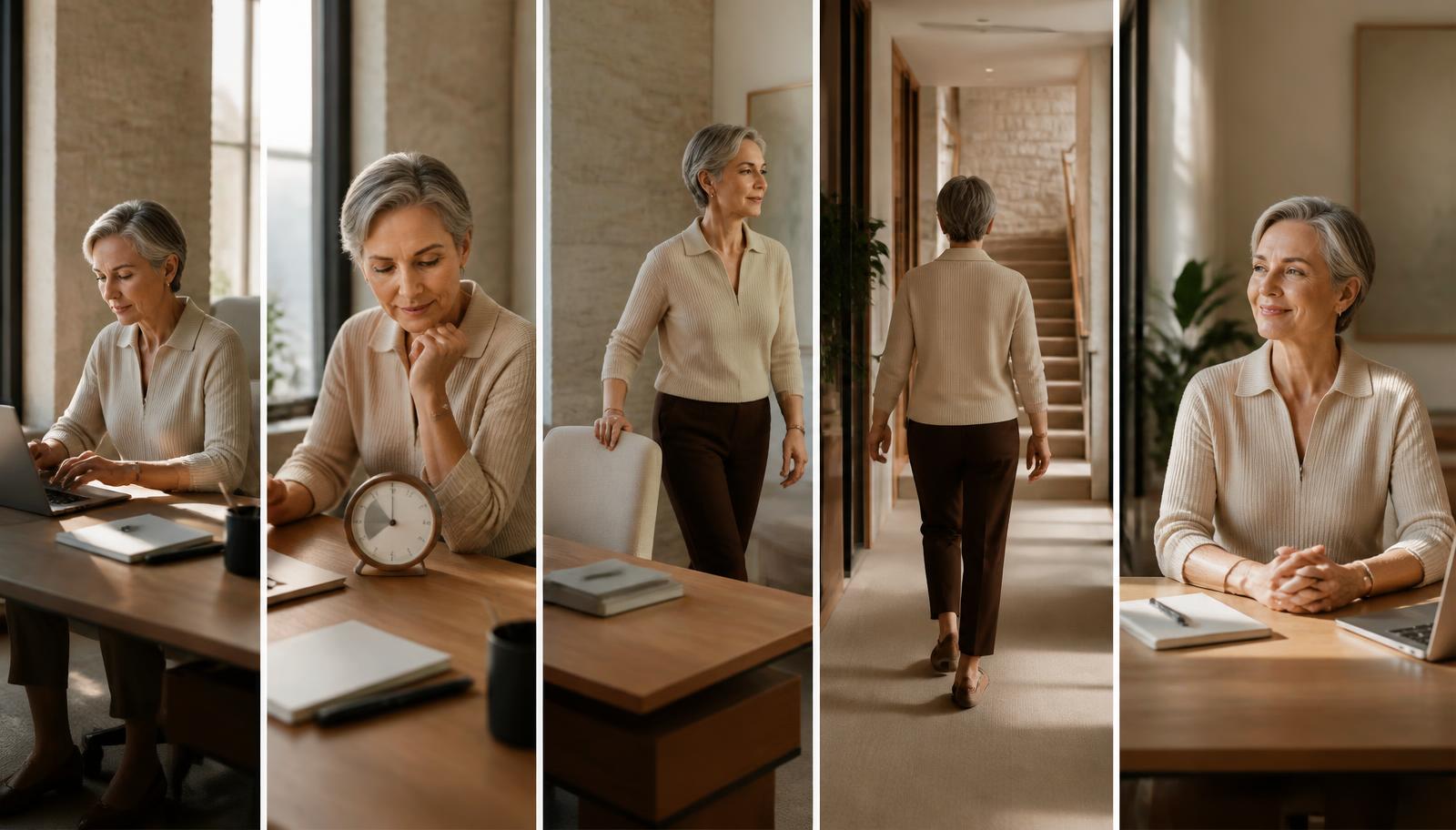
There is no scientifically established single perfect interval for everyone. The newest evidence suggests that activity breaks in the range of a few minutes every 30–60 minutes can improve acute vascular and metabolic outcomes under experimental conditions. [6]
But don't turn this into another rule you have to worry about. A practical approach is:
- Walk for a few minutes
- Climb stairs
- Do some light household activity
- Stand and perform several calf raises
- Take a short walk after a meal
The goal is not to follow a stopwatch perfectly. It is to prevent hours of inactivity from becoming your default.
Do You Still Need Exercise If You Take Movement Breaks?
Yes. Movement breaks and exercise solve related but different problems.
- Movement breaks: interrupt long periods of inactivity
- Structured exercise: provides a larger cardiovascular and muscular training stimulus
A brisk 30-minute walk is valuable. Getting up several times during the other eight hours of your day is also valuable. You do not need to choose between them.
And Exercise Earlier in the Day May Offer Some Protection
A 2024 systematic review and meta-analysis found that exercise performed before prolonged sedentary behaviour helped preserve flow-mediated dilation during subsequent sitting compared with sitting without prior exercise. [7]
That is encouraging. But it should not be interpreted as “I worked out this morning, so sitting continuously for the next ten hours doesn't matter.” Exercise helps. Reducing prolonged uninterrupted sitting helps too.
Why This Matters More After 50
Sedentary living can gradually increase with age. A job changes. Retirement arrives. Children leave home. Sports participation declines. Joint discomfort makes some activities less appealing. Driving replaces walking. Entertainment becomes increasingly screen-based. And muscle mass and fitness can decline at the same time.
Meanwhile, aging itself tends to bring changes in:
- endothelial function
- NO bioavailability
- arterial stiffness
- metabolic health
- and cardiovascular reserve
The issue is not that older people should exercise because they are old. It is that the biological value of maintaining vascular stimulus becomes increasingly important as vascular efficiency changes with age.
Sedentary Living Can Create a Self-Reinforcing Cycle
After several years, the difference in walking speed, stamina, strength, balance and cardiovascular capacity can become substantial. The best time to interrupt that cycle is before inactivity becomes normal.
Muscle Is Part of the Solution
This is another reason resistance training becomes valuable after 50. Stronger leg muscles make walking, stairs, travel, gardening, shopping and everyday movement easier. The easier movement feels, the more likely you are to keep moving. So maintaining muscle indirectly helps maintain the repeated vascular stimulus associated with an active life. Strength and circulation are more connected than they initially appear.
A Sedentary Day Does Not Need to Stay Sedentary
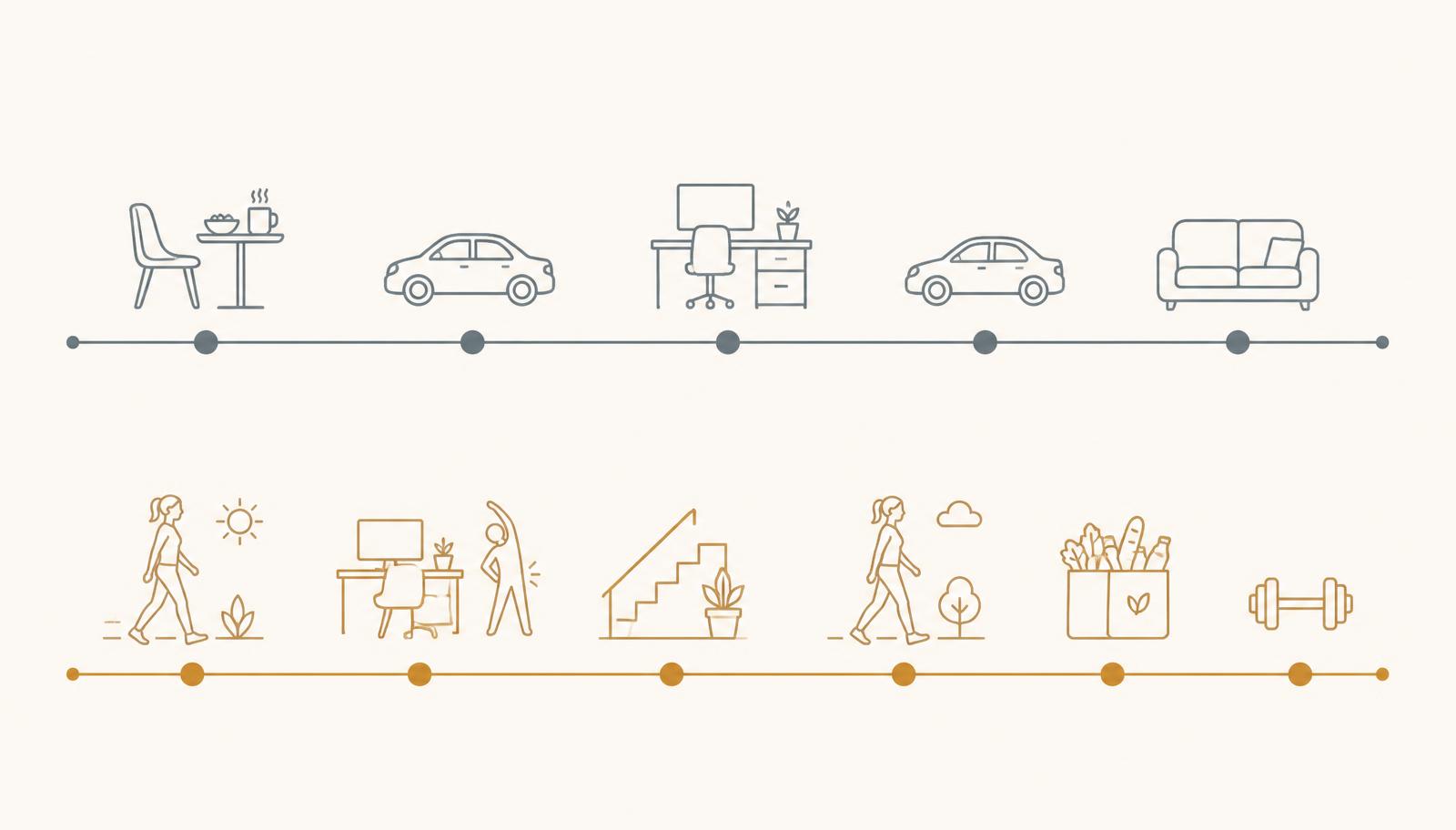
Imagine a typical desk-based day. You might:
- walk for 20–30 minutes in the morning
- stand during a telephone call
- walk for three minutes each hour
- take the stairs once or twice
- walk after lunch
- carry groceries
- do several resistance exercises in the evening
None of those activities individually sounds extraordinary. Together, they create a completely different physiological day from chair → car → chair → sofa → bed. That is the lifestyle difference that matters.
What About Nitric-Oxide Supplements?
A supplement cannot reproduce muscle contraction, shear stress, exercise conditioning, or the vascular adaptations created by repeated physical activity. But targeted nutrition can support the biological pathway that movement stimulates.
Endothelial eNOS uses L-arginine as substrate for nitric-oxide production. L-citrulline provides another nutritional route because the body can convert it into arginine. That means exercise and nutritional support can address different parts of the same physiological system.
Where ėNOS Fits
An important distinction: eNOS is endothelial nitric oxide synthase — the natural enzyme involved in vascular NO production. ėNOS is a dietary supplement from Australiana Life, formulated around nitric-oxide science to support the body's natural NO-production system, healthy circulation and cardiovascular wellness.
Its core L-arginine + L-citrulline combination provides complementary nutritional support for arginine availability — the substrate side of the natural eNOS pathway. That makes ėNOS a useful complement to an active lifestyle, but the relationship should be understood correctly: ėNOS supports the nutritional pathway; movement supplies the physiological stimulus. One does not replace the other.
Particularly After 50, Support Both Sides
- Move regularly and interrupt long periods of sitting
- Maintain aerobic fitness and keep your muscles strong
- Eat well and include nitrate-rich vegetables
- Support the arginine/eNOS pathway nutritionally
- Maintain healthy blood pressure and metabolic health
This is much stronger than looking for one solution. The cardiovascular system is a system. Support it like one.
Seven Easy Ways to Make a Sedentary Day Less Sedentary
You do not need to rebuild your life around exercise. Try making movement unavoidable.
- 1. Walk after a meal — even a short walk creates muscle activity and changes blood flow.
- 2. Stand up during phone calls — better still, walk if practical.
- 3. Put something you use away from your desk — give yourself a reason to get up.
- 4. Use stairs when appropriate — large leg muscles create a meaningful cardiovascular stimulus.
- 5. Break long screen sessions — television and computer time are easy places for hours to disappear.
- 6. Keep your legs strong — strength makes everyday movement easier.
- 7. Think in days, not workouts — ask how much you moved today, not only whether you exercised.
You Don't Have to Become an Athlete
The opposite of sedentary is not athletic. It is active. Walking. Gardening. Shopping. Cycling. Playing golf. Swimming. Cleaning. Traveling. Strength training. Dancing. Playing with grandchildren. Taking stairs.
All of these give your muscles and circulatory system something to do. The goal is not elite fitness. It is preserving the ability to participate in life.
Your Blood Vessels Are Listening to What You Do
The connection between a sedentary lifestyle and nitric oxide is not that a chair somehow destroys NO. The biology is more interesting. Movement changes blood flow. Blood flow changes shear stress. Shear stress influences endothelial signalling. The endothelium participates in NO production. And repeated movement helps preserve the cardiovascular system's ability to respond.
Prolonged inactivity moves the stimulus in the opposite direction. Fortunately, you can change that stimulus repeatedly throughout the day. Stand. Walk. Use your muscles. Change your blood flow. Give your endothelium something to respond to.
Your circulation was designed for a moving body.
Scientific References
[1] Harden JE, Branch JD, Reynolds LJ. Impacts of Physical Inactivity Models on Endothelial Function: A Systematic Review.
Sports Medicine. 2025;55(8):1937–1952. PMID: 40388068. Systematic review of reduced daily activity, detraining, bed rest and immobilization showing that greater physical inactivity is commonly associated with impaired endothelial and microvascular function.
PubMed / National Library of Medicine →[2] The Acute Effects of Prolonged Uninterrupted Sitting on Vascular Function: A Systematic Review and Meta-analysis.
PMID: 34334722. Meta-analysis finding significant reductions in lower-limb flow-mediated dilation and shear rate during prolonged uninterrupted sitting.
PubMed / National Library of Medicine →[3] Saito S, et al. Prolonged sitting is not associated with altered shear-mediated dilation of the internal carotid artery, despite impairing lower limb endothelial function.
Physiological Reports. 2025;13(3). PMID: 39878625. Human study demonstrating regional differences in vascular response during four hours of sitting.
PubMed / National Library of Medicine →[4] Sedentary behaviour and cardiometabolic health: Integrating the potential underlying molecular health aspects.
Metabolism. 2025. PMID: 40483777. Review examining sedentary behavior in relation to glucose and lipid metabolism, inflammation, oxidative stress and micro- and macrovascular function.
PubMed / National Library of Medicine →[5] Impact of prolonged sitting interruption strategies on shear rate, flow-mediated dilation and blood flow in adults: A systematic review and meta-analysis of randomized cross-over trials.
PMID: 35731706. Found that interrupting prolonged sitting improved shear rate, FMD and blood flow compared with continuous sitting.
PubMed / National Library of Medicine →[6] Acute effects of “exercise snacks” during prolonged sitting on hemodynamics and peripheral vascular function: a three-level meta-analysis.
2026. PMID: 41965833. Meta-analysis of 36 studies and 632 adults finding that short activity breaks improved FMD and peripheral blood flow compared with uninterrupted sitting.
PubMed / National Library of Medicine →[7] Effect of Exercise Prior to Sedentary Behavior on Vascular Health Parameters: A Systematic Review and Meta-Analysis of Crossover Trials.
2024. PMID: 38853205. Found that exercise before prolonged sitting helped preserve flow-mediated dilation during subsequent sedentary periods.
PubMed / National Library of Medicine →
Continue the Lifestyle & Healthy Aging Journey
- Exercise & Nitric Oxide: Why Movement Matters →
See what happens when increased blood flow actively stimulates endothelial signalling.
- Lifestyle Habits That Support Healthy Nitric Oxide Production →
Put movement into the larger picture alongside food, sleep, oral health and metabolic wellness.
- Healthy Circulation After 50: Why Blood Flow Matters →
Explore why maintaining an active circulatory system becomes increasingly important with age.
- Why Nitric Oxide Production Changes With Age →
Understand the mechanisms that make NO support more relevant through midlife and beyond.
- Nitric Oxide and Oxidative Stress →
See why NO availability depends on more than production alone.
SIT WHEN YOU NEED TO. JUST REMEMBER TO MOVE AGAIN.
A sedentary lifestyle can create a less favourable environment for blood flow, endothelial function and healthy NO signalling. ėNOS by Australiana Life can complement an active lifestyle by providing L-arginine + L-citrulline and deliberately selected supporting nutrients to help support the body's natural nitric-oxide system, healthy circulation and cardiovascular wellness.
EXPLORE ĖNOS →This article is provided for informational purposes only and is not intended as medical advice or to diagnose, treat, cure or prevent disease. Sedentary behaviour, physical activity needs and cardiovascular health vary among individuals. ėNOS is a dietary supplement formulated to support the body's natural nitric-oxide system, healthy circulation and cardiovascular wellness. Dietary supplements should complement, rather than replace, appropriate nutrition, physical activity and medical care.
More in Lifestyle & Healthy Aging
- Nitric Oxide & Exercise Performance
- Nitric Oxide & Exercise Recovery
- Lifestyle Habits That Support Healthy Nitric Oxide Production
- Exercise & Nitric Oxide: Why Movement Matters
- Diet & Nitric Oxide: How Everyday Food Choices Matter
- Sleep, Cardiovascular Health & Nitric Oxide: What Do We Know?
- Smoking, Vascular Health & Nitric Oxide
- Nitric Oxide, Energy & Staying Active as We Age
- Nitric Oxide & Men's Sexual Health: The Blood-Flow Connection
- Nitric Oxide & Oral Health: The Surprising Connection
- Nitric Oxide & Aging: What Changes After 40, 50 and Beyond?
- Why Does Nitric Oxide Production Change With Age?
- Healthy Aging: Supporting Circulation, Blood Flow & Nitric Oxide After 50
- Nitric Oxide and Brain Health/Cognition
About Our Health & Science Content
Australiana Life Health & Science articles are based on published scientific research and written to make complex health and nitric oxide science easier to understand. Our educational content undergoes scientific review for accuracy and appropriate interpretation of the evidence and is updated as relevant scientific understanding evolves.